Disclosure: Some of the links on this site are affiliate links. If you make a purchase through one of them, I may earn a small commission at no extra cost to you. Read my full disclaimer here. Thank you for your support!
Novecento is a nine-room, family-run boutique hotel in Venice’s San Marco sestiere, a few minutes’ walk from the Accademia Bridge, and after four winter nights spent there on my own, I would recommend it to anyone who wants their hotel to feel as much a part of Venice as the city outside its door.
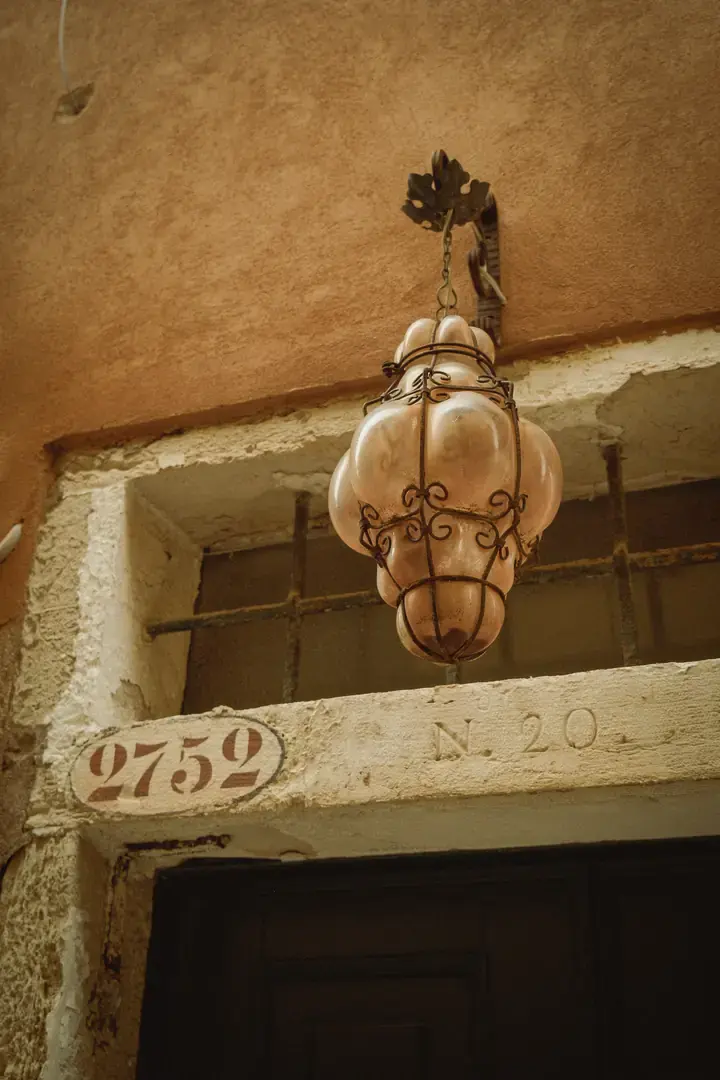
From the street, there is very little to announce it, just an understated door a few steps from Campo San Maurizio. Step through it on a winter afternoon, however, and you are met by a rush of warmth that is as much about the welcome as it is the temperature.
The heating was turned up as only an Italian hotel in winter will do, the greeting from the front desk was an exceptionally genuine and considerate one, and the house beyond it was furnished with a care that is obvious from the doorway.
I spent a long time choosing this hotel.
The trip was a solo one, long anticipated, but it was also a working one, with intense days of research ahead. I wanted somewhere that would set the tone for the city that I would love coming back to, and, as always, a hotel with a real sense of the place it stands in.
Novecento gave me both, and its address, in a part of San Marco that the usual advice tends to dismiss, turned out to be one of its greatest strengths.
THE STAY, AT A GLANCE
Novecento Boutique Hotel, Venice
BEST FOR
A solo or winter stay, or a first visit to Venice, with central access and a hotel steeped in the city’s past.
THINK TWICE IF
You need a lift, a restaurant or bar on site, or a spacious, contemporary room.
WHAT STANDS OUT
Interiors collected over time rather than designed to a trend, which make it feel like staying in a Venetian merchant’s house.
WHERE
San Marco, just off Campo San Maurizio, about five minutes’ walk from the Accademia Bridge.
MY STAY
4 nights, solo, in winter · first-floor double room · standard rate
Rates fall noticeably in winter, so compare dates if yours are flexible.
Table of Contents Show
Why I chose Novecento for a solo winter trip to Venice
For a winter trip on my own, I wanted something cosier, somewhere that would feel like a sanctuary at the end of a long day.
A Cultured Voyages Guide
Seven shifts that take you from sightseeing to actually understanding a place – the same ones I use on every trip I plan.
Location mattered as much as atmosphere. Travelling solo, I wanted to be central enough that getting around would never become a chore, on streets busy enough that walking back after dinner would feel comfortable, and close to the parts of the city I most wanted to explore, particularly Dorsoduro across the Grand Canal.
Novecento answered every one of them, and four nights there confirmed it as one of my favourite places I have stayed anywhere.
Where Novecento sits: San Marco, but not St Mark’s Square

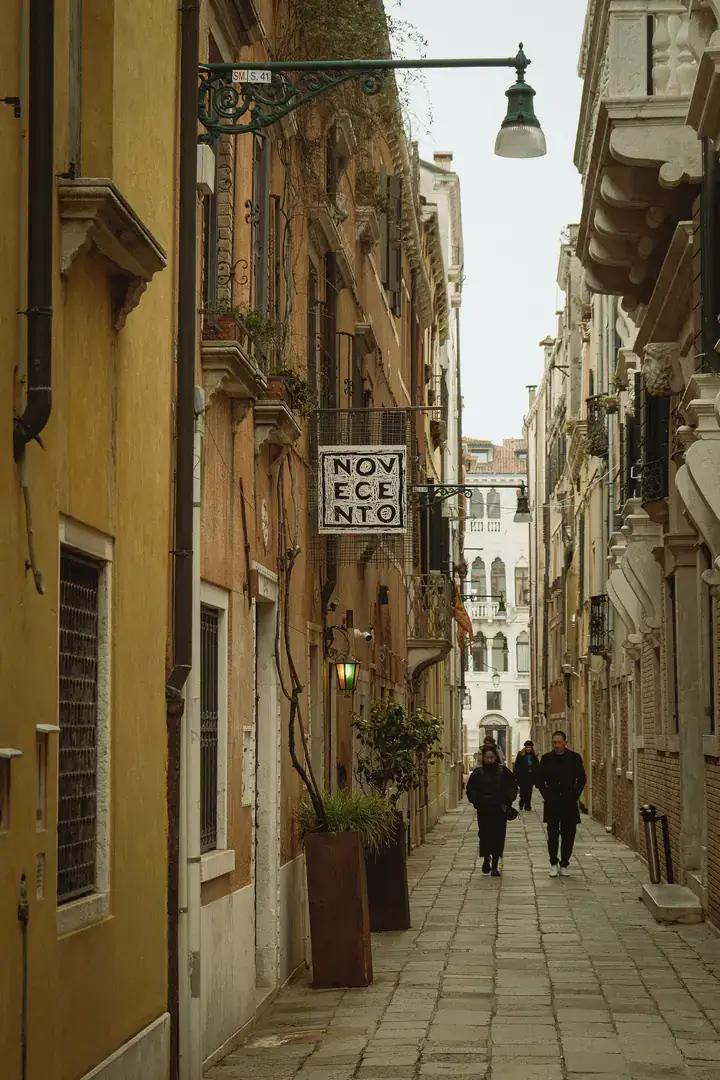
“Don’t stay in San Marco” is advice you will hear again and again about Venice, and around St Mark’s Square itself I would give it too, as the crowds there can make the city feel frantic and overrun.
The trouble with the advice is that it writes off an entire sestiere when the problem is more localised to the square itself and the streets immediately around it.
Novecento sits on the fringe of San Marco, just off Campo San Maurizio and close to the Grand Canal, on the side facing Dorsoduro.
Cross the Accademia Bridge, and in under five minutes you are in Dorsoduro, while St Mark’s Square is near enough to walk to whenever you want it and far enough away that its crowds never reached me.
A little further north, a traghetto crossing ferries you over the Grand Canal towards San Polo, which puts a good deal of the city within easy reach on foot; the only area I would call a long walk away is Cannaregio.
The hotel sits on a well-used route between two campi, so the streets around it are never deserted at night, which mattered a great deal to me as a solo traveller. I ate across the bridge in Dorsoduro, elsewhere in San Marco and up in Cannaregio, and walked back alone every evening without a moment’s unease.
What you won’t find here, however, is laundry strung between the houses, and if that lived-in Venice matters more to you than access, my guide to where to stay in Venice compares the neighbourhoods that offer it.
I arrived on foot from Piazzale Roma, wheeling a suitcase and carrying a backpack full of camera equipment, mostly so I could stop for cicchetti at Bacareto da Lele on the way (it was fieldwork, and not a route I would recommend to anyone with luggage, even though the pitstop was worth the physical exertion).
When I left, I crossed the Accademia Bridge and took the vaporetto instead, which carried me straight up the Grand Canal to the station.
GETTING THERE & GETTING AROUND
Arriving
Vaporetto line 1 to Santa Maria del Giglio, about three minutes’ walk from the hotel. The Alilaguna Orange line from the airport stops there too, and the hotel can arrange a private water taxi.
Leaving
Cross the Accademia Bridge and take the vaporetto from the Accademia stop, which runs straight up the Grand Canal to Piazzale Roma and the train station.
On foot
About five minutes to the Accademia Bridge and around ten to St Mark’s Square.
With luggage
The hotel has stairs and no lift; ask for help with bags when you arrive.
A merchant’s house of curiosities: the interiors and the Romanelli family
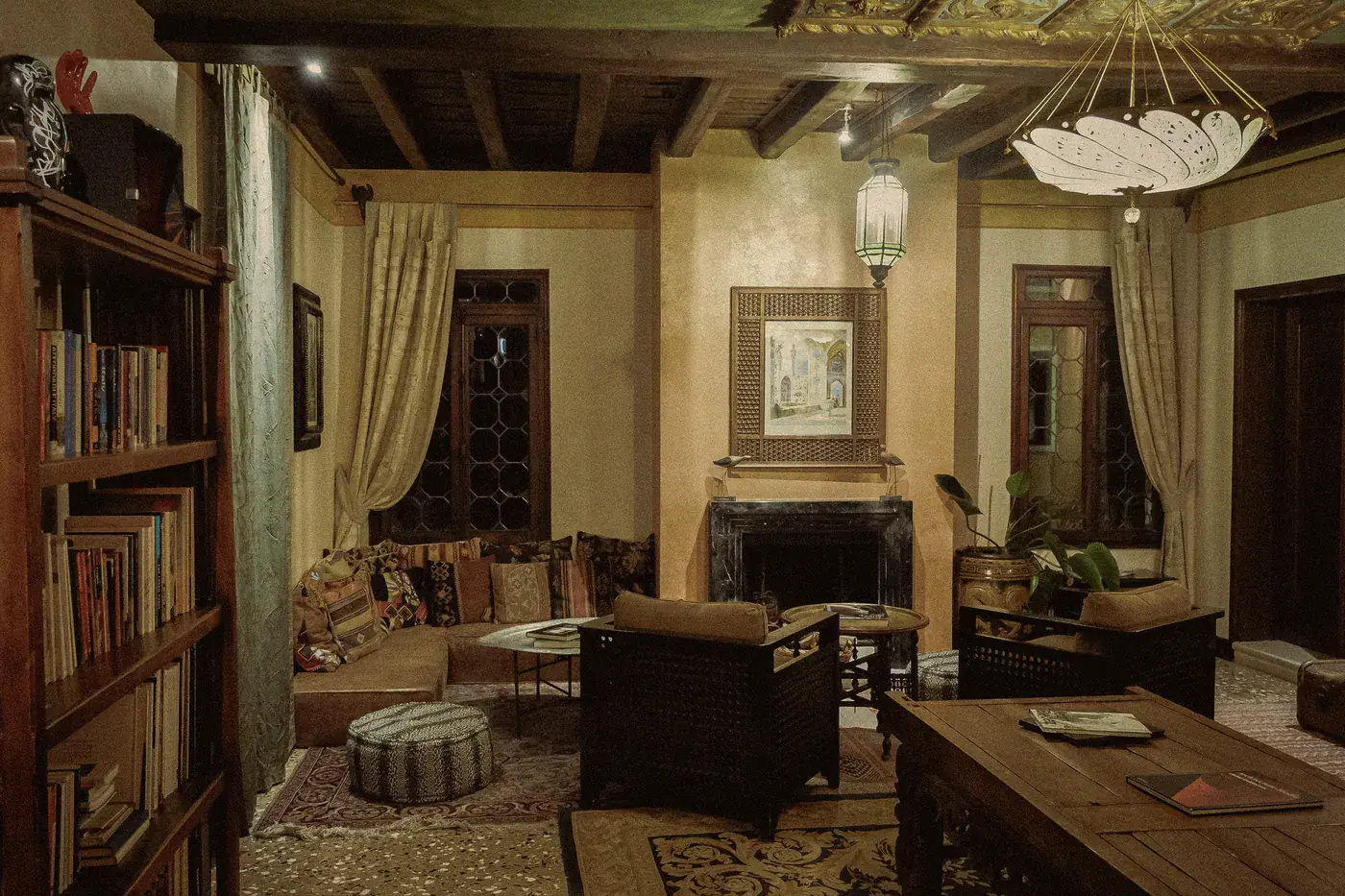
For me, Venice has always been about its reach. At its height, the maritime republic’s trade routes reached far beyond Europe, and its streets would have carried an exoticism and an international flavour that few other cities of the time could have matched.
Novecento captures something of that spirit, and the effect, to my mind, is of staying in a wealthy merchant’s house, filled with things brought home from the far ends of his trade routes.
The family describe the style as the Orientalism of the early 1900s, inspired by the Venice-based designer Mariano Fortuny. The house is furnished with pieces from Asia and North Africa and rugs gathered on the family’s own travels, and keeps its original Venetian marble and wooden floors.
What struck me most, however, was that none of it feels performative. Nothing has been chosen to fill a gap or follow an interior design trend, and every corner I saw had the air of having been collected over time by people genuinely interested in the item.
Those people are the Romanelli family, who have run the larger Hotel Flora (also on my Venice stay list) nearby since 1965 and opened Novecento in 2002. They also publish Inside Venice, an editorial project of guides, interviews and stories about the city, with a shop of work by Venetian artisans.
Having visited Venice several times, I am very aware of how overtouristed it has become, and in a place like this, it matters to me to stay with a family who are from the city, are visibly involved in running their hotels, and are working to show visitors a side of the city beyond the obvious.
That was also an important factor in my decision to stay here, and having seen the proof of it at work, is a large part of why I stand so firmly by my recommendation for this hotel.
My room: ochre walls, a curtained archway and baking through the floorboards

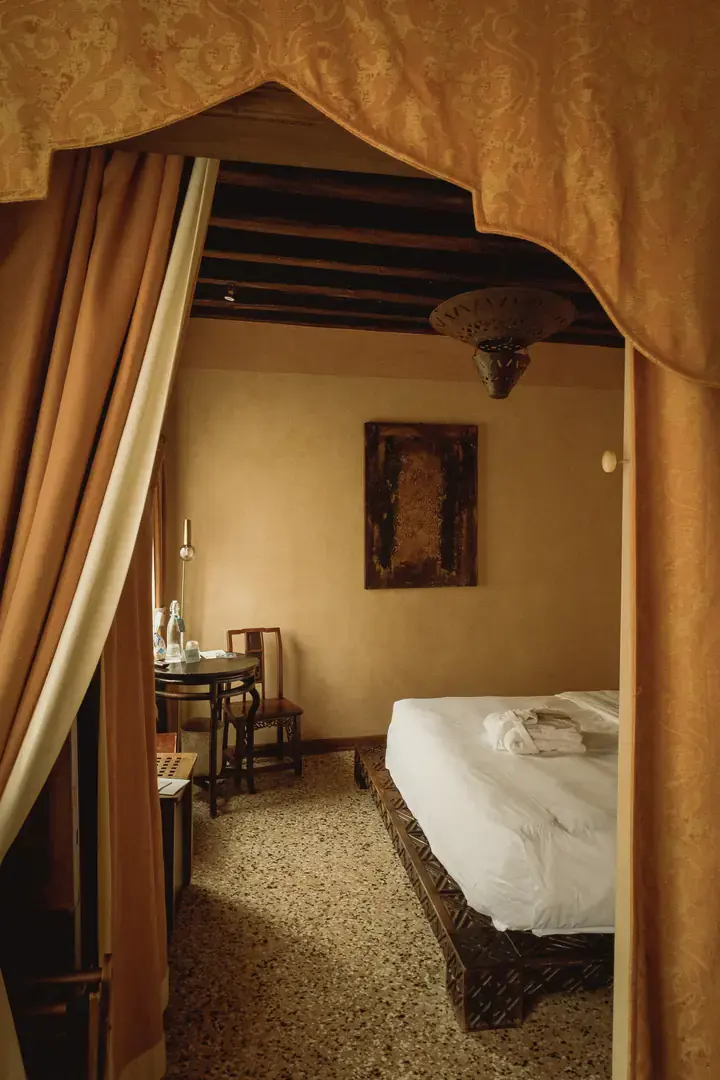
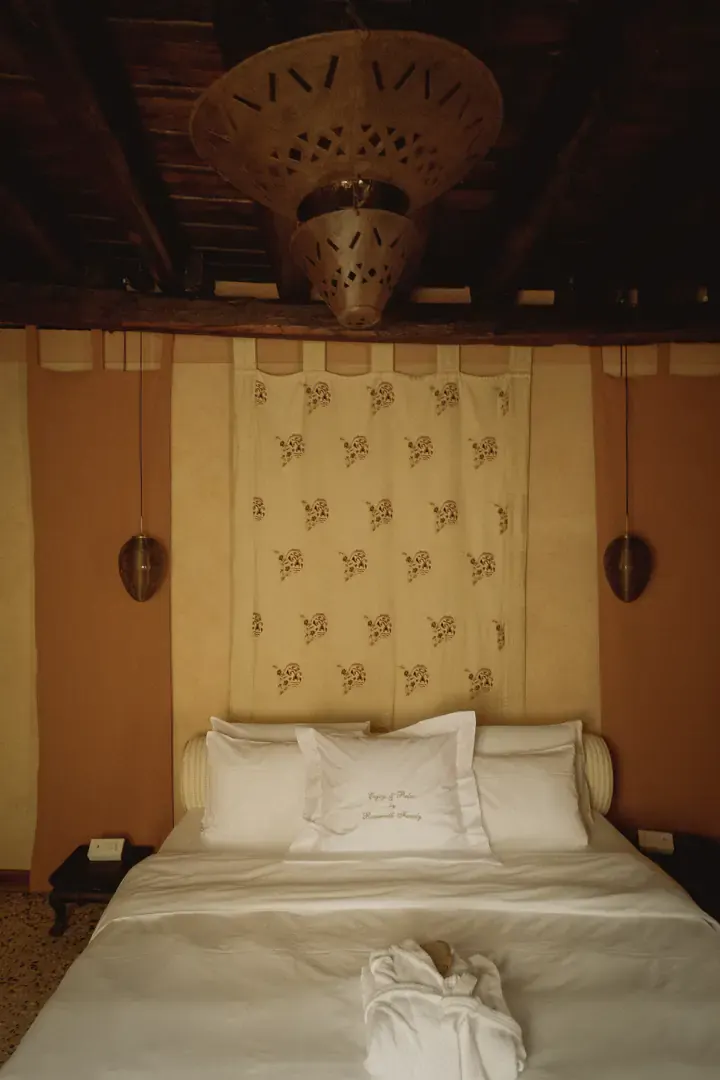
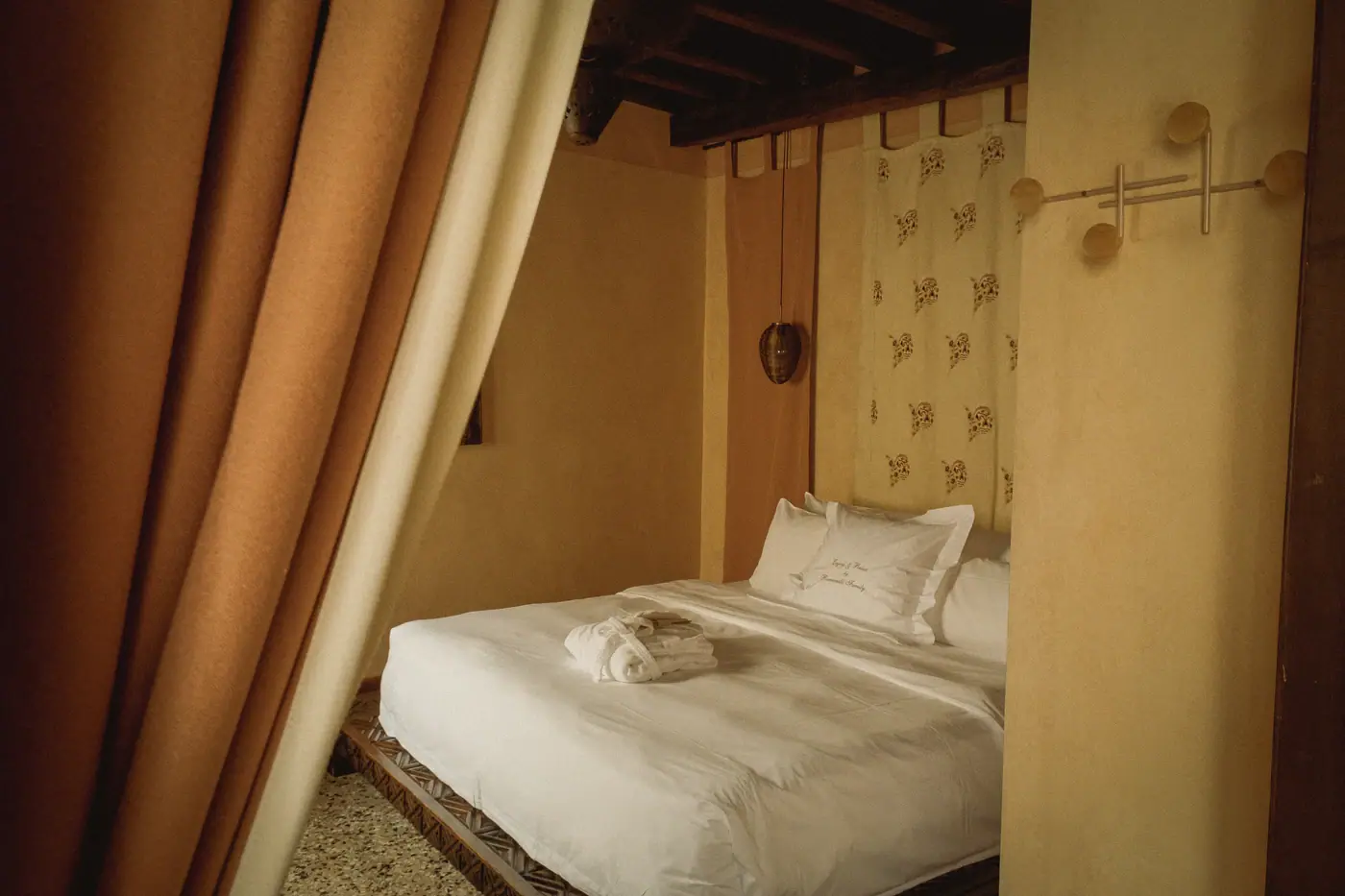
My room was on the first floor, reached by a narrow, winding staircase and tucked into the far corner of the upstairs lounge, a wonderfully welcoming room with an assortment of seats, layered textiles, rugs, furs and a fireplace.
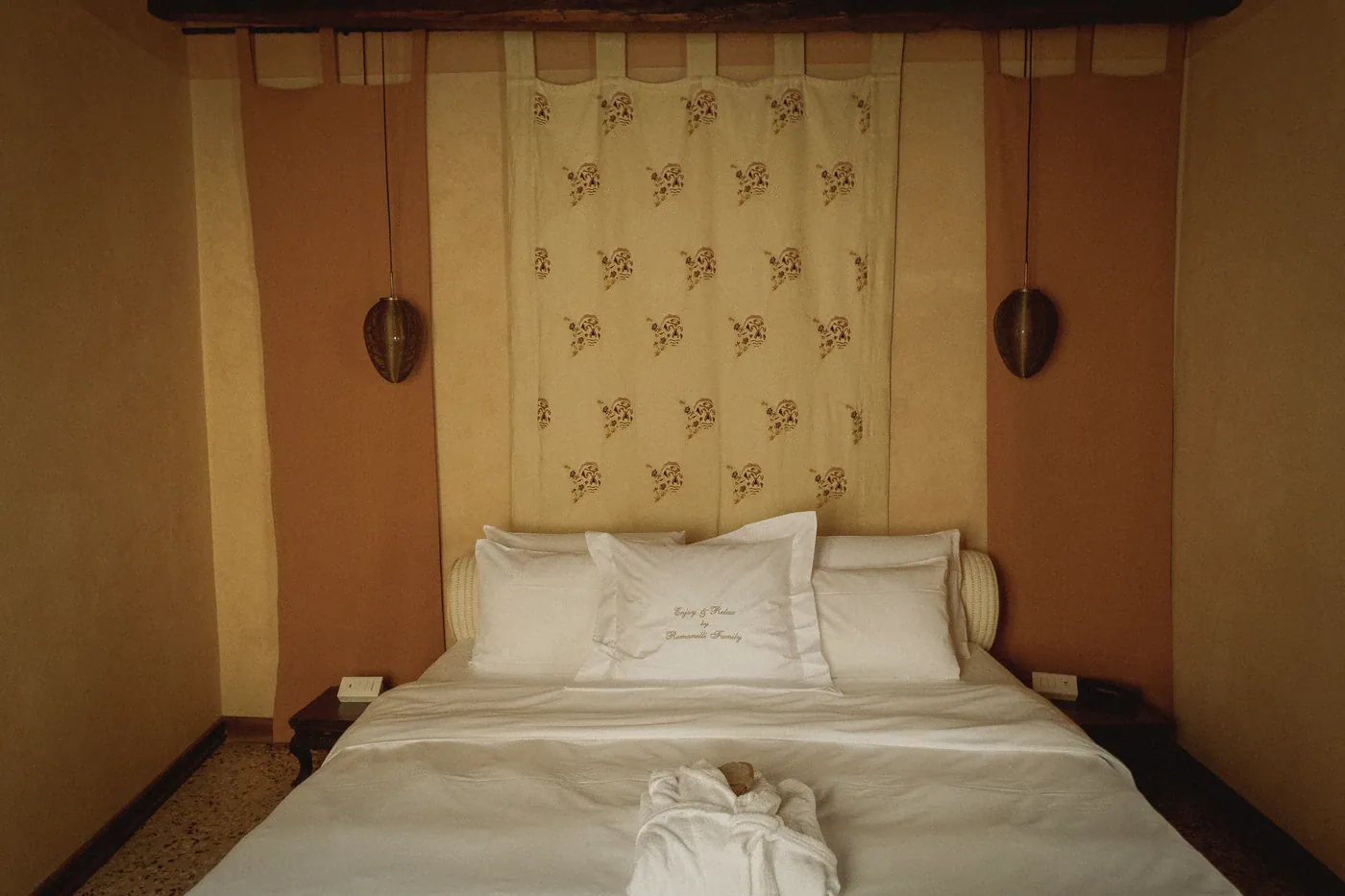
A small antechamber led into the room itself through an opening framed in fabric. Beyond it, the walls were washed in ochre and terracotta beneath dark wooden beams, a pierced brass lantern hung from the ceiling and a printed hanging fell behind the bed, where a pillow had been embroidered with the family’s name.
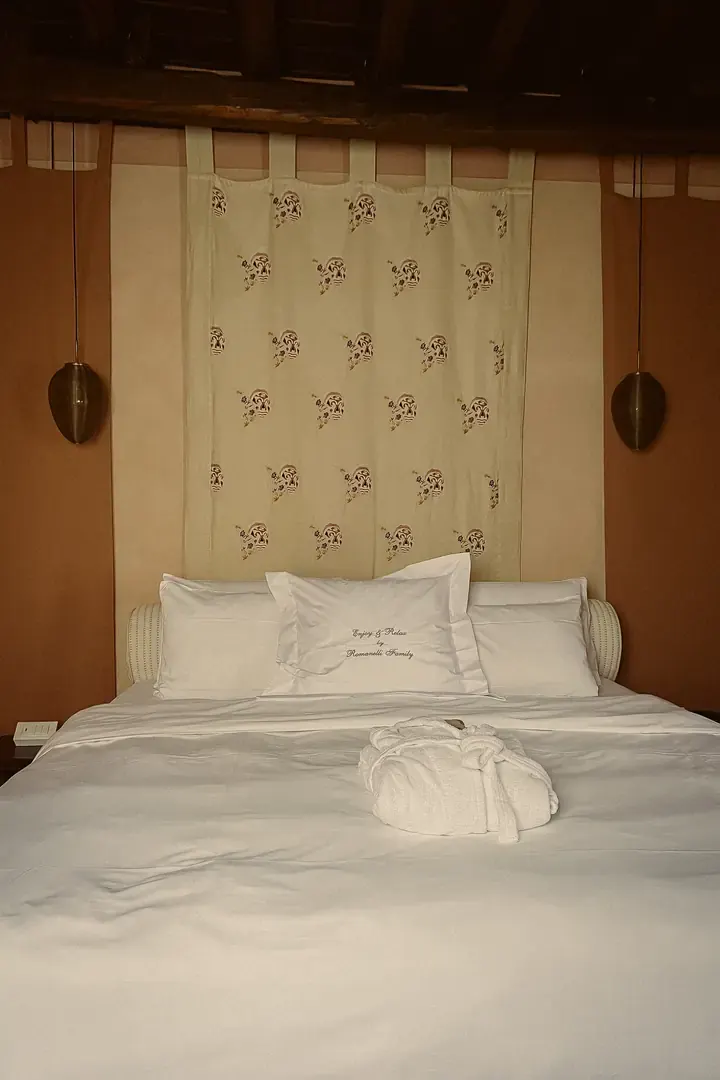

It was not a large room, but you’re naive if you come to Venice expecting space, and it was a little aesthetic treat from the moment I walked in.
The window looked onto a courtyard or a back street (I couldn’t now tell you which, because the view was never the point), and being at the back of the building, the room was silent at night.
With no restaurant or bar, the house goes quiet once guests return to their rooms, and I slept beautifully. I woke each morning to the smell of baking drifting up through the floorboards from the small kitchen below.
WHICH ROOM TO BOOK
Choose Novecento for the house rather than a particular room.
All nine rooms are individually decorated, and none is particularly large. Mine left me wanting to come back and stay in every one of them before settling on a favourite.
MY ROOM
A double on the first floor, off the upstairs lounge, at the back of the building.
ASK BEFORE BOOKING
About the stairs if you have heavy luggage, and about a room at the back if you sleep lightly.
Breakfast, coffee between galleries and staff who read the room
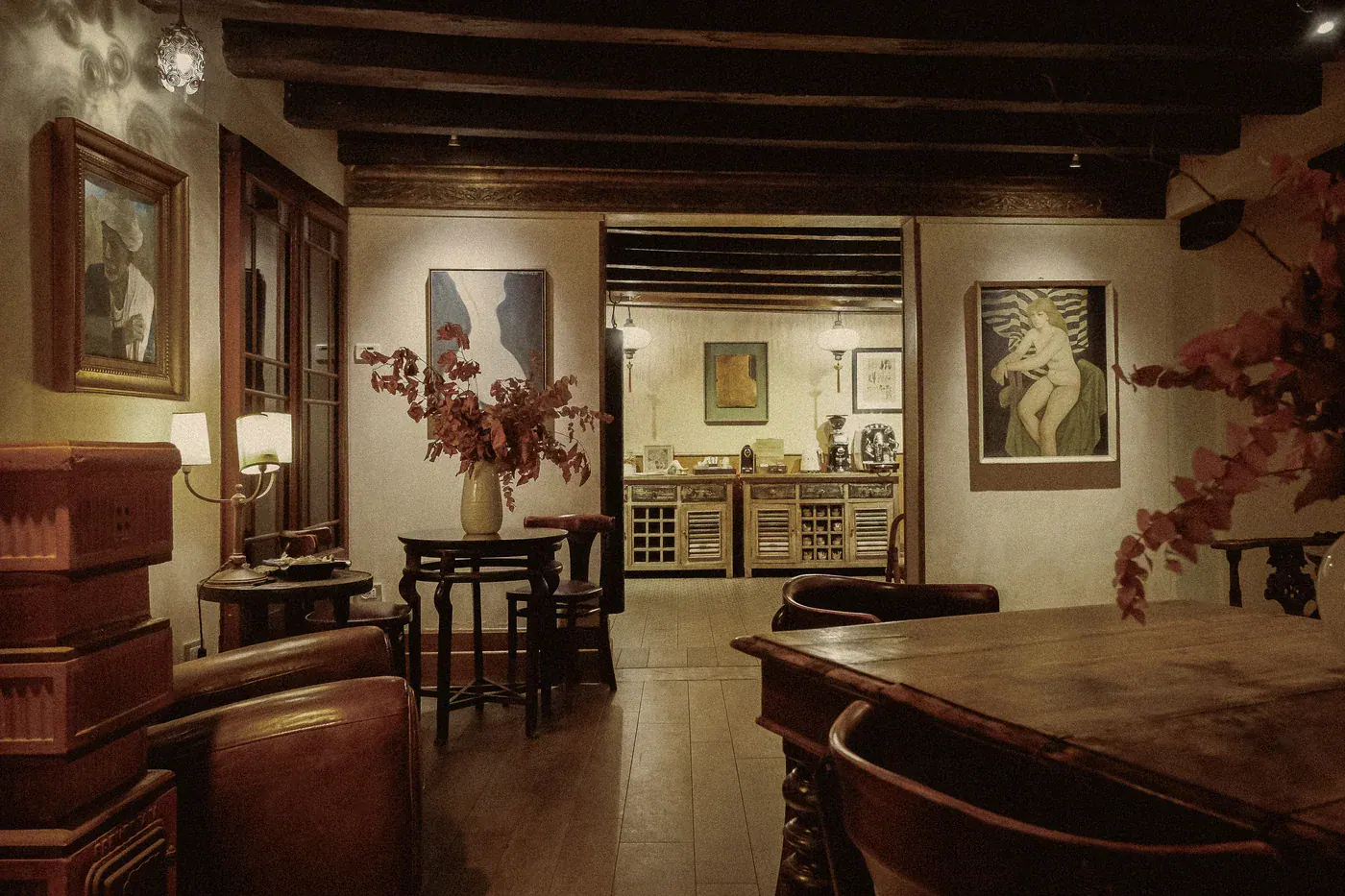
Breakfast is served in a small breakfast room with a drawing room off it, so you can take your pick of perches, and I loved coming down to it each morning.
The spread ran to juices, yoghurt, granola and cereals, cold meats and cheeses, and baked goods fresh from the oven. The other guests (couples for the most part, and the occasional small family) kept the mood calm, which suited a solo breakfast very well.
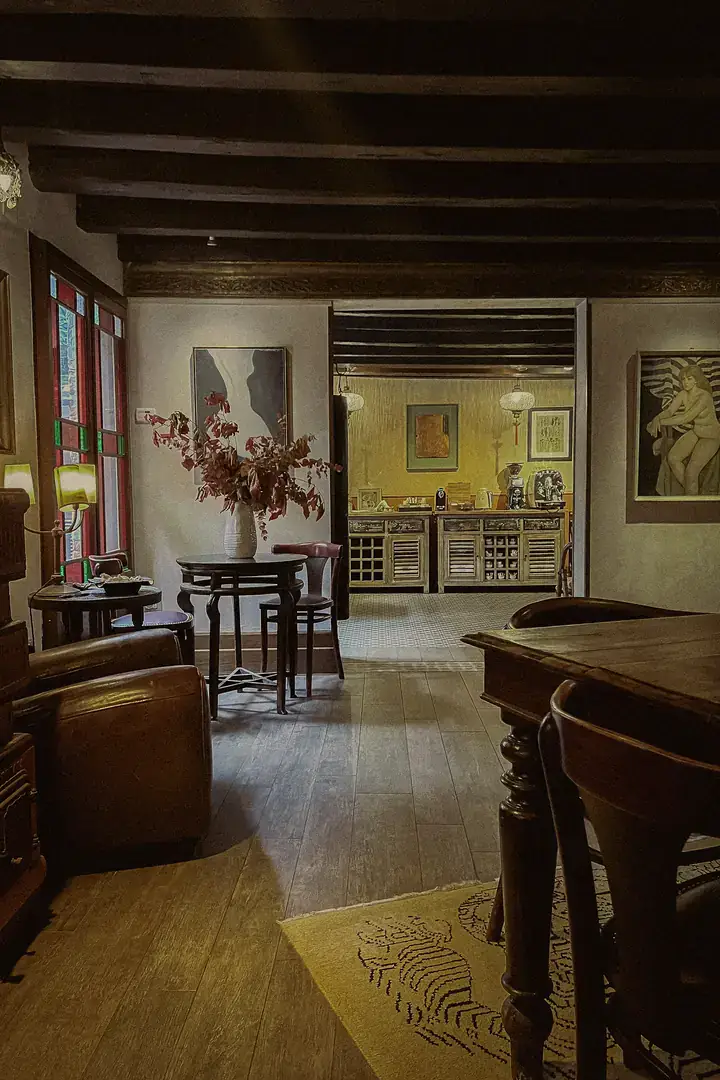


Coffee and tea are there to help yourself to throughout the day, and it became a ritual of mine to come in from the cold between museums and galleries, head straight for the lounge and sit down with an espresso before going back out.
The staff struck exactly the right note, warm whenever I passed them and never intrusive.
On my first day they offered a map and a few suggestions, unobtrusively, and asked what I had planned. Once it was clear I had a plan of my own, they respected it rather than steering me elsewhere, which is a rarer skill than it sounds.
Who Novecento suits, and who should look elsewhere
THE DECISION
Choose Novecento when you want your hotel to be part of Venice rather than a retreat from it, and you are happy to trade space and facilities for character.
A GOOD FIT IF
You are travelling solo or in winter, when a warm lounge, a calm house and a busy-enough route home after dinner all come into their own.
HAPPIER ELSEWHERE IF
You need a lift, want to eat or drink on site in the evening, or prefer a large, contemporary room.
THE ALTERNATIVE
The family’s larger Hotel Flora nearby, which has a lift, a bar and a garden.
This is a small hotel, and it behaves like one, without the facilities of a larger property and with stairs and irregularly shaped rooms throughout.
None of it ever felt like a shortcoming to me, because the absence of a busy bar or restaurant is precisely why the house stays so calm, and the way I was looked after more than made up for anything a bigger hotel might have offered.

Before you go
Everything I check before a trip now lives on one page.
Seven shifts I run on every trip I plan, each one paired with the story that taught it to me and the steps for using it yourself — built to be printed, kept, and pulled back out before the next one.
It arrives when you join The Cultured Voyages Edit, a fortnightly letter on European cultural travel.
Before you book
BOOKING DETAILS
Facts checked: 14 October 2026
Rooms and rate
Nine individually decorated rooms; breakfast included.
Access
No lift, with stairs throughout. For guests with limited mobility, the hotel offers the use of Hotel Flora’s lift nearby; ask before booking.
Reception
Staffed 8am to 4pm. Outside those hours there is an intercom, smart check-in and Hotel Flora’s 24-hour concierge.
Meals and bar
No restaurant. Bar service is at Hotel Flora.
Other
Pets welcome; laundry service; private water taxi from the airport on request.
Disclosure: I paid for this stay myself, at the standard rate.
I would happily return to Novecento in the same season, and on my own again.
If you are planning a winter trip of your own, my guide to Venice in winter covers what the season gives and takes away, and for the evenings, my pick of the best cicchetti in Venice will take you to the kind of bacari I stopped at on my walk in.

