
Disclosure: Some of the links on this site are affiliate links. If you make a purchase through one of them, I may earn a small commission at no extra cost to you. Read my full disclaimer here. Thank you for your support!
This guide covers where to stay in Venice by neighbourhood – six sestieri assessed honestly, with handpicked hotels in each and clear advice on who each area suits. Location in Venice matters more than almost anywhere else I’ve travelled, and that’s what this guide is built around.
Figuring out where to stay in Venice is one of the most deceptively difficult parts of planning a trip. On paper, the city looks small and compact.
In reality, where you base yourself – sometimes down to which side of a bridge or canal – can completely change how Venice feels, how much you walk, and how much time you actually get to enjoy it.
I’ve been to Venice several times now, in different seasons, and I’ve gone through this decision process repeatedly – poring over sestieri (Venice’s neighbourhoods), comparing hotels, and learning (sometimes the hard way) that positioning matters far more here than in most cities.
Being close to a Grand Canal crossing, for example, can save you hundreds of metres a day; getting it wrong can quietly drain your time and energy.
On my earlier trips, I defaulted to what seems logical: staying as central as possible. In Venice, that usually means San Marco – and often close to St Mark’s Square.
While the buildings are undeniably beautiful, it’s also the most crowded and commercialised part of the city, and not somewhere I enjoy spending much time beyond the sights themselves.
It was only when I stayed slightly further out – near bridges, quieter canals, and neighbourhood life – that Venice really clicked for me.
This guide is built from those experiences: places I’ve stayed, neighbourhoods I’ve returned to, mistakes I wouldn’t repeat, and hotels I’ve carefully shortlisted because they work in Venice.
I’ll break the city down by sestiere, explain who each area suits, and share a curated set of accommodation picks to help you choose with confidence.
If you want to avoid overwhelm, steer clear of the obvious traps, and stay somewhere that enhances your time in Venice rather than complicating it – you’re in the right place.
Where should you stay in Venice?
For most first-time visitors, I’d start with Dorsoduro near the Accademia Bridge, San Polo, or the quieter fringes of San Marco. Wherever you stay, proximity to a Grand Canal crossing matters more than the neighbourhood name on your booking.
My top overall pick is Novecento on the outer edge of San Marco – small, family-run, perfectly positioned, and one of my most enjoyable hotel stays in Italy.
Quick Picks: My Top 3 Places to Stay in Venice
If you want to shortcut the decision, these are the three places I’d personally recommend first, based on location, atmosphere, design, comfort and facilities.
1. Novecento – By Romanelli Family (San Marco)

I stayed here recently and absolutely adored it. A small, family-run boutique filled with curiosities and oriental touches that nod to Venice’s maritime past. Tucked into a quiet corner of San Marco near the Accademia Bridge, it feels calm and cocooning, with genuinely warm hospitality and a lovely breakfast.
***
2. Hotel Giorgione (Cannaregio)
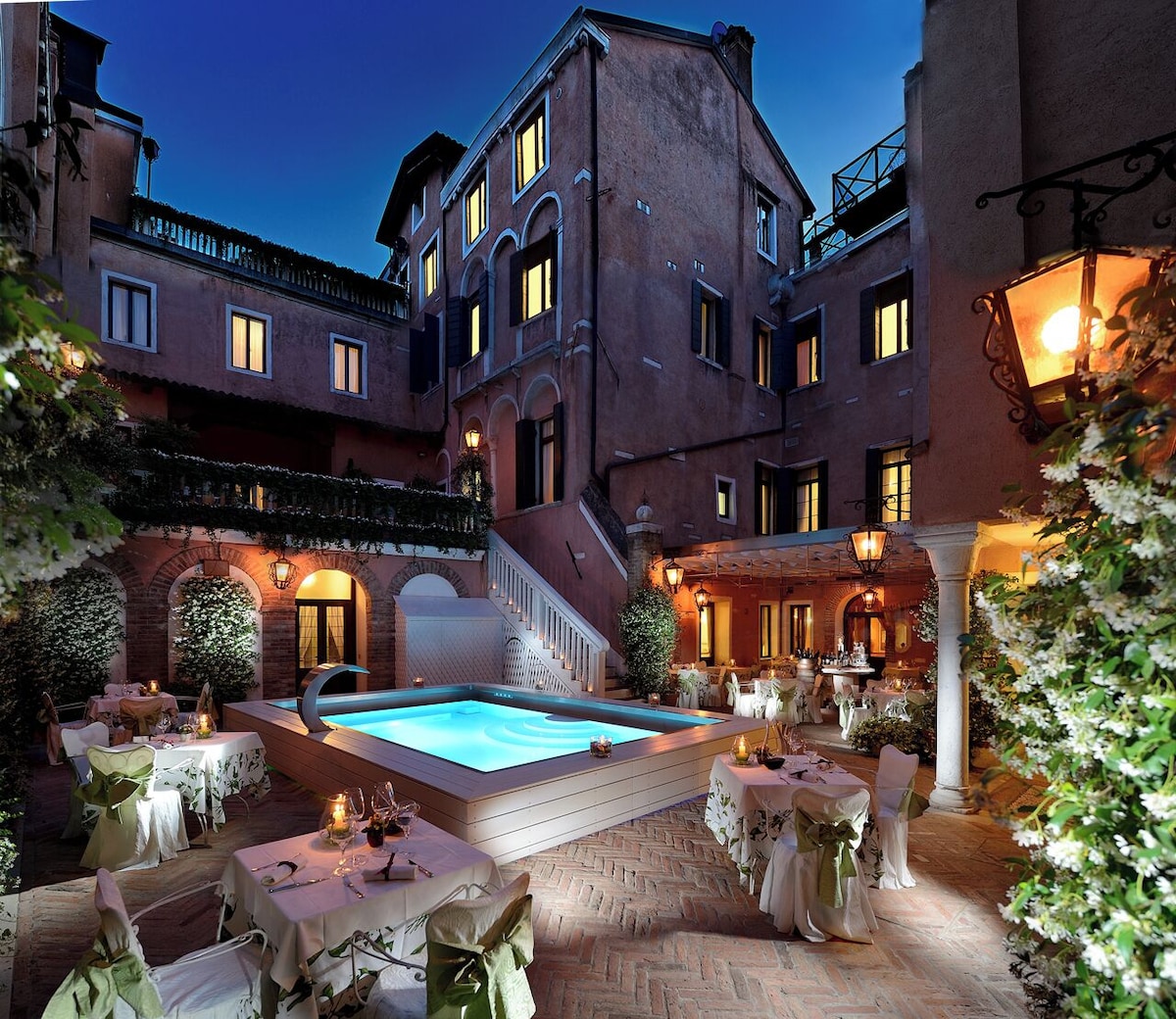
A characterful historic hotel on the San Marco side of Cannaregio, giving you easy access to the main sights without staying in the thick of it. The rare courtyard pool is a real bonus, and it strikes a surprisingly good balance between convenience and retreat.
***
3. Palazzetto Madonna (San Polo)
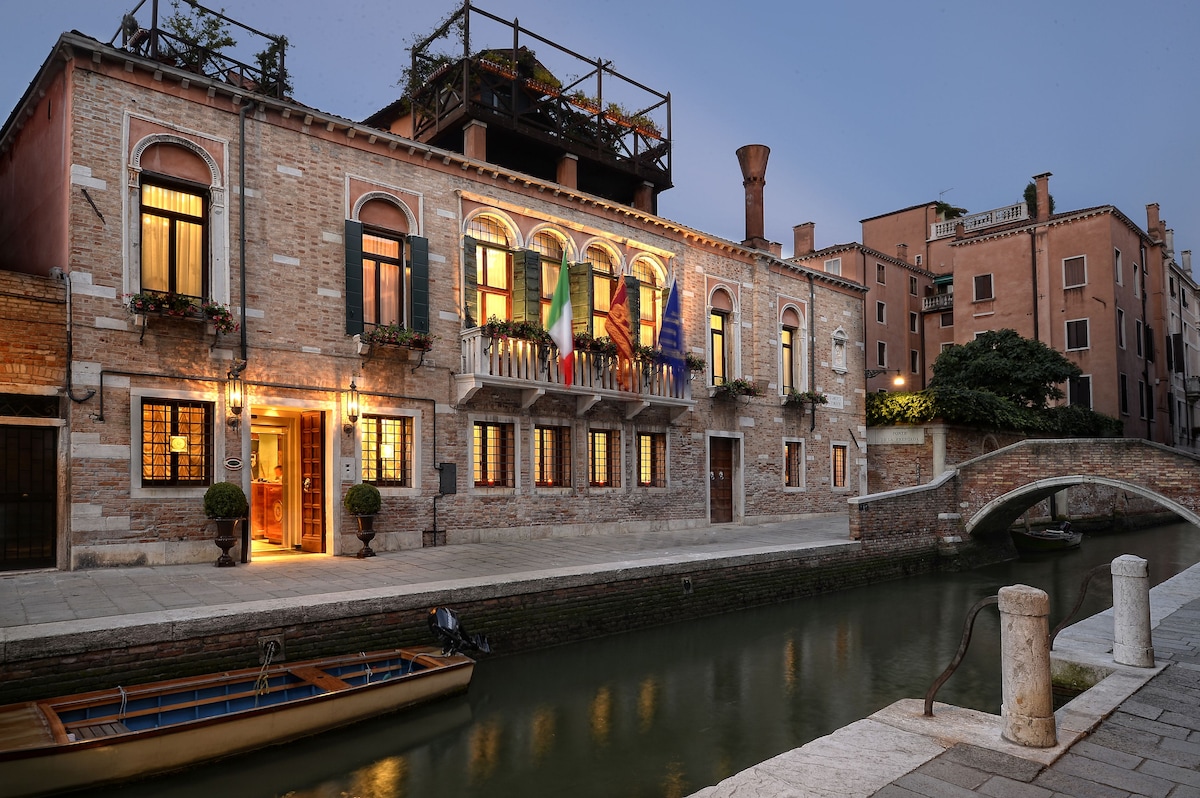
A beautiful little find in San Polo. Set near the Grand Canal and a traghetto crossing, it’s ideal if you want to stay somewhere atmospheric and local-feeling, but still well placed for exploring the rest of the city. Classic Venetian interiors and a lovely, calm setting.
Where to Stay in Venice – Quick Neighbourhood Comparison
| Area | Best for | My take | Hotel pick |
| Dorsoduro | First-timers, art lovers, couples | Calm, cultured and very walkable – just stay near the Accademia Bridge to keep logistics easy. | Ca’ Pisani Hotel |
| Cannaregio | Repeat visitors, value seekers | Lived-in and atmospheric with great food, but further from sights unless you enjoy walking or ferries. | Hotel Giorgione |
| San Marco | Short stays, convenience | Works on the fringes only; staying near St Mark’s Square itself is overwhelming and misleading. | Novecento |
| San Polo | Couples, calm central stays | Quiet and characterful once you move away from Rialto, with excellent dining but fewer hotels. | Hotel Palazzetto Madonna |
| Santa Croce | Early trains, logistics-led trips | Uneven but misunderstood – works best near the San Polo border, far less so near transport hubs. | Hotel Olimpia |
| Castello | Quieter stays, summer visits | Highly transitional – feels like San Marco on its western edge, increasingly residential as you move east. | Hotel Ai Cavalieri di Venezia / Ruzzini Palace |

Things to Know Before Choosing Where to Stay in Venice


Choosing where to stay in Venice isn’t just about picking a “nice” hotel.
Over multiple trips, I’ve learned that micro-location matters far more here than in most cities – often more than the hotel itself. These are the things I always consider before booking, and the same lens I’ve used to curate the recommendations in this guide.
1. Distances in Venice are deceptive (bridges matter)
Venice looks compact on a map, but distances feel very different on foot – especially once you factor in bridges.
A hotel that appears close “as the crow flies” can add hundreds of extra metres if you’re forced to detour to the nearest crossing. Over the course of a day, that really adds up, particularly if you’re sightseeing-heavy or tired.
2. Rialto & Grand Canal crossing points change everything
Where you can cross the Grand Canal will shape your entire experience. Being near the Rialto Bridge, Accademia Bridge, or a traghetto crossing can drastically reduce walking time and make certain areas feel far more accessible.
I always prioritise accommodation near these crossing points – it’s one of the biggest quality-of-life upgrades you can make in Venice.
3. Luggage, vaporetti & arrival fatigue
Arrival day in Venice can be surprisingly tiring.
If you’re hauling luggage over bridges, navigating vaporetti, or arriving late, hotel location suddenly matters a lot more than aesthetics.
Staying somewhere that reduces your reliance on boats – or at least simplifies the journey in – can make a huge difference to how your trip starts.
4. Dining availability varies hugely by sestiere
Not every part of Venice is equally easy to eat well in. Some areas make spontaneous dinners a pleasure; others require planning or travelling elsewhere.
I factor this in heavily, especially if I don’t want to cross the city again at night. Many of my accommodation picks are in areas where you can genuinely eat well close to home.
5. Staying near the train station: pros & cons
Being near the train station (Santa Croce) can be incredibly practical – especially for early departures, late arrivals, or heavy luggage. But it’s also the least charming part of Venice.
A Cultured Voyages Guide
Seven shifts that take you from sightseeing to actually understanding a place – the same ones I use on every trip I plan.
It can work very well for short or logistics-led stays, but it’s not where I’d choose if atmosphere and romance were top priorities.
How I’ve approached this guide
With all of that in mind, I’ve broken Venice down by sestiere, sharing my honest take on what each area feels like to stay in – not just visit – and then highlighting a small number of carefully chosen hotels in each.
This way, you can start with the neighbourhood that best suits how you want to experience Venice, and then choose accommodation that actually supports that experience.
The Best Areas to Stay in Venice: Sestiere Breakdowns
1. Dorsoduro

Quick summary – should you stay in Dorsoduro?
If someone asked me off the cuff whether they should stay in Dorsoduro, I’d say yes – absolutely – with one important caveat: where you stay within the neighbourhood really matters.
I think Dorsoduro is one of the nicest areas to base yourself in Venice, particularly if it’s your first visit and you don’t want your entire impression of the city to be shaped by the crowds and commercial feel of San Marco.
You get a great balance here between accessibility and atmosphere, but I would always recommend staying as close as possible to the Accademia Bridge.
Best for:
First-time visitors, couples, art and museum lovers, travellers who enjoy exploring on foot
Avoid if:
You want to be right in the thick of Venice’s most iconic sights, or you’re expecting glamour, designer shopping, and constant buzz outside your door
Pros & cons of staying in Dorsoduro
| Pros | Cons |
| Easy access to San Marco on foot via Accademia Bridge | Location within Dorsoduro makes a big difference |
| Calmer, more local feel than San Marco | Further ends can feel cut off |
| Excellent cluster of galleries and museums | Can add walking time if you’re not near Accademia |
| Good dining with genuinely local places | Not a glitzy or shopping-focused area |
| Pleasant, quieter evenings | Vaporetto reliance increases the further west you stay |
Who Dorsoduro suits best
I think Dorsoduro is a really strong choice for first-timers, especially if you want to ease yourself into Venice rather than being dropped straight into its most hectic areas.
If you stay in San Marco, you do tend to spend a lot of time nearby – and for a first visit, that can give a very commercial, almost theme-park version of the city.
Dorsoduro gives you a different starting point. It still feels unmistakably Venetian, but with more breathing room.
I’d also happily recommend it for:
- Couples, particularly if you like quieter evenings and good food
- Art lovers, thanks to how much is concentrated here
- Short stays of 2–3 nights, if you’re happy to walk a little more
If you enjoy exploring cities on foot – which, honestly, is half the joy of Venice – Dorsoduro works very well, even for a shorter stay.


Who it’s not ideal for
You may not love staying in Dorsoduro if:
- You want to step straight out into Venice’s most iconic sights
- Being close to luxury shopping or grand hotels matters to you
- You’re staying far from the Accademia Bridge and don’t want to rely on boats
It’s also not the best fit if being close to the train station is important – Santa Croce makes more sense in that case.
What it’s like to stay in Dorsoduro
On a map, Dorsoduro can look like it’s slightly removed from the action, but in reality it isn’t – as long as you’re near the Accademia Bridge. From there, you can be over in San Marco in minutes on foot.
What I really noticed spending time here is how different the atmosphere feels once you move away from the edges of the neighbourhood.
Areas around the Accademia Gallery, the Peggy Guggenheim, and Santa Maria della Salute can feel busy, but those spots sit right on the Grand Canal and are very much on the fringes.
Once you head inward, Dorsoduro becomes noticeably quieter – especially in the evenings.
One thing that really struck me on my last visit was watching the footfall over the Accademia Bridge later in the day, as people clearly heading home filtered back into Dorsoduro. It felt residential in a way that much of Venice doesn’t.
At night, the streets can seem almost empty at first glance, particularly in colder months, but open the doors of bars and restaurants and you’ll find them lively and full.
There’s a strong student presence here thanks to the university, which gives the area a very everyday, lived-in rhythm.
For context, I’ve stayed just on the San Marco side of the Accademia Bridge rather than in Dorsoduro itself – close enough that the difference was very clear – and it’s exactly why I’d choose this side of the canal next time.


Getting around from Dorsoduro
Logistics are the main thing to understand here.
If you stay near the Accademia Bridge, getting around on foot is very easy. San Marco is close, and many of Venice’s major galleries are either in Dorsoduro or just across the canal.
Where things get trickier is if you stay:
- Further south towards Santa Maria della Salute, or
- Further west towards Santa Croce and San Polo
At that point, you’re increasing your walking distances quite a bit – sometimes by several hundred metres – or relying more on vaporetti. If you’re hopping on boats multiple times a day, it can become slower and more expensive than you expect once you factor in waiting times.
That’s why I always prioritise accommodation around the Accademia Bridge when recommending places to stay in Dorsoduro.
Nearby sights & easy walks from Dorsoduro
One of the reasons I like Dorsoduro so much is how much you can reach on foot.
- Accademia Gallery – on your doorstep
- Peggy Guggenheim Collection – an easy walk
- Punta della Dogana – very close
- Santa Maria della Salute – right at the edge of the sestiere
- San Marco – quick walk via Accademia Bridge
- San Polo & Santa Croce – easily explored without crossing the Grand Canal
Dining & evenings in Dorsoduro
Dorsoduro has one of my favourite dining scenes in Venice – relaxed, local, and easy to enjoy without much planning.
It’s an area that works well for spontaneous dinners, and far less dominated by tourist menus than San Marco. A few favourites of mine here include Bar Alla Toletta for a quick sandwich, Cantina del Vino Già Schiavi for cicchetti, Enoteca Ai Artisti for something more refined, La Bitta for a very local, meat-focused meal, and Caffè Rosso in Campo Santa Margherita for sitting outside and soaking up everyday neighbourhood life.
Best Places to Stay in Dorsoduro
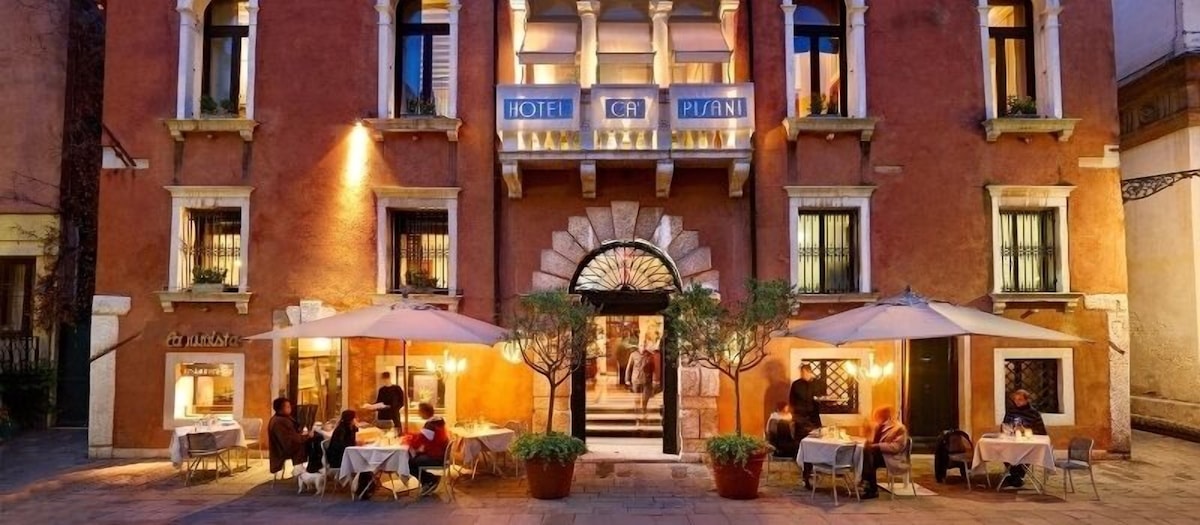
Ca’ Pisani Hotel
This is my top pick in Dorsoduro, largely because of its location just behind the Accademia Gallery. You’re only moments from the bridge, making it easy to get around Venice on foot. It’s a design-led hotel with Art Deco interiors, comfortable rooms, excellent reviews, and a rooftop terrace.

Suite 735
Suite 735 is my more budget-friendly pick in Dorsoduro, without feeling like a downgrade. It’s a small, modern boutique hotel with plush, comfortable rooms and a strong design focus. There’s no restaurant, but breakfast is served on site, and the location near the Accademia Bridge and Peggy Guggenheim is excellent.
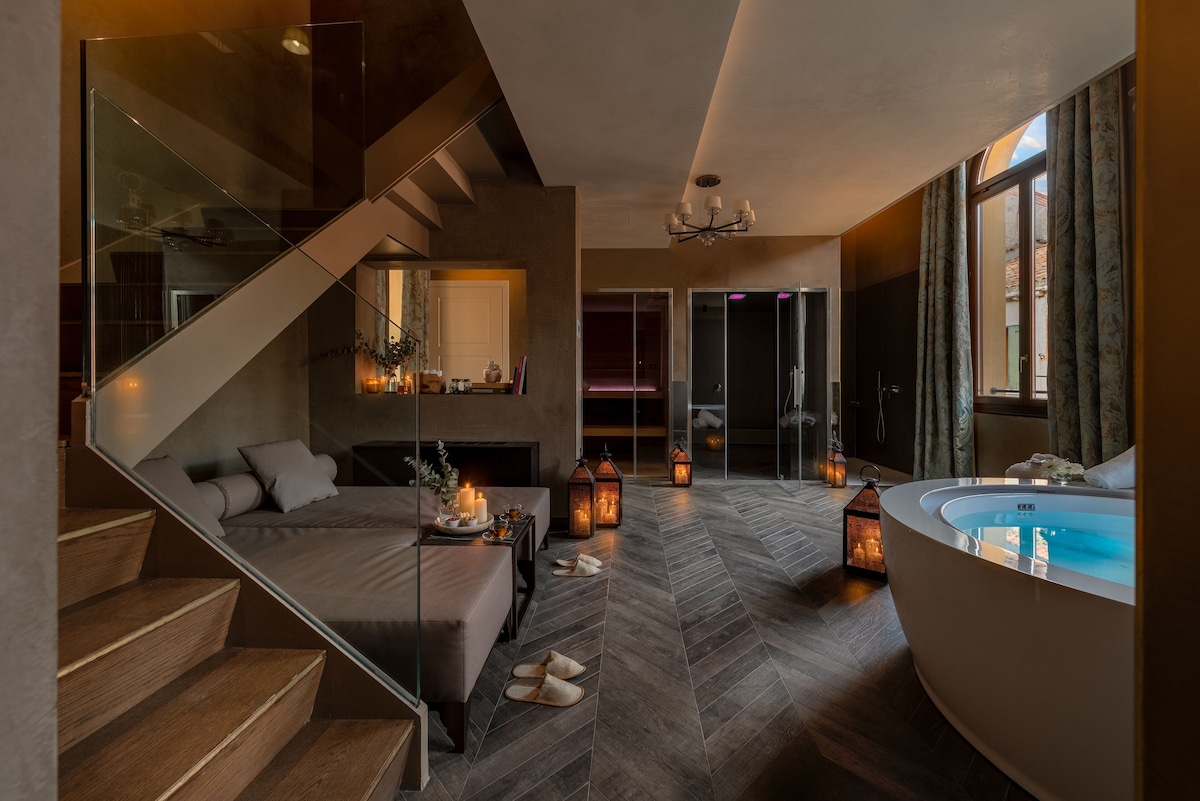
Palazzo Veneziano – Venice Collection
Palazzo Veneziano is a popular and dependable four-star option in Dorsoduro. It’s about a 10-minute walk from the Accademia Bridge and well located for exploring San Polo and Santa Croce. Rooms are comfortable and well finished, with some offering canal views or spa baths.
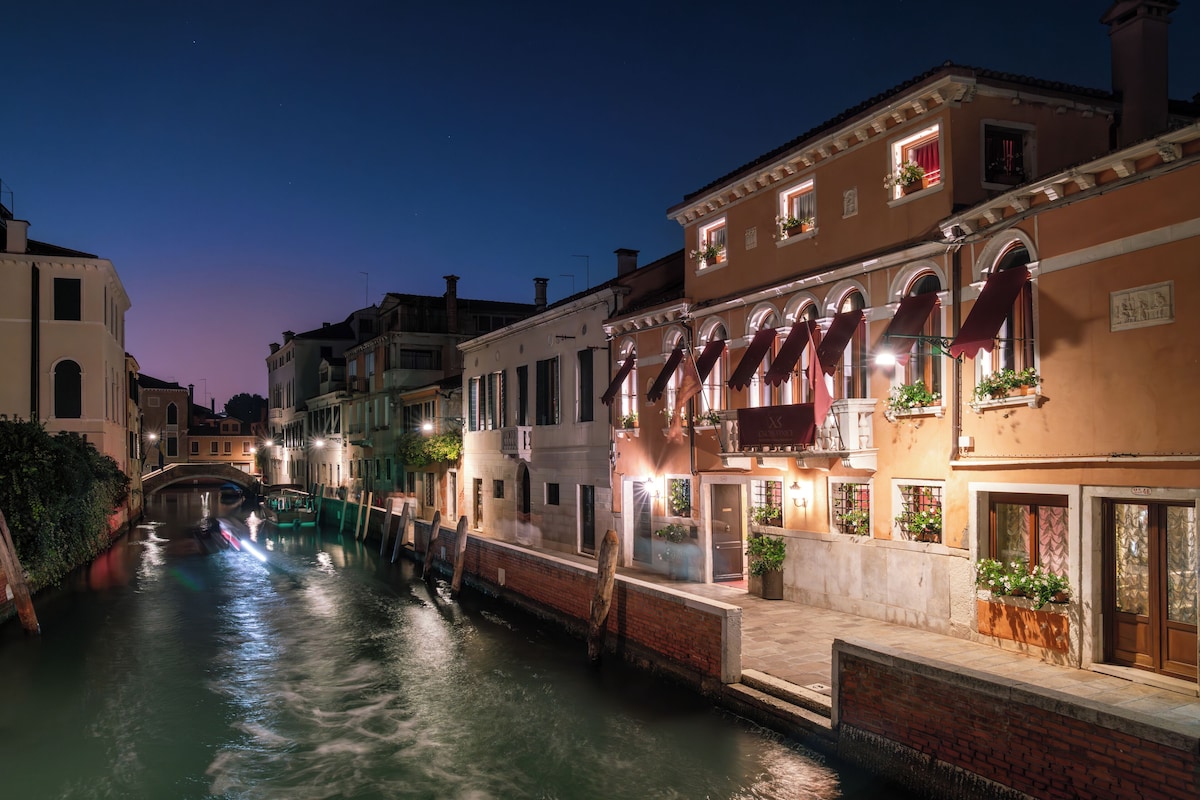
Excess Venice Boutique Hotel & Private Spa
Excess Venice is Dorsoduro’s five-star option and a real indulgence. Set in a restored 15th-century building, it leans into Venice’s more theatrical side with bold, design-led interiors. The glorious garden and quieter canal setting make it a lovely place to retreat to after a day of sightseeing.
2. Cannaregio

Quick summary – should you stay in Cannaregio?
Cannaregio is a great choice if you’re looking for a quieter, more local-feeling part of Venice, and don’t mind being a little removed from the main tourist axis.
I think Cannaregio works particularly well if you’re happy to trade a bit of convenience for atmosphere. Accommodation can be better value here, evenings are lovely, and parts of the neighbourhood genuinely feel like everyday Venice rather than a stage set.
Best for:
Repeat visitors, more intrepid first-timers, couples, travellers who enjoy local neighbourhoods and slower evenings
Avoid if:
You want to be close to the major sights, prefer everything on your doorstep, or don’t want to think about routes, ferries, or walking distances
Pros & cons of staying in Cannaregio
| Pros | Cons |
| One of the most local-feeling areas of Venice | Not centrally located within the sestieri |
| Calmer, more residential atmosphere | Longer walking distances to some major sights |
| Lively, sociable evenings along the canals | Vaporetto use may be needed more often |
| Generally better value accommodation | Some areas near the station feel less charming |
| Excellent food and wine scene | Requires a bit more planning |


Who Cannaregio suits best
I think Cannaregio really shines for repeat visitors, especially if you’ve already experienced staying in or around San Marco and want to see a different side of the city. It feels more self-contained – almost like its own little microcosm within Venice – and I love that about it.
It also suits:
- More adventurous first-timers who are happy to stay put and soak up neighbourhood life
- Couples who enjoy relaxed evenings and wandering rather than ticking off sights
- Travellers on a slightly tighter budget, as accommodation can be better value here
If your idea of a good Venice trip involves mooching, sitting by canals with a drink, and letting the city unfold slowly, Cannaregio is a very good fit.
Who it’s not ideal for
Cannaregio probably isn’t the best choice if:
- You want to maximise time at Venice’s headline attractions
- You prefer to be in the middle of everything
- You like an “everything taken care of” style of travel
It’s also worth being honest: while Venice is compact, Cannaregio is the northernmost sestiere. If you plan to walk everywhere – especially to Dorsoduro, for example – you may find for some days it becomes a long old trek.

What it’s like to stay in Cannaregio
Cannaregio feels noticeably more local to me than most other parts of Venice.
I have very vivid memories here of warm, golden evening light falling across quiet campos, children playing football, people walking dogs, and groups lingering along the canals chatting with drinks in hand.
You’ll often see small personal boats moored along the water, which really adds to that lived-in feeling.
During the day, especially once you walk away from the San Marco end, it can feel quite calm.
At night, some streets empty out, but others come alive – particularly along the Rio della Misericordia and around Fondamenta di Ormesini, where there’s a really nice concentration of places to eat and drink outdoors.
Getting around from Cannaregio
Cannaregio is very walkable in itself, but it’s not centrally positioned. Where you stay within the neighbourhood makes a big difference.
- Stay closer to the San Marco / Rialto end, and you’ll find it much more convenient – but also busier
- Stay closer to the train station, and it’s practical but less charming
- The sweet spot, in my experience, is somewhere in the middle, where things feel quieter
Getting to other areas can mean longer walks, taking the vaporetto, or using a traghetto to cross the Grand Canal (such as at Santa Sofia). None of this is difficult, but it does require a bit more thought than staying somewhere more central.


Nearby sights & easy access from Cannaregio
Cannaregio is most convenient for exploring its own neighbourhood and the northern side of the city, but it’s still well connected.
- Jewish Ghetto – within Cannaregio itself
- Madonna dell’Orto & Campo dei Mori – easy walks
- Ca’ Pesaro International Gallery of Modern Art – reachable via ferry or Grand Canal crossing
- Rialto Market – accessible on foot or via traghetto
- San Polo & Santa Croce – easy to reach once you cross the Grand Canal
- San Marco – very doable, but expect a longer walk or vaporetto ride
Dining & evenings in Cannaregio
I think Cannaregio is very strong for food, particularly if you enjoy a more relaxed, local dining scene. It’s an area where it’s genuinely easy to eat well without feeling funnelled into tourist menus.
Some of my personal favourites here include Vino Vero, a brilliant natural wine bar; Al Timon, which I’ve had excellent steak at (it’s good for cicchetti too); Estro Pane e Vino, a great stop for sandwiches and wine right along the canal; and Osteria Giorgione da Massa, closer to the San Marco end, which I thought was superb and a really interesting Venetian–Japanese fusion.
Evenings here are sociable and low-key – lots of people sitting along the water, chatting, drifting between places – and it’s somewhere I’m always happy to come back to after a day of sightseeing.
Best places to stay in Cannaregio
As with Dorsoduro, I think location within the sestiere matters more than the name on the door, and I’d prioritise spots that balance walkability with that quieter, residential feel.
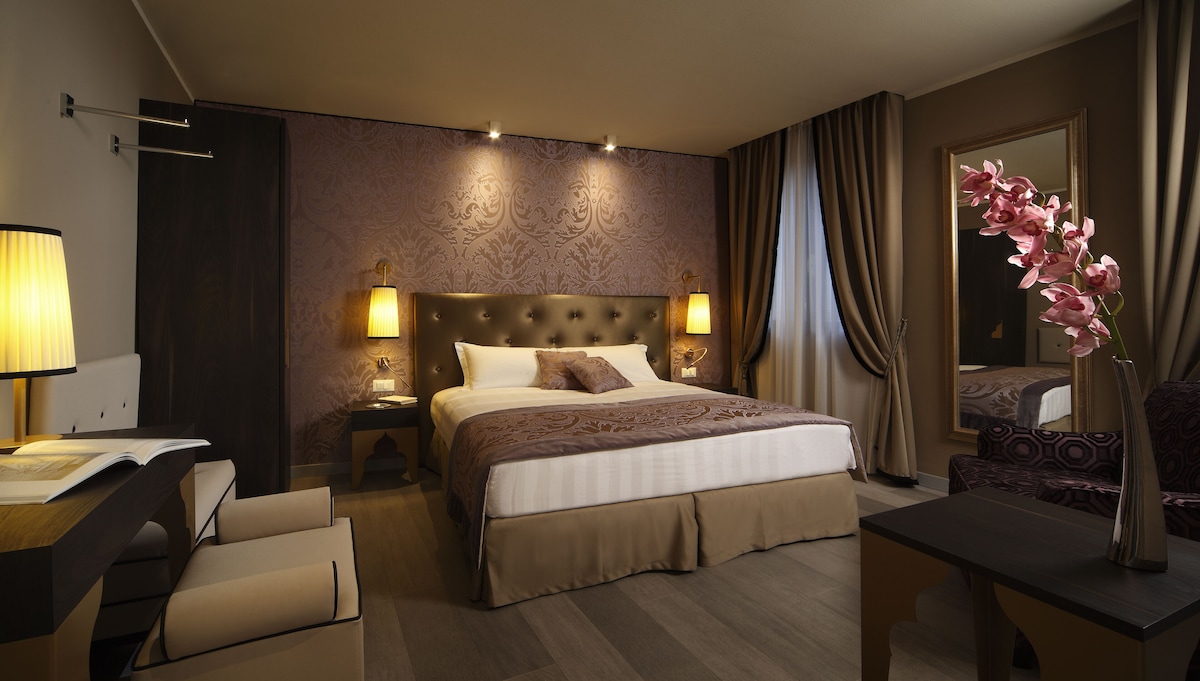
Arcadia Boutique Hotel
Arcadia Boutique Hotel is set in a beautiful 17th-century building and strikes a really nice balance between historic character and contemporary comfort. The interiors mix Venetian and oriental influences without feeling heavy or old-fashioned, and rooms feel plush and well finished. Its location near Ponte delle Guglie is very convenient for the train station, Rialto, and getting across to San Polo.
Hotel Giorgione
Hotel Giorgione is a charming four-star with a very traditional Venetian feel – antiques, rich fabrics, and a slightly old-school atmosphere, but in a good way. One of its real standouts is the lovely internal courtyard, which also has a rare swimming pool. It’s well located towards the San Marco end of Cannaregio, giving you easy access to the sights while staying just outside the chaos.
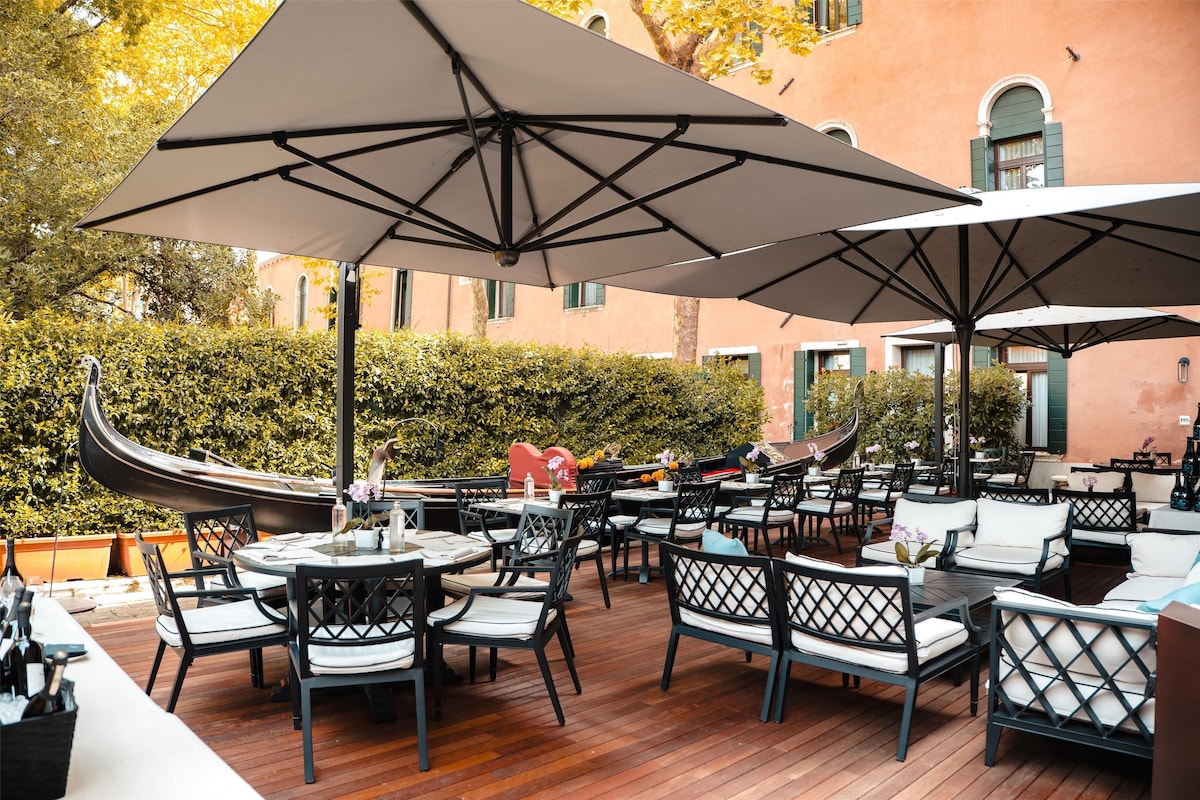
Radisson Collection Hotel, Palazzo Nani Venice
Palazzo Nani is a stunning historic palazzo where the architecture really does most of the talking – frescoed ceilings, grand proportions, and beautifully restrained interiors. It feels like modern luxury done respectfully within a Venetian setting. It’s well located for quieter parts of Cannaregio and the train station, though you may rely on water transport a little more.

Carnival Palace – Venice Collection
Carnival Palace is a newer hotel, but it makes up for the lack of historic setting with consistently excellent reviews and a peaceful canal-side location. Sitting at the northern end of Cannaregio, it’s quiet and feels removed from the crowds. Rooms are comfortable and modern with a slightly theatrical Venetian style, making it a great option if you don’t mind extra logistics in exchange for calm.
3. San Marco

Quick summary – should you stay in San Marco?
San Marco isn’t an immediate no for me – but it very much comes with conditions. I’d only consider staying here if you’re on the outer edges of the sestiere, ideally closer to the Grand Canal or near a bridge, and not anywhere immediately around St. Mark’s Square itself.
Done right, San Marco can be extremely convenient. Done wrong, it can give you a very distorted – and frankly exhausting – impression of Venice.
Best for:
Short stays, first-time visitors who prioritise convenience, travellers who want easy access to all sestieri
Avoid if:
You want a romantic or tranquil atmosphere, dislike crowds, or are hoping for a “hidden Venice” experience
Pros & cons of staying in San Marco
| Pros | Cons |
| Exceptionally central location | Extremely intense crowds around the square |
| Easy access to all other sestieri | Can feel overwhelming and frenetic |
| Plenty of vaporetto stops and crossings | High risk of overpriced, touristy dining |
| Convenient for short stays | Disneyfied atmosphere in core areas |
| Works well if chosen carefully | Poor choice if you stay too close to the square |
Who San Marco suits best
I think San Marco works best for first-time visitors on a short trip, particularly if you want to maximise sightseeing and minimise travel time. Being so central means you can dip in and out of different areas of the city without feeling like you’re constantly navigating long distances.
It can also make sense if:
- You’re only in Venice for 1–2 nights
- You like having lots of transport options nearby
- You’re happy to walk to other areas for dinner
That said, I’d only recommend it if you’re willing to be quite selective about where you stay.


Who it’s not ideal for
San Marco will likely disappoint anyone looking to be genuinely enchanted by Venice – especially if you stay too close to St. Mark’s Square without understanding what that really involves.
I wouldn’t recommend it if:
- You want calm, serendipitous wandering
- You’re sensitive to crowds or noise
- You want to feel immersed in local life
- You expect to eat well without doing homework
For luxury travellers in particular, I’d actually steer you away from San Marco. With a bigger budget, you can afford water taxis and slightly less central bases – and you’ll have a far more charming experience elsewhere.
What it’s like to stay in San Marco
San Marco is intense. Around the square especially, the crowds are relentless during the day, and it can feel like you’re constantly on high alert.
From stays in the vicinity I’ve noticed very clearly how pleasant it was early in the morning – and then how dramatically things shifted once day-trippers and cruise crowds arrived from around 9.30am onwards.
Certain parts of the area, particularly around St. Mark’s Square and the Rialto Bridge, feel very Disneyfied to me.
Rows of mass-produced souvenirs and constant foot traffic can make it seem as though Venice has lost its magic – which I honestly believe is why some people leave with a negative impression of the city.
The key thing, though, is that this isn’t the whole story.
As you move away from the square, San Marco becomes noticeably calmer. There are quieter pockets, especially closer to the Grand Canal and around places like where Museo Fortuny is located, where the atmosphere changes completely.
Getting around from San Marco
From a purely logistical point of view, San Marco is excellent.
If you’re near a bridge, it’s particularly easy to get around:
- Accademia Bridge gives you instant access to Dorsoduro
- Rialto Bridge connects you easily to San Polo
- Traghetto crossing at San Toma makes Grand Canal crossings straightforward
There are also plenty of vaporetto stops, which makes navigating the city relatively intuitive once you get your bearings. This centrality is San Marco’s biggest strength.

Nearby sights & easy access from San Marco
San Marco is, unsurprisingly, very convenient for Venice’s headline sights.
- St. Mark’s Basilica & Doge’s Palace – on your doorstep
- Secondary sights like Palazzo Grassi, La Fenice Opera House, Museo Fortuny and many more are located in San Marco
- Rialto Bridge – walkable depending on location
- Dorsoduro – Gallerie dell’Accademia and Peggy Guggenheim Collection very easy to access via Accademia Bridge
- San Polo & Santa Croce – easily reached on foot
- Castello – walkable from the eastern side
It’s one of the easiest areas for hopping between neighbourhoods.
Dining & evenings in San Marco
The food scene in San Marco requires more care than elsewhere. There are excellent restaurants here, but they’re fewer and farther between, and the risk of overpriced, tourist-leaning places is much higher.
I’ve had a genuinely wonderful meal at Osteria I Assassini, which proves that good food does exist in this area – but you do need to seek it out.
In general, I find it easier to eat well by walking or hopping over to Dorsoduro, San Polo, or Santa Croce in the evenings, which is exactly what I did when staying here.
Choosing the right part of San Marco
If there’s one thing I’d stress, it’s this: location within San Marco matters enormously.
I’d avoid staying:
- Right on or around St. Mark’s Square
- Within a few streets of the Rialto Bridge
Instead, I’d look for places:
- On the outer fringes of the sestiere
- Closer to the Grand Canal
- Near bridges or crossing points
That’s why, when I do recommend hotels in San Marco, they’re deliberately positioned to give you an escape route – and a different experience – from the most overwhelming parts of the area.
Best Places to Stay in San Marco
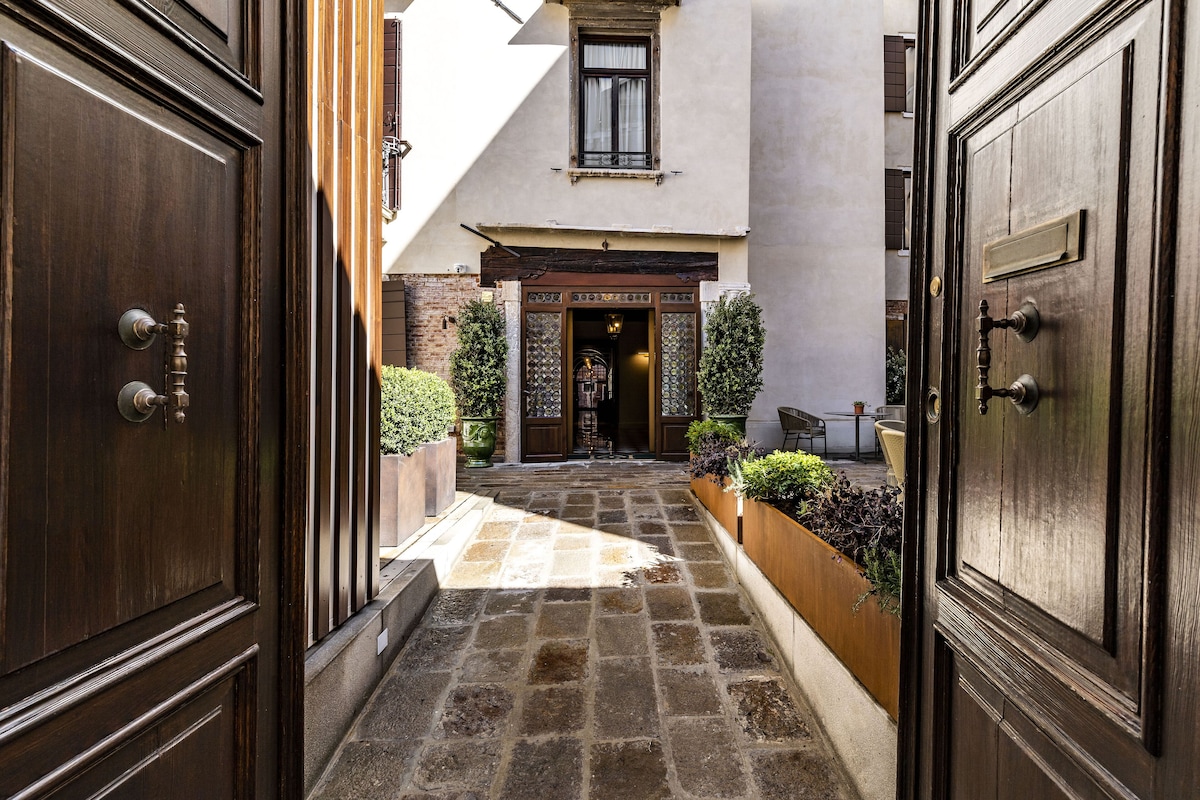
Novecento – By Romanelli Family
This is where I stayed, and it remains one of the loveliest hotel experiences I’ve had in Italy. Novecento feels like a little sanctuary – intimate, cosy, and full of character. The interiors nod to Venice’s maritime history, with exotic, oriental and Mediterranean influences that feel warm rather than themed. It’s family-run, beautifully looked after, provides a gorgeous breakfast spread, and is brilliantly located near the Accademia Bridge, on a quieter edge of San Marco.
Palazzo Keller
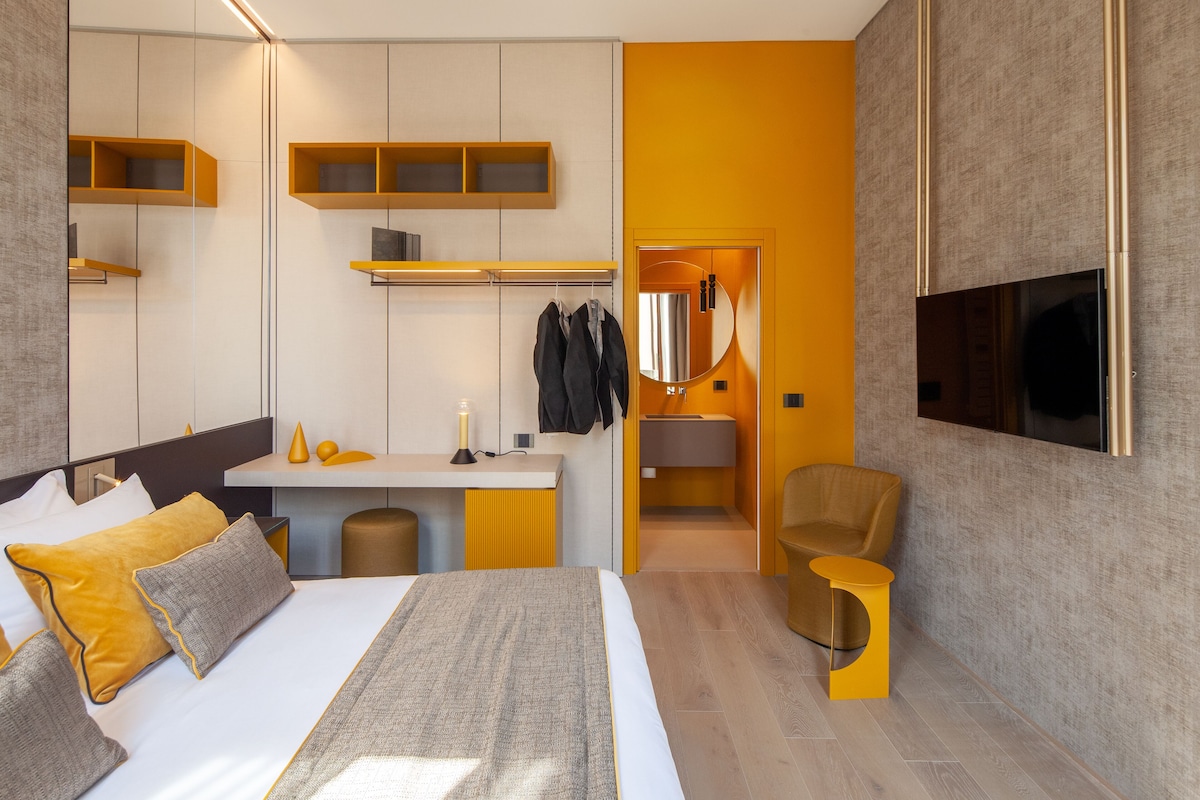
Palazzo Keller is a stylish, slightly swanky option with a real sense of polish. It’s set in a beautiful old palazzo but furnished in a contemporary, confident way, and the bar at the front is genuinely a nice place for cocktails. Service here is excellent, rooms range from sleek and modern to more plush and ornate, and the location is ideal – close to Accademia and the Sant’Angelo traghetto, but away from the worst of the crowds.
Palazzo Pianca
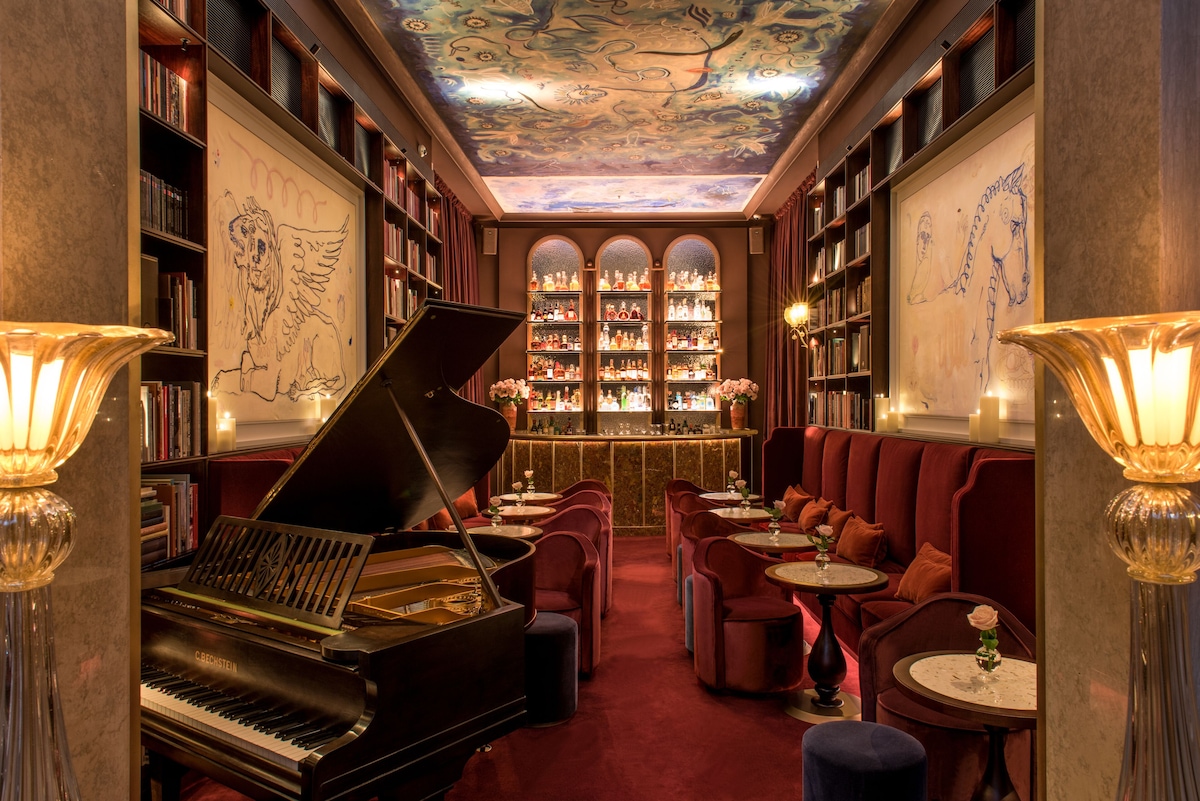
Palazzo Pianca is a very solid, understated choice in the La Fenice area, which feels like its own little pocket within San Marco. Interiors are modern, moody and grown-up, with darker tones and a cosy, contemporary feel. It’s not about grand extras or over-the-top luxury, but it’s comfortable, well-reviewed, and extremely well located for getting around Venice without being right on top of the square.
Nolinski Venezia – Evok Collection
This is my splurge pick in San Marco. Interiors are rich and elegant – think velvet, brass details, modern art, and thoughtful design touches throughout. There’s a rooftop pool and spa facilities, which is a real rarity in Venice. It’s close to St Mark’s Square, but just far enough removed to feel calm and considered.
B&B Bloom Settimo Cielo
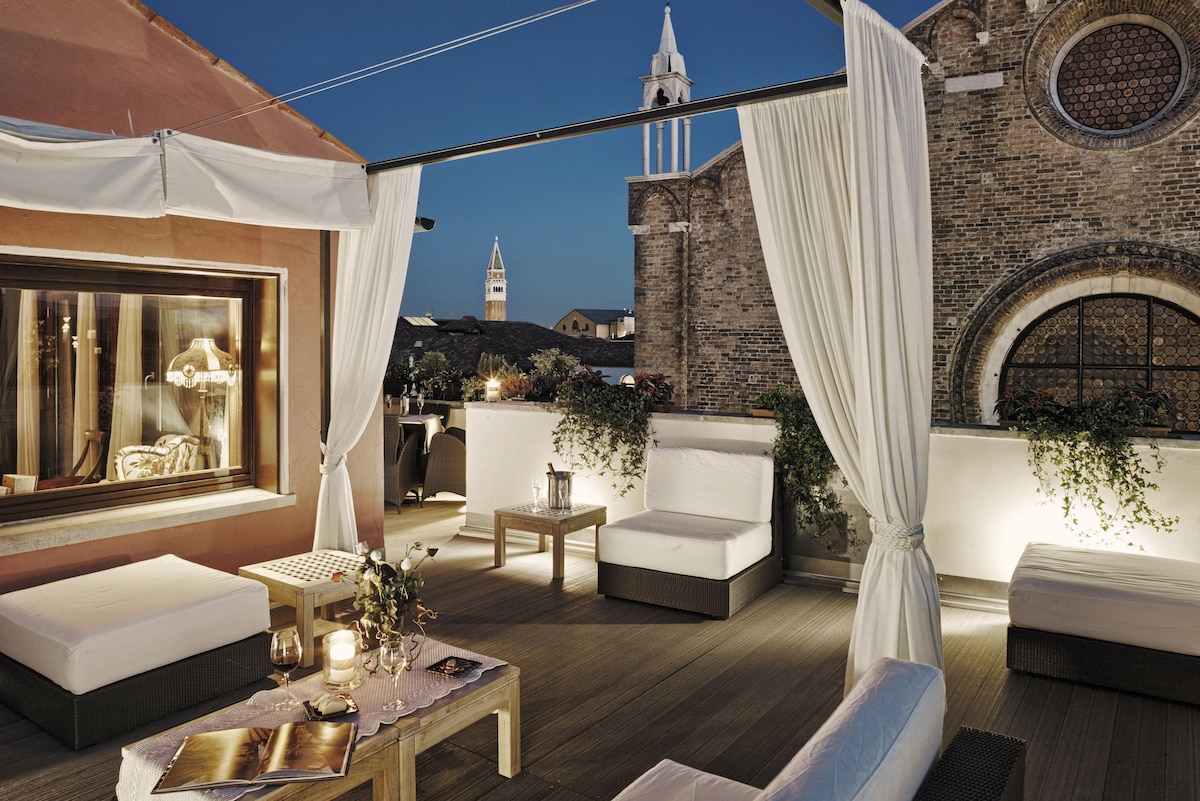
More boutique hideaway than traditional B&B, Bloom Settimo Cielo is plush, atmospheric and unmistakably Venetian, with tapestries, velvet, exposed beams and a real sense of drama. The standout is the rooftop terrace and lounge, which is a gorgeous place to watch the sun set over the city. It’s well located near Accademia and the Sant’Angelo traghetto, on a quieter stretch of San Marco.
4. San Polo

Quick summary – should you stay in San Polo?
If someone asked me whether they should stay in San Polo, I’d say yes if you’re looking for central access to Venice’s major sights and you find accommodation you genuinely like. There simply isn’t the same concentration of hotels here as in San Marco, so availability and fit matter more.
Personally, San Polo is an area I love to spend time in, and one I’m always happy to be based near. It’s surprisingly calm once you move away from the Rialto Bridge, and it offers a very gentle, lived-in side of Venice.
Best for:
Couples, independent travellers, first-timers who want something gentler than San Marco, travellers who enjoy quiet evenings
Avoid if:
You’re looking for glitz, shopping, or a wide choice of accommodation, or you’re not comfortable navigating crossings and walking distances
Pros & cons of staying in San Polo
| Pros | Cons |
| Very central location | Fewer accommodation options |
| Exceptionally quiet away from Rialto | Less choice than San Marco or Dorsoduro |
| Rich concentration of churches and art | Requires Grand Canal crossings |
| Excellent food scene | Not ideal for limited mobility |
| Easy walking access to multiple sestieri | No major shopping presence |


Who San Polo suits best
I think San Polo suits travellers who are happy to explore Venice at a slightly slower, more observant pace. It works particularly well for couples and independent travellers who value atmosphere over buzz, and who enjoy staying somewhere that feels quietly authentic rather than polished.
It’s also a good option for first-timers who want something more restrained than San Marco, provided you’re comfortable reading a map and figuring out how to cross the Grand Canal when needed.
Who it’s not ideal for
San Polo probably isn’t the right fit if:
- You want lots of hotel choice or big-name luxury properties
- You’re expecting nightlife, shopping, or glamour
- You’re not confident with walking, bridges, or using vaporetti or traghetti
Because you’ll often need to cross the Grand Canal to reach other areas, it may also be challenging if mobility is a concern.


What it’s like to stay in San Polo
San Polo can feel almost eerily quiet – in the best possible way.
I was here most recently in February, and there were moments where streets felt completely abandoned, with hardly anyone around. Considering that one edge of San Polo touches the very busy Rialto Bridge and market, that contrast is quite striking.
Once you move away from the market area, the neighbourhood becomes calm and under-frequented, with narrow streets, small canals, old bridges and a very weathered, lived-in feel.
Getting around from San Polo
I find San Polo very well connected, once you understand your crossing points.
You can:
- Walk across the Rialto Bridge into San Marco
- Use the Sant’Angelo traghetto to cross the Grand Canal
- Take the Santa Sofia traghetto to reach Cannaregio
- Walk through Santa Croce towards the train station
- Follow the curve of the Grand Canal in an anti-clockwise direction from San Polo, and you’ll end up in Cannaregio
It does require a bit of logistical thinking, but because San Polo is so central, distances rarely feel excessive once you’re oriented.


Nearby sights & easy access from San Polo
San Polo is an excellent base if you enjoy art, churches, and wandering.
- Rialto Market – on the edge of the sestiere
- Scuola Grande di San Rocco – extraordinary Tintoretto cycle
- Basilica di Santa Maria Gloriosa dei Frari – Titian works and historic tombs
- Ca’ Pesaro – International Gallery of Modern Art – easy to reach
- Scuola Grande di San Giovanni Evangelista – historic confraternity building
- Dorsoduro – easily walkable from the southern end
You could comfortably spend a full day sightseeing in San Polo alone.
Dining & evenings in San Polo
San Polo is one of my favourite areas in Venice for food. It has a wonderful mix of very traditional, lagoon-focused cooking and more contemporary interpretations.
Some standouts for me include Trattoria Antiche Carampane, which is classic, old-school Venetian and one of my favourite restaurants in the city; excellent cicchetti spots like All’Arco and Al Mercà near the market; and Cantina Do Mori, full of character and history.
Closer to the Dorsoduro end, Adriatico Mar offers a more modern take on a bacaro, alongside the excellent Ristorante Wistèria.
Evenings here are quiet, atmospheric, and very easy to enjoy locally.
San Polo vs San Marco (and Dorsoduro)
Compared to San Marco, San Polo feels worlds apart in terms of atmosphere, while still offering access to many of the same sights. You lose some immediacy, but gain calm.
Compared to Dorsoduro, San Polo feels more central and better positioned if you plan to sightsee extensively or arrive by train. Dorsoduro, however, offers a slightly wider range of accommodation.
For a 2-night stay, San Polo can work very well – especially if you’re comfortable navigating crossings and want to minimise travel time between major sights.
Best Places to Stay in San Polo
Hotel Palazzetto Madonna
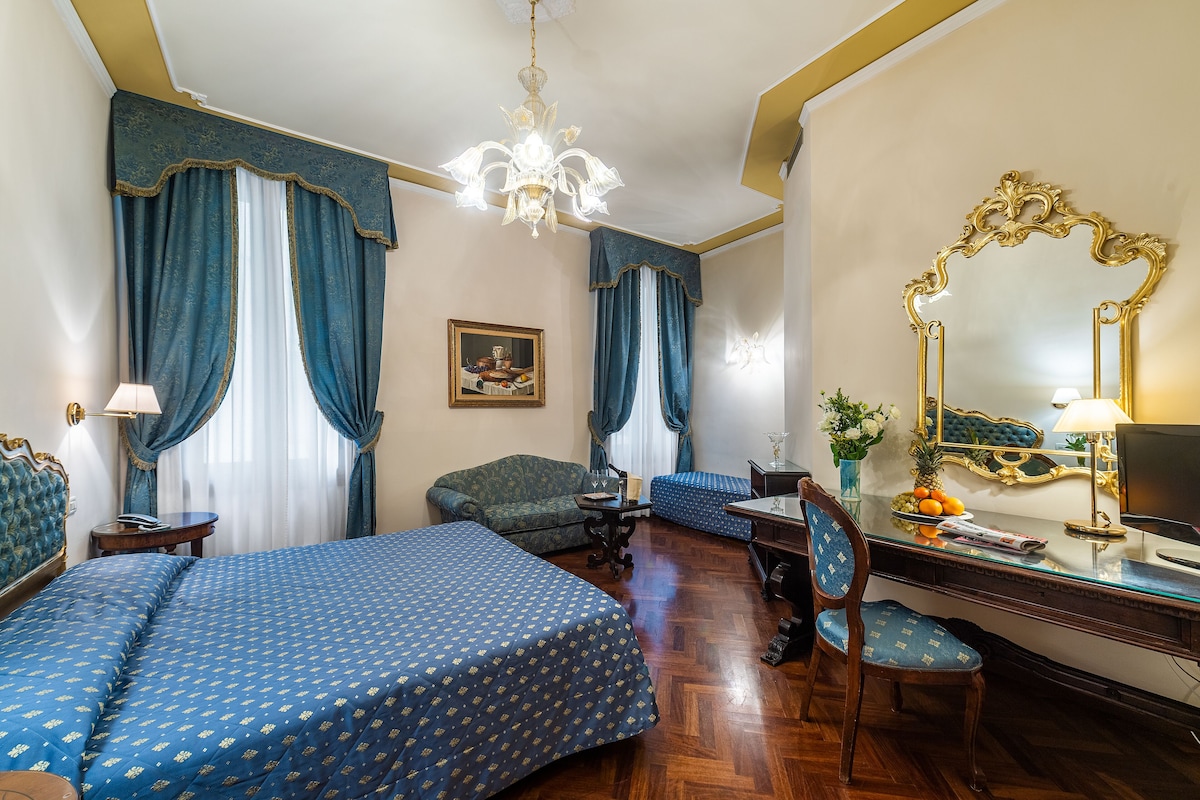
I really love the location of Palazzetto Madonna. It sits towards the Dorsoduro end of San Polo, right by the Sant’Angelo traghetto, which makes hopping across the Grand Canal incredibly easy. The setting is quiet and canal-side (it also has a courtyard garden), and interiors lean classic Venetian – plush, slightly moody, and very in keeping with the historic building.
Locanda Sant’Agostin
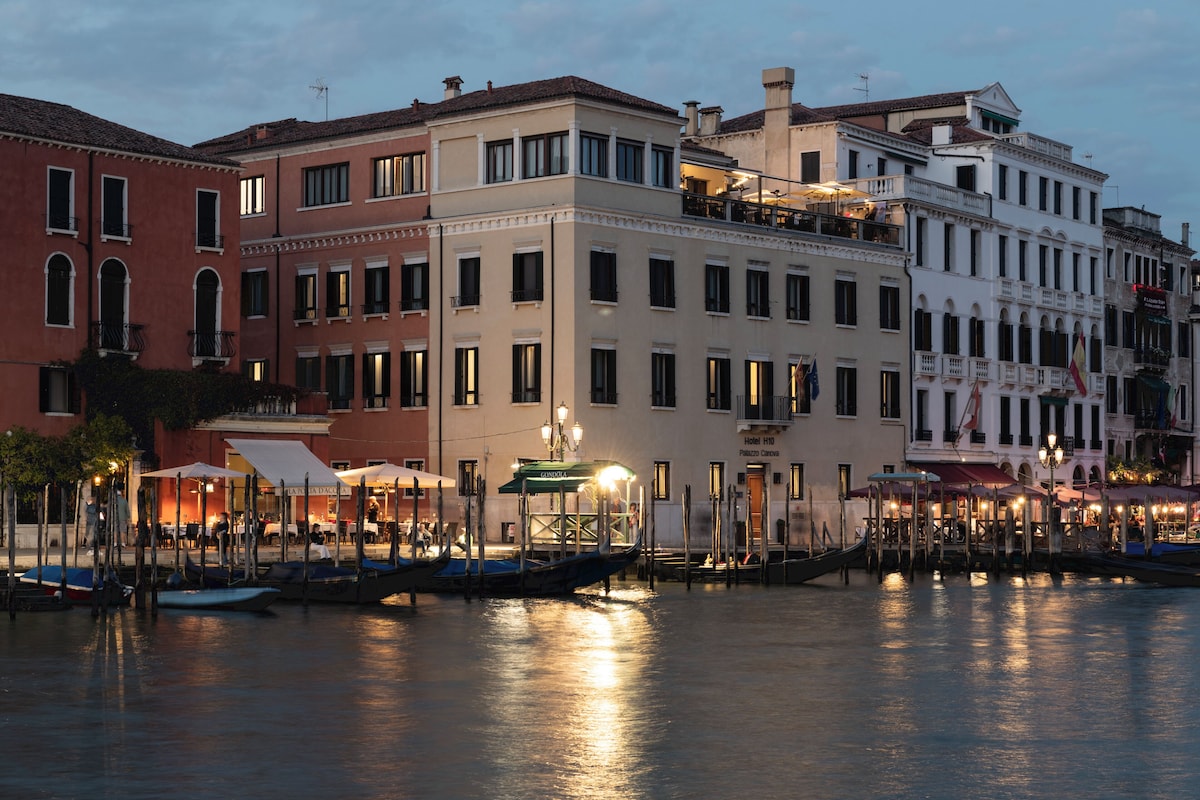
Locanda Sant’Agostin has a brilliant, central San Polo location, putting you within easy reach of the Rialto Bridge and multiple Grand Canal crossings. It’s set along a pretty canal by a small bridge, and the rooms feel classically Venetian without being overdone – think dark wood, rich colours, and a slightly old-school charm in a 16th-century building.
H10 Palazzo Canova
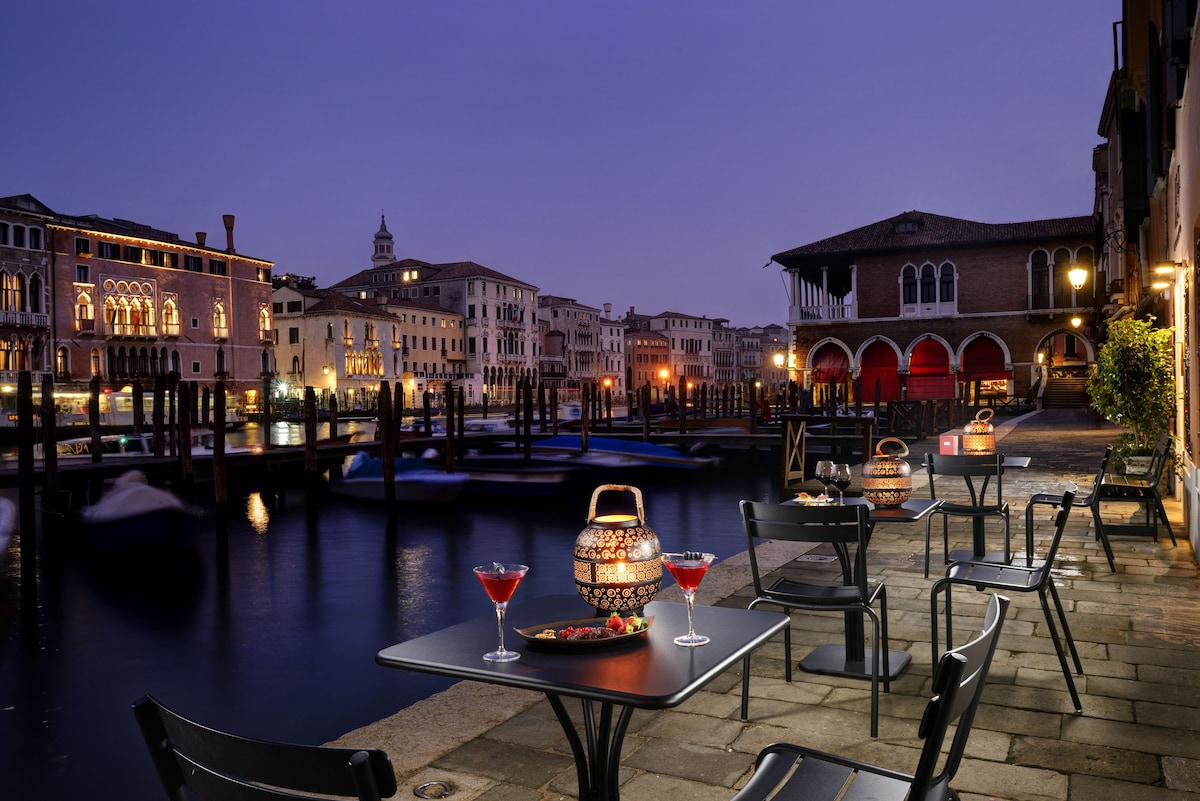
I don’t usually gravitate towards chains, but H10 Palazzo Canova is hard to ignore. It consistently gets excellent reviews and offers a very high level of comfort and service. The standout is its spectacular Grand Canal location near the Rialto Bridge. You get a polished, five-star location without paying true luxury prices.
Hotel L’Orologio Venezia
Hotel L’Orologio is a really lovely find just beyond the Rialto Market, near Ca’ Pesaro. It’s close to San Marco, San Polo, and Cannaregio, yet tucked along a quieter stretch of canal. It has a rooftop terrace, and some rooms overlook the Grand Canal, making it a great spot for soaking up the atmosphere. Stylish, comfortable, and very well located.
5. Santa Croce

Quick summary – should you stay in Santa Croce?
I’d recommend staying in Santa Croce selectively, rather than ruling it out entirely. It works best if you prioritise proximity to the train station or airport bus – for example, if you’re arriving late, leaving very early, or travelling with luggage and want to minimise friction – and you choose accommodation on the San Polo–facing side of the sestiere.
It’s still not my favourite area to stay in Venice, and parts of it are undeniably functional rather than beautiful. But I’ve realised over a few visits how I was initially a little unfair to Santa Croce as a whole – some of its eastern pockets are far more pleasant, local-feeling, and atmospheric than its reputation suggests.
Best for:
Early departures, late arrivals, short stays, travellers who value convenience but still want access to good food and nearby neighbourhoods
Avoid if:
You want classic Venetian beauty right outside your door, or you’re sensitive to busy transport-heavy environments
Pros & cons of staying in Santa Croce
| Pros | Cons |
| Closest sestiere to the train station | Uneven in character – location matters hugely |
| Easy access to airport buses (Piazzale Roma) | Parts feel functional and worn |
| Convenient for luggage and arrivals | Least charming stretch of the Grand Canal |
| Good vaporetto access along the Grand Canal | Can feel touristy near transport hubs |
| Easy access to San Polo and Dorsoduro | Can feel busy and touristy near transport hubs |
Who Santa Croce suits best
Santa Croce suits travellers for whom logistics matter more than romance, but who still want to stay within the historic centre rather than commuting in.
It can work particularly well if:
- you’re staying one night or have a tight schedule
- you want to avoid hauling luggage across multiple bridges
- you plan to spend most of your time in San Polo and Dorsoduro
- you’re happy to treat your accommodation as a base, not a destination
In those cases, Santa Croce can actually be very efficient and quietly comfortable.


Who it’s not ideal for
Santa Croce will likely disappoint travellers looking for:
- postcard-perfect streets and canals at every turn
- a clearly defined neighbourhood atmosphere
- a base that feels special in its own right
The nicest-feeling parts of Santa Croce are also not where most hotels are clustered, which means you need to be more deliberate here than in other sestieri.
What it’s like to stay in Santa Croce
Santa Croce feels fragmented. Large sections run along the Grand Canal, and while that sounds appealing, much of this stretch sits beside the train station, ferry terminals, and Piazzale Roma -areas that feel busy, exposed, and more logistical than romantic.
However, once you move south -particularly towards San Polo – the character shifts noticeably. Streets become quieter, canals narrower, and the atmosphere more residential.
Several places I’d instinctively associated with San Polo, including Ca’Pesaro, Venice’s modern art gallery, are actually just inside Santa Croce’s boundary.
That contrast is what defines Santa Croce: it can feel harsh and functional in one direction, then unexpectedly local and understated just a few minutes’ walk away. Even spots close to the station, like the wonderful cicchetti spot Bacareto da Lele, show how misleading first impressions can be.
Getting around from Santa Croce
From a practical point of view, Santa Croce is very convenient.
- Train station is a short walk away
- Airport buses depart from Piazzale Roma
- Many hotels are close to the Grand Canal, giving easy vaporetto access
- San Polo and Dorsoduro are easily walkable
The area that’s most awkward to reach from here is actually San Marco, unless you’re happy to walk through San Polo, take a vaporetto, or use a traghetto crossing.


Nearby sights & easy access from Santa Croce
Santa Croce isn’t packed with headline sights, but it’s not entirely devoid of interest either. One of Venice’s most important art institutions, Ca’ Pesaro – the International Gallery of Modern Art, is located here, along with Palazzo Mocenigo, which focuses on Venetian history, costume, and perfume. These aren’t must-sees for everyone, but they do give Santa Croce more cultural weight than it’s often credited with.
Where Santa Croce really shines, though, is as a launch pad.
From here you have:
- Immediate access to San Polo – churches, Scuola Grande di San Rocco, and some of Venice’s best food
- Easy walking access to Dorsoduro – galleries, quieter streets, and evening dining
- Straightforward vaporetto connections to Cannaregio
- San Marco – reachable, but less immediate than from other central sestieri
You’re unlikely to spend whole days sightseeing within Santa Croce itself, but it places you extremely well for exploring the surrounding neighbourhoods without unnecessary friction.
Dining & evenings in Santa Croce
Santa Croce doesn’t have a huge dining scene, but there are a few solid options. Bacareto da Lele is a big favourite of mine for cheap wine and cicchetti, and La Zucca is well known for its vegetarian-focused menu in a pleasant canal-side setting.
Stappo offers a more modern wine-bar feel with a focus on quality ingredients.
In practice, though, Santa Croce works best as a base from which to eat elsewhere – San Polo, Dorsoduro, and Cannaregio are all close and offer far more choice.
Santa Croce vs other areas
Compared to San Polo, Santa Croce is more practical but less cohesive. Compared to Dorsoduro, it’s far easier for arrivals and departures, but lacks the same charm and cultural density.
If you’re only in Venice for one night, Santa Croce can make real sense. For longer stays, I’d still choose another sestiere first – but I don’t see Santa Croce as a blanket “no”, so long as you understand which part you’re choosing and why.
Best Places to Stay in Santa Croce
Hotel Olimpia Venice
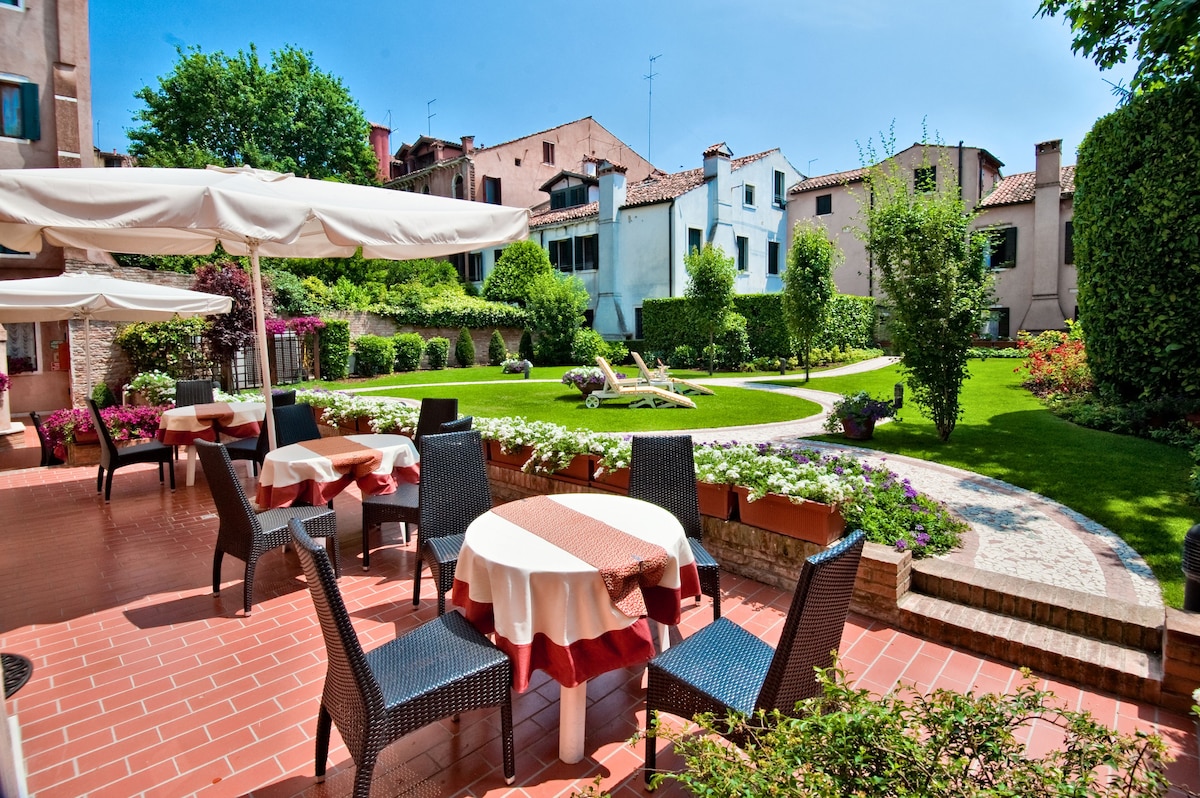
Hotel Olimpia is one of the more charming options in an area otherwise dominated by transport hubs. Set in a 16th-century building along a canal, it feels welcoming and surprisingly tranquil. Rooms lean classic Italian, slightly old-fashioned but comfortable, and the real highlight is the large internal garden – a rare and lovely retreat this close to the train station.
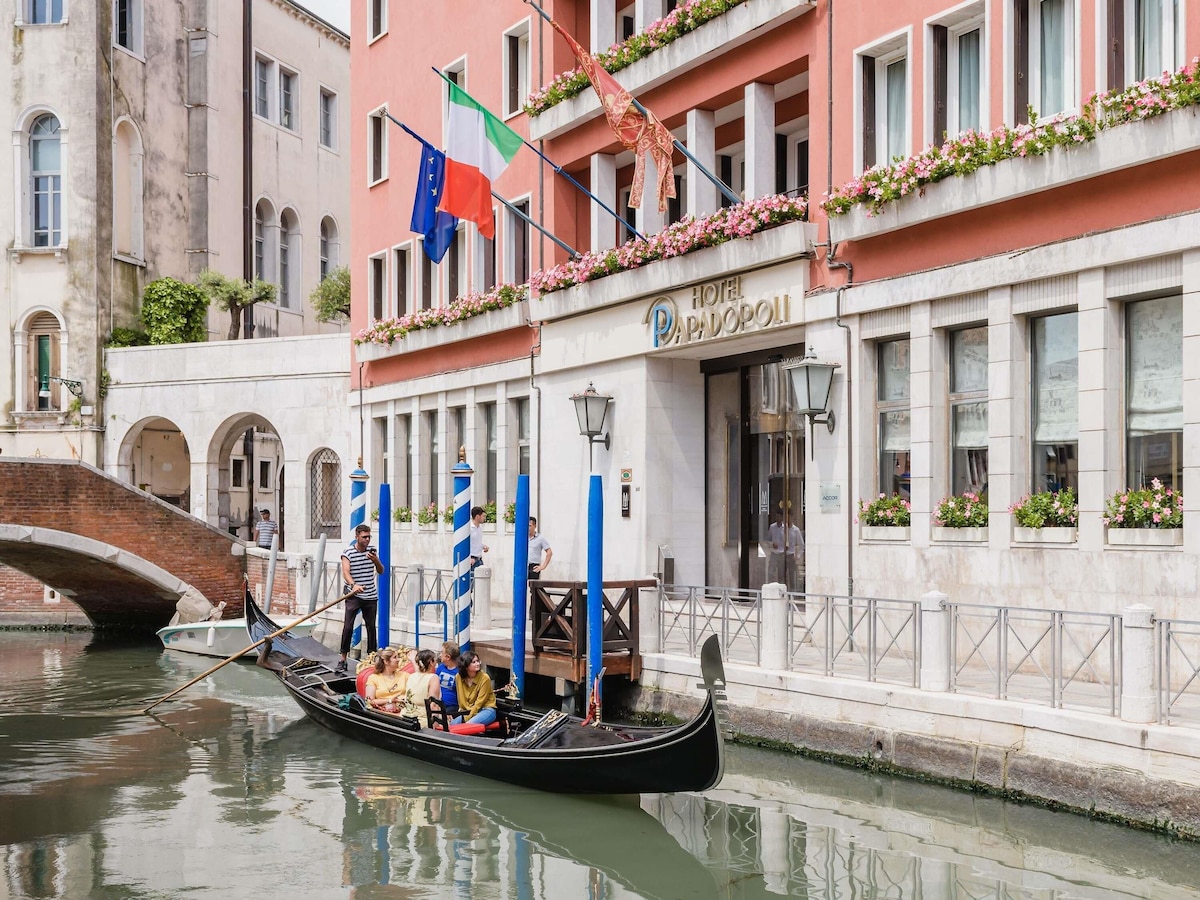
Papadopoli Hotel Venezia
Papadopoli Hotel is a strong choice if you want comfort without sacrificing convenience. Interiors are plush and classically Venetian, with ornate furnishings and some beautiful canal-view rooms. There’s even a rooftop jacuzzi suite. It’s ideal if you’re short on time, need to be near the station, but still want a polished, indulgent stay.
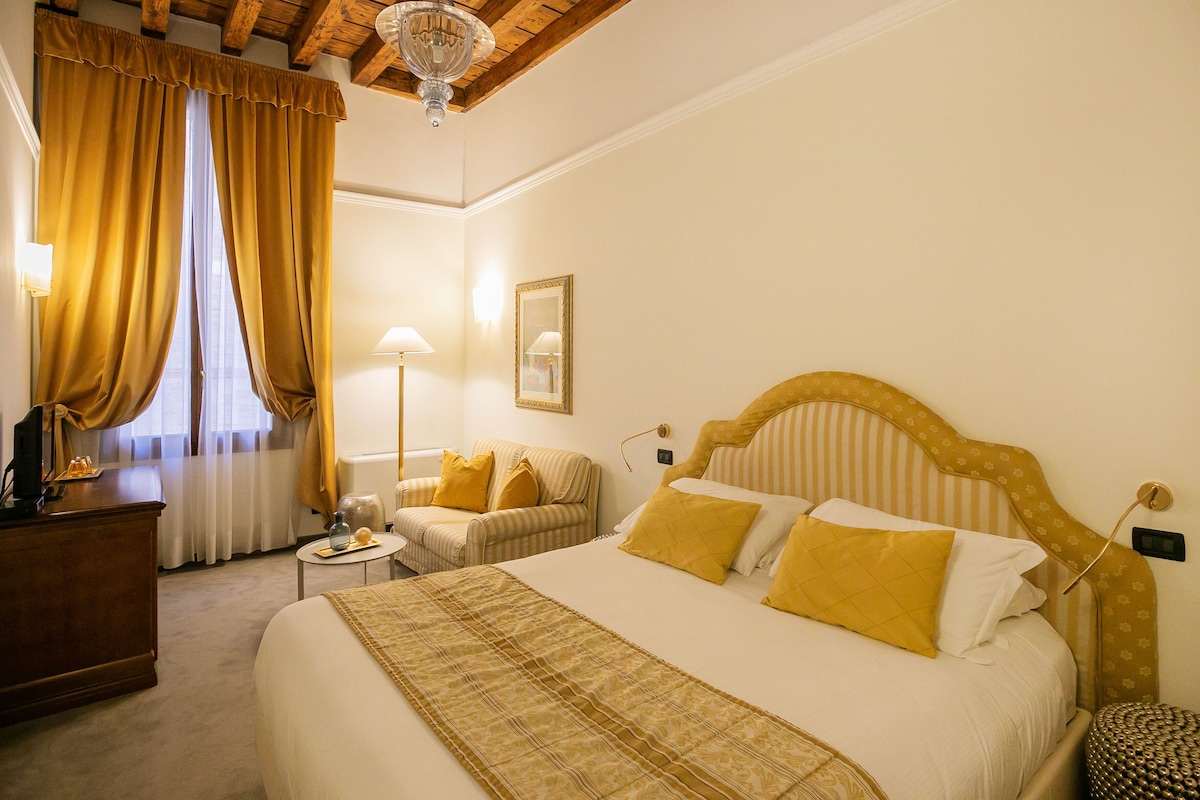
Ca’ San Giorgio B&B
Ca’ San Giorgio feels quietly removed despite being just a short walk from Santa Lucia station. Set just off the Grand Canal, it’s a historic, intimate property with antique furnishings, exposed beams, and a lovely sense of age. Some rooms have small balconies with partial canal views, and the central courtyard features a 14th-century well, which adds to the atmosphere.
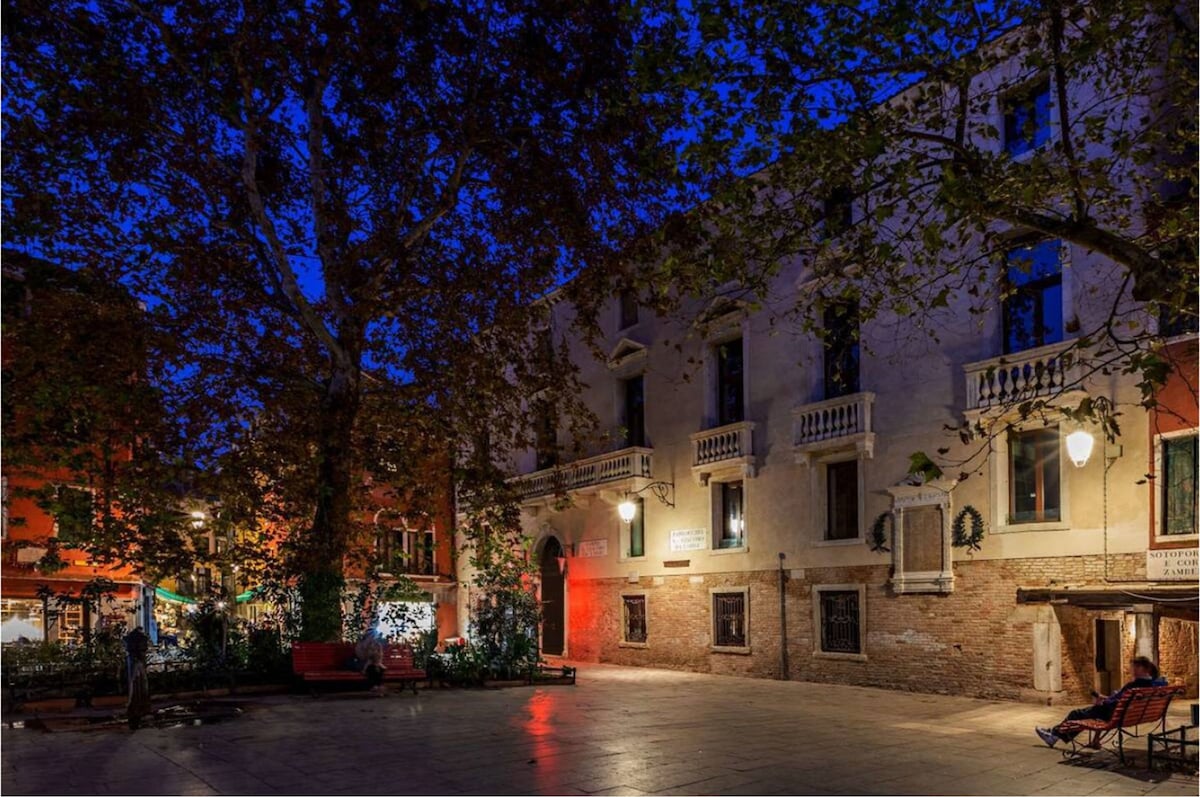
Hotel Aquarius Venice
Hotel Aquarius is a modern, design-led option that works well if you prefer contemporary comfort. Interiors subtly reference Venice’s lagoon setting through darker tones, terrazzo floors, rich materials, and Murano glass chandeliers. It’s smart, well finished, and consistently well reviewed. While it lacks historic charm, it’s a solid, comfortable base about 20 minutes from San Marco.
6. Castello

Quick summary – should you stay in Castello?
Whether or not I’d recommend staying in Castello again depends on where within the sestiere you base yourself, and how close you want to be to San Marco. Castello is large, and its character changes dramatically from one end to the other.
One thing that’s important to understand about Castello is how sharply it transitions. Its western edge quite literally backs onto the rear of St Mark’s Square, and in those first few streets, Castello can feel almost indistinguishable from San Marco – busy, tourist-heavy, and very central.
However, the further east you move, the more Castello becomes its own neighbourhood entirely.
Crowds thin quickly, canals grow quieter, and daily Venetian life becomes much more visible. This shift happens over a surprisingly short distance, which is why Castello can feel so different depending on exactly where you stay.
Best for:
Travellers who want a quieter, more residential Venice; summer visits; longer stays; those happy to walk or use vaporetti
Avoid if:
You want a central base with easy access to all sestieri, or plan to spend significant time in Dorsoduro
Pros & cons of staying in Castello
| Pros | Cons |
| Noticeably quieter than San Marco | Very large sestiere – location matters |
| Strong local, residential feel | Far from Dorsoduro and parts of San Polo |
| Easy access to San Marco (from western edge) | Can feel isolated in the far east |
| Good value accommodation in places | Longer walking distances overall |
| Excellent for summer stays | Less “plug-and-play” than central areas |


Who Castello suits best
Castello suits travellers who actively want to step away from the most touristed version of Venice. I stayed here during a peak summer visit, and honestly, it made the rest of the city feel far more tolerable. We were close enough to dip into San Marco when we wanted to, but could escape the crowds very quickly.
It works well for:
- Longer stays, where you don’t need to be everywhere at once
- Summer visits, when breathing room really matters
- Travellers who enjoy seeing everyday Venetian life rather than just sights
It’s not just for repeat visitors – it’s more about the kind of experience you want.
Who it’s not ideal for
Castello isn’t a great choice if:
- You want the easiest possible access to every sestiere
- You plan to spend a lot of time in Dorsoduro
- You don’t enjoy longer walks or navigating distances
If you’re staying deep into Castello and expecting a central, efficient base, you may find it frustrating rather than peaceful.


What it’s like to stay in Castello
Castello feels genuinely residential, especially once you move away from San Marco. The further east you walk, the more the tourist veneer falls away.
On morning walks here, I noticed laundry strung between windows, quiet canals, people walking dogs, and a pace of life that feels very different to the city’s busier quarters.
Evenings are generally calm. Some areas near the waterfront or around lively campos do pick up, but many streets become very quiet at night. It feels lived-in rather than curated – which I think is exactly its appeal.
Getting around from Castello
Getting around from Castello depends heavily on where you are.
- San Marco is very easy to reach from the western edge – in some places you’re practically backing onto it
- Cannaregio is straightforward, with a long but uncomplicated walk
- San Polo is accessible if you’re near the Rialto Bridge
- Dorsoduro is the least convenient, as you’ll need to cross most of San Marco to reach the Accademia Bridge
If you’re happy to use the vaporetto and take your time, Castello works well. If you want maximum efficiency on foot, less so.


Nearby sights & easy access from Castello
Castello is particularly strong for certain interests.
- San Zaccaria – one of my favourite churches in Venice, with its flooded crypt
- Palazzo Grimani – an underrated highlight
- Arsenale – for Venice’s maritime history
- Biennale Gardens – especially pleasant in warmer months
- St Mark’s Square, Basilica & Doge’s Palace – easily reached from the western side
- Cannaregio – accessible entirely on foot
You also have easy access to the eastern, less-visited side of Venice.
Dining & evenings in Castello
Castello is very good for local dining if you’re willing to explore a little. I’ve had excellent meals here, often at better prices than elsewhere.
Standouts include Pietra Rossa for local produce and natural wines, Corte Sconta for traditional Venetian cooking in a hidden, vine-covered courtyard, and Ai Nevodi, which is popular for good reason.
More broadly, Castello rewards curiosity – it’s one of the easier areas to stumble across genuinely local places.
Castello vs other areas
Compared to San Marco, Castello offers a far calmer, more authentic-feeling base – especially appealing in peak season.
Compared to Cannaregio, it feels less lively in the evenings but more directly connected to Venice’s historic core.
For a short stay, Castello works best if you’re on the western edge. For longer stays, even the quieter eastern reaches can be very rewarding.
Best Places to Stay in Castello
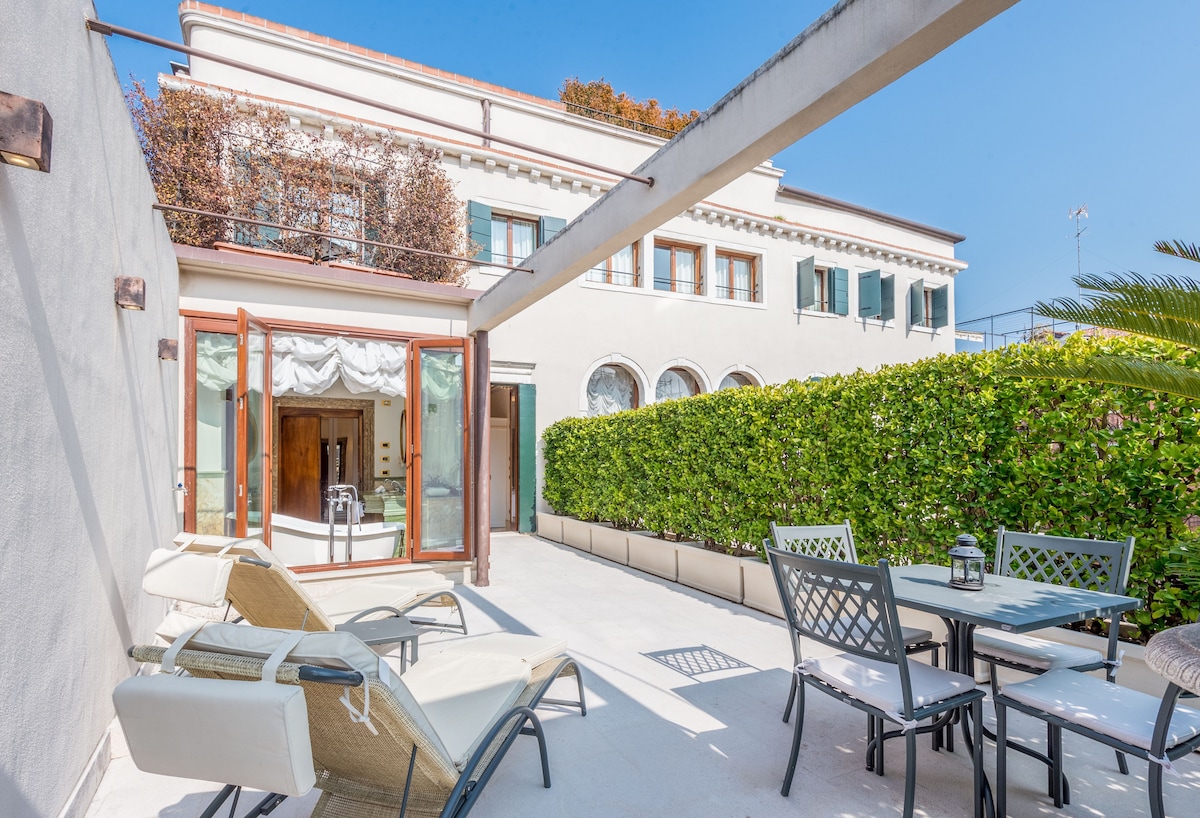
Hotel Ai Cavalieri di Venezia
Hotel Ai Cavalieri is a beautiful, upmarket choice on the Rialto side of Castello, just a short walk from the bridge and within easy reach of San Marco, San Polo, and Cannaregio. It’s a splurge, but a worthwhile one – think high ceilings, wood beams, frescoes, chandeliers, velvet finishes, and marble bathrooms. A classic, elegant Venetian stay.
Hotel Nuovo Teson
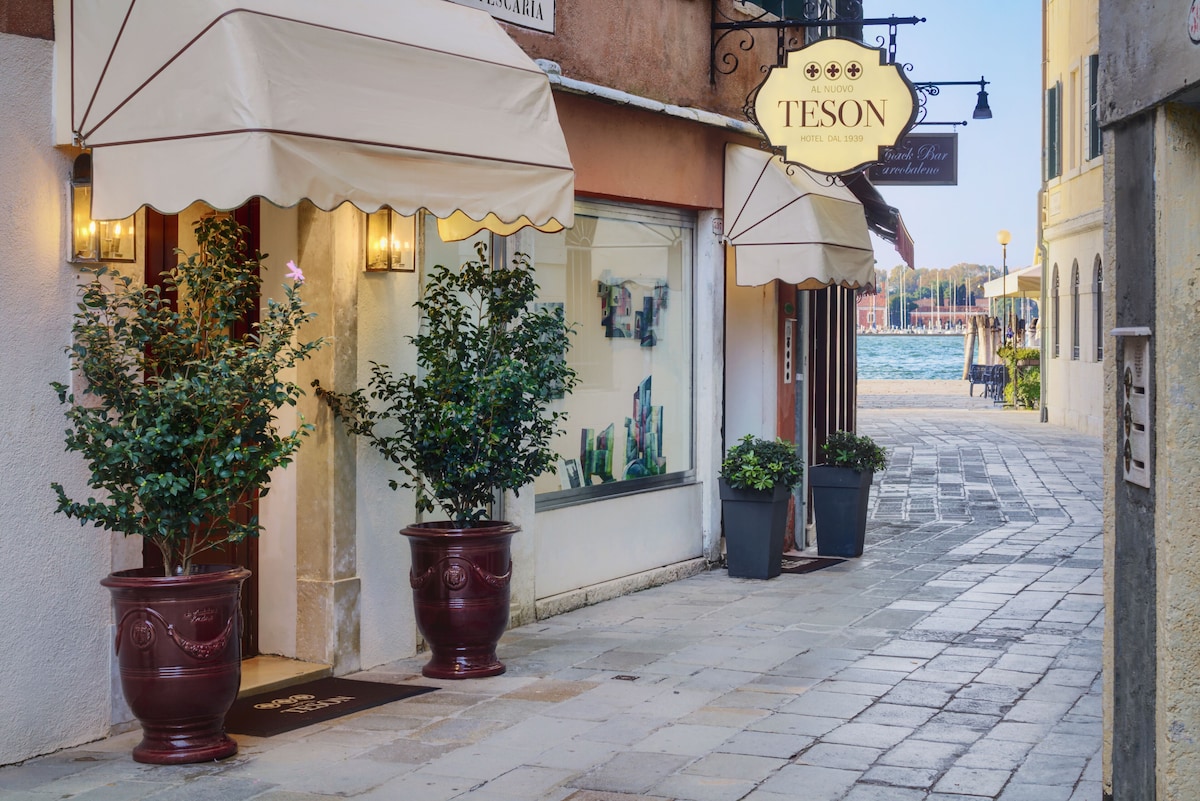
I’ve stayed at Hotel Nuovo Teson in summer and found it very good value for its location. It’s a comfortable, well-run three-star on the fringes of San Marco, far enough from the chaos but close enough to walk everywhere easily. Rooms are on the smaller side, but it’s a solid base for sightseeing, with a pleasant square and eateries nearby.
Ruzzini Palace Hotel
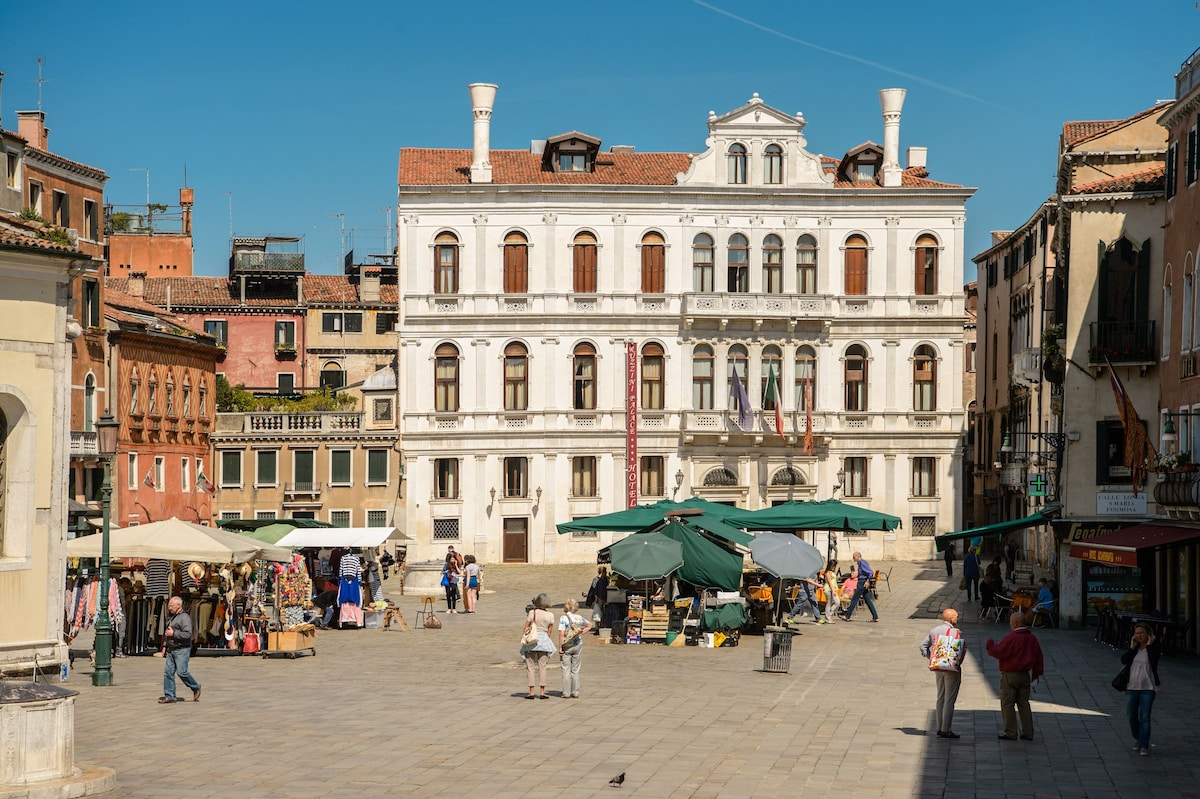
Ruzzini Palace sits on Campo Santa Maria Formosa, one of Venice’s oldest and largest squares, and you can even arrive by water taxi. Interiors are classically Venetian – ornate, polished, and exactly what you’d expect from a historic palazzo. Its location is excellent, right at the intersection of Castello, San Marco, and Cannaregio, but just removed from the worst of the crowds.
Hotel Palazzina Sardi
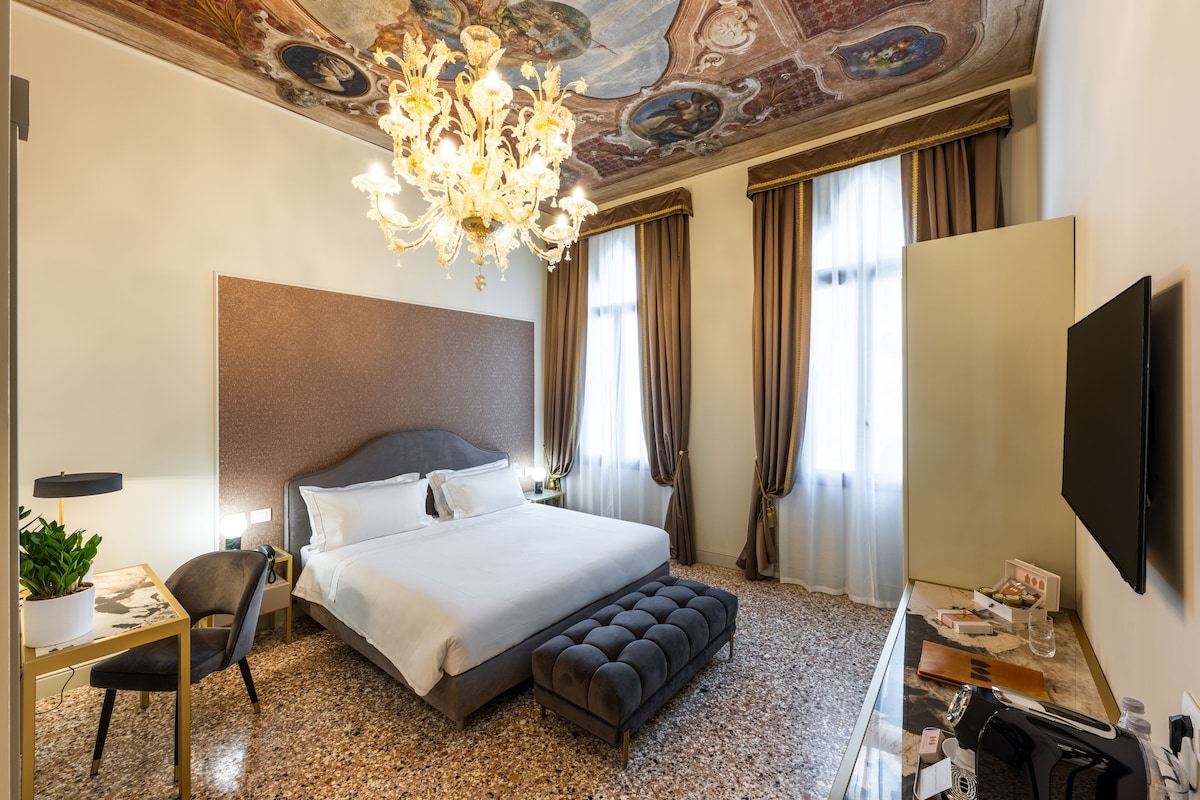
Hotel Palazzina Sardi is a very strong option right on the fringes of San Marco and Castello. It’s close to the action, but just far enough away to feel calmer than staying directly by the square. Interiors are modern and comfortable, reviews are consistently excellent, and it backs onto Campo San Zaccaria – one of my favourite, quietly beautiful corners of Venice.
Other Areas to Stay in Venice (& My Reasons for Not Staying There)

These are areas you may also be considering when planning a Venice stay. While they all have their merits, I don’t generally recommend them as a base for most Venice itineraries – particularly for first-time or shorter visits.
Giudecca
Giudecca may well be lovely, and it’s certainly significant – the Church of the Redentore alone makes that clear – but as a base, it’s simply not very practical for sightseeing. You’ll be relying on ferries constantly, which adds time and friction.
Unless you’re staying somewhere very specific (like the Hilton Molino Stucky), I’d see Giudecca as somewhere to visit rather than base yourself.
Mestre
I don’t personally consider staying in Mestre as staying in Venice. While it’s close and well connected by train, you’re essentially day-tripping into the city.
It lacks Venice’s atmosphere, and you miss out on the magic of early mornings and evenings in the historic centre. If you’re going to stay outside Venice proper, I’d rather stay somewhere else entirely than commute in from Mestre.
Lido
Lido can be a nice choice in summer, particularly if you’re travelling with kids, want beach time, or have a longer stay and plan to mix sightseeing with downtime.
That said, for a 2–3 day Venice trip – especially on a first visit – it’s not ideal. Ferries add up, and it’s simply less convenient if your focus is exploring the historic city.
Murano, Burano & Torcello
These islands are far better suited to day trips or very intentional overnight stays than as a base for Venice itself. Travel times add up quickly, and using them as a hub for sightseeing in Venice is impractical.
I’d happily stay overnight on one of these islands to experience local life – but only if that was the point of the trip, not as a way to see Venice’s main sights.
Are you missing out by not staying in these areas?
For most travellers, no – you’re really not. Unless you have very specific priorities (beach time, island life, or a hotel-led stay), these areas don’t make sense as a base for exploring Venice.
For first visits – and even the first few return trips – staying within the historic sestieri will give you a far better experience overall.
FAQs About Where to Stay in Venice

What is the best area in Venice to stay in?
There’s no single “best” area to stay in Venice – it really depends on your priorities. That said, for most people, I’d start with the outer edges of San Marco or nearby areas of Dorsoduro, San Polo, Cannaregio, or western Castello that sit close to it.
If I had to rank my personal top areas overall, they’d be:
- San Polo
- Dorsoduro
- The intersection where Castello, San Marco, and Cannaregio meet, or around the Accademia Bridge
These locations balance atmosphere, walkability, and access far better than being right in the middle of St Mark’s Square.
Where should you avoid staying in Venice?
I would explicitly avoid staying right around St Mark’s Square itself. It’s extremely crowded, heavily Disney-fied, and very expensive – and you’ll almost certainly need to leave the area to eat well or escape the chaos. Staying too close can also give a very distorted impression of Venice.
I’d be cautious about choosing Mestre purely for price. While it’s cheaper, staying there effectively turns Venice into a day trip – and it also feeds into a broader housing issue.
Many Venetians and people who work in the city have already been pushed out to Mestre due to rising rents and the growth of tourist accommodation.
Increasing demand there risks pushing them even further out again, without offering visitors a particularly rewarding experience in return.
Is San Polo or San Marco better?
For me, San Polo is better for atmosphere, while San Marco wins on convenience.
If you value calm, character, and a more lived-in feel, San Polo is the stronger choice. I’d only genuinely choose San Marco over San Polo if you’re very short on time, not confident crossing the Grand Canal, or have mobility or fitness concerns and want everything as close and straightforward as possible.
Where should first-timers stay in Venice?
For a typical first-time visit of 2–3 nights, I’d recommend:
- Dorsoduro
- San Polo
- San Marco – but only on the fringes, never right by the square
I would actively warn first-timers against staying too close to St Mark’s Square, as it’s one of the quickest ways to leave Venice thinking it’s overcrowded, overpriced, and has lost its magic – which simply isn’t true once you step away.


Where should you stay in Venice for 2–3 nights?
For 2 nights, I’d lean slightly more towards centrality, provided you choose a quieter pocket rather than the heart of San Marco. Even a few streets’ difference can make a huge impact.
For 3 nights, my advice shifts clearly towards San Polo or Dorsoduro, where you’ll have more breathing room and a better sense of Venice beyond the headline sights.
I’d only suggest Santa Croce for a very short stay if logistics are critical, or if you’ve found a hotel you truly love.
Where is the best area to stay in Venice on a budget?
I prefer to think in terms of better value, rather than “cheap” – Venice is an expensive city, particularly in peak season.
Traditionally, Cannaregio has offered the best balance of price and experience, though that gap has narrowed. Castello can also offer better value, but accommodation there may be more dated depending on where you stay.
I’m not a budget-travel specialist, so I don’t recommend chasing the absolute lowest prices at the expense of experience – and I’d urge caution around Mestre for ethical and experiential reasons.
Where should you stay in Venice with kids?
If you have enough time, the Lido can work well with kids, especially in summer when beach time is appealing.
Within the historic centre, I’d look at Dorsoduro, San Polo, or Castello, which tend to be calmer and less overwhelming. Castello, in particular, can be a good choice as it involves fewer canal crossings.
I’d also flag that crowds and bridges require extra awareness with children – pickpocketing tends to concentrate in busy pinch points.
Where should you stay in Venice near the train station?
If being close to the train station or airport bus is the priority, Santa Croce is the most practical choice – but only if logistics matter more to you than atmosphere.
Otherwise, I’d recommend walking a little further into San Polo or Dorsoduro, which still keep travel manageable while offering a much nicer overall experience.

Before you go
Everything I check before a trip now lives on one page.
Seven shifts I run on every trip I plan, each one paired with the story that taught it to me and the steps for using it yourself — built to be printed, kept, and pulled back out before the next one.
It arrives when you join The Cultured Voyages Edit, a fortnightly letter on European cultural travel.
Continue Planning Your Trip to Venice

Once you’ve chosen where to stay in Venice, the rest of your planning becomes far more straightforward. The next most useful steps are understanding how Venice works day-to-day and making sure you don’t fall into the most common traps – especially around food, transport, and sightseeing.
If you’re planning what comes next, I’d recommend starting here:
Get oriented
- Venice Travel Tips – the things that genuinely matter before you arrive, from logistics to expectations
- Venice Airport Transport: Bus vs Vaporetto vs Water Taxi – how to get into the city without wasting time or money
Plan what you’ll see
- Visiting the Doge’s Palace – what to expect and how to approach it properly
- Best Museums & Galleries in Venice – a curated selection, by interest, of the city’s most rewarding spots
Eat and drink well
- Where to Eat in Venice – my main food guide, focused on quality and avoiding tourist traps
- Best Places for Cicchetti, Wine & Spritz in Venice – ideal for relaxed evenings and casual bites

All my Venice posts are listed below – or head to the Venice destination hub for the full collection. Planning a wider Italian trip? The Italy travel planning page has everything in one place.
Related reading for Venice


Like this post? Pin for later!

