Disclosure: Some of the links on this site are affiliate links. If you make a purchase through one of them, I may earn a small commission at no extra cost to you. Read my full disclaimer here. Thank you for your support!
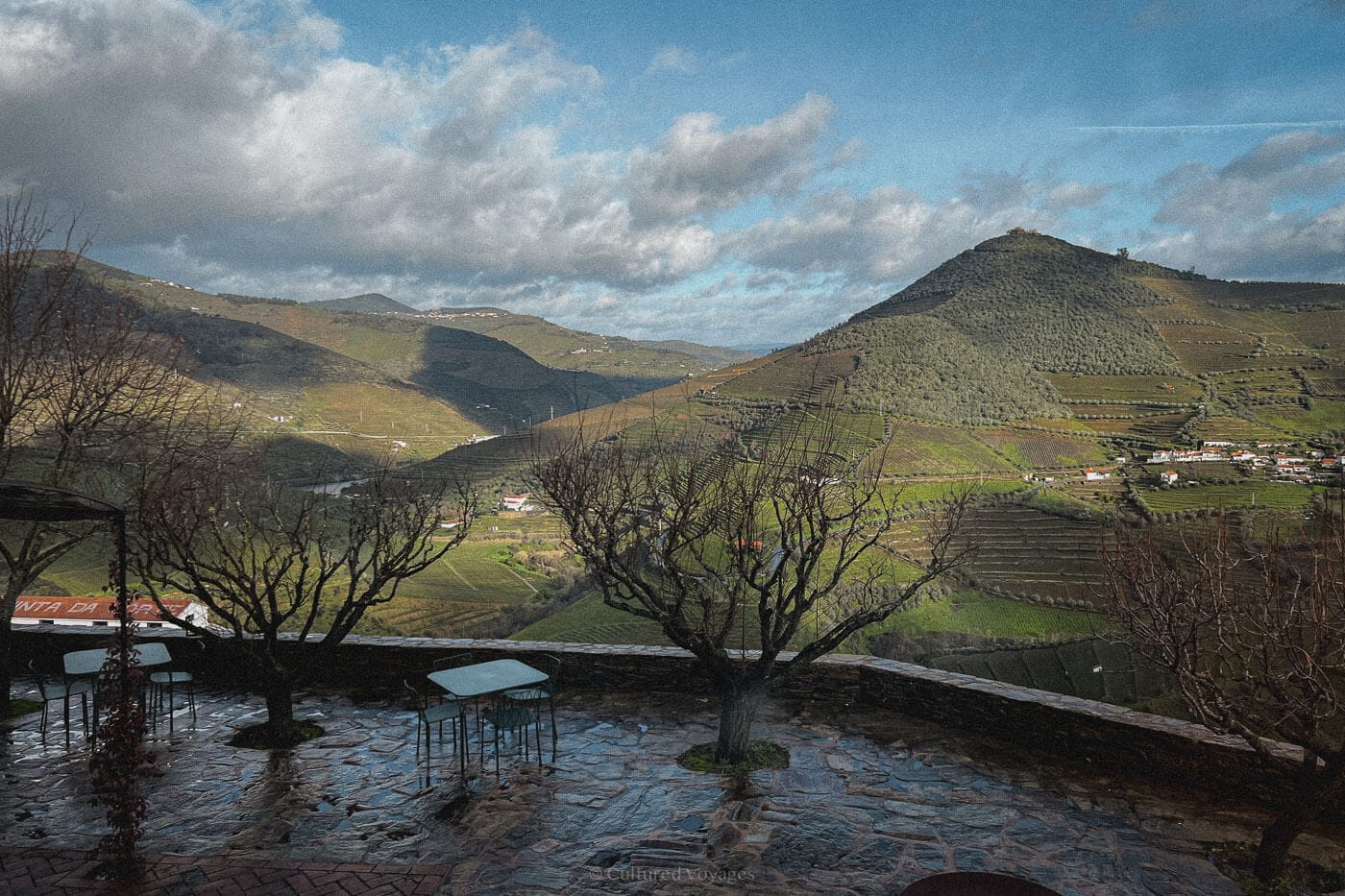
The Douro Valley in winter is quiet, misty, and far removed from the postcard-perfect harvest scenes you see in September.
The question most people ask – is it worth visiting in winter? – comes down to what you want.
If you dream of lush green terraces and long river cruises, you’ll be disappointed. But if you’re after intimate wine tastings, cosy firesides, and room rates that can be half the price of summer, then winter is one of the best-kept secrets in northern Portugal.
When I stayed for three nights in January, I saw both sides: torrential rain that scuppered our plans to road trip the N222, and then a crystalline morning walk through vineyards rinsed clean, mist lifting from the hillsides and birdsong carrying in the stillness.
That seems to be winter in the Douro: less predictable, more pared back, but atmospheric in a way you simply don’t get in busier seasons.
In this guide, I’ll share what to really expect – from the weather to the pros and cons, the quintas that shine in the off-season, and the few experiences worth booking.
If you’re considering the Douro in winter, here’s how to decide if its quiet magic is for you, as well as how to do it well if you do decide to go.
✨ Planning a Winter Trip to the Douro Valley? Start Here
🛏️ My Favourite Places to Stay
Winter rates make even the most stylish quintas far more accessible.
→ Quinta da Pacheca – The Wine House Hotel – Iconic spa hotel just outside Régua, with fine dining and its famous barrel rooms.
→ Quinta da Côrte – Boutique design and family-style dinners in a remote eagle’s-nest setting with sublime views.
→ The Vintage House, Pinhão – An institution on the riverfront with old-school charm and plenty of flexibility for day trips.
🍷 Great Winter Experiences
→ Quinta do Tedo Winery Tour – Classic tasting of wine, port, and olive oil at a historic estate.
→ Pinhão River Cruise – A one-hour rabelo boat ride with port wine; short enough to enjoy even on cooler days.
→ Douro Valley Cooking Class – Hands-on workshop with a farm tour and hearty winter lunch.
💡 Insider’s Tip
Average highs hover around 12–14°C, with chilly mornings and damp spells. Pack layers, a waterproof jacket, and sturdy shoes – indoors the quintas are always warm, (unless you are visiting cellars specifically).

Table of Contents Show
Is the Douro Valley worth visiting in winter?

The Douro Valley in winter feels like an entirely different place than the golden, sunlit slopes you see in summer photos.
When I stayed there in January, what struck me most was just how still it all was – the fog hanging low over the river, vines stripped bare, and hardly anyone else around. At times it almost felt abandoned, in a romantic, windswept kind of way.
A Cultured Voyages Guide
Seven shifts that take you from sightseeing to actually understanding a place – the same ones I use on every trip I plan.
That quietness can be a gift if you’re after a peaceful, wine-centred escape.
But it also comes with compromises. Winter is not the season of leafy vineyards, buzzing riverboats, or road-tripping from one miradouro to the next. Whether it’s worth it really depends on what you want out of your trip.


Pros of visiting the Douro Valley in winter
- Peace and quiet – the valley feels hushed, with far fewer visitors than in spring or autumn. At a boutique estate like Quinta da Côrte, it was almost dreamlike to have the place to ourselves.
- Better value – room rates are lower in January and February, making high-end quintas more affordable.
- More personal tastings – with smaller groups, winemakers often have time to chat, open special bottles, and make the experience feel intimate.
- Atmosphere – the mist rolling through the hills, rain on the cobblestones, fires crackling in quinta lounges – winter brings its own kind of magic.
Cons of visiting the Douro Valley in winter
- Weather risk – heavy rain can easily wash out your plans for scenic drives or viewpoints. When I visited, road tripping was pretty much impossible due to torrential rain.
- Bare vineyards – don’t expect lush green terraces; the vines are stripped back, more skeletal than photogenic.
- Seasonal closures – some hotels, restaurants, and boat tours shut in January for a break, so you can’t always count on choice.
- Less to do outdoors – hiking, cycling, or long wanders through the vines are hit-or-miss depending on the weather.

❄️Planning a European winter escape?
Discover my roundup of the best European cities to visit in winter – from Seville and Porto to Bruges and Ghent – with cultural highlights, seasonal food, and boutique hotels worth travelling for.
👉 Read the full guide → Best European Cities to Visit in Winter You Haven’t Considered
Weather in the Douro Valley in winter

I’d say that winter in the Douro Valley is refreshingly cool rather than harsh. You won’t usually find snow unless you’re up in the higher mountains, but you should absolutely expect grey skies, short days, and a good chance of rain.
From December through February, average daytime highs hover around 12–14°C (mid–50s °F), with nights dropping to 4–7°C (low–40s °F). January tends to be the chilliest and dampest month, while February starts to edge a little milder with more sunshine.
Here’s what the season looks like in numbers:
| Month | Avg. High | Avg. Low | Rainfall (days) | Rainfall (mm) | Daylight Hours |
| December | 14°C | 7°C | ~6–7 days | ~17 mm | ~9h 24m |
| January | 13°C | 7°C | ~7 days | ~10 mm | ~9h 43m |
| February | 14°C | 7°C | ~7 days | ~9 mm | ~10h 43m |
- Rain: Even though it only rains on about a week’s worth of days each month, it can come down hard when it does – think torrential bursts rather than constant drizzle. On dry days, the valley can feel crisp and bright.
- Fog & mist: Common in mornings, often lifting by midday.
- Sunshine: 5–7 hours on average, with clear days bringing luminous winter light.
Does the Douro Valley get snow?
It’s rare, but possible in the surrounding hills. In the valley itself, you’re far more likely to see rain than snow.


A Note: Rainfall in the Douro Valley in Winter
While the Douro Valley does see rain in winter, the totals are surprisingly low. December averages around 17 mm across 6–7 rainy days, while January and February drop to just 9–10 mm in total. By comparison, coastal Porto gets well over 100 mm in the same months.
What this means in practice is that you’re more likely to encounter occasional downpours or short-lived showers rather than endless grey drizzle.
On my own trip, the rain came in torrents that forced us indoors for a while – but when it cleared, the air felt crisp and the valley looked washed fresh.
What the Douro Valley is like in winter


When I visited the Douro Valley in January, the biggest thing that stood out was just how different the atmosphere felt compared to a busier period like summer or harvest time.
At Quinta da Pacheca, which is closer to Porto, there was still a bit of a buzz – I got the sense a lot of local weekenders were there for a night away, enjoying the spa and the dining.
But once we drove further into the valley to stay at Quinta da Côrte, the tone shifted completely. It felt wilder, more remote, and incredibly still, like we’d stepped into a quieter season that most travellers skip.
The weather really defined my time there.
We were unlucky and caught one of those heavy bursts of rain – one of the “seven rainy days” you see on the averages, except it felt like we got the full brunt of one and a half of them back-to-back.
It poured solidly while we were at Quinta da Côrte, and that basically wrote off our plans to road trip around to viewpoints and explore towns like Pinhão or Régua.
But there’s also a kind of beauty in that.
At Quinta da Côrte, we were perfectly content to hole up – fires lit in the shared kitchen, tastings on site, and cosy dinners that stretched into the evening. And when the rain finally cleared on our last morning, it was magic.
Walking through the estate, puddles shimmered on the cobblestones, the gravel crunched wetly under our shoes, and little wisps of mist curled across the valley. The air felt sharp and clean, rinsed by the storm, and all we could hear was birdsong in the stillness.
So that was my experience: Pacheca buzzing with weekend guests near Porto, Côrte hushed and atmospheric further in, and weather that veered from relentless downpours to crystalline stillness! In a nutshell, a short trip that was full of contrasts!
Best things to do in the Douro Valley in winter

Winter in the Douro is about slowing down. You won’t be cycling between vineyards or spending long afternoons on the river like you might in summer. Instead, it’s about wine, food, and making the most of clear days when they come. Here’s what I’d prioritise.
Wine tastings and cellar tours
This is the one activity that works year-round. Tastings in winter are often quieter and more personal – you’ll get more time with the hosts, and sometimes even a special bottle opened just for you.
You can arrange tastings directly with quintas, or join a guided visit such as the winery tour at Quinta do Tedo or a vineyard tour at Quinta da Formigosa in Pinhão.
Stay in a quinta and enjoy it fully
Because the weather can turn, where you stay matters more in winter than any other season. A quinta with its own dining, tastings, and cosy fires will give you everything you need even if the rain sets in.
On my trip, we were glad to simply settle in at our hotel, linger over a tasting, and enjoy slow dinners rather than dashing around.


Scenic drives or a train ride (if weather allows)
If you do get a bright winter’s day, seize it.
The N222 between Peso da Régua and Pinhão is famously scenic, twisting along the river with viewpoints at every bend. If you’d rather not drive in wet conditions, the Douro train line offers dramatic views in comfort – and you can hop off at quintas or towns along the way.
Short river cruises from Pinhão
Most long boat trips pause in winter, but you can still get on the water for an hour or two.
From Pinhão, you can take a one-hour river boat ride with port wine, which gives you a fresh perspective on the valley terraces.
If you want something more private, there’s also the option of a yacht cruise along the Douro – bundled up with a blanket and a glass of port in hand.
Cooking classes and food experiences
Winter is when the Douro’s hearty food really comes into its own. A cooking workshop is a perfect way to spend a damp day indoors, especially when it ends with a long lunch.
This traditional Douro cooking class with farm tour and lunch is one of the best options, giving you hands-on experience with local recipes before sitting down to enjoy them.

If you’ve decided the Douro Valley in winter is for you – or you’re still weighing up how to make it work – have a look at my First-time Visitor’s Guide to the Douro Valley. It covers how to get there, the best towns to base yourself in, transport options, and plenty more ideas for what to do once you’re there.
Where to stay in the Douro Valley in winter

In summer, it’s easy to flit between quintas, book river cruises, or spend long days outside.
In winter, where you stay matters so much more.
Rain can keep you indoors, and shorter days mean you’ll likely spend more time in your hotel than out exploring.
My advice: pick somewhere that’s as much an experience as it is a base.
These are four very different stays that all work beautifully in the cooler months.
Quinta da Pacheca – The Wine House Hotel (Peso da Régua)


Quinta da Pacheca is one of the most famous names in the Douro, and for good reason. It’s a slick operation with everything under one roof: a spa, a fine-dining restaurant, cooking classes, and of course their barrel-shaped rooms tucked among the vines.
I stayed in one of their newer house rooms instead of the barrels, and it was plush, stylish, and supremely comfortable. The wine tasting here was polished and professional – more of a crowd, but still excellent.
Best of all, Pacheca is one of the easiest quintas to reach: it’s just outside Peso da Régua, about 1h30 by train from Porto, with a short taxi ride at the end. Perfect for a one-night winter escape.
Quinta da Côrte (Valença do Douro)


Quinta da Côrte couldn’t feel more different. Designed by a renowned French architect, its interiors are chic but homely – like staying in a friend’s luxurious countryside retreat.
Dinner here was family-style at a long table, where we ended up chatting with fellow winter travellers from France and the US. Normally I shy away from that kind of communal set-up, but it turned out to be a highlight.
Tastings were intimate, too, with only a handful of guests, and the whole property feels deeply personal.
The setting is spectacular: perched high above the valley with views that make you feel like you’re in an eagle’s nest. There’s even an infinity pool (not for winter swims, but the outlook is unreal).
Getting there involves a bit of a hairy drive down narrow roads, so you’ll want your own car – but the reward is sublime isolation and atmosphere.
The Vintage House (Pinhão)
If you’d rather base yourself in a town, The Vintage House in Pinhão is the obvious choice. It’s a long-established institution right on the riverfront, with old-school charm in its décor.
What makes it great in winter is flexibility: from here you can catch the train, hop on a short river cruise if the weather clears, or hire e-bikes to explore the valley. You’re also within walking distance of Pinhão’s restaurants and cafés, which means you’re not reliant on your hotel for every meal.
For travellers who want options and convenience, this is the best bet.
Quinta Nova (near Pinhão)
Quinta Nova is Portugal’s first wine hotel, and a Relais & Châteaux property set on 120 hectares of vineyards. It’s grand and traditional, with walking trails through the estate and panoramic views over the river.
The estate has its own tiny train station, which makes access easier than the winding valley roads – a shuttle runs guests up from the platform.
While it commands high prices in summer (think €700–900 per night), winter rates often drop closer to €500. Still a splurge, but a significant saving for a stay of this calibre.
A note on locations:
- Peso da Régua (Pacheca) is closest to Porto, ideal for a quick winter getaway.
- Valença do Douro (Côrte) feels deep in the valley, remote and atmospheric.
- Pinhão (Vintage House) gives you town flexibility and transport links.
- Quinta Nova balances rural grandeur with easier train access.
If you’ve decided a quinta is for you, take a look at my roundup of the best quintas and winery hotels in the Douro Valley, where I break out my top picks by area.
Tips for visiting the Douro Valley in winter

Winter in the Douro can be wonderful, but it’s not the same experience you’d get in summer or harvest season. Here are a few lessons from my own January trip.
Confirm openings before you go
January in particular is when many hotels, restaurants, and boat operators take a seasonal break. I had a couple of places on my list that were closed on the dates we visited. Always check ahead and pre-book tastings so you’re not disappointed.
Anchor yourself to the right accommodation
When it poured with rain for a day and a half, our entire trip became about where we were staying.
At Quinta da Côrte, we were happy to linger by the fire, enjoy long meals, and taste wines on site. At Pacheca, the spa and fine dining gave it more of a luxury-hotel feel.
Choose somewhere you’d genuinely enjoy spending a day indoors, because you might have to!
Be flexible with plans
I’d intended to road trip along the N222 and explore towns like Pinhão and Régua. In reality, torrential rain made that impossible.
If you get a clear day, seize it for a drive or a walk – but build your itinerary around slow experiences, not a packed checklist.
Pack layers and waterproofs
Daytime highs of 12–14°C sound mild, but mornings and evenings are chilly, and when the rain comes it can be heavy.
Waterproof (or at least resistant) shoes make a big difference – vineyard paths can be muddy, and even gravel crunches wetly underfoot after a storm.
Decide between town and countryside
Staying in Pinhão or Régua gives you more flexibility: restaurants, cafés, and even a short boat trip if the weather clears.
Going deeper into the valley brings that hushed, remote beauty I found at Côrte, but you’ll be more cut off if it pours.
Think about whether you value convenience or seclusion more in the winter months.
What to wear in the Douro Valley in winter


When I was in the Douro in January, I found that you really don’t need heavy winter clothes. It’s cool and often damp, but it’s not freezing, and inside the quintas it’s toasty with the heating on.
Most days I was in a medium-weight jumper layered over a long sleeve, with leggings or jeans and trainers. My partner wore trousers, trainers, and a short lightweight puffer jacket. That was plenty for walking around the estates.
When we went out after a heavy downpour, I threw on my trench-style raincoat over woollen trousers and ankle boots – trainers would have been fine too unless you’re hiking more serious trails.
In the evenings it was even easier.
At Pacheca I had dinner in a satin blouse, jeans, and ankle boots, and I was perfectly comfortable – the restaurant was lovely and warm and I didn’t need another layer.
At the more casual Quinta da Côrte, I wore just a lightweight sweatshirt and long sleeves. At the tastings, some of the ladies had lighter woollen jumpers or polo necks, and people tended to keep jackets on in the cellars, which are a little cooler.
So really, you’ll be fine with mid-weight layers you can peel off indoors, a good waterproof jacket for showers, and trainers or ankle boots for gravel paths.
If you plan on proper hiking, then pack sturdier boots, but for meandering between quintas, I was absolutely fine without them.
FAQs about the Douro Valley in winter

Can you do a Douro Valley river cruise in winter?
Yes – you can. Shorter trips, like one-hour rabelo boat cruises from Pinhão, run year-round (weather permitting). Some operators also offer private cruises on reduced schedules.
Full-day cruises may be limited or seasonal, so it’s best to check availability directly with providers if that’s what you’re after.
Are wineries open in January?
Most wineries stay open through the winter, but January is when some take short breaks for holidays or maintenance.
Larger and more established estates usually keep welcoming visitors, but it’s always best to confirm opening hours and book tastings in advance so you’re not caught out.
How much time do you need in the Douro Valley in winter?
I spent three nights and found it about right for a relaxed winter break. Two nights is the minimum I’d suggest if you want to really settle in, especially since shorter days and the chance of rain mean you’ll spend more time at your hotel.
What are the best months to visit the Douro Valley?
Spring and early autumn are the classic choices – the vines are green, the weather is more reliable, and everything is open. But winter has its own charm if you value quietness, intimacy, and cosy wine-focused stays over sightseeing.

Before you go
Everything I check before a trip now lives on one page.
Seven shifts I run on every trip I plan, each one paired with the story that taught it to me and the steps for using it yourself — built to be printed, kept, and pulled back out before the next one.
It arrives when you join The Cultured Voyages Edit, a fortnightly letter on European cultural travel.
Continue planning your winter trip to the Douro Valley

If you’ve decided the Douro Valley in winter is for you, the next step is figuring out the practicalities. Start with my First-time Visitor’s Guide to the Douro Valley, which covers how to get there, the best towns to base yourself in, and what to expect on your first trip.
If choosing the right place to stay is top of your list, have a look at my guide to the best winery hotels and quintas in the Douro Valley – it’s a detailed round-up of estates across the region, from small boutique stays to Relais & Châteaux classics.
If you’d rather not base yourself in the Douro overnight, another option is to visit as a day trip from Porto. I’ve put together a guide to Douro Valley wine tours from Porto, which covers the best organised options – ideal if you’d prefer someone else to handle the logistics of driving, tastings, and timings.
And since most trips to the Douro start or end in Porto, don’t miss my Porto in Winter guide. It’s packed with tips on cosy cafés, port lodges, and how to enjoy the city without the crowds.
Other Winter Guides
Curious about other destinations? I’ve put together a full guide to the best European cities to visit in winter, including both classics and unexpected alternatives.


Like this post? Pin for later!

