
Disclosure: Some of the links on this site are affiliate links. If you make a purchase through one of them, I may earn a small commission at no extra cost to you. Read my full disclaimer here. Thank you for your support!
This guide to the best time to visit Florence covers not just the seasons – but the time of day, the day of the week, and how each of those decisions shapes a very different experience of the city.
I’ve visited Florence in early spring when the wisteria was just coming into bloom, spent a month in the height of summer during a full-blown heatwave, and again in May when the weather didn’t behave the way I expected at all.
Over time, what’s become clear is that timing in Florence shapes the entire experience.
Get it right, and you can move around easily, take things in properly, and enjoy the city at a more natural pace. Get it wrong, and you’re dealing with dense crowds, long queues, and days that feel far more effortful than they need to be.
One of the biggest mistakes I see people make is focusing only on the time of year, without realising how much the time of day, the day of the week, and even how you structure your plans can change things.
For example, there’s a very real difference between standing in a packed Piazza del Duomo at midday, moving slowly with the crowd, and walking through that same space before 9am when there are only a handful of people around. It almost feels like a different city.
This guide breaks down the best time to visit Florence across seasons, days, and times of day, so you can choose what suits your trip and plan around it properly.
Table of Contents Show

TL;DR: When is the best time to visit Florence?
- Best overall balance: early April (before Easter) or late October into November
- Quietest time: January and February, after the Christmas period
- Most difficult time: summer, especially July and August, due to heat and crowd levels
- Most important factor: how you structure your day matters just as much as the season
When is the best time to visit Florence overall?
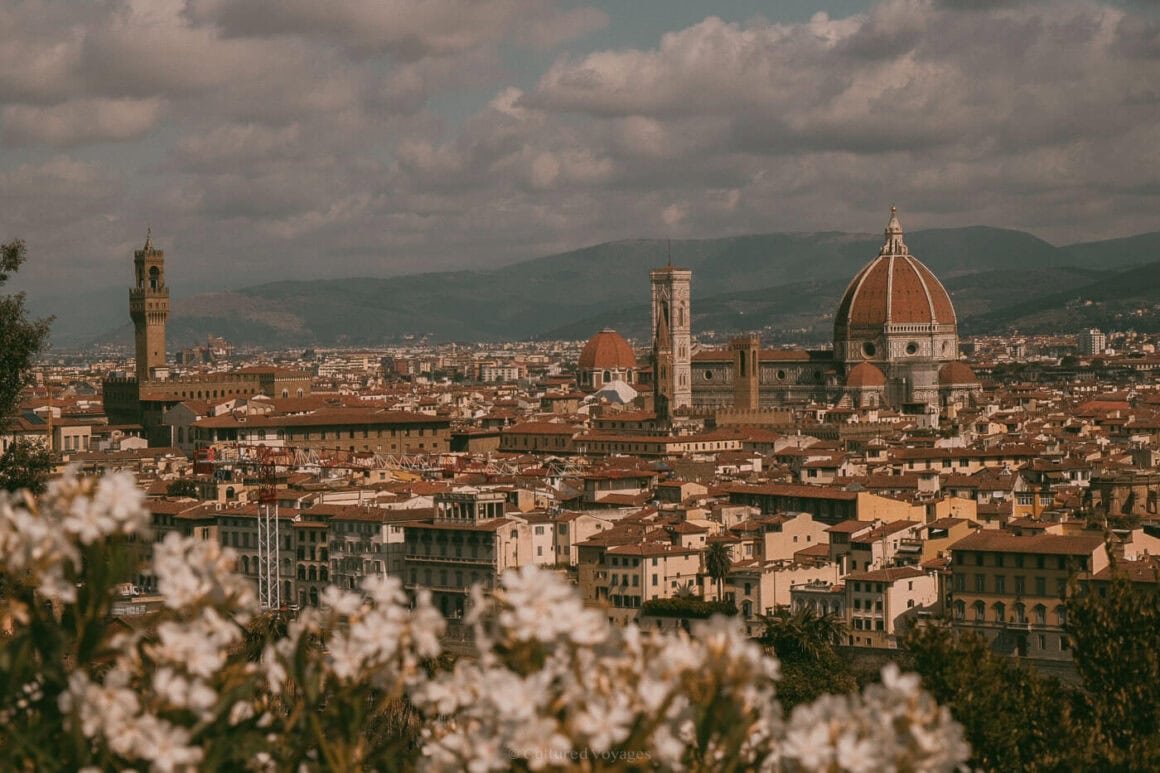
In short: early April before Easter or late October into November gives you the best balance of atmosphere, manageable crowds, and comfortable weather – but neither is as quiet as it used to be.
That’s when you’re most likely to get a version of the city that still feels alive, but isn’t at full capacity.
You can move around more easily, you’re not constantly adjusting around crowds, and the overall pace of the city feels more manageable.
That said, I wouldn’t go in expecting these periods to feel quiet.
On an earlier trip in April 2018, Florence felt noticeably calmer at that time of year. But returning in 2025, the difference was quite striking, even midweek in May, there were far more people around than I expected.
That stretch of what used to be considered shoulder season doesn’t feel quite the same anymore.
Weather is also less predictable than people assume. I’ve had cool, rainy days in May, which doesn’t really line up with the idea of it being a guaranteed sweet spot.
If avoiding crowds is your main priority, then winter, particularly January and February, is when Florence is at its quietest.
And if summer is your only option, it’s still worth going, but you need to approach it differently. Early starts, pre-booked tickets, and building your day around the footfall patterns of the city makes a noticeable difference.
Best time to visit Florence at a glance
| Priority | Best time to visit Florence |
| Best overall balance | Early April (before Easter), late October to November |
| Fewest crowds | January and February |
| Best chance of good weather | May and September |
| Worst for crowds | Late May to September, especially weekends |
| Best time of day | Before 9am and after 5:30pm |
What is the best time of day to visit Florence?
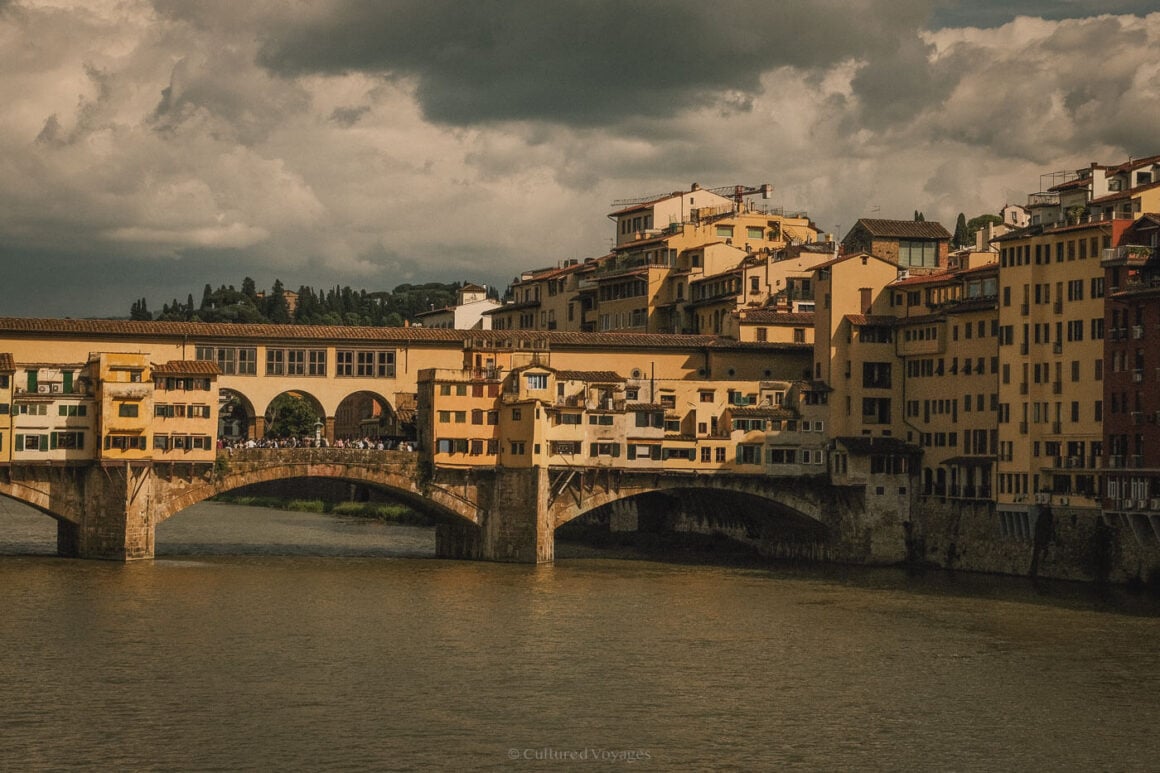
The short version: before 9am and after 5:30pm are when Florence is easiest to move through. Everything in between is when the city is at its busiest – and its most effortful.
Early morning: when Florence is at its best
When I spent a month living in Florence during a summer heatwave, this was something I became very aware of, very quickly.
Most mornings, my partner Andy and I would head out early, partly to avoid the heat later in the day, but also because it just felt like the easiest time to be out.
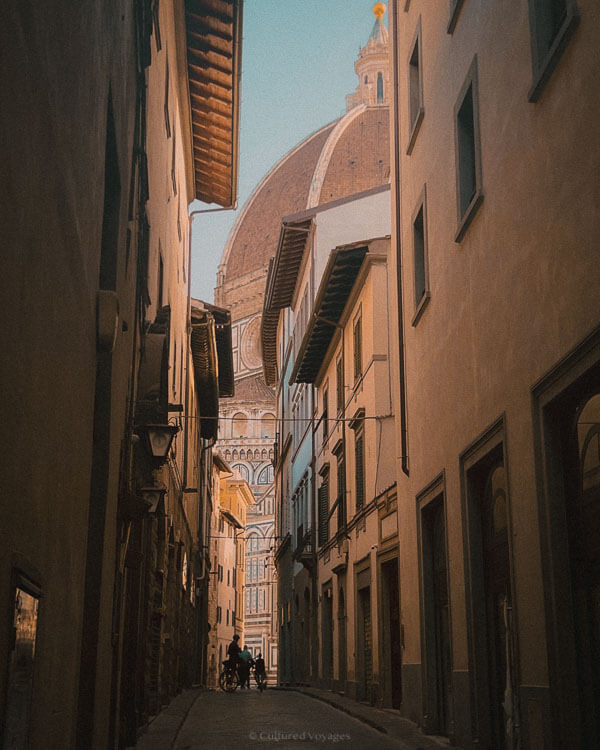
We were staying in San Lorenzo, so we’d walk down Via Faenza and within a few minutes you’re turning the corner into Piazza del Duomo. And I don’t think I’ll ever forget that contrast.
At that time of day, there might be a few dozen people in the square – if even – compared to the thousands that gather there later on. You can actually stop and take it in properly, rather than shuffling along with the crowds like a penguin.
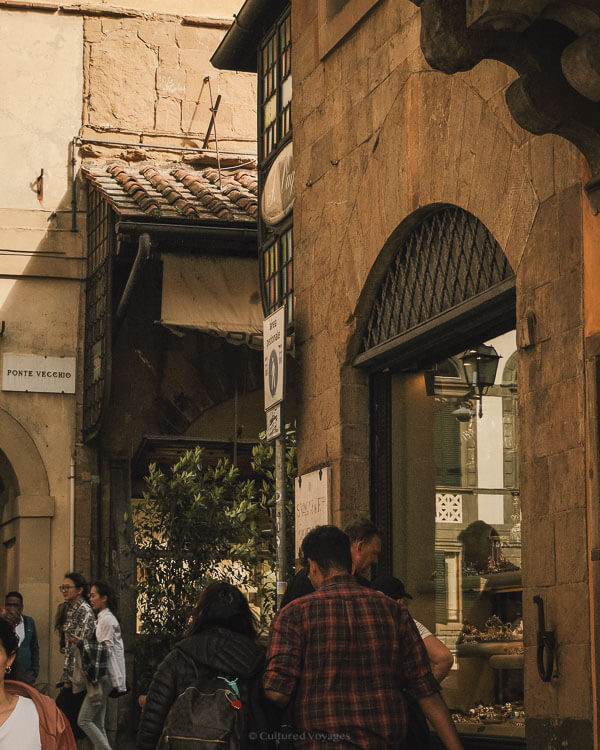
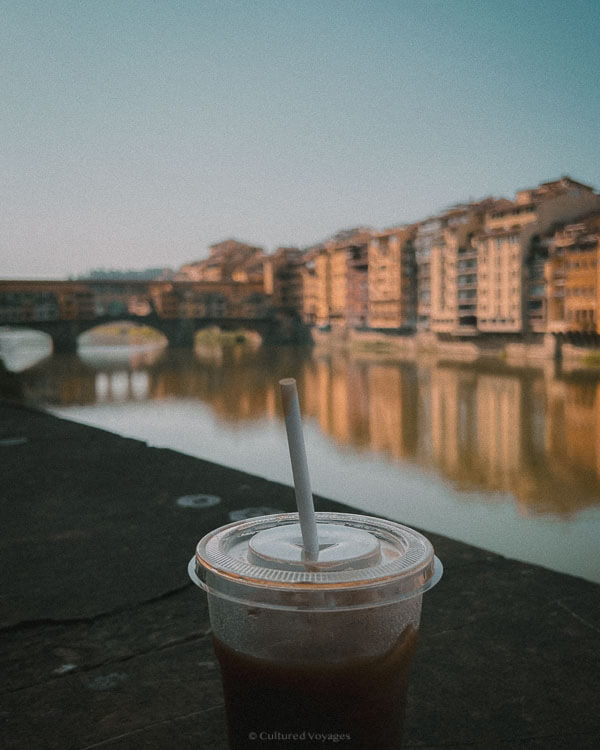
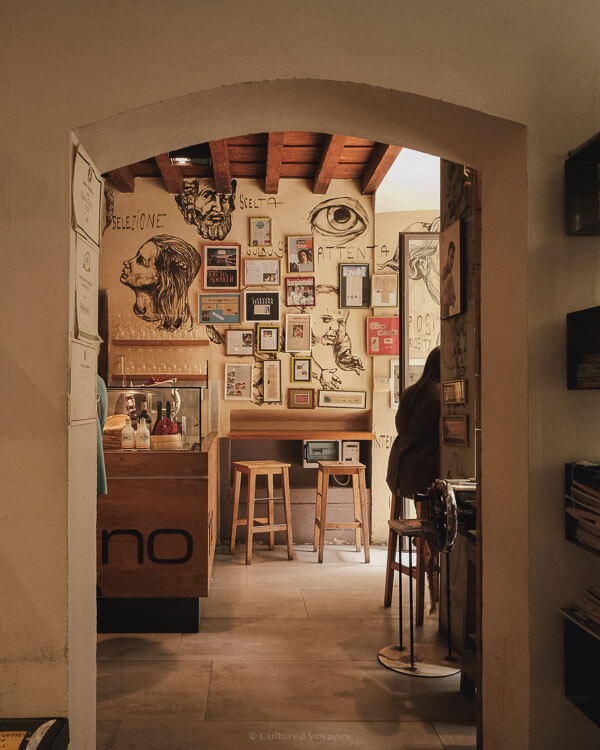
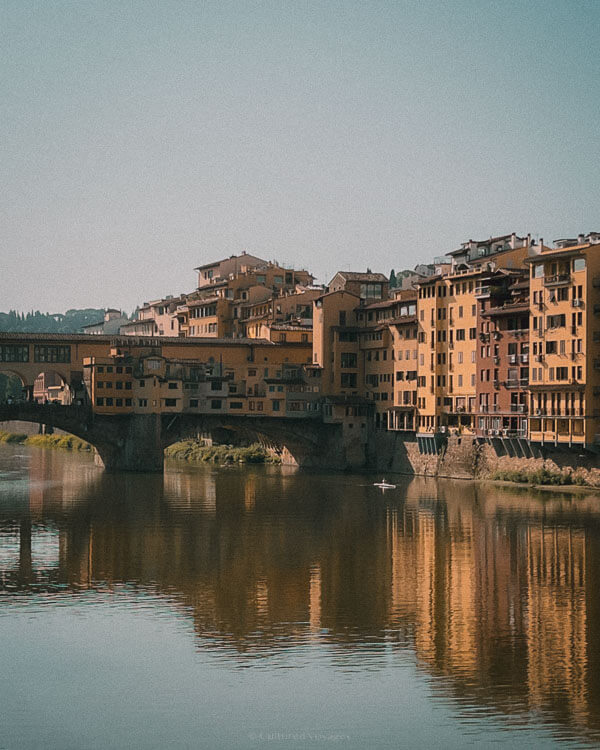
From there, we’d usually make our way down towards the Ponte Vecchio, cross it while the shutters were still down over the jewellery shops, and then head into Oltrarno to Ditta Artigianale for coffee – sometimes the one just across the bridge, sometimes the one further along the river.
And what I always noticed was how much things changed even within that short window. You’d head out into a city that felt almost still, and by the time you were making your way back, you could see it filling up around you as shops opened, more people arrived, and the whole pace began to shift.
Mid-morning to mid-afternoon: when crowds are worst in Florence
From around 10am onwards, things start to build quickly.
Tour groups arrive, day-trippers are fully in, and the centre fills up in a way that’s quite hard to avoid, particularly around the Duomo, the Uffizi, and the main routes towards Ponte Vecchio.
It also makes getting anywhere considerably slower.
You’re stopping more, adjusting your pace, trying to find space where there isn’t much of it. And if you’ve booked something at what feels like a “nice” time – say 11am or early afternoon – you’ll very likely be experiencing it at the same time as a lot of other people who had the exact same idea.
That’s probably the most common mistake I see – choosing times that feel the most convenient, rather than thinking about when an attraction, or indeed the city, will actually be at its quietest. And this is also exactly why I structure days the way I do in my Florence itineraries.
How to time your visits to Florence’s major attractions
This is where the early morning point needs a bit of nuance.
A lot of Florence’s main attractions don’t open before 9am, so it’s not as simple as just turning up early. What made the biggest difference for me was booking the very first available time slot, whatever that happened to be.

Download the Guide
Avoid the Florence That Feels Like a Queue
The cultural considerations that matter, the etiquette locals notice, and the choices that separate a considered visit from a rushed one.
On my first trip, I booked one of the earliest entries to the Uffizi, and I remember being really struck by how manageable it felt. The courtyard outside wasn’t packed, the queue was short, and once inside, it didn’t feel like you were immediately surrounded by people.
It’s one of the few times I’ve visited a major attraction in Florence and felt like I could actually take my time with it.
After that first wave of entries, things ramp up quite quickly, so even being an hour later can make a noticeable difference.
Late afternoon into evening: when it eases off again
The other time of day that works well is later on, once things begin to quieten down.
From around 5:30pm onwards, you can feel a shift. Some of the day-trippers start to leave, tours wind down, and the pace of the city changes slightly.
It’s still busy – this isn’t early morning quiet – but it’s easier. You’re not dealing with the same density of people, and it becomes noticeably easier to move around and wander again.
By the evening, most day-trippers have left, and while restaurants may still be busy, I found that the streets see considerably less footfall than they do throughout the day.
A quick example of how much time of day in Florence matters
One of the clearest examples of this wasn’t even a museum. During my month in Florence, I had a regular spot – I’ Girone De’ Ghiotti – that I could visit at off-peak times with barely a wait. When I returned a couple of years later, it had clearly blown up online. Every time I walked past, the queue was dozens deep.
The only way I got served without a long wait was going on a different day, around 10:30am, and just treating it as an early lunch.
It’s exactly the pattern you see across the whole city. The timing principle doesn’t just apply to museums – it applies to everywhere people have discovered online.
Best days of the week to visit Florence
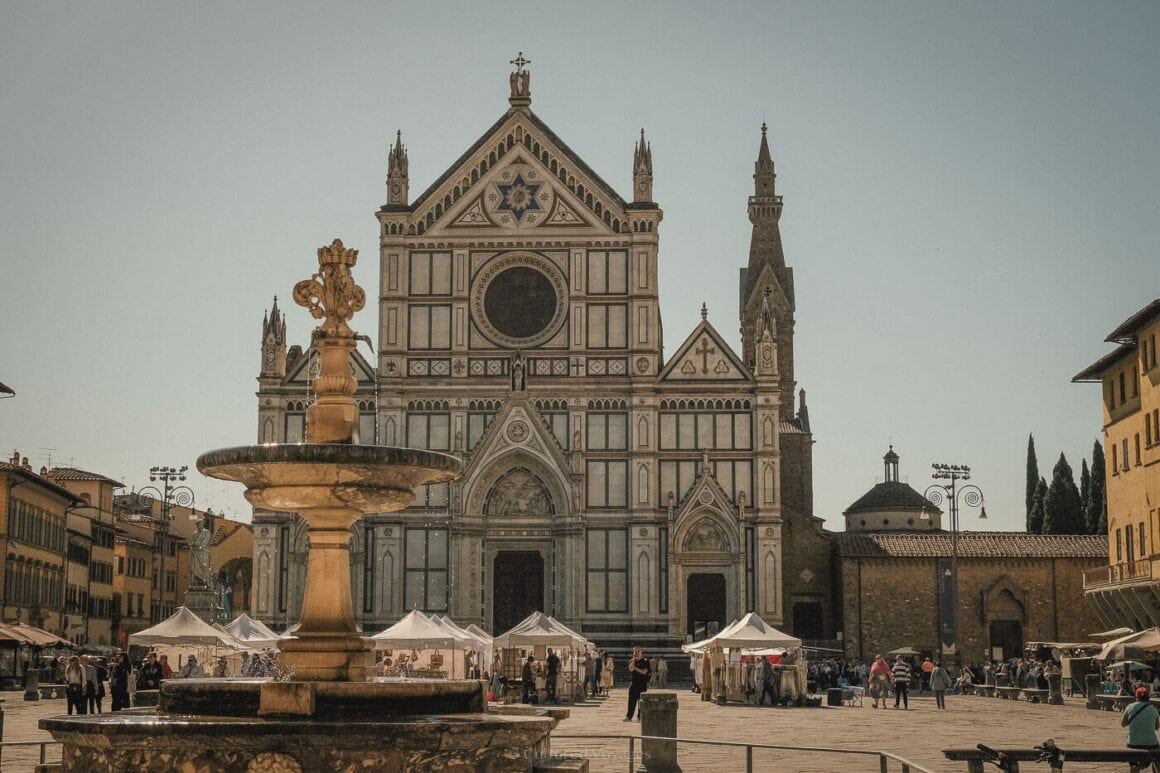
Simply put: Tuesday and Wednesday are consistently the calmest days to be in Florence. From Thursday onwards, the city starts to fill again ahead of the weekend.
That’s consistently been my experience. There’s a noticeable drop in foot traffic compared to the weekend. Florence is not empty, but it is easier to move around, easier to get into places, and generally just a bit less effort.
How the week actually plays out
What I’ve noticed over multiple trips is that Florence follows a pretty clear weekly pattern.
From about Thursday onwards, things start to build. Friday is busy, and Saturday is the peak when you really feel the volume. You’ve got a mix of international visitors, weekend city-break travellers, and Italian footfall all at once, and it shows.
Sunday is slightly different. Mornings can still feel busy, but by the afternoon and evening there’s a bit of a drop-off as people start to leave.
Then by Monday, you feel that shift even more. It’s quieter than the weekend, but it comes with a trade-off as quite a few museums and attractions are closed, which can be frustrating if you haven’t planned for it.
By the time you get to Tuesday and Wednesday, things have usually settled down as much as they’re likely to. That’s when I’ve found the city at its most manageable during the week.
A couple of things that surprised me
One thing I didn’t fully expect is how busy midweek can still feel even in shoulder season.
On a trip in April/May, I remember being surprised by how many people were around even on weekdays. There were clearly a lot of longer-haul travellers – people doing full Italy itineraries rather than short breaks – so it didn’t drop off come Tuesday and Wednesday in the way I thought it might.
Then from Thursday onwards, you get that added swell of weekend visitors coming in, which is where the real jump happens.
So it’s less that weekdays are quiet, and more that they’re quieter relative to the weekend.
So what days should you aim for when visiting Florence?
If your priority is avoiding crowds in Florence as much as possible, I’d recommend that two of your days in Florence fall on a Tuesday or Wednesday.
If you still want a bit of atmosphere without things feeling overwhelming, Thursday is a good middle ground.
Weekends aren’t a bad time to be in Florence per se, but they are busier, more expensive, and you’ll need to be more organised. If that doesn’t bother you, they can still work perfectly well.
The only day I’d be slightly careful with is Monday, just because of closures. It can be a good quieter day to be there, but only if you’ve checked in advance that the places you want to visit are actually open.
Florence Queues: When They’re Worst and How to Avoid Them
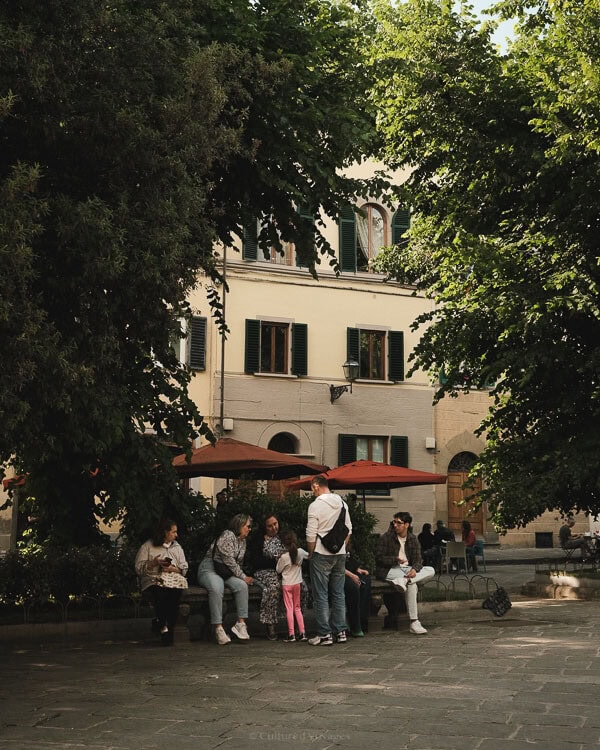
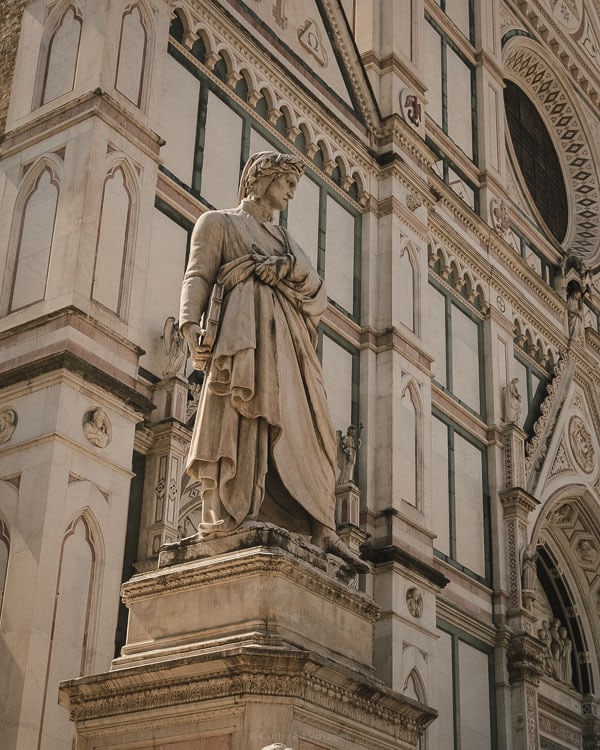
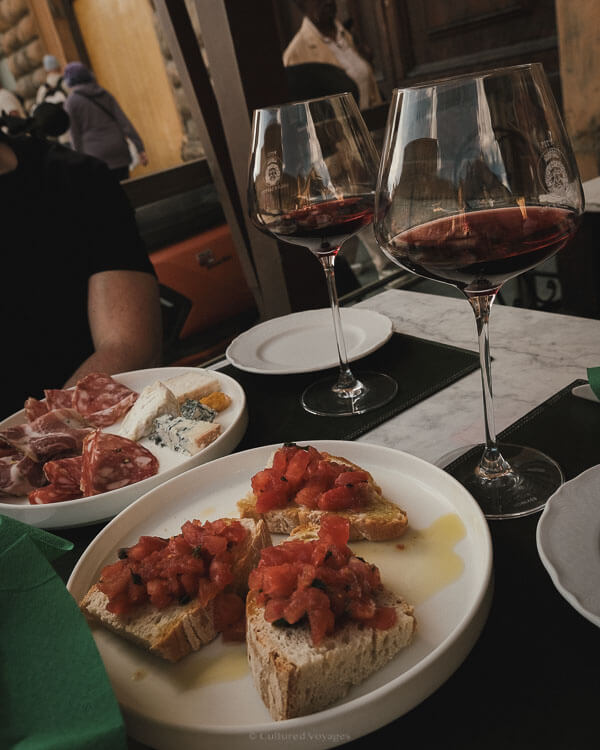
The key point: queues in Florence are almost entirely avoidable if you book the first available entry slot and avoid the 10am–4pm window. Timing beats luck every time.
When are queues worst in Florence?
Queues in Florence tend to peak when three things overlap: time of day, time of year, and visitor flow through the city.
In practical terms, that usually means:
- Late morning to mid-afternoon (roughly 10am–4pm) – when tour groups, day-trippers, and general sightseeing all converge
- Peak season (late May through September) – when visitor numbers are at their highest
- Weekends and public holidays – when domestic and short-break travel adds to the overall volume
This is when you’re most likely to encounter the longest waits, particularly at places like the Uffizi, Accademia, and the Duomo. Italian public holidays and school holiday periods can also make a noticeable difference to crowds and wait times (i.e. it will be a lot busier on these dates).
How to avoid the worst of the queues in Florence
In reality, there are only two things that make a meaningful difference here: booking ahead, and being a bit more deliberate about the time you choose.
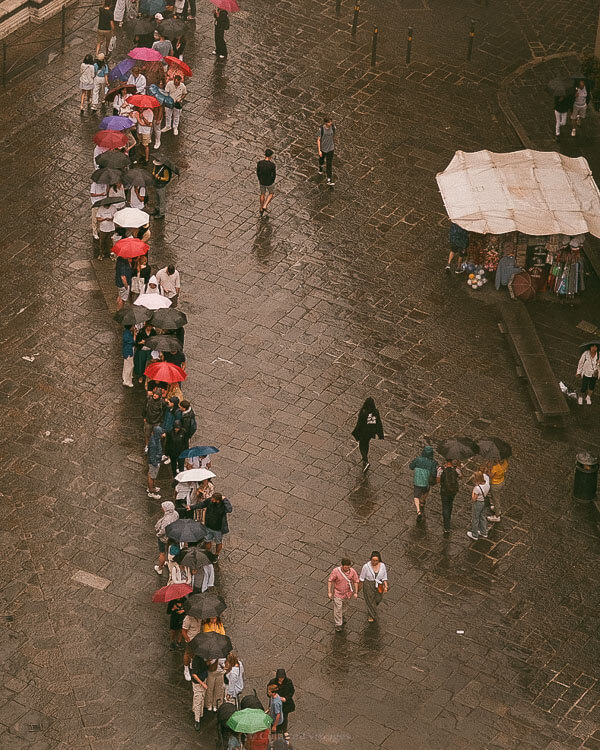
For anywhere like the Uffizi or Accademia, having a timed ticket is what separates a short wait from standing in line for an hour or more. Also, I don’t think it’s worth it to queue for free entry to visit the interior of the Duomo – I go into this more in my guide to visiting Florence’s Duomo complex.
As covered in the time of day section, the earliest available slot is almost always the right call – it’s the obvious mid-morning window (10am-12.30pm) that everyone else books too.
Outside of that, avoid stacking big attractions back to back, or doing too many on the same day. Otherwise your queuing time will compound.
Visiting Florence in summer: what to expect
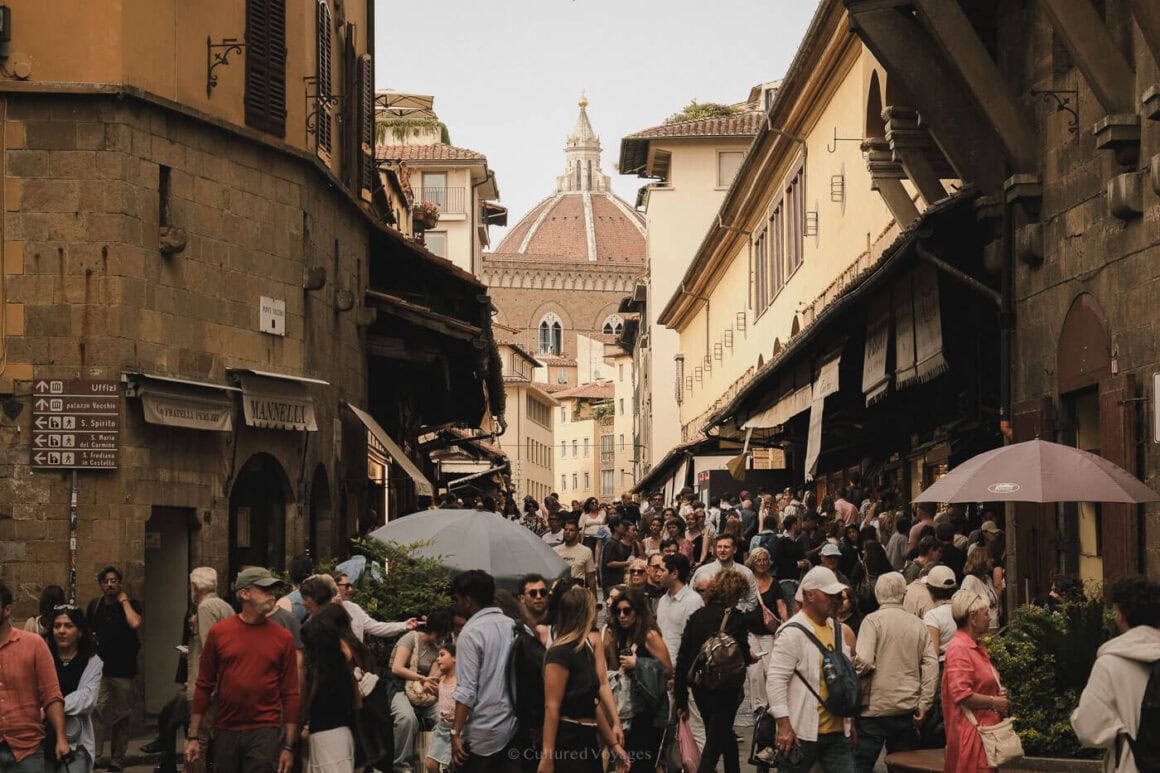
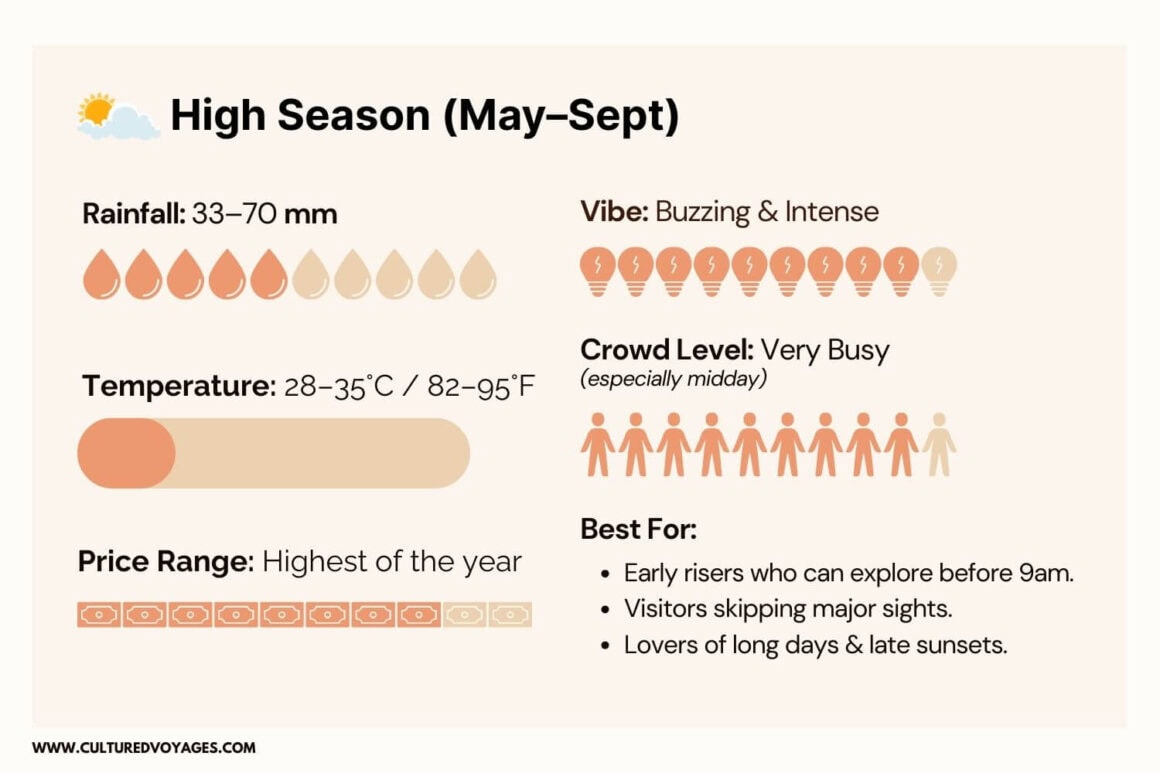
Bottom line: summer is the most intense version of Florence – crowded, hot, and expensive. You can have a good trip, but it takes more planning and more flexibility than any other time of year.
When is summer in Florence?
Late May through to the end of September, with July and August as the absolute peak. From what I’ve seen – and from conversations with locals – the season now effectively stretches from Easter onwards, only really easing off sometime in October.
What’s the weather actually like in Florence in summer?
Peak summer in every sense: long days, intense sunshine, and increasingly frequent heatwaves. Average highs sit between 28–35°C, with July and August often pushing well into the high 30s.
What caught me off guard wasn’t just the temperature – it was how the heat lingers late into the day. I spent a full month in Florence during a heatwave, and it genuinely shaped how we lived day to day.
The buildings absorb heat all afternoon and release it slowly back into the streets, so even walking home after dinner can feel like stepping through warm air – sometimes like a hot hairdryer pointed straight at your face.
I found that I adapted quickly. Early mornings and shaded routes stop being a nice idea and become non-negotiable.
How crowded is Florence in summer?
By mid-morning, areas like Piazza del Duomo and the Uffizi courtyard are absolutely heaving with tourists. From roughly 9am to 5pm, the historic centre can feel like a constant stream of people, with long queues at almost every major sight.
July and August alone see well over a million arrivals each.
But what doesn’t always come across in photos or guides is what that actually feels like to move through.
During that month in Florence, I was also on crutches with a knee injury – moving more slowly, needing a bit more awareness from people around me. In the busiest parts of the city, the crowds were so dense that people didn’t really notice, or didn’t stop to notice.
There were moments where people just pushed past or brushed into me, and it wasn’t just frustrating – it was physically painful and a little unnerving.
I remember feeling slightly thrown by it. Not because Florence is unfriendly – but because in that kind of volume, people are just focused on getting where they’re going.
So if you’re someone who struggles with dense crowds, prefers ease of movement, or has any kind of limited mobility – it’s worth taking that into account. Summer isn’t just visually busy. It can be physically demanding to navigate.
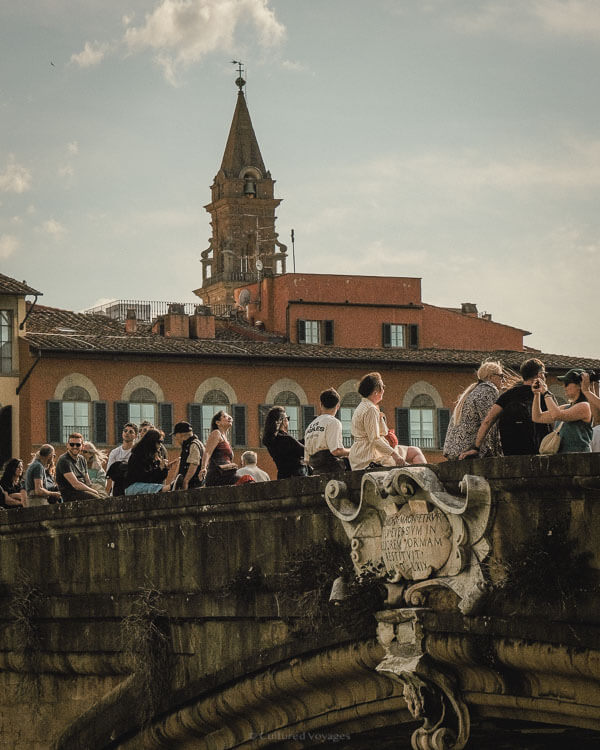
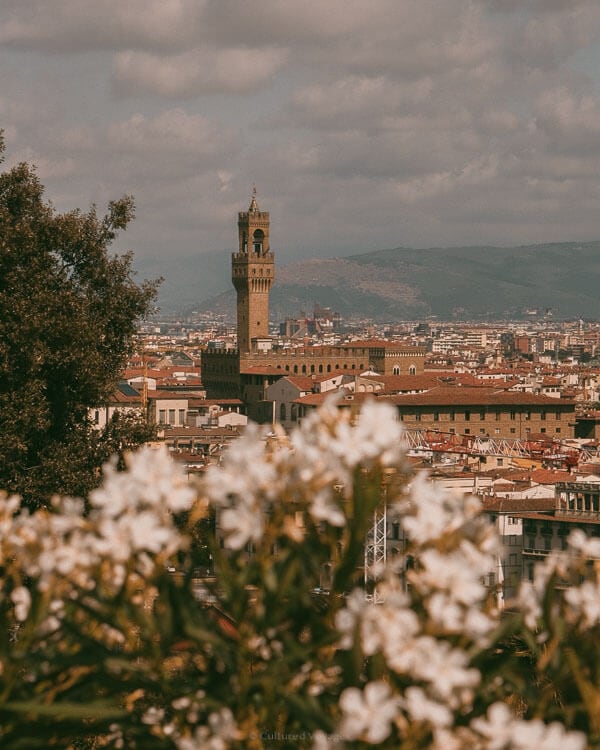
What does a typical day actually feel like?
Summer pushes you into a schedule of sorts: early start, slow shaded afternoons, evening wander. If you try to power through from mid-morning to late afternoon, it’s exhausting. But if you lean into that structure – start early, take breaks, step away from the centre – then it becomes much more manageable.
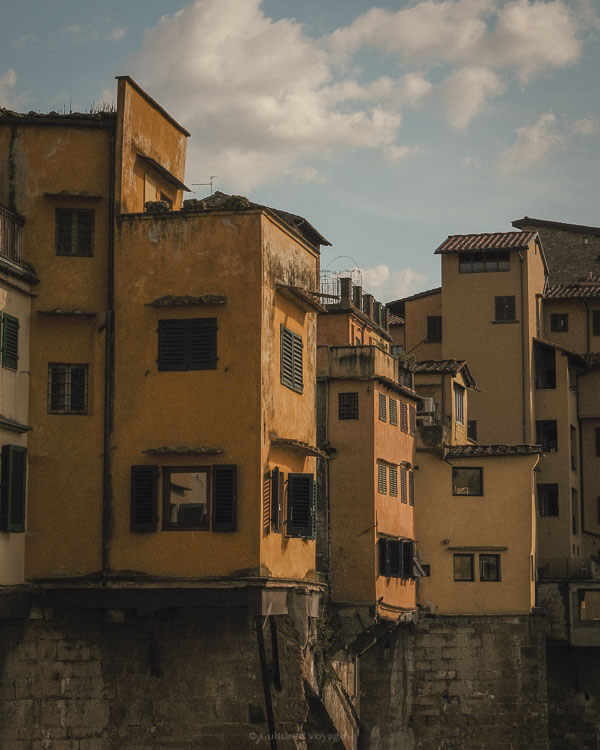
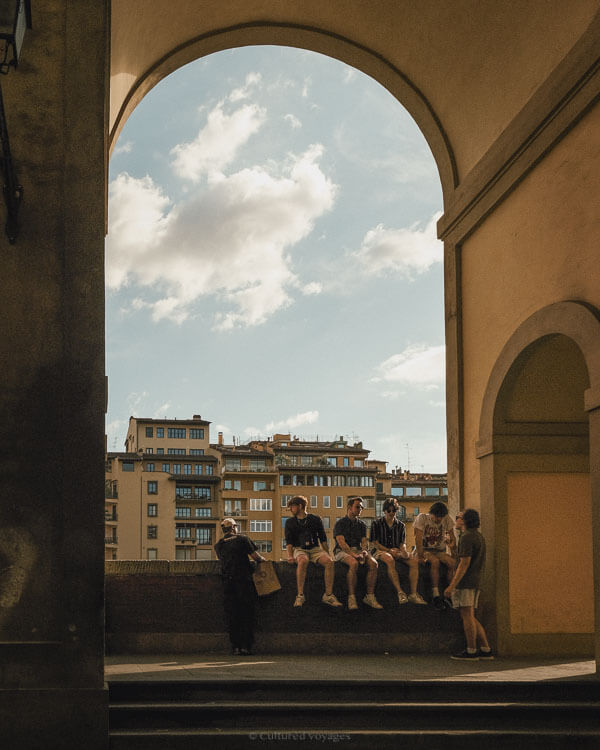
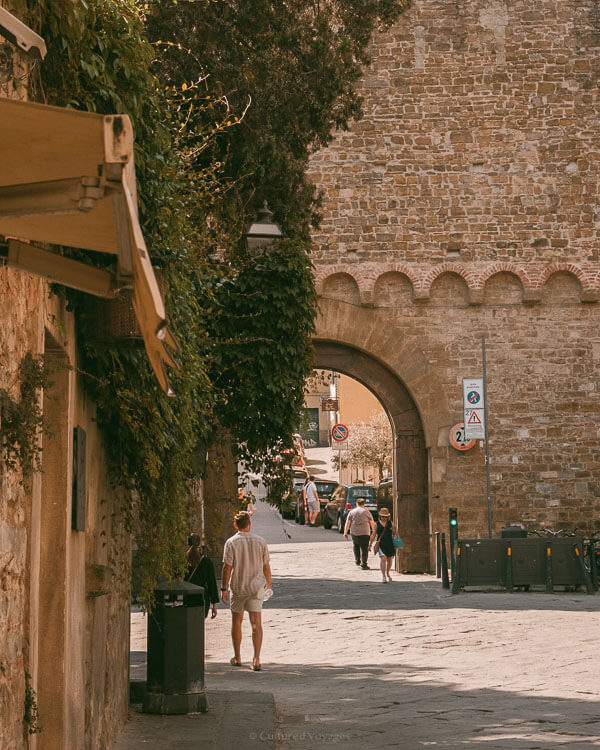
Some of my best moments that summer weren’t the big sights at all. They were the quiet ones: walking across the Arno around 7:30 or 8am, when the streets were still empty, the light was soft, and it felt like the city hadn’t quite woken up yet.
How expensive is Florence in summer?
This is the most expensive time of year to visit, and the difference is noticeable. Even mid-range hotels can sit around €220–€250 per night, while boutique or design-led stays regularly climb into the €400–€800 range.
The best options – particularly those with outdoor space or good airflow – book out well in advance. If you’re set on summer, booking early isn’t optional.
Should you visit Florence in summer?
For most first-time visitors, I wouldn’t recommend it if you can help it. You’ll pay more, queue more, and often see less in a day than you expect.
Where summer does work is if you’ve been before and don’t feel pressure to do everything, you’re happy to skip or minimise the big-ticket sights, or you enjoy a busy, high-energy atmosphere.
If you do go: as covered in the time of day section above, starting early and booking the first available entry slot makes the biggest difference. Build in proper downtime. And when it starts to feel like too much, cross the Arno, sit in Santo Spirito, and let the pace drop.
Visiting Florence in shoulder season: spring and autumn
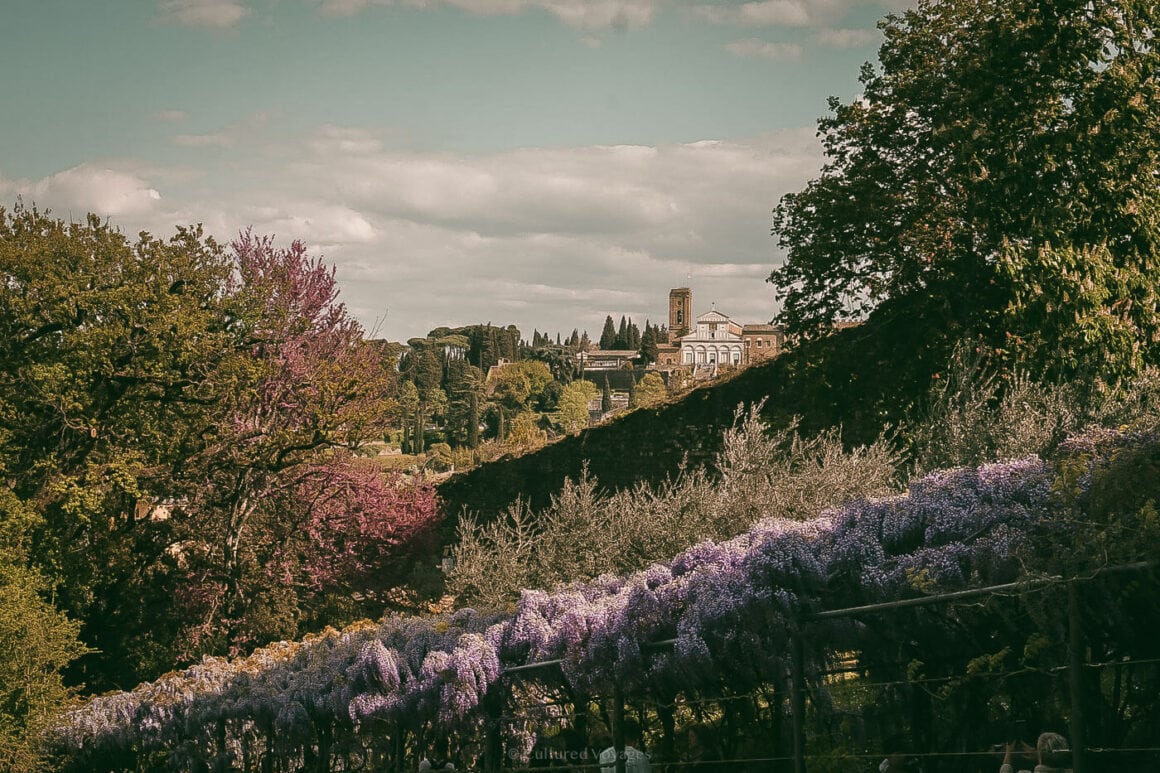
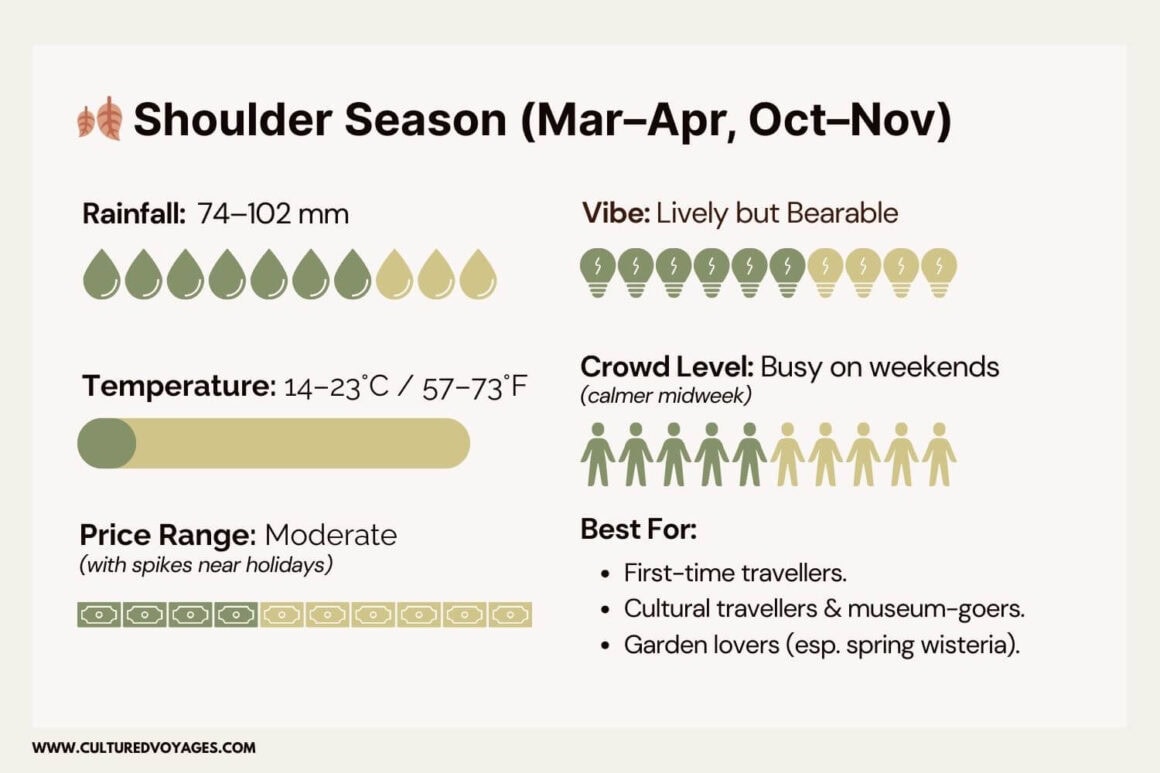
The honest summary: shoulder season is still the best time for most people, but early April before Easter is where the real sweet spot sits. By May, it’s busier than people expect. On the other side of summer, late October into early November is best for autumn.
When is shoulder season in Florence?
March to mid-April, and again from mid-October through November. From what I’ve experienced and from what locals have confirmed, things start ramping up quickly from Easter onwards – so it’s worth being precise about which part of shoulder season you’re actually targeting.
What does Florence actually feel like in shoulder season?
This is where Florence feels most balanced.
A typical spring day in April starts off cool and a little blustery – that mix of sun and cloud that never quite settles. You head out in a light jacket, warm up as the day goes on (I found myself in a t-shirt and jeans at one point), and by evening you’re glad you kept it with you.
It’s changeable, but comfortable, and it lets you move around the city without constantly managing heat or battling crowds.

Why early April (before Easter) is such a sweet spot
If I had to pick one specific window to visit Florence, this would probably be it.
You still have to queue for the big sights, but there’s a little more flexibility and you don’t feel quite as locked into booking everything weeks in advance.
Where you really notice the difference is outside those main arteries. The streets feel easier to move through, restaurants aren’t as competitive, and the city has a bit more breathing room.
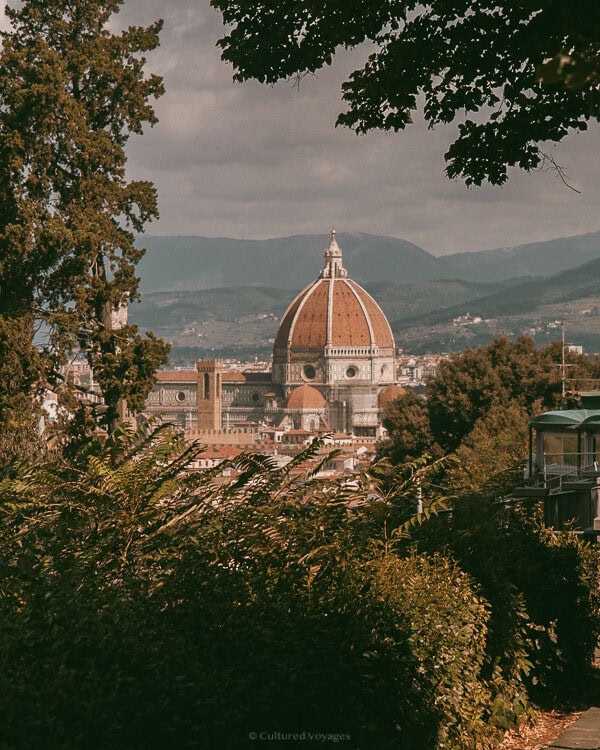
One moment that really stayed with me was walking up to Piazzale Michelangelo one morning around 9 or 10am, when most people were still at breakfast. There were maybe 30 or 50 people up there – which sounds like a lot, but in that space, it really isn’t at all.
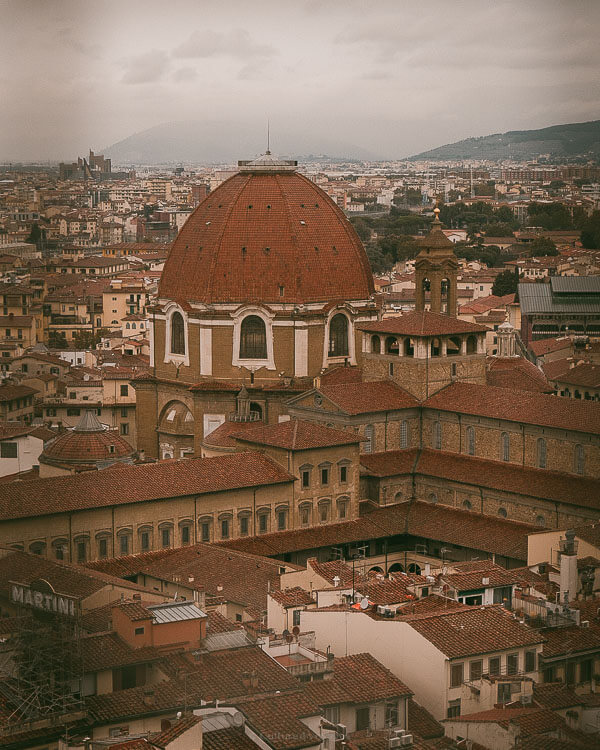
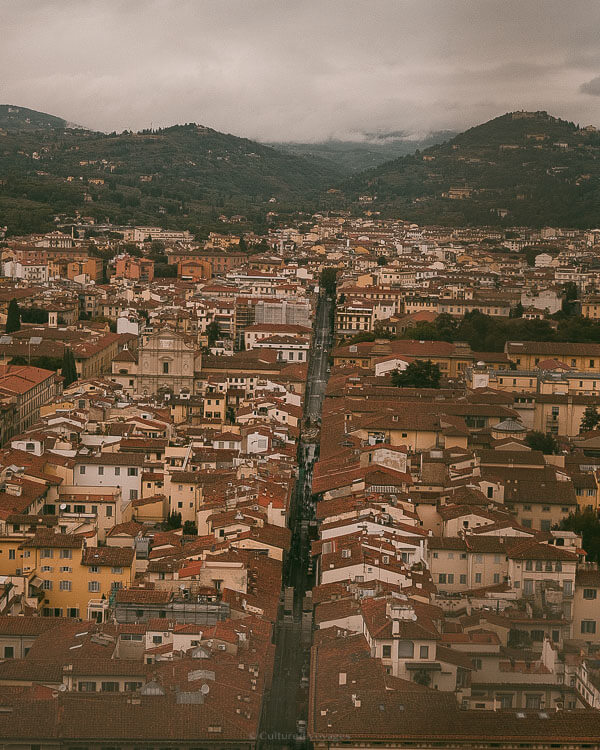
Florence’s ochre and rust-coloured rooftops rolled out beneath us in the soft morning light, as spring blossoms starting to appear framed the view. There was a sense of calm that’s quite hard to find later in the year.
The reality of late April and May (and why it’s not quite the same)
This is where I think people get caught out.
On paper, May sounds ideal. The weather is warmer, days are longer, and everything is in bloom.
But my recent experience was quite different.
I visited from the end of April into mid-May, and the weather just wasn’t playing ball. It was cooler, wetter, and more unsettled than expected.
But what surprised me more was the shift in crowds.
There was a noticeable jump compared to early April. And not just at the weekend – even midweek, it didn’t really drop off in the way I expected.
The season had already tipped, with clearly more people on annual leave rather than just weekend visitors.
So while May is still technically “shoulder season”, it doesn’t necessarily feel like that quieter, easier version of Florence people often imagine.
How expensive is Florence in shoulder season?
Prices sit somewhere in the middle, but they’re not static.
Spring (especially April into May) has seen rising demand in recent years, with boutique and mid-range hotels typically falling around €160–€220 per night, and higher-end stays pushing €300–€500.
November drops off more noticeably, often by 30% or more. There’s a clear difference even within shoulder season itself.
So – is shoulder season the best time to visit Florence?
For most people, yes – but specifically early April before Easter. That’s where you get manageable crowds, comfortable weather, and a city that still feels open and easy to move through. After Easter, things start to shift, and by May it can feel noticeably busier than people expect.
Is Florence busy in May? What’s changed
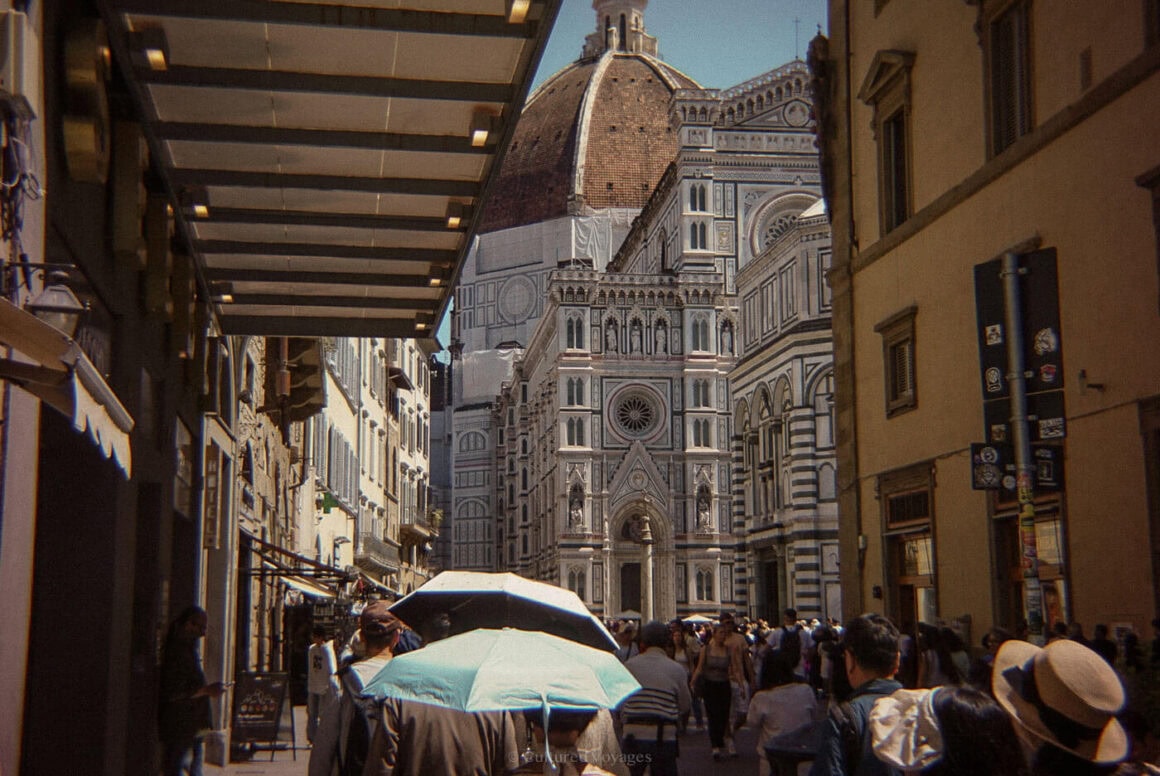
It’s worth saying a bit more about May specifically, because it’s where I see a lot of outdated advice still circulating.
You’ll often see May (and sometimes late April or October) recommended as the ideal time to visit Florence.
I’d question that now.
On an earlier trip in April 2018, Florence felt noticeably quieter at that time of year. But returning at the same time of year in 2025, the difference was quite striking.
Even midweek at the end of April, there were far more people around than I expected, and when I returned two weeks later in the middle of May having travelled around Tuscany, the crowds had increased even more.
That stretch of shoulder season doesn’t feel quite as “shoulder” as it used to.
Another thing I’ve noticed, both in Florence and in other places I’ve travelled to in spring over the last few years (even as far as Sri Lanka), is how much less predictable the weather has become.
Whether that’s down to climate change or not, it doesn’t always behave the way you’d expect it to. I had several cool, rainy days in Florence in May, which doesn’t quite line up with the idea of it being a guaranteed sweet spot anymore.
Visiting Florence in winter: what it’s actually like
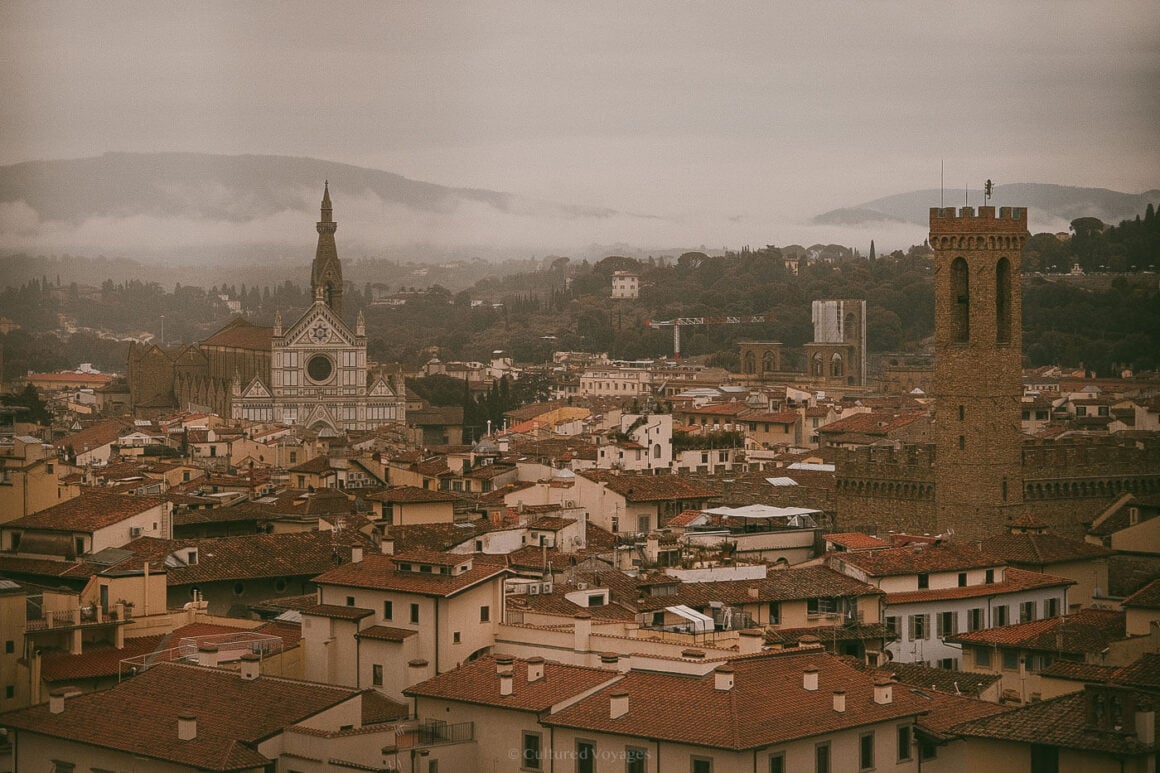
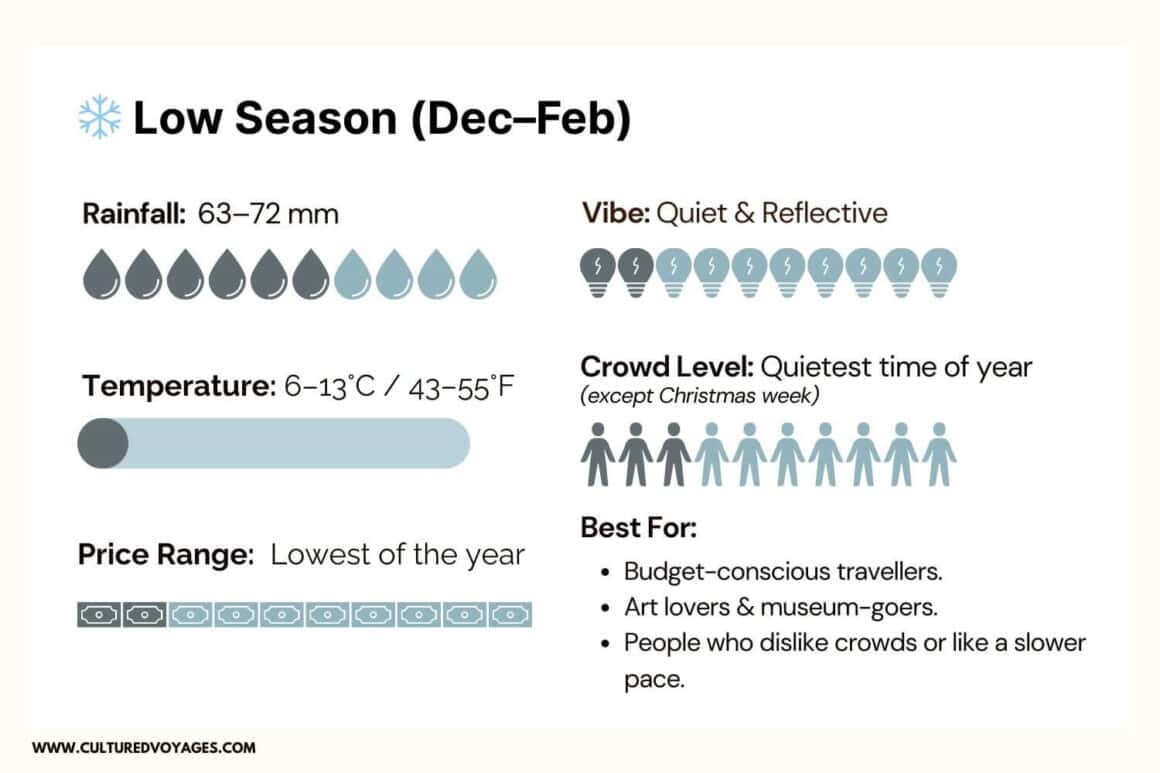
In a nutshell: winter is the quietest and most affordable time to visit Florence, and if your focus is museums, food, and unhurried exploration, it’s far more rewarding than most guides suggest.
When is winter in Florence?
December through February – with one caveat. The Christmas and New Year period brings a short spike in domestic tourism. Once that passes, Florence drops off quickly. January and February are widely considered the quietest months of the year.
What I’ve heard about Florence in winter from locals
One conversation has always stuck with me. A Florentine taxi driver, when I asked him when Florence feels like it belongs to locals again, answered immediately: November.
He described it as the point where things finally slow down – the crowds thin, the pressure lifts, and the city starts to feel like itself again. January and February, he said, are the absolute quietest months, with the trade-off of worse weather.
Everyone I’ve spoken to since has said the same.
What is Florence actually like in winter?
I haven’t experienced Florence in winter firsthand yet, though a January trip is firmly on my radar. From what I’ve heard consistently from locals, the shift is less about weather and more about atmosphere – you go from being one of many to one of very few.
The streets aren’t empty, but they’re calmer. You notice more: small details, interactions, thepace of daily life that get lost when the city is full.
I had that in Venice in winter – walking through streets that would normally be packed and finding them almost completely still – and it ended up being one of the most memorable trips I’ve ever taken.
Florence, I imagine, offers something very similar.
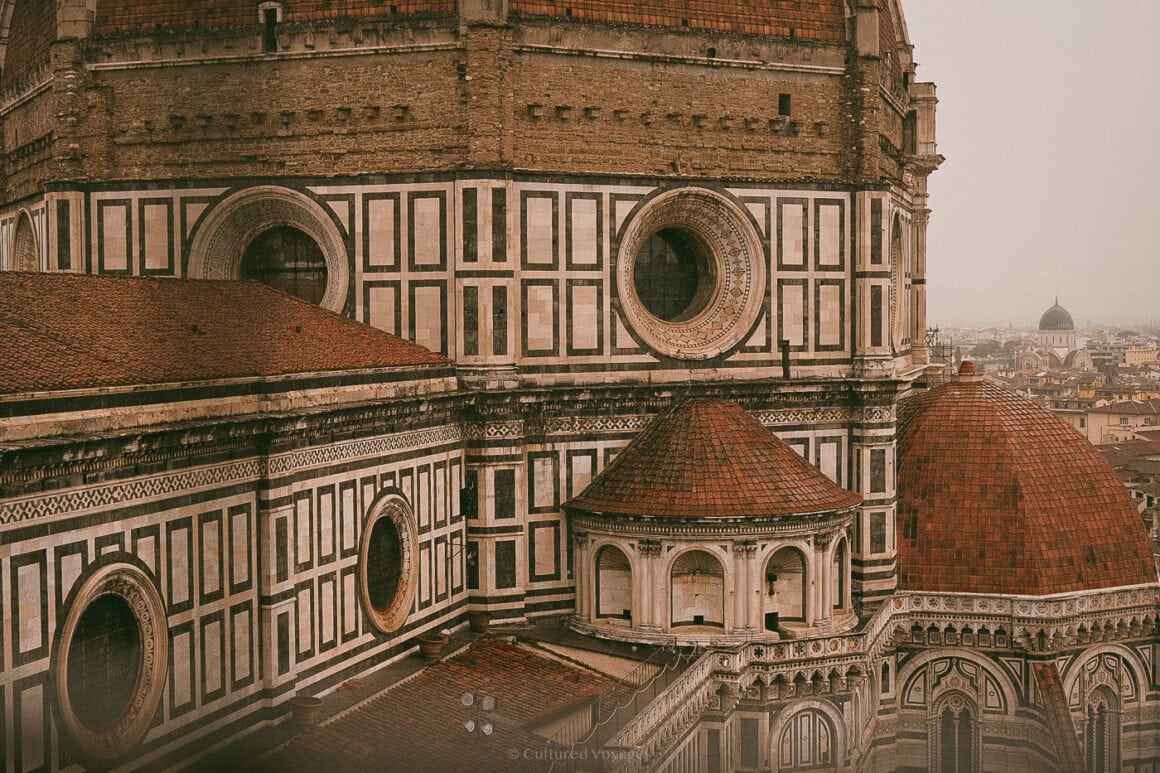
What about winter weather in Florence – does it matter?
Winter in Florence is cool, sometimes damp, and not photogenic in the way summer is. Daytime temperatures sit around 6–13°C, with colder evenings and a fair chance of rain.
But Florence is slightly misunderstood on this point. So much of what you do here naturally pulls you indoors – museums, churches, galleries, long meals that stretch out over hours. For the kind of trip Florence lends itself to, the weather matters less than people expect.
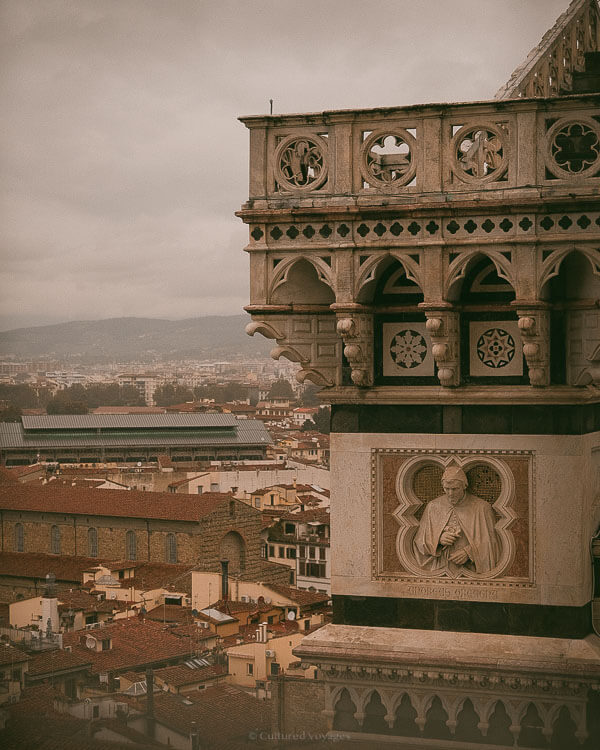
How crowded and expensive is Florence in winter?
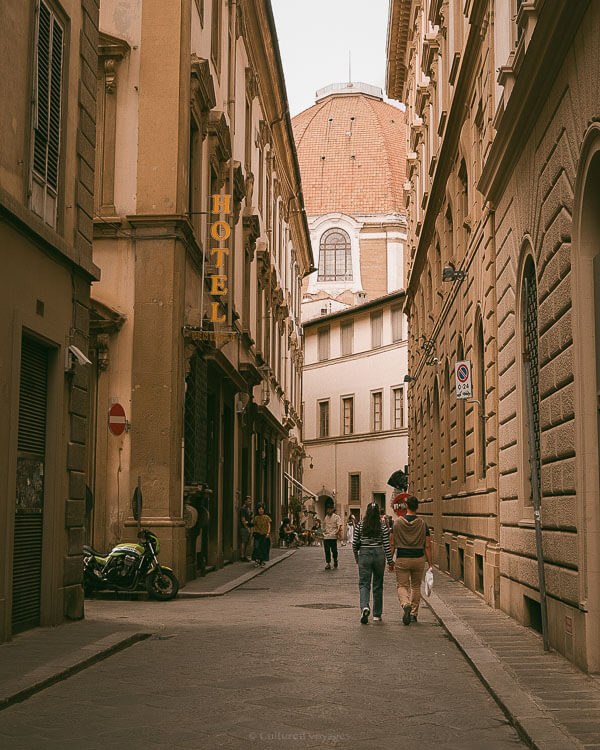
After early January, visitor numbers drop sharply – January typically records the lowest tourist arrivals of the year. In practical terms, you can often walk into places that would normally require careful planning.
It’s also the most affordable time to visit. Hotel occupancy drops significantly from January through early March, and prices follow – often with extras that aren’t available in busier months: upgrades, included breakfast, more flexible cancellation.
If you’ve ever looked at Florence and thought it felt slightly out of reach budget-wise, this is the window where it becomes much more accessible.
So – is winter a good time to visit Florence?
This is probably when Florence feels most like a real, lived-in city rather than something you’re moving through alongside everyone else.
The trade-off is obvious: you’re giving up sunshine, longer days, and the classic Italian atmosphere people often picture. But if your priorities are museums, food, and the space to actually enjoy both, winter makes a lot of sense.
When should YOU visit Florence? (by travel style)
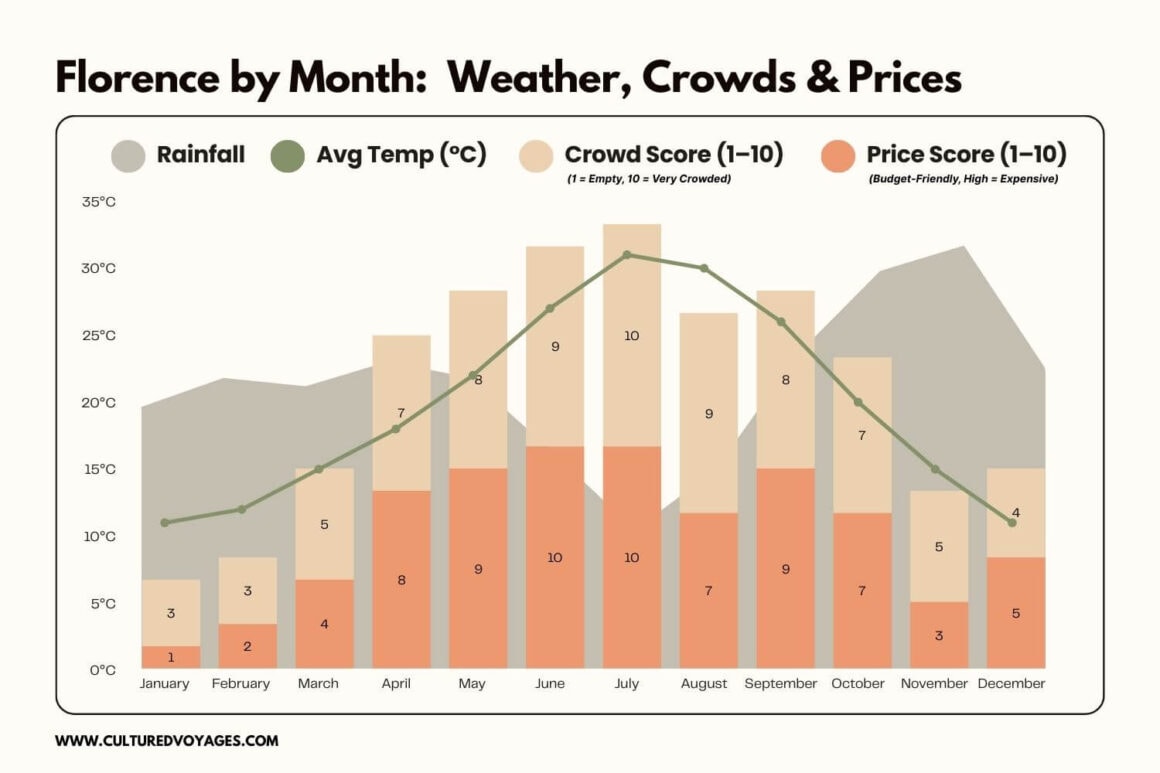
The summary: there’s no single right answer, but knowing whether your priority is crowd avoidance, weather, food, or art significantly narrows down the best window for your specific trip.
There are definitely some patterns I’ve noticed over multiple trips that make certain times work much better than others. If you’re not sure what applies to you, this should help you narrow it down.
Best time to visit Florence for first-time visitors
If you can, I would try to avoid visiting in summer.
It’s not that you can’t have a good trip – you absolutely can – but you are seeing the city under the most pressure. The crowds are at their highest, the heat can be draining, and everything takes more effort than it should.
If this is going to be your first impression of Florence, I think that really matters.
If I were planning a first trip now, I’d aim for early spring (before Easter if possible) or late autumn (towards the end of October into November). You still get atmosphere, things are open, and the city feels more balanced overall.
If summer is your only option, then go – but go in knowing you’re seeing Florence at its busiest, and give it a bit of grace on that front.
Best time to visit Florence if you want to avoid crowds
This is very much me, and I feel quite strongly about this one.
I would actively avoid summer and weekends if you can.
The difference in how the city feels is noticeable. It’s easier to move around, easier to get into places, and generally just less tiring.
If you’re not too concerned about perfect weather, I’d seriously consider November, January, or February. You’re trading sunshine for space, but in Florence, that’s often a good trade.
If you still want a bit of life in the city without it feeling overwhelming, then the edges of shoulder season – early April before Easter, or late October – tend to strike a better balance.
Best time to visit Florence for food-focused travellers
Timing doesn’t massively change the quality of food in Florence – you can eat very well year-round – but it does change how easy it is to eat the way you want to.
In peak periods, even very good, non-hyped places will be busy. If you have specific restaurants in mind, you’ll need to book ahead, and you’ll have less flexibility to just wander and decide on the spot. If you want help narrowing those down, I’ve broken that out in my guide to where to eat in Florence.
If you prefer that more spontaneous style – walking around, peeking into places, deciding as you go – then quieter periods will suit you much better.
The same applies to food tours in Florence, too.
In busier months, they run constantly and are easy to slot into your plans, especially around weekends. Outside of peak times, there’s usually still plenty available, but you might find fewer options midweek or at the very start and end of shoulder season, so it’s just something to keep in mind if that’s a key part of your trip.
Autumn does bring things like truffle season and the wine harvest, but unless you’re spending time out in the Tuscan countryside, that won’t shape your experience in the city as much as people sometimes expect.
Best time to visit Florence for art and culture
If your focus is museums, galleries, and actually taking your time with what you’re seeing, then I would seriously consider winter.
It’s quieter, and that changes everything.
You’re not navigating crowds between places, you’re not being rushed through rooms, and you’re not trying to look at something while someone else’s phone is in your line of sight.
Florence is also very compact, so even in colder or wetter weather, you’re never outside for long stretches between stops.
You can visit at any time of year, of course – but if your priority is actually experiencing the art properly, quieter months make that much easier.
If I were choosing now
At this point, I’d go back in January, just after the Christmas period.
Everything has settled down, the city is quieter, and you can actually move through it without constantly adjusting around other people.
That said, that’s partly because I’ve already seen the main sights. If I were planning a first trip again, I’d probably lean towards the end of March or mid-November instead.


How prices change throughout the year in Florence
Curious about Florence hotel prices by month and how much they fluctuate across the year?
I ran an independent comparison using live rates for three types of stays – a central 2-bed apartment, a high-end boutique hotel, and a great-value 3-star – across low, shoulder (spring and autumn), and high seasons.
Prices were pulled directly from Booking.com and Plum Guide for 2025–2026.
| Accommodation | Season | Midweek € per night | Weekend € per night |
| Plum Guide Apartment (2-bed, central) | Low Season (Tues 27 Jan & Sat 31 Jan 2026) | €321 | €348 |
| Shoulder Season (Spring) (Tue 17 & Sat 21 Mar 2026) | €385 | €467 | |
| Shoulder Season (Autumn) (Tue 28 Oct & Sat 1 Nov 2025) | €409 | €415 | |
| High Season (Tues 16 & Sat 20 Jun 2026) | €557 | €683 | |
| High-End Boutique Hotel Cerretani Hotel (room only) | Low Season (Tues 27 Jan & Sat 31 Jan 2026) | €256 | €256 |
| Shoulder Season (Spring) (Tue 17 & Sat 21 Mar 2026) | €310 | €336 | |
| Shoulder Season (Autumn) (Tue 28 Oct & Sat 1 Nov 2025) | €400 | €364 | |
| High Season (Tues 16 & Sat 20 Jun 2026) | €468 | €482 | |
| Boutique 3* Hotel Hotel Pendini | Low Season (Tues 27 Jan & Sat 31 Jan 2026) | €161 | €161 |
| Shoulder Season (Spring) (Tue 17 & Sat 21 Mar 2026) | €205 | €227 | |
| Shoulder Season (Tue 28 Oct & Sat 1 Nov 2025) | €282 | €293 | |
| High Season (Tues 16 & Sat 20 Jun 2026) | €469 | €482 |
📌 Clear Takeaways from the Price Data
- Florence hotel prices remain flat in the low season: January and February are the most affordable months, with minimal difference between weekend and midweek stays – ideal for budget-conscious travellers.
- Spring prices rise steadily from early March: For example, I saw how the same Plum Guide apartment that’s €385 per night at the end of February increases to €432, then €440, then €467 over successive weekends – peaking at €766 by Easter weekend (first weekend of April 2026).
- Avoid Easter if you’re watching your budget: The week leading into Easter (5 April in 2026) sees the steepest spike, particularly in apartments and family-friendly properties.
- Autumn shoulder season remains elevated through October: Prices stay high until after Halloween, with some weekend hotel rates dropping sharply from 1 November. This makes early November an excellent value window.
- Summer prices are significantly higher, especially for apartments: That same 2-bed apartment jumps from €321 in January to €683 in mid-June – more than double. High-end hotels and 3-star stays also increase by around 80–100% from low to high season.
- Book early for summer to get better deals: I found lower rates for July 2025 than for the same dates in 2026 – suggesting that hotels and apartments offer meaningful early-bird savings if booked 6–12 months out.
What This Price Research Means for You
If you’re still deciding when to visit Florence, use this pricing data as a guide. Travelling just a few weeks before or after peak season could save you hundreds – especially if you’re booking multiple nights or travelling as a group. Planning a trip in March (before Easter) or early November can unlock excellent value without sacrificing atmosphere.
Accommodation pricing is one of the clearest indicators of demand. Use it to your advantage – whether you want to avoid the crowds, splurge smart, or simply make your money go further.
If you’d like to see what neighbourhoods and accommodation I recommend, you can read more in my Florence neighbourhood and accommodation guide.
FAQs about the best time to visit Florence


What is the best time of day to visit Florence?
Early morning, before about 9am, and then again later in the evening.
That’s when the city feels easiest to move around and far less crowded. The one thing to keep in mind is that most major attractions don’t open before 9am, so the best approach is to use that early window for wandering, and then book the first available entry slot for places like the Uffizi or Accademia.
In the middle of the day, everything overlaps, and even short distances can start to feel slow.
What is the best time of day to take a tour in Florence?
Book the first available slot of the day. By 11am, queue and crowd density at the Uffizi, Accademia, and Duomo complex are noticeably heavier – and even the streets between them become harder to move through. The earliest entry available is consistently the most effective thing you can do to make a Florence tour feel manageable.
What is the best day of the week to visit Florence?
Tuesday or Wednesday. That’s consistently when I find Florence feels most manageable – foot traffic is lower, and you avoid the Thursday-onwards swell of incoming weekend visitors. Monday is quieter than the weekend but comes with a trade-off, as a number of museums and attractions are closed.
Is Florence busy in April or May?
Yes, more than people often expect.
Spring used to be considered a quieter time, but that’s shifted. On a recent May trip, I was surprised by how busy it felt even midweek, so I wouldn’t go expecting a calm or low-season experience.
What is the quietest time to visit Florence?
January and February are the quietest months.
From what I’ve experienced, and from conversations with locals, this is when the city finally slows down after the festive period. It’s not empty, but you have far more space to explore.
What are the busiest times in Florence?
Late morning through mid-afternoon, especially from late May through September, and across weekends.
That’s when tour groups, day-trippers, and weekend visitors all overlap, and it’s when the city feels most crowded.
What is the best time of year to visit Florence?
For most people, early April, before Easter if possible, or late October into November offers the best balance.
You avoid the peak summer crowds but still get atmosphere and a full city experience. That said, these periods aren’t as quiet as they used to be, and the weather can be less predictable. I’ve had cool, rainy days in May, so it’s worth keeping expectations flexible.
Is Florence worth visiting in summer?
Yes, but it’s not the easiest time to experience it.
It’s hot, crowded, and requires more planning. If it’s your only option, it’s still worth going, but you’ll need to work around the heat, the queues, and the overall intensity of the city at that time of year.
Continue Planning Your Trip to Florence
Timing is one piece of the planning puzzle – but once you’ve settled on when to go, the practical decisions are where most people need the most help.
For everything else you need to plan before you arrive:
➙ Florence travel guide: plan your trip with months of first-hand knowledge
For the tips that actually change how the trip feels on the ground – including how to use time of day to your advantage:
➙ Florence travel tips: what I wish I knew before visiting
And if you’re considering day trips into Tuscany during your stay – timing those well matters just as much as timing the main visit:
➙ Best day trips from Florence
If you’re still in research mode or want to explore a bit more before committing to anything, you can browse all of my Florence content in one place here: Florence travel hub.
Related reading for Florence


Like this post? Pin for later!

