
Disclosure: Some of the links on this site are affiliate links. If you make a purchase through one of them, I may earn a small commission at no extra cost to you. Read my full disclaimer here. Thank you for your support!
These are 17 things to do in Florence chosen from a month living in the city and several visits before and since – a mix of the iconic sights that genuinely deserve their reputation, and the quieter discoveries that don’t make most lists but should.
Florence is one of those cities that can feel overwhelming to plan.
There’s an enormous amount of art, history and culture concentrated into a relatively small space – I spent a month there in 2023 and still left with a list of things I hadn’t got to.
It’s easy to either over-schedule and end up running between museums in the midday heat without properly absorbing any of them, or to under-research and miss the things that would have made the trip. I’ve done both, at various points.
What I’ve tried to do here is cut through that. Not every attraction in the city, but the ones I’d actually recommend – with honest context for each, including the ones that are worth the hype and the ones where I’d point you somewhere better instead.
17 Things to Do in Florence: Browse by Category
The iconic art and architecture
Renaissance power and politics
- Palazzo Vecchio and the Secret Passages
- Palazzo Pitti and Boboli Gardens
- The Medici Chapels and New Sacristy
Neighbourhoods and local life
Views and outdoor spaces
Food, drink and aperitivo
For the extra curious
Shopping
Beyond Florence
Cultured Voyages’ recommendations for FLorence
Skip-the-line tickets: Statue of David // Duomo // Uffizi Gallery
Top rated tours & experiences in Florence:
☆ VIP David & Duomo Tour with Exclusive Terrace Access (**top pick**)
☆ Cooking class: The art of Pasta – Nonna Recipes
☆ Uffizi & Accademia with Michelangelo’s David – Small Group Tour
☆ Oltrarno at Sunset: Florence Food & Wine Tour (great for foodies)
Top foodie experience from Florence:
☆ Cooking Class & Lunch at Tuscan Farmhouse ( + local market tour) (2,668+ 5 star reviews)
Cultured Voyages’ selected hotels:
✦ Peruzzi Urban Residences (luxe for less)
✦ AdAstra Suites (boutique bolthole)
✦ NH Collection Porta Rossa (fantastically located 5-star)
✦ Villa Cora (classic luxury)
✦ Plum Guide (incredible Florence rentals)
Things to Do in Florence: Cultured Voyages’ Top Picks
1. Admire Michelangelo’s David at the Accademia Gallery

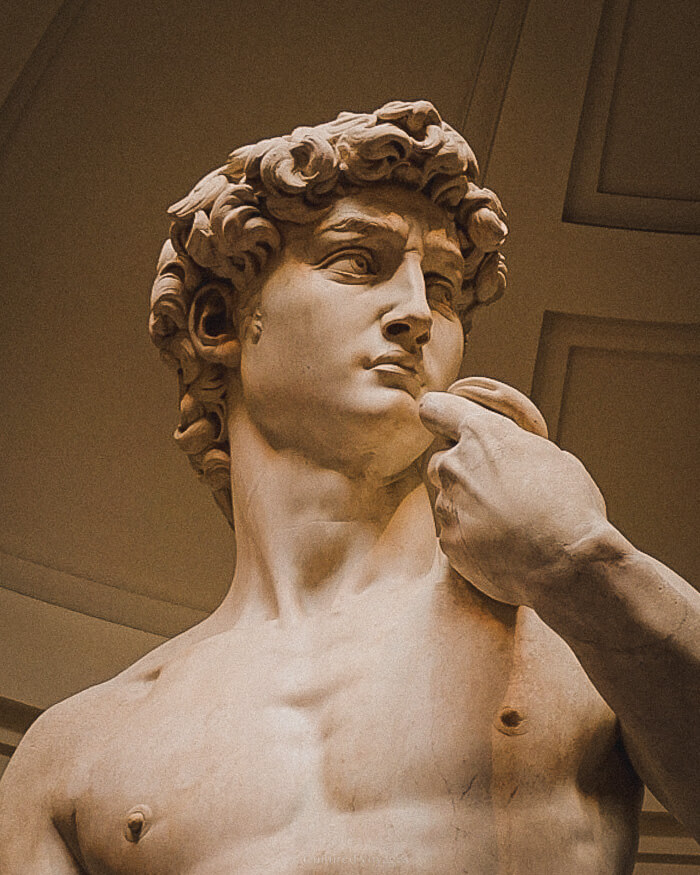
Standing before Michelangelo’s David is an experience that stays with you long after you’ve left Florence. Created between 1501 and 1504, this 5.17-meter marble statue is a masterpiece of Renaissance sculpture and a symbol of Florentine strength and independence.
As you enter the gallery, you’ll find David at the end of a long corridor, bathed in natural light from the circular skylight above. Take your time approaching – the statue is impressive from every angle.
From afar, you’re struck by the sheer mass it occupies within the space – it has such a commanding presence. Up close, the details are astonishing – the veins in his hands, the tension in his neck, the look of determination in his eyes.
What many people don’t realise is that David was carved from a single block of marble that had been rejected by other sculptors as too difficult to work with. Michelangelo was just 26 when he began the project, and his skill in bringing this flawed piece of stone to life is truly remarkable.
While David is undoubtedly the star, don’t miss the other Michelangelo works in the gallery.
Take a close look at his unfinished “Prisoners” or “Slaves”, and you’ll get an insight into his sculpting process, and how a work such as David begun to take form. You can almost see the figures struggling to break free from the marble.
The gallery isn’t just all about the sculpture, either. Upstairs you’ll find a collection of artworks spanning several centuries, including some rather impressive religious panels that utilise some pretty jazzy, fluorescent paint colours, should that tickle your fancy.
Accademia Gallery: Practical Information
- Location: Via Ricasoli, 58/60
- Cost: €13 per adult. EU citizens aged 18-25 pay just €2, and it’s free for children under 18 and disabled visitors plus a companion. Note that tickets sell out weeks in advance.
- Opening Hours: Tuesday to Sunday, 8:15 am to 6:50 pm (last entry is at 6:20 pm). Closed Mondays.
- Tickets: Book well in advance, especially for summer visits. You have two main options:
- Official website: Tickets often sell out weeks ahead and attract a €4 booking fee. There are refunds or changes allowed.
- Skip-the-line tickets: These offer better last-minute availability and cancellation up to 24 hours before for a full refund.


Recommended Resources For Visiting David:
Tips for Visiting the Accademia Gallery
- Book the earliest or one of the latest time slots possible. Being among the first to enter gives you a chance to appreciate David in relative solitude, as do the later slots because a lot of visitors will have cleared off.
- Allow at least 1-1.5 hours for your visit. While you could rush through in 30 minutes, you’d miss out on fully appreciating the rest of the artworks there.
- Consider a guided tour. An expert can provide valuable context about Michelangelo’s life and work, enhancing your appreciation of the sculptures.
- Photography is allowed, but no flash. Remember to put the camera down and experience the artwork with your own eyes too!
- If you’re interested in Michelangelo’s work, combine this visit with the Medici Chapels and the Bargello Museum for a more comprehensive experience.
- Remember that the Accademia is much smaller than the Uffizi. If you’re short on time in Florence, this is a more manageable option that still allows you to see one of the city’s most iconic artworks.
2. Explore the Uffizi Gallery

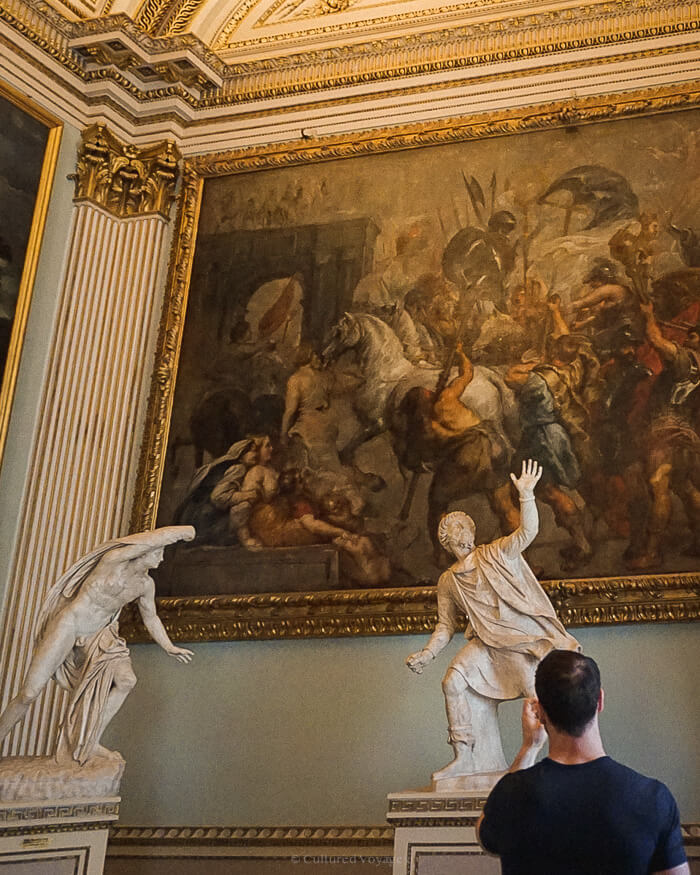
Originally built as administrative offices for Cosimo I de’ Medici in 1560 (“uffizi” is the Italian word for offices), the Uffizi became one of the world’s first public museums in 1765 when the last of the Medici gifted their art collection to the city of Florence.
Designed by famed Renaissance architect and artist, Georgia Vasari, the building itself is rather impressive. The long corridors lined with statues and the frescoed ceilings are works of art in their own right.
Start on the second floor with the early Renaissance works.
Botticelli’s “Birth of Venus” and “Primavera” are undoubted highlights. I dare you to not to be struck by the ethereal beauty of Boticelli’s muse in Primavera, and the mastery demonstrated by the transluscent garments of its other characters.
Don’t miss Leonardo da Vinci’s “Annunciation” – his mastery of perspective and light is evident even in this early work.
Moving through the gallery, you’ll encounter masterpieces by Michelangelo, Raphael, Titian, Giotto, Raffaelo, Caravaggio and more. Caravaggio’s “Medusa” is particularly striking – the look of horror on her face seems to follow you around the room.
A room of particular note is the Tribuna, an octagonal room that once housed the Medici’s most precious artworks. Its ornate decoration and carefully curated collection make it a museum within a museum.
Uffizi Gallery: Practical Information
- Location: Piazzale degli Uffizi, 6
- Cost: €26 per person if bought on the day, with an extra €4 charged if you book for a specific time and date in advance.
- Opening Hours: Tuesday to Sunday, 8:15 am to 6:30 pm. Closed Mondays.
- Tickets: Book well in advance. Options include:
- Official website: €26 + €4 extra for advance booking. Collect physical tickets at a separate office, to which the queues can be extremely long.
- Skip-the-line tickets: Often available even when the official site is sold out. Also the option I’d recommend, as you will save a decent chunk of time not having to queue at the ticket office.
- Guided tours: Include skip-the-line access and expert commentary, which may be useful for a collection that is so storied, and vast.


Recommended Resources For Visiting the Uffizi
Tips for Visiting the Uffizi Gallery
- Arrive early or late in the day for smaller crowds. The first or last entry times are often the quietest.
- Plan for at least 3-4 hours to do the gallery justice. Art fatigue is real – take breaks in the cafe or on the rooftop terrace.
- If you’re short on time, research the key pieces you want to see and plan your route accordingly. The gallery provides maps to help you navigate. View it here.
- The Uffizi can be overwhelming. If you’re not an art expert, don’t feel pressured to see everything. Focus on the works that interest you most.
- Remember to look up! The ceilings are adorned with beautiful frescoes that are often overlooked.
3. Visit the Florence Cathedral and Duomo Complex

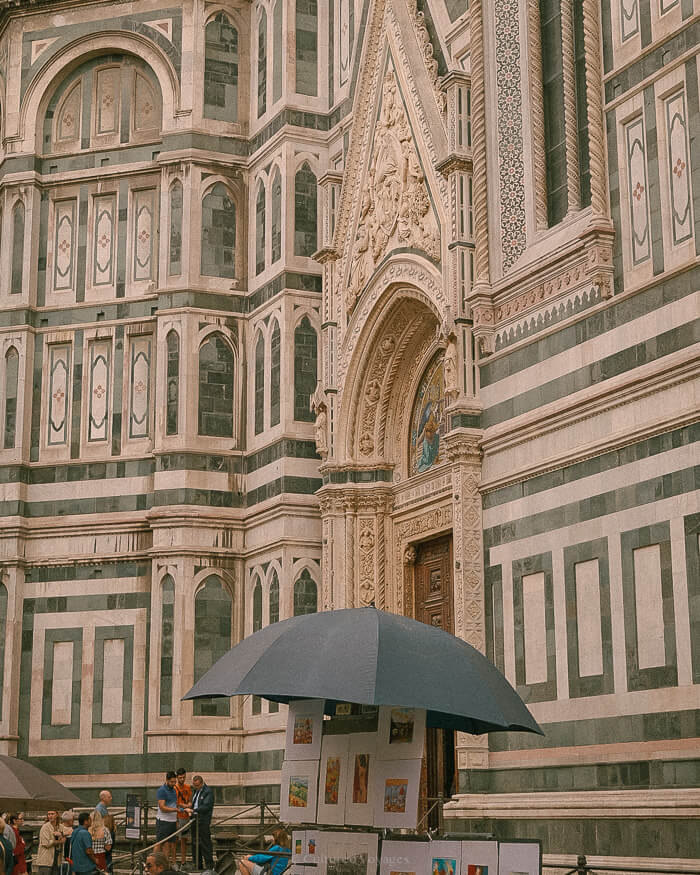
If there’s a single jewel in Florence’s Renaissance crown, it’s the Cattedrale di Santa Maria del Fiore, better known as the Duomo. This architectural masterpiece dominates the city skyline, its iconic dome visible from just about every vantage point dotted about Florence.
My first glimpse of the Duomo rendered me rather astonished.
The intricate marble facade in white, green, and pink is a work of art in itself, while Brunelleschi’s dome seems to defy gravity. It’s hard to believe that when construction began in the 13th century, no one knew how to build a dome of this size!

Download the Guide
Avoid the Florence That Feels Like a Queue
The cultural considerations that matter, the etiquette locals notice, and the choices that separate a considered visit from a rushed one.
Not just about the dome, the Duomo complex consists of several stunning structures. The term ‘Duomo’ actually refers to the cathedral itself, and not the dome. In Italian, the dome is called the ‘Cupola’.
Here’s what you will find at the complex.
The Cathedral, or Duomo:
While the exterior is breathtaking, the interior is surprisingly austere. However, don’t miss the chance to crane your neck to see Vasari’s frescoes of the Last Judgment inside the dome. The sheer scale of the nave is impressive, too, stretching to 153 meters in length.
Brunelleschi’s Dome:
The story of its construction is one of Renaissance ingenuity.
When the cathedral was built in the 13th century, no one knew how to construct a dome of this size without it collapsing. It wasn’t until 1418 that a competition was held to find a solution.
Filippo Brunelleschi, a goldsmith with no formal architectural training, proposed an innovative double-shell design inspired by ancient Roman techniques. His solution was so secretive that even today, some of his methods remain a mystery.
Climbing the 463 steps to the top is a must, should you be relatively comfortable in tight spaces and with heights.
Do note that the narrow passages were originally used by workers during construction, and were not created for the enjoyment of future visitors! It all, however, adds to the experience. At the top, you’re rewarded with panoramic views of Florence that are simply unforgettable.
Giotto’s Campanile:
This elegant bell tower stands 85 metres tall and offers another great viewpoint over the city.
The climb is less crowded than the dome, and you get the added bonus of the changing perspectives of viewing Brunelleschi’s masterpiece from various heights. Look closely at the tower’s decorative panels – they tell the story of human civilisation and the Christian faith.
There are 414 steps to the top, and while less claustrophobic than the dome climb, there are still a few tight corners and narrow staircases throughout the route to the top.
The Baptistery:
One of the oldest buildings in Florence, dating back to the 11th century. It’s known for its magnificent gilded bronze doors, created by Lorenzo Ghiberti, which were dubbed the “Gates of Paradise” by Michelangelo.
The original doors are now in the Opera del Duomo Museum, with replicas in place at the Baptistery. Inside, look up to see the stunning golden mosaic ceiling depicting scenes from the Bible. It only takes a few minutes to visit, but you’ll be glad you looked inside.
Opera del Duomo Museum:
Often overlooked, this museum is a treasure trove of sculptures and reliefs that once adorned the Duomo complex.
If this collection was in any other city but Florence, it would probably be one of its most heavily visited museums. But such is the depth of Florence’s artistic riches and alas, it forms an afterthought for many visiting Florence.
Highlights include Michelangelo’s unfinished Pietà (I’d argue that this is my favourite Michelangelo sculpture in Florence, one he started to craft to adorn his own tomb but fell out of love with) Ghiberti’s original Gates of Paradise, and Donatello’s gaunt, haunting Mary Magdalene.
The museum also houses a wooden model of the original facade design for the cathedral, as well as an interesting exhibition dedicated to Brunelleschi and the building of the dome.
Santa Reparata:
Beneath the cathedral floor lie the remains of the ancient basilica of Santa Reparata. This was a more modest church that stood where the Duomo was later erected.
This archaeological site offers a fascinating look at Florence’s early Christian history, as it dates back to the 5th century. You can see original floor mosaics with gorgeous geometric motifs and icons and the tombs of both Brunelleschi and Giovanni de Medici – the Medici who paved the way for the dynasty that was to come.


Duomo Complex: Practical Information
- Location: Piazza del Duomo
- Cost: Various ticket options available. The all-inclusive Brunelleschi Pass (€30) gives access to all sites for 72 hours (although you need to pick & stick with a time to climb the dome).
- Opening Hours: Vary for different parts of the complex. The cathedral and Santa Reparata is generally open 10:15 am to 3:45 pm. The Dome, Bellw Tower, Baptistery and Museum open earlier and close later than this. Check times here.
- Tickets: Book well in advance, especially for the dome climb. You have three options:
- Brunelleschi Pass (€30): Includes all sites, with timed entry for the dome.
- Giotto Pass (€20): All sites except the dome.
- Ghiberti Pass (€15): Baptistery, Museum, and Santa Reparata only.
Recommended Resources for Visiting the Duomo:
Tips for Visiting the Duomo Complex
- Book dome climb tickets as soon as you know your travel dates – they sell out quickly!
- Consider a guided tour for skip-the-line access and historical context.
- Dress modestly (covered shoulders and knees) to enter the cathedral.
- Visit the dome or bell tower around sunset for beautiful golden hour views.
- The cathedral itself is free to enter, but queues can be long. With any Duomo ticket, you can skip the line via the side door at Giotto’s Bell Tower (the entrance to Santa Reparata).
- If you’re short on time or tickets are sold out, consider visiting the Medici Chapels or a smaller church instead of queuing for hours to access the Duomo if you haven’t bought a ticket for the cathedral.
4. Cross the Ponte Vecchio

The Ponte Vecchio is more than just a bridge; together with the Duomo, it could be said that it’s an emblem of Florence. It’s so emblematic that even Hitler elected not to blow it up during WWII when he did all the other bridges in Florence (or was it because a canny local dismantled the bombs that were wired along the bridge?).
Spanning the narrowest point of the Arno River, this medieval bridge has been a symbol of Florence since 1345. What makes it unique is its dual function as a thoroughfare and a marketplace, as it is lined along its entirety with small shop units.
Originally, these shops were occupied by butchers and tanners, but the smell became so unbearable that in 1593, Ferdinand I decreed that only goldsmiths and jewellers could trade on the bridge – a tradition that continues to this day.
As you walk across, take time to browse the glittering displays of gold and silver. Even better, if you’re there early in the morning, these shopfronts will be hidden beneath heavy wooden coverings that look almost armoured in appearance.
One of my favourite experiences in Florence was watching the sunset, and its impact upon the Ponte Vecchio, from one of the adjacent bridges. As the sky turns shades of pink and orange, the river reflects the light, and the bridge transforms to a range of ambers and ochres, creating a truly magical atmosphere. These bridges are well earmarked, however, so arrive early to claim a good viewing spot.
Keep an eye out for the Vasari Corridor, the elevated enclosed passageway that runs above the shops. Built for the Medici to move between the Palazzo Vecchio and Palazzo Pitti without mixing with commoners, it’s a testament to their power and influence. It’s been closed for renovations for years, with its reopening date constantly pushed out – this should, surely, however be imminent.
Ponte Vecchio: Practical Information
- Location: Ponte Vecchio
- Cost: Free to walk across
- Opening Hours: Always open, but shops close in the evening
Tips for Visiting The Ponte Vecchio
- Visit early morning or late evening to avoid the crowds.
- For the best views of the bridge itself, walk along the Arno to the next bridge in either direction.
- Consider taking a boat tour along the Arno for a unique perspective of the bridge.
- The bridge can get very crowded and can be popular with pickpockets – keep a close eye on your belongings.
5. Peek Behind the Curtain at Palazzo Vecchio

If you’re keen to understand the beating heart of Renaissance Florence, don’t make the mistake I did on my first visit – missing out on Palazzo Vecchio. This imposing fortress-palace, overlooking the bustling Piazza della Signoria, offers a fascinating glimpse into the power structures that made Florence the superpower of the Renaissance.
Palazzo Vecchio served as the seat of Florentine government for over seven centuries. It’s where the city’s ruling council, the Curia, made decisions that shaped Florence’s future. The Medici family’s gradual takeover of this institution is a tale of political intrigue that would put modern dramas to shame.
The Piazza della Signoria itself has been the stage for some of Florence’s most dramatic moments.
It was here that the fiery preacher Savonarola held his infamous “Bonfire of the Vanities” in 1497, where he encouraged Florentines to burn their luxuries and “sinful” objects. Ironically, it was also in this square where Savonarola himself was executed a year later, when the tide of public opinion turned against him.
The square has witnessed its fair share of violence, too. In 1478, it saw the public hanging of the conspirators involved in the Pazzi plot to assassinate Lorenzo and Giuliano de’ Medici – a grim reminder of the ruthlessness of Renaissance politics.
While the exterior is impressive, it’s the interior of Palazzo Vecchio that truly astounds. The highlight is undoubtedly the Salone dei Cinquecento (Hall of the Five Hundred), a vast chamber adorned with Vasari’s massive battle scenes and Michelangelo’s unfinished “Genius of Victory” sculpture.
For a truly unique experience, I highly recommend booking the Secret Passages tour.
This small-group tour (limited to six people) takes you through hidden staircases and concealed rooms used by the Medici to navigate the palace discreetly. The Studiolo of Francesco I, only accessible on this tour, is a treasure trove of artworks and curiosities that showcases the Medici’s love for art and science.
As a bit of a Medici nerd, I absolutely geeked out on this tour! However, you don’t have to know much (or anything) about the family at all to enjoy the tour – no one else on ours knew about them and each agreed on how interesting and unique it was.
Before or after your visit, take time to explore Piazza della Signoria.
This open-air sculpture gallery includes the Loggia dei Lanzi, where you can admire masterpieces like Cellini’s Perseus and Giambologna’s Rape of the Sabine Women. Don’t miss the copy of Michelangelo’s David at the entrance to Palazzo Vecchio – look closely behind it for the carved graffiti said to be made by Michelangelo himself.


Palazzo Vecchio: Practical Information
- Location: Piazza della Signoria
- Cost: €12.50 for general museum entry
- Opening Hours: Generally 9:00 am to 7:00 pm daily, except Thursdays when it closes at 2:00 pm
Tips for Visiting Palazzo Vecchio
- Book the Secret Passages tour well in advance – spots are limited and sell out quickly.
- Allow at around 2 hours for your visit, especially if taking the tour.
- Combine your visit with time in Piazza della Signoria for a full experience of Florence’s political heart.
- The tower attached to the Palazzo Vecchio (Torre di Arnolfo) can be climbed for an additional fee of €12.50, and offers some great (if not somewhat limited) views of Florence – the Duomo in particular. On the way up, you can view the prison cell that held some of Florence’s most famous captives – including Cosimo de’ Medici, who bribed his way out.
6. Discover Palazzo Pitti and Boboli Gardens

On the south bank of the Arno, in the Oltrarno district, lies the imposing Palazzo Pitti.
Originally built for the Pitti family in the 15th century, it later became the primary residence of the Medici Grand Dukes of Tuscany. The palace’s façade presents a powerful front of power, wealth and ‘distance from the masses’ with its rough-hewn, hulking stonework.
Within the palace today, you’ll find several museums, including the Palatine Gallery, which contains an impressive collection of Renaissance and Baroque paintings. The other museums are comprised of the Museum of Costume and Fashion, the Imperial and Royal Apartments, the Treasury of the Grand Dukes, the Gallery of Modern Art and the Museum of Russian Icons, which is the oldest collection of Russian icons in Western Europe.
Works by Raphael, Titian, and Rubens adorn the lavishly decorated rooms, offering a glimpse into the opulent lifestyle of Florence’s ruling family.
I was particularly struck by the way the paintings are displayed – frame to frame, covering almost every inch of wall space, just as they would have been in the Medici’s time. It’s almost difficult to choose where to focus your eyes!
But for me, the real gem of Palazzo Pitti is the Boboli Gardens.
Stretching over 111 acres within the city’s limits, these gardens are a masterpiece of landscape architecture and a peaceful oasis in what is a busy, busy city. The Medici spared no expense in creating this green haven, filling it with ancient and Renaissance statues, grottos, and fountains.
As you wander through the gardens, you’ll encounter beautiful fountains, like the Fountain of Neptune, and hidden grottos like the Buontalenti Grotto, a fantastical mannerist structure. The Amphitheater, with its Egyptian obelisk, is particularly impressive. Make your way to the top of the hill for stunning views over Florence – it’s less crowded than Piazzale Michelangelo and equally beautiful.
I recommend setting aside at least several hours to explore both the palace and gardens. Bring a picnic to enjoy in the gardens – it’s a lovely way to take a break from sightseeing and soak in the atmosphere.
Palazzo Pitti and Boboli Gardens: Practical Information
- Location: Piazza de’ Pitti, 1
- Cost: €16 for Palazzo Pitti, €10 for Boboli Gardens, €22 for combined Pitti + Boboli
- Opening Hours: Tuesday to Sunday, 8:15 am to 6:30 pm (last entry at 5:30 pm). Closed Mondays. Through summer and autumn, the gardens are now opening on the first and last Monday of the month.
- Tickets: Can be purchased on-site or in advance online. Consider a combined ticket if you plan to visit both the palace and gardens.
Recommended Resources FOR VISITING THE PITTI PALACE:
7. Marvel at the Medici Chapels and New Sacristy

Hidden behind the unassuming facade of the Basilica of San Lorenzo lies one of Florence’s most opulent treasures: the Medici Chapels.
This site affords a glimpse into the sheer wealth and power that the Medici family amassed. To think that they designed this as their final resting place is rather astonishing – the luxuriance on display almost puts the Pyramids of Giza to shame.
It’s also home to some of Michelangelo’s finest sculptural work.
The complex consists of two main parts: the Chapel of Princes and the New Sacristy.
The Chapel of Princes, or Cappella dei Principi, is a testament to Medici grandeur. Its octagonal dome rivals that of the Duomo in size, and its walls are adorned with semi-precious stones and marble. The sheer opulence is staggering – it’s estimated that the decorations here cost as much as the entire state of Tuscany earned in a year.
But for me, the real highlight is the New Sacristy.
Designed entirely by Michelangelo, this space houses the largest collection of his sculptures in Florence. The allegorical figures of Day, Night, Dawn, and Dusk adorning the Medici tombs are simply breathtaking.
Take some time, and watch how the the changing light plays across these masterpieces. The way Michelangelo captured the softness of flesh in hard marble never ceases to amaze me. The fact that it’s so underappreciated by tourists means that you’ll have the space quite to yourself. It offers an extraordinary opportunity to be up close to such impressive works of art.
What stands out about the New Sacristy in particular is that it represents both Michelangelo’s architectural and sculptural genius.
Typically, art occupies a space that has been designed by another, but in this case, the artist has designed the space to best showcase his work. With that in mind, the space itself is as much a work of art as the sculptures it contains.
A recent discovery has added another layer of intrigue to the Medici Chapels.
In 1975, a small room was found beneath the New Sacristy, its walls covered in charcoal sketches believed to be by Michelangelo himself. It’s thought that he may have hidden here during a period of political turmoil in 1530.
The room was opened to the public on a trial basis from late 2023 through to mid-2024. This trial appears to have been a success, as tickets are still on sale at the time of publishing this post.
Tickets are available on an extremely limited basis, and cost and additional €20. On top of your regular Medici Chapels ticket, plus booking fee, that brings the total cost of a visit to €32.


Medici Chapels: Practical Information
- Location: Piazza di Madonna degli Aldobrandini, 6
- Cost: €9 for adults, regular Medici Chapels ticket. For Michelangelo’s Secret Room, you will need to purchase online in advance at this link. It costs an additional €23 (€32 cost in total)
- Opening Hours: 8:15 am to 6:50 pm (last entry at 6:10 pm). Closed on Tuesdays.
8. Explore Oltrarno: Florence’s Artistic Soul

Cross the Ponte Vecchio and you’ll find yourself in Oltrarno, which literally means “beyond the Arno”. This is one of the areas that made me fall in love with the real Florence – less touristy, more authentic, and full of hidden gems.
Oltrarno has long been home to Florence’s artisans, and that tradition is alive and well today. As you wander its narrow streets, peer in through doorways and you’ll come across workshops where skilled craftspeople continue centuries-old traditions.
On Via Maggio and the surrounding streets, you can watch the likes of leather workers, goldsmiths and bookbinders at work. You’ll also find a cohort of clothes shops – boutiques and vintage – antique stores, art galleries, shoe shops and more.
The heartbeat of the Oltrarno can be traced to Piazza Santo Spirito, a lively square that perfectly captures the neighbourhood’s bohemian spirit.
By day, browse the local market or visit the Basilica di Santo Spirito, a Renaissance church designed by Brunelleschi. Its plain facade belies a beautiful interior, which houses early work by Michelangelo, who took refuge in the convent of Santa Spirito when, at the age of 17, his patron Lorenzo the Magnificent died. By night, join locals at the square’s many cafes and bars for aperitivo.
Food lovers will find plenty to enjoy in Oltrarno. Some of my favourite spots include:
- Gustapizza: For delicious, no-frills Neapolitan pizza
- La Sorbettiera: In my opinion, the best gelato in Florence
- Il Santo Bevitore: A trendy restaurant serving excellent Tuscan cuisine
- Fiaschetteria Fantappié: A rustic wine bar with an exceptional range of local wines
- Trattoria Cammillo: a homey and busy local favourite, which caters really well for the gluten free diner
Don’t miss the chance to explore some of Oltrarno’s quieter corners.
The San Frediano area has a more traditional atmosphere and a lack of crowds, and offers a glimpse into everyday Florentine life. Look out for the street art here, including works by the famous Florentine artist Clet Abraham.
Meanwhile, the San Niccolò neighbourhood at the foot of the hill leading to Piazzale Michelangelo has a charming village-like feel. If you’d like to feel like you’ve ‘escaped’ the city somewhat, then it’s a lovely place to enjoy an evening aperitivo, with several bars and restaurants lining the streets near Piazza San Niccolò.


Oltrarno: Practical Information
- Location: South of the Arno River
- Cost: Free to explore
Tips for Visiting Oltrarno
- Visit on a weekday morning to see artisans at work in their workshops.
- Join a food tour to discover the best local eateries and learn about Tuscan cuisine.
- Look out for Florence’s historic ‘wine windows’ (buchette del vino) in this area – small openings in palazzo walls where wine was once sold.
- Explore the Bardini Gardens for a less crowded alternative to the Boboli Gardens, with stunning views over Florence.
9. Discover Florence’s Lesser-Visited Neighbourhoods

While the historic centre of Florence is undoubtedly beautiful, some of my favourite memories were made exploring the city’s less-touristed neighbourhoods when out and about on our morning walks.
These areas offer a better glimpse into everyday Florentine life and often hide some of the city’s best-kept secrets.
The Sant’Ambrogio neighbourhood, just a short walk east of Santa Croce, is a food lover’s paradise.
The Mercato di Sant’Ambrogio is a local market in which you’ll be able to sample fresh produce, cheeses and cured meats.
Unlike the more famous Mercato Centrale, this one caters primarily to locals, offering a more authentic experience. If you can stomach it (I’ve never been able to get my head around what it is I’m eating), then don’t miss trying lampredotto, a traditional Florentine street food made from the fourth stomach of a cow – it’s an acquired taste, but a true local speciality.
Nearby, the Santa Croce area is known for its lively nightlife (the university is closeby and many students live here during term time) and artisanal leather shops.
But venture beyond the main square, and you’ll find quiet streets lined with traditional trattorias and local bars. The area is also home to the Scuola del Cuoio (Leather School), where, by entering through the gardens of Santa Croce, you can watch artisans at work, as well as purchase high-quality leather goods.
A little west of Santa Croce and sitting on the north of the historic centre, the San Lorenzo neighbourhood offers a mix of tourist hotspots and local haunts. This is where I lived for a month, and found lots of little gems to keep me occupied.
Most people trudge down Via Faenza from Santa Maria Novella train station to see the Duomo, or just stick to the leather markets and Mercato Centale, but miss out on a lot of the activity and side streets that surround it. It’s definitely worth wandering around for a while.
Grab a drink and sit outside the lively Antica Panineria, stop off at Il Cantuccio di San Lorenzo for some baked goods, try a great schiacciata from hole in the wall spot I Rustici, or pull up a chair under the arches to the side of San Lorenzo market to have a cocktail or beer at PanicAle.
For a completely different vibe, head to the Oltrarno side and explore San Frediano.
A former working classes area that has quicky become one of Florence’s trendiest neighbourhoods, here you’ll find hip bars, vintage shops, and excellent restaurants. Keep an eye out for street art here, particularly the playful traffic sign modifications by artist Clet Abraham.


Florence Neighbourhood Markets: Practical Information
- Sant’Ambrogio Market Hours: Monday to Saturday, 7am to 2pm
- Scuola del Cuoio Location: Via San Giuseppe, 5R (inside Santa Croce)
Tips for Exploring Florence’s Neighbourhoods
- Use these neighbourhoods as a base for your stay to experience local life.
- Visit local markets early for the best selection and atmosphere.
- Don’t be afraid to get lost – some of the best discoveries are made when you wander off the main streets.
- Try aperitivo in these areas for a more local and less expensive experience than in the city centre.
10. Enjoy Panoramic Views from Piazzale Michelangelo

For the best views over Florence, head to Piazzale Michelangelo. A large square on a hill south of the city centre, you’ll likely recognise the panorama of Florence’s skyline viewable from here from any iconic travel photography of the city.
The climb up to Piazzale Michelangelo can be steep, but it’s well worth the effort.
As you ascend, you’ll pass through a charming residential area and catch glimpses of the view to come if you look over your shoulder.
Once you reach the top, the entire city spreads out before you – the Duomo, Palazzo Vecchio, Ponte Vecchio, and the Arno River winding through it all. It’s a rather astonishing view – like what you’d see from a drone, without having to actually fly one!
While beautiful at any time of day, Piazzale Michelangelo is particularly magical at sunset. I recommend arriving about an hour before sunset to secure a good spot as it gets really busy.
Bring a bottle of wine and some snacks, find a place on the steps, and watch as the setting sun bathes the city in golden light. The way the light plays on the Duomo’s dome and glints off the Arno is simply unforgettable.
In the centre of the square, you’ll find a bronze copy of Michelangelo’s David. While not as impressive as the original, it provides a nice focal point for photos with the city in the background.
If you’re up for a bit more climbing, continue up the hill to the beautiful church of San Miniato al Monte. This 11th-century basilica offers even more spectacular views and is far less crowded than Piazzale Michelangelo.
Piazzale Michelangelo: Practical Information
- Location: Piazzale Michelangelo
- Cost: Free
- How to get there: You can walk up from the Oltrarno district (about 20-30 minutes uphill), or take bus 12 or 13 from the city centre.
Tips for Visiting Piazzale Michelangelo
- Bring water and wear comfortable shoes for the climb if you walk during the hot part of the day.
- The square can get very busy at sunset, so arrive early for the best spots.
- Visit in the morning for a quieter experience and beautiful light for photography.
- Consider combining your visit with a walk through the nearby Rose Garden.
- There’s a café at the piazzale, but it’s often crowded and overpriced. Bringing your own picnic is a better option.

FOODIE TIP
If you do visit in the morning, walk back down the hill, cross the Arno via Ponte Alle Grazie and head to Melaleuca for a delicious brunch. Alternatively, remain on the Oltrarno side and head slightly further east as you descend from Piazzale Michelangelo to drop into the Ditta Artigionale at Piazza Ferrucci.
11. Indulge in Florentine Cuisine and Wine

No visit to Florence is complete without indulging in the city’s incredible food and wine. Tuscan cuisine is known for its ‘cucina povera’ (or ‘poor cooking’). It focuses on simple, high-quality, local ingredients, and Florence is the perfect place to experience it.
Start your culinary journey at the Mercato Centrale, a two-story food market in the San Lorenzo area.
On the ground floor, you’ll find stalls selling fresh produce, meats, cheeses, and other local specialities (as well as a great place to grab cheap pasta on the go called Pasta Fresca). The upper floor is a food court where you can sample a variety of Tuscan dishes.
Some must-try Florentine dishes include:
- Bistecca alla Fiorentina: This thick T-bone steak, from specially reared Chianina cattle, is a Florentine classic. It’s grilled rare and seasoned simply with olive oil, salt, and pepper. Remember, it’s usually served by weight and can easily feed two people.
- Ribollita: A hearty vegetable and bread soup, perfect for cooler days. It’s a great example of Tuscan “cucina povera” (poor man’s cuisine) that’s now considered a delicacy.
- Pappa al Pomodoro: Another bread-based soup, this time with tomatoes. It’s simple but incredibly flavorful.
- Lampredotto: If you’re feeling adventurous, try this tripe sandwich. It’s a true Florentine street food.
For a quick lunch, try a schiacciata (Tuscan flatbread) sandwich. While All’Antico Vinaio is famous, I personally prefer I’ Girone De’ Ghiotti, which is located nearby, as well as the fantastic Pino’s Sandwiches in Santa Croce.
Florence is also at the heart of Tuscany’s wine country.
Don’t miss the chance to sample some local wines, particularly Chianti Classico, Brunello di Montalcino, Vino Nobile di Montepulciano, and some Super Tuscans.
For a wine-tasting experience, I recommend visiting Le Volpi e l’Uva, the more rustic Fiaschetteria Fantappié, or the fabulous Enoteca Pitti Gola e Cantina. Better yet, take a day trip to the Chianti region for vineyard tours and tastings.
Finally, end your day with the Italian tradition of aperitivo.
Many bars offer a buffet of snacks with the purchase of a drink in the early evening. For that, you can try one of the aforementioned wine bars, or alternatively, hit up one of my two favourite aperitivo spots in Florence; the elegant Procacci on Via Turnabuoni, or the unique Loggia Roof Bar at Palazzo Guadagni, which overlooks Piazza Santo Spirito.


Mercato Centrale: Practical Information
- Mercato Centrale Location: Piazza del Mercato Centrale
- Mercato Centrale Hours: 8:00 am to midnight daily
Tips for Eating and Drinking Well in Florence
- Join a food tour to discover hidden gems and learn about Tuscan cuisine.
- Look for restaurants away from major tourist areas for better quality and prices.
- Remember that Italians eat late – many restaurants don’t open for dinner until 7:30 pm or later.
- Book a Tuscan wine tour to explore the beautiful countryside and sample wines at the source.
- Make reservations for dinner, especially at popular restaurants, unless you arrive at opening.
- Learn a few Italian food terms to help navigate menus more easily.

Worth knowing
Take this superb sunset food and wine tour in Florence’s Oltarno to try Tuscan wines, regional cuisine and visit a wine window.
12. Visit the Bargello Museum

Often overlooked in favour of more famous museums, if you’re visiting Florence for 3 days or more, or are return visitor to the city, then the Bargello is more than worth of a spot in your travel plans.
The museum is housed in a 13th-century palace that was formerly a barracks and prison. Despite its many uses throughout the centuries, the Bargello now holds an impressive collection of Renaissance sculptures.
What struck me most about the Bargello was the intimate atmosphere. Unlike the often-crowded Uffizi or Accademia, here you can appreciate masterpieces in relative tranquillity.
The museum’s star attraction is Donatello’s bronze David, a graceful and somewhat androgynous figure that contrasts intriguingly with Michelangelo’s more famous marble version.
This was due to its rather provocative nature.
Donatello’s David is a far cry from the heroic warrior we might expect – instead, he’s portrayed as a slender, almost delicate youth, completely nude save for a jaunty hat and boots.
Standing triumphantly over Goliath’s head, there’s a sensuality to the figure that must have raised quite a few Renaissance eyebrows. It was a bold move by Donatello, and is though to be the first free-standing nude since antiquity.
When looking at Donatello’s David in the context of the time it was created in, it takes on a whole other air of importance. It serves to mark the changing attitudes of the early Renaissance, when the human form started to become something to celebrate rather than hide away.
Other highlights include Michelangelo’s Bacchus, his first major commission in Florence, and the Bust of Brutus, his only known portrait sculpture.
The museum also houses an impressive collection of works by Cellini, including his bronze bust of Cosimo I, and Giambologna, whose Mercury is a masterpiece of dynamic motion frozen in bronze.
Once on site, you won’t be able to help yourself from admiring the beautiful courtyard, where you can admire the rustic, early-Renaissance architecture of the palace itself. I found it particularly atmospheric. It also houses some wonderful sculptures underneath its covered perimeter.
The Bargello also houses an impressive collection of decorative arts, including ceramics, textiles, and silverwork. The Carrand Collection on the top floor is particularly noteworthy, with its array of small bronzes, enamels, and ivories.


Bargello Museum: Practical Information
- Location: Via del Proconsolo, 4
- Cost: €10 for adults (as of 2024)
- Opening Hours: 8:15 am to 1:50 pm (last entry at 1:20 pm). Closed on the 2nd and 4th Sunday, as well as Tuesdays, with some additional openings outside these parameters, which you can view here.
Tips for Visiting Bargello Museum:
- Visit in the morning for the quietest experience.
- Combine with a visit to nearby Santa Croce for an art-filled morning.
- The museum is compact and can be thoroughly explored in about 1-2 hours.
- There’s little explanatory text in English, so consider renting an audio guide (I think this was €6 or so if I remember correctly) or bringing a good guidebook.
- The museum is usually much less crowded than other major Florence attractions, making it a great option if you’re feeling overwhelmed by the crowds elsewhere.
13. Tour Florence’s Historic Churches

While the Duomo steals much of the spotlight, Florence is home to numerous other churches that are architectural marvels in their own right and house some of the city’s most precious artworks.
Santa Croce
Santa Croce, with its striking neo-Gothic facade, is known as the “Temple of Italy’s Glories” due to the many illustrious Italians buried here, including Michelangelo, Galileo, and Machiavelli.
The church’s frescoes by Giotto are a highlight, as is Donatello’s famous “Annunciation of the Virgin” sculpture. Don’t miss the Pazzi Chapel in the first cloister, a masterpiece of Renaissance architecture by Brunelleschi.
Santa Maria Novella
Santa Maria Novella, near the main train station, is another gem. Its marble facade, designed by Leon Battista Alberti, is a masterpiece of Renaissance architecture.
Inside, you’ll find important works by Masaccio, Ghirlandaio, and Filippino Lippi. The Tornabuoni Chapel with its stunning fresco cycle by Ghirlandaio is particularly noteworthy – look closely and you might spot a young Michelangelo among the figures.
Basilica of San Lorenzo
The Basilica of San Lorenzo is Florence’s oldest cathedral. Though its austere façade belies the beauty within, once you step inside you will immediately appreciate Brunelleschi’s harmonious design. The basilica served as the Medici family church for over three centuries, hosting their most significant ceremonies.
Don’t miss the Old Sacristy, another Brunelleschi masterpiece adorned with Donatello’s decorations. Adjacent, you’ll find the Laurentian Library, showcasing Michelangelo’s architectural brilliance, particularly in its unique vestibule and staircase.
The complex also includes peaceful cloisters, a treasury museum, and intriguing underground areas. Note that the Medici Chapels, while part of the broader complex, require a separate ticket.
Your €9 ticket grants access to the basilica, Old Sacristy, cloisters, and other areas, but not the library or chapels. Purchase tickets at the entrance.
Orsanmichele
One of my favourite discoveries in Florence was Orsanmichele, a church that began its life as a grain market.
Its exterior is adorned with stunning sculptures by masters like Donatello and Ghiberti, while the interior houses a magnificent tabernacle by Orcagna. Originally, the sculptures on the exterior were all originals, but they’ve been replaced with copies for preservation. You can see the originals in the museum on the upper floors.
San Miniato al Monte
For a peaceful retreat, climb the hill to San Miniato al Monte. This 11th-century church offers stunning views over Florence and boasts some of the finest Romanesque architecture in Tuscany.
The geometric patterns of green and white marble on the facade are particularly striking. If you time your visit right, you might catch the monks performing Gregorian chant at vespers (around 5:30pm most days).


Florence’s Historic Churches: Practical Information
- Santa Croce – Location: Piazza di Santa Croce. Buy tickets here. See opening times here.
- Santa Maria Novella – Location: Piazza di Santa Maria Novella. Buy tickets & see opening times here.
- San Lorenzo – Location: Piazza di San Lorenzo. More info on tickets & opening hours here.
- Orsanmichele – Location: Via dell’Arte della Lana. Buy tickets & see opening hours here.
- San Miniato al Monte – Location: Via delle Porte Sante
Tips for Visiting Florence’s Historic Churches
- Remember to dress modestly when visiting churches (cover shoulders and knees).
- Many churches charge a small fee for entry, which goes towards their maintenance.
- Check opening hours in advance, as they can be limited, especially during lunchtime.
- Consider buying the Firenze Card if you plan to visit multiple churches and museums.
14. Shop Till You Drop: From Designer Labels to Artisanal Crafts

Shopping in Florence is an experience that you will find caters to all tastes and budgets, from high-end designer boutiques to local artisanal workshops and bustling markets.
For luxury shopping, head to Via de’ Tornabuoni. This pristine, palazzo-lined street is home to Italian designer brands like Gucci, Ferragamo, and Prada, as well as many other international luxury labels. Even if you’re not planning to buy, window shopping here is a treat.
If you fancy yourself a bit of a fashion-maven, then don’t miss the Gucci Garden just a few streets over on Piazza della Signoria, which combines a boutique with a museum showcasing the brand’s history.
Florence is renowned for its leather goods, but be cautious – not all “leather” products are created equal. While the San Lorenzo market is popular, I’d recommend seeking out smaller, family-run workshops for better quality.
In Oltrarno, upmarket artisanal shops like Cuoiofficine offer beautifully crafted bags and accessories. For a unique experience, visit the Scuola del Cuoio (Leather School) in Santa Croce, where you can watch artisans at work.
For a more eclectic shopping experience, explore the vintage stores and independent boutiques in the Santo Spirito and Santa Croce areas as a starting point. Via dei Neri and the surrounding streets are filled with unique shops selling everything from handmade jewellery to locally designed clothing.
Art enthusiasts shouldn’t miss the chance to purchase hand-marbled paper, a Florentine speciality dating back to the 12th century. Il Papiro and Alberto Cozzi are two well-known producers where you can watch the marbling process and pick up beautiful stati
Tips for Shopping in Florence
- Many small shops close for a long lunch break, usually from 1pm to 3:30pm.
- For the best deals on designer items, consider a trip to The Mall outlet outside of Florence.
- Remember that quality handmade goods come at a price – if something seems too cheap, it probably isn’t authentic.
- Don’t be afraid to haggle in markets, but remember to be respectful.
- Look out for the “Fiorentina” mark on leather goods – it’s a sign of authentic, locally-made products.
15. Take a Day Trip to the Tuscan Countryside

While Florence itself could keep you occupied for weeks, I highly recommend taking at least one day to explore the surrounding Tuscan countryside if you find yourself with more than 2 days in Florence.
With its rolling hills, mist-shrouded medieval hilltop towns, and world-renowned vineyards, wider Tuscany offers a perfect contrast to the urban energy of Florence.
One of my favourite day trips was to the Chianti region. Just a short drive from Florence, Chianti is famous for its wine production.
Many wineries offer tours and tastings, allowing you to sample some of Italy’s best wines while learning about the production process. The scenery alone is worth the trip – picture-perfect vineyards, olive groves, and cypress-lined roads that seem to come straight from a postcard.
If you prefer exploring historic towns, consider a day trip to Siena or San Gimignano. Siena, with its stunning cathedral and famous Piazza del Campo (where the Palio horse race is held twice each summer), offers a glimpse into medieval Tuscan life. San Gimignano, known as the “Town of Fine Towers,” is smaller but equally charming, with its well-preserved medieval architecture and excellent gelato.
For those interested in Renaissance art beyond Florence, I’m a big fan of the town of Arezzo – I think it’s a totally overlooked gem.
Here you can see Piero della Francesca’s stunning fresco cycle, The Legend of the True Cross, in the Basilica of San Francesco. It’s also the homeplace of one of the Renaissance Florence’s key players; Georgio Vasari. I loved my visit to his house, which he decorated himself with frescos that still remain today.
Florence Day Trip: Practical Information
- How to get there: You can join an organised tour, rent a car, or use public transportation (trains and buses connect Florence to many Tuscan towns).
- Recommended tours:
Tips for Day Trips from Florence
- If driving, be aware that many hilltop towns restrict car access in their historic centres.
- Book winery visits in advance, especially during peak season.
- Consider staying overnight in a smaller town to experience Tuscany without the day-trippers.
- Bring a good camera – the Tuscan countryside is incredibly photogenic.
16. Experience Florence’s Modern Side

While Florence is rightly famous for its Renaissance treasures, I was keen to discover its more contemporary offerings. After a few days of traipsing through medieval alleyways and gawping at centuries-old art, I found myself craving something a bit more… current.
That’s when I stumbled upon the Museo Novecento. Tucked away in the former Leopoldine complex in Piazza Santa Maria Novella, this museum was a breath of fresh air. It’s chock-full of 20th and 21st-century Italian art – just the ticket for shaking off that Renaissance fatigue!
I also loved Palazzo Strozzi, a stone’s throw from the Duomo.
This Renaissance palace hosts rotating exhibitions of modern and contemporary art. There’s something brilliantly jarring about seeing cutting-edge installations against the backdrop of 15th-century architecture. It really hammers home how Florence is constantly evolving while still honouring its past.
But it’s not just the art scene that’s moving with the times. Florence’s food and drink culture is also embracing the new while tipping its hat to tradition.
The city and its surrounding area boasts a whopping eleven Michelin-starred restaurants – with seven of these alone in the city of Florence! I didn’t splash out on the three-starred Enoteca Pinchiorri (maybe next time!), but I’ve heard their wine cellar alone is worth remortgaging your house for.
What really surprised me, though, was Florence’s burgeoning speciality coffee scene.
Ditta Artigianale, with its third-wave roasts and hipster vibe, quickly became my go-to spot for a morning caffeine fix. While their Via dei Neri location is its most popular, my personal favourites were the Riva d’Arno and Via Giosuè Carducci locations.
For a more local feel, my partner and I loved Coffee Mantra near the Sant’Ambrogio market. It’s a bit off the beaten track, but well worth seeking out for its expertly crafted brews, chilled atmosphere, and friendly owner.
As the sun sets, Florence’s cocktail bars come alive. I particularly loved Locale Firenze, hidden away in a historic palazzo. They serve up some properly innovative cocktails in a setting that seamlessly blends old and new Florence. It’s the ideal spot for an aperitivo after a day of hoofing it around the city.
While you can’t (and shouldn’t) ignore Florence’s Renaissance roots, taking some time to explore its modern side offers a more rounded view of this ever-evolving city. It’s not just preserving history – it’s still making it. That, for me, is part of what makes Florence truly special.
17. Enjoy Aperitivo Like a Local

One of my favourite Florentine (and indeed, Italian) traditions is aperitivo, which is the equivalent of the Italian happy hour. It’s a bit more than just pre-dinner drinks; it’s a social ritual that bridges the gap between work and dinner, usually lasting from about 7 pm to 9 pm.
During aperitivo, bars serve drinks accompanied by small bites of food. Some places offer a full buffet included in the price of your drink, while others serve a few carefully chosen snacks.
While there are many rustic, barrel-filled wine bars (particularly in Oltrarno), my own favourite haunt was right in the middle of glam-ville on Via de Tornabuoni, at the elegant and wonderfully positioned Procacci.
Procacci is an institution in Florence – this bar dates back to the late 19th century and is fantastic for people-watching. It also has a great selection of wine and other drinks, along with the most divine little brioche sandwiches (with elevated ingredients like truffle and anchovies) in accompaniment.
On the other side of the river, a small and somewhat under-the-radar gem to try in Oltrarno is Fiaschetteria Fantappié. This cosy little wine bar offers an excellent selection of local wines and a spread of Tuscan cheeses and cured meats.
Alternatively, you could try out the better-known Il Santino on Via Santo Spirito, or Le volpi e l’uva, which prides itself on choosing and buying wines directly from small producers, particularly those that are organic or biodynamic in nature. Again, these are both located in the Oltrarno and I enjoyed my visits to both of these places.
For a more upscale experience, try the SE·STO on Arno Rooftop Bar at The Westin Excelsior, which offers panoramic views of the city.
Or, for something a little bit special, I recommend that you book a table at the Loggia Roof Bar located in the historic, 16th-century, Palazzo Guadagni. Situated on Piazza Santo Spirito, the ambience is great, as are the views of the red rooftops of Florence and the Tuscan hills in the distance.


Continue Planning Your Trip to Florence
Once you know what you want to do in Florence, the next questions are usually where to eat, where to stay, how to book the things that need advance booking, and what to know before you arrive.
For where to eat well – as important as any sight on the list above:
➙ Best restaurants in Florence: personal picks from months of eating there
For food tours if you want a guided introduction to the city’s food scene early in your stay:
➙ Best food tours in Florence
For choosing the right neighbourhood to base yourself in:
➙ Where to stay in Florence: best areas for first-timers and beyond
For the practical tips that change how the trip feels on the ground – timing, booking, what to avoid:
➙ Florence travel tips: what I wish I knew before visiting
For the two major attractions that need advance booking:
➙ How to visit Michelangelo’s David
➙ Florence Duomo complex: tickets, passes and how to plan your visit

You’ll find all my Florence travel guides below – or dip into my Florence travel planning resources for more practical tips, food spots, and itineraries.
Related reading for Florence


Like this post? Pin for later!

