Disclosure: Some of the links on this site are affiliate links. If you make a purchase through one of them, I may earn a small commission at no extra cost to you. Read my full disclaimer here. Thank you for your support!
One day in Granada is enough to understand why this city has a hold on people – and this itinerary covers how to spend it well, with a practical hour-by-hour plan, honest Alhambra guidance, restaurant picks, and advice on what to book weeks in advance.
Granada sits at the foot of the Sierra Nevada in the heart of Andalusia, and it carries its history differently to other Spanish cities.
The Moorish, Jewish and Christian layers here aren’t just described on information plaques – they’re visible in the architecture, the street layouts, the food, the music. I’ve visited twice, and I absolutely plan to return again, as each time I visit the city reveals something new.
The Alhambra is the reason most people come, and it earns it.
Walking through the Nasrid Palaces, I caught glimpses of snow-capped Sierra Nevada peaks through elaborately carved Moorish windows – a view so incongruous and so beautiful that it stopped me mid-step.
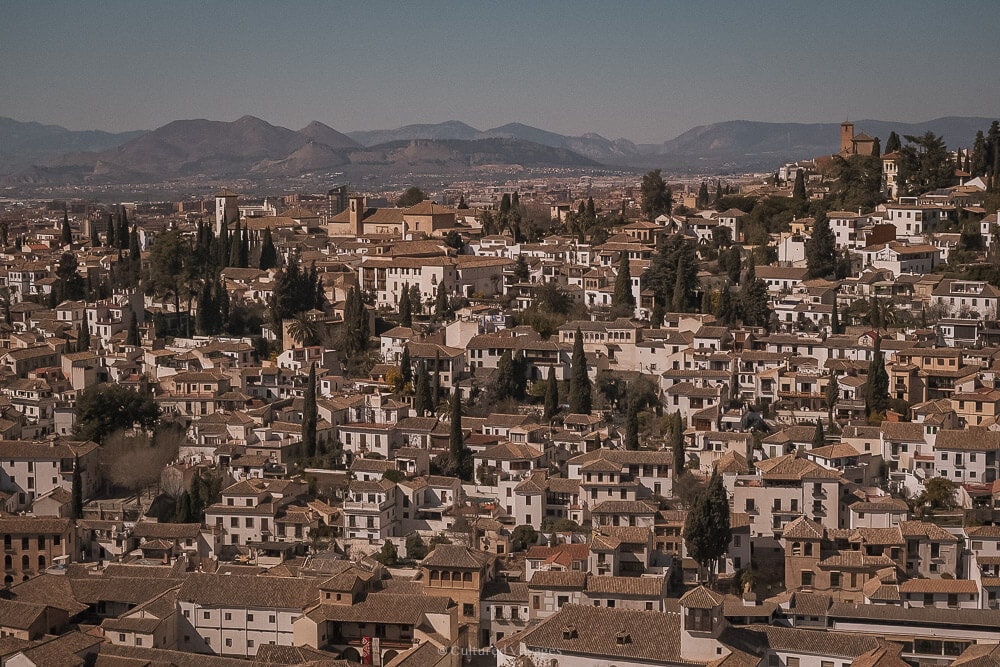
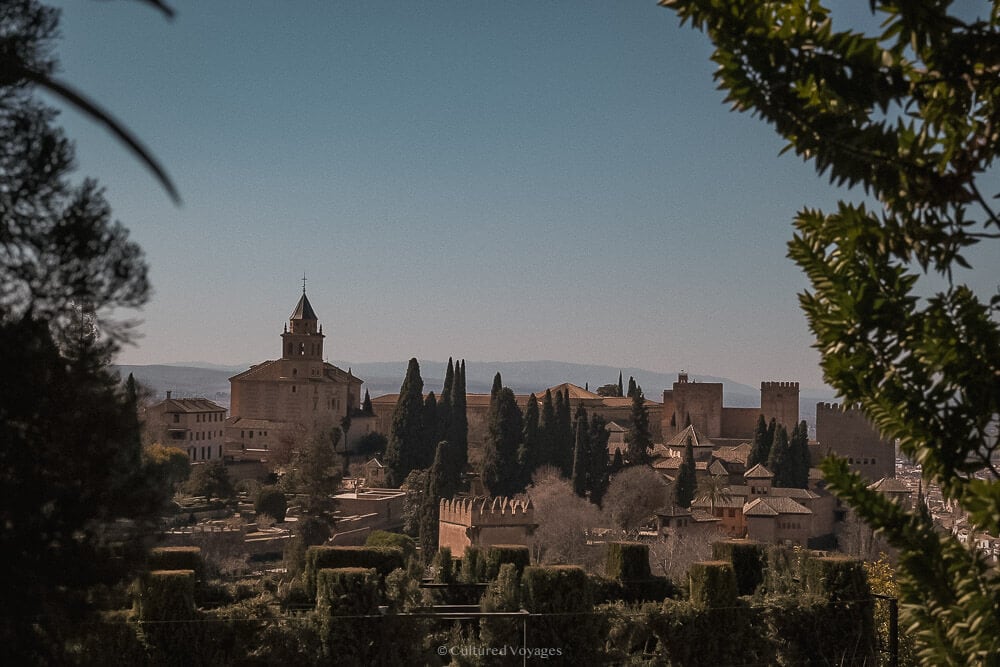
Then across to the Generalife, looking back across the gorge toward the palaces and the fortress, with the white buildings and higgledy-piggledy rooftops of Granada spread out at the foot of this monumental complex below. It feels genuinely otherworldly, like stepping into a history book – tales of conquest, of coexistence, of a civilisation at its peak.
One day won’t quite be enough, but it’s a very good start, and this is how to make it count.
Essential links for booking your granada trip
Logistics: car rental // train tickets // bus tickets
Resources for the Alhambra:
✧ Skip-the-line Alhambra & Nasrid Palace tickets
✧ Small-group Alhambra tour **top pick**
Other top-rated tours & experiences:
✦ Sunset walking tour in Albaicín & Sacromonte
✦ Ultimate Hammam experience
✦ Intimate Flamenco & dinner experience
✦ Granada Tapas & Wine Small Tour
Cultured Voyages accommodation picks:
I’ve stayed at Hotel Casa 1800 and Villa Oniria when visiting Granada – both are fabulous.

Your Granada in One Day: At a Glance
| Time | Stop |
| Morning (early) | Alhambra: Nasrid Palaces, Alcazaba fortress, Generalife Gardens |
| Late morning | Alcaicería bazaar lanes |
| Lunch | Noat café – flat whites, brunch dishes, good cakes |
| Afternoon | Granada Cathedral + Royal Chapel |
| Late afternoon | Albaicín neighbourhood, Paseo de los Tristes |
| Sunset | San Nicolás Mirador – views of the Alhambra with the Sierra Nevada behind |
| Evening | Free tapas at Bodegas Castañeda, then flamenco in Sacromonte |
Key booking note: Alhambra tickets – especially for the Nasrid Palaces – sell out weeks to months in advance depending on the season. Book before anything else.
1 Day in Granada Itinerary


Visit the Alhambra in the Morning
Tickets and Tours
Starting your day at the Alhambra is a strategic choice and one that you won’t regret.
But, let me be straight—securing tickets well in advance is of upmost importance, as tickets that include entry to the Nasrid Palace are limited daily and often sell out many weeks in advance depending on the time of year you’re visiting.
A Cultured Voyages Guide
Seven shifts that take you from sightseeing to actually understanding a place – the same ones I use on every trip I plan.
You can opt for a standard entry-only ticket, but then there’s the hustle of being your own guide, which could be daunting given the Alhambra’s size. You can also get an audioguide onsite for €6, useful for those on a budget but perhaps lacking the personal touch.
If it’s your first visit, then I strongly recommend a small group guided tour. These tours often last around 3 hours, covering all the crucial parts, and offer an enriching experience courtesy of an expert guide. It’s the best way to soak in the Alhambra’s grandeur and still leave ample time for the rest of Granada.
What to See and Prioritise
If you’ve got half a day, your first priority should be the Nasrid Palaces.
These palaces are the pièce de résistance of Islamic art and architecture in Spain. The Hall of Ambassadors and the Court of the Lions are particularly breathtaking.
After that, the Alcazaba fortress offers panoramic city views and is worth the climb, while the Generalife Gardens, with their lush greenery and fountains, provide a pleasant contrast to the intricate detailing of the palaces – I highly recommend fitting in a visit to these beautiful gardens.
In my own experience, trying to ‘do it all’ can make the visit feel rushed if you want to see some more of the city of Granada. Stick to a few key areas, but do them justice.
RELATED READING | Visiting the Alhambra – Ultimate Guide + Insider Alhambra Tips

Drop by the Alcaicería
The Alcaicería, once Granada’s Great Bazaar, is a fascinating little web of narrow lanes that shouldn’t be missed as you’re walking by.
While originally a Moorish silk market, today, the space is filled with small shops offering souvenirs, spices, and traditional Andalusian crafts.
You might wonder if it’s a tourist trap, and while it’s clear who its ware is geared towards (hint; it’s you!) it’s still quite charming and worth a quick visit.
Have Lunch and a Coffee at Noat
After exploring the Alhambra, then I highly recommend dropping in to Noat.
The cool, minimalist design of the café will instantly appeal to millennials and Gen Z, as well as anyone who enjoys a good brew.
Specialising in artisanal coffee, I opted for a flat white while there that went down a treat.
But it’s not just about coffee here; their menu features a variety of yummy brunch dishes and cakes. It’s a great place to sit down for a while, rest your feet, refuel and plan the rest of your day.


Visit Granada Cathedral
After savouring the gastronomic delights of Noat, it’s time to dive deep into Granada’s rich religious history (of the Christian variety) by visiting the city’s Cathedral.
This isn’t just another church. The brainchild of Queen Isabella, Granada Cathedral took its first architectural breath in 1523 under the careful eye of Enrique Egas. What stands today is an awe-inspiring blend of Gothic style and Renaissance architecture that serves as a magnificent chronicle of its time.
As you enter, you’re greeted by an ethereal light filtering through the stained glass windows that line its upper walls. The nave is lined with opulent chapels that are akin to a kaleidoscope of art and devotion.
If you’re like me and want to know the stories behind the facades, opt for an audio guide. It immerses you in the nuances behind every piece of marble and stroke of gold that adorns this monumental edifice.
PLAN YOUR VISIT | Open from 10:00 to 19:00 (Mondays to Saturdays) and 15:00 to 19:00 on Sundays. Regular tickets cost €5 and €3.5 for students here. Explore the Granada Cathedral and the Royal Chapel with a skip the line ticket and tour.
Head to the Royal Chapel (if you have time)
Just a stone’s throw away from the cathedral, the Royal Chapel, or Capilla Real, is another must-visit landmark.
Commissioned by the Catholic Monarchs Ferdinand and Isabella, this isn’t just an architectural marvel but also a spiritual epicentre designed to symbolise Spain’s Christian unification. The construction began in 1505 and once you enter this sacred space, you’re essentially stepping into a vital chapter of Spain’s history.
During my visit, I was initially without expectations but found myself utterly captivated.
I walked in and was immediately struck by the grandeur of the intricate altarpiece, awash with Renaissance artworks. But what really catch your attention are the monumental, elaborately carved tombs of the Catholic Monarchs.
I couldn’t help but feel the weight of the history resting there. For those of you who really want to dig deep, again, I recommend the audio guide available upon entry.
PLAN YOUR VISIT | Open from 10:00 to 14:00 and 15:00 to 19:00 (Monday to Saturday), and 11:00 to 14:00 and 15:00 to 19:00 on Sundays and liturgical holidays. Holiday timings vary. Tickets are €5 for individuals and €3.5 for students here. Join a guided tour with skip the line tickets for La Madraza and the Royal Chapel.


Explore the Albaicín Neighbourhood
The Albaicín is Granada’s old Moorish quarter – a hillside neighbourhood of narrow lanes, whitewashed houses, and hidden carmenes (private gardens enclosed by high walls) that feels entirely separate from the rest of the city.
Originating as a Roman settlement, the area dramatically evolved during the Moorish period, becoming a vibrant centre of commerce and religion for the Muslim community.
The neighbourhood was home to mosques, Hammams (public baths), and bustling bazaars, all surrounded by defensive walls. It was essentially the nucleus of Muslim life in the city, and many of its streets still bear Arabic names.
When the Christians reconquered Granada in 1492, the Albaicín became a refuge for the city’s Moorish population, although many of its original Islamic buildings were transformed or replaced by Christian structures, eroding much of its Moorish architecture.
The neighbourhood’s Islamic legacy has been superbly preserved; its layout, architecture, and even some buildings like El Bañuelo, a 11th-century Hammam, remain intact. The district is now a UNESCO World Heritage site, along with the Alhambra, which it faces from across the Darro River.
The Darro River is another emblematic feature of Granada that adds an extra layer of charm to the Albaicín.
Flowing gently between the neighbourhood and the Alhambra, the river is flanked by ancient stone walls, cobbled pathways, and flourishing vegetation.
It serves as a picturesque divider between the Albaicín and the hill upon which the Alhambra sits, and walking along the Paseo de los Tristes next to the river provides an unforgettable panorama of Granada’s architectural and natural splendour, epitomising the timeless allure that is ever-present in this storied city.

Head to San Nicolas Mirador for Sunset
San Nicolás Mirador is the best viewpoint in Granada – a wide terrace in the heart of the Albaicín that looks directly across at the Alhambra with the Sierra Nevada behind it. At sunset, the light on the palace walls turns extraordinary. It doesn’t just offer an unparalleled view of the Alhambra; the atmosphere here is infectious.
Locals and tourists gather together, sometimes there’s even live flamenco music. The sky turns into a painting as the sun dips below the horizon— it’s a sight for sore eyes.
Experiencing the magic of sunset from San Nicolas Mirador is something you won’t easily forget.
Situated in the heart of the Albaicín, the elevated viewpoint offers a cinematic panorama of the Alhambra with the Sierra Nevada mountains serving as a stunning backdrop.
As the day transitions into evening, the atmosphere often takes on a festive spirit, amplified by live performances of flamenco guitar and soulful singing that occasionally occur here.
As you watch the sun’s descent, it feels like the sky itself is putting on a show, displaying shades of orange, pink, and purple in a stunning celestial artwork. I’d highly recommend that you squeeze in a sunset viewing while spending a day in Granada.
One particularly memorable activity I’ve undertaken while in Granada was a sunset walking tour that incorporated the viewpoint into a tour of the Albaicín and Sacromonte areas, adding layers of context and history to what is already a breathtaking visual experience.
If you have the time, I’d recommend that you consider it.

Grab Some Drinks and Free Tapas
The culture of ‘tapas’ in Granada is not just a culinary experience; it’s a social one. Tapas bars are bustling hubs of chatter and laughter. I was thrilled to discover that each drink ordered is accompanied by a free tapa. Offerings are delicious and often generous in portion size.
My top tip for snagging a table at a tapas bar is to arrive a bit earlier than the traditional Spanish dining time. If you get to the bar around 7 pm, you’ll have a better chance and if you’re earlier than that (provided they are open, many won’t be) then you’ll almost always be guaranteed one.
For a truly authentic experience, head to the heaving bar at Bodegas Castañeda.
Round off Your Day with a Flamenco Show
To truly immerse yourself in Granada’s vibrant culture, you must end your day with Flamenco in the Sacromonte district. Known for its cave houses, Sacromonte’s Flamenco shows are authentic and passionate.
Flamenco in Granada isn’t just a dance; it’s an emotional expression deeply rooted in the Gypsy, Moorish, and Jewish cultures that have influenced the region.
Some venues even offer dinner along with the Flamenco show, which can really make for an unforgettable experience. Traditional Andalusian dishes, local wine, and the raw emotion of Flamenco—what more could you ask for to end your one-day itinerary in Granada?
One day in Granada: on the map

More than 24 hours in Granada?
If you find yourself fortunate enough to have more than just a day to explore Granada, you’re in for a real treat!
While a day lets you sample some of the city’s standout offerings, an extended stay allows you to truly immerse yourself in the depth and richness of Granada’s history, culture, and lifestyle.
For a more comprehensive look at how to spread out your journey through this Andalusian gem, don’t miss out on my Two Days in Granada Itinerary post.
Now, let’s talk about some of the attractions and experiences that couldn’t fit into a one-day itinerary but are worth the effort if you have extra time.

RELATED READING | how many days to stay in granada
Hammam Al Andalus: A Soothing Respite
First on the list has to be Hammam Al Andalus. This isn’t just a spa; it’s a journey into Granada’s rich Moorish past.
After a day exploring the Alhambra, nothing quite compares to the relaxation offered by these Arabian baths. The serene atmosphere, the poetic blend of light and shadow, the aromatic scents filling the air— it’s an experience that takes you back to the time of the Nasrid Dynasty.
With warm, cold, and hot pools, plus the option of adding a massage to your experience, this is more than just a place to relax; it’s a place to reconnect with the city’s ancient culture while recharging your own batteries.
Other Noteworthy Attractions
- Sacromonte Abbey: Nestled on the Valparaíso hill, this abbey isn’t just a religious site; it’s a time capsule of Granada’s history. From its intricate artwork to the stunning views of the Alhambra and the Sierra Nevada, the Sacromonte Abbey provides a unique and less-touristed perspective of the city.
- Cave Museum of Sacromonte: The caves of the Sacromonte district have long been the dwelling of Granada’s Roma community. The Cave Museum showcases the history, customs, and traditional crafts of this community. This is more than a museum; it’s an enlightening experience.
- El Bañuelo: Also known as the Banuelo Baths, these are among the best-preserved Arabian baths in Spain. When visiting, you’ll be transported back to the 11th century. It’s an often-overlooked gem that reveals another layer of Granada’s rich Moorish history.
Where to stay for your two days in Granada

This is a truly unique, historical hotel set just off the Darro River at the foot of both the Albaicín area and the Alhambra. I cannot say enough good things about my stay here. It’s so historic, that guided tours even stop outside to look at the building, which demonstrates some exquisite Moorish Architecture.
Set around a courtyard equipped with trickling fountain, opt for one of its superior rooms or suites from some gorgeous views of the Alhambra. Not your average hotel and a really lovely, special place to stay in Granada.
***
I loved staying at this hotel in Granada! Situated in the city centre, Villa Oniria is an elegant 4 star hotel situated in a 19th century manor house.
Set around a beautiful Andalusian courtyard, it has a plush, yet relaxed atmosphere. The location is great for exploring all the main sights of Granada. There is also a fantastic restaurant located onsite.
***
If you’re looking for a 5 star hotel in Granada, I would draw your attention to the Alhambra Palace.
It’s probably a toss up for me between here and the Hotel Palacio de Santa Paula (where the entry level rooms may be a tad more modern than those of the Alhambra Palace’s equivalent), but it’s the location outside the walls of the Alhambra and the expansive views of the city that clinch this for me – I’ll take a Junior Suite with city views, please.

Before you go
Everything I check before a trip now lives on one page.
Seven shifts I run on every trip I plan, each one paired with the story that taught it to me and the steps for using it yourself — built to be printed, kept, and pulled back out before the next one.
It arrives when you join The Cultured Voyages Edit, a fortnightly letter on European cultural travel.
Before You Plan Your Granada Day Trip

Why Visit Granada
Granada is one of the most historically complex cities in Spain – Moorish, Jewish and Christian influences layered on top of each other and still visible in everything from the street plan to the food. The Alhambra alone would justify a visit. Everything else is a bonus.
The city is an awe-inspiring fusion of cultures, where Moorish artistry, Jewish intellect, and Christian influence all converge in a spectacular burst of colour, music, and life.
Walking through its labyrinthine, cobbled streets, you can almost hear the whispers of sultans, poets, and philosophers who once called this place home.
A Brief History of Granada
Granada has a rich tome of history that’s as complex as it is captivating.
Founded by native Iberian tribes, it later became a Roman colony. The most transformative period, however, began in the 8th century with the arrival of the Moors.
Under Moorish rule headed by the Nasrid Dynasty, Granada became a beacon of enlightenment—a city where Muslims, Christians, and Jews coexisted and enriched the world with their collective wisdom in fields like astronomy, medicine, and philosophy.
The iconic Alhambra palace stands as a magnificent testament to this era.
However, the Reconquista in the 15th century saw the Catholic Monarchs Ferdinand and Isabella taking control, leading to the expulsion of Jews and Muslims and the repurposing of many religious buildings.
Today, this beautiful city is a living museum of its diverse past. Its architecture, culture, and even cuisine offer glimpses into the layers of history that have built this extraordinary city.

RELATED READING | visiting the Alhambra from Seville as a day trip


Is It Worth Visiting Granada for a Day?
Is a single day in Granada worth it? The answer is an emphatic yes!
While you won’t be able to delve into all its nooks and crannies, one day in this cultural kaleidoscope is better than not experiencing it at all.
If you’re journeying through Andalusia and are passionate about history and culture, omitting Granada from your itinerary of Southern Spain would be a glaring oversight.
Even with limited time, you can visit monumental sites like the Alhambra, get lost in the Albaicín’s narrow streets, and sample some of Andalusia’s best tapas.
Trust me when I say it though; a day in Granada will only leave you yearning for more.

READ NEXT | How TO PLAN THE PERFECT ANDALUSIA ITINERARY
Getting to Granada
Getting to Granada is relatively straightforward, especially if you’re travelling from other southern Spanish cities like Málaga, Seville, or Córdoba.
You have multiple options, but I find the train to be the most relaxing and scenic. Spanish trains are fairly reliable and offer a peaceful journey through Andalusia’s rolling olive groves.
The train station is about 2km from the city centre, making it convenient to take a quick taxi or bus ride into the heart of the action. You can also do it on foot – while a little bit of distance with bags, I’ve done this before and it took around 20-25 minutes for us to reach our hotel near Plaza Nueva.
If you prefer driving, the roads between major Andalusian cities are generally in excellent condition.
However, a word to the wise: Parking can be a little challenging, so know your options beforehand by checking in with your accommodation provider, if you’re staying overnight, or locating a carpark in advance.
Some Tips for Getting Around Granada
Once in Granada, I highly recommend exploring on foot to truly absorb this wonderful city’s charm.
Its maze-like streets are best navigated without the hassle of a vehicle. That said, if you’d like to conserve your energy for marvelling at the sites, local buses, especially those starting with a ‘C’, are a solid option.
The C30 links Plaza Isabel La Católica to the Alhambra, the C32 links the Alhambra to the Albaicín, while the C34 goes to the Sacromonte area from Plaza Isabel La Católica
Taxis offer a quick, door-to-door experience and aren’t too pricey. But if you’re venturing into historic districts like the Albaicín, remember that many streets are narrow and closed to non-residential vehicles.
So, pack a comfy pair of walking shoes, and let Granada unfold before you, one incredible step at a time.

Granada in One Day: Top Questions
When is the best time to visit Granada?
The best time to visit Granada largely depends on what you’re looking to experience.
Spring (March to May) and Autumn (September to November) are ideal for mild temperatures and fewer crowds, making these seasons perfect for sightseeing and outdoor activities.
The summer can get very hot but has a lively atmosphere (although read busy, however), while wintertime in Granada offers the unique opportunity to go skiing in the nearby Sierra Nevada Mountains in the morning and explore the Alhambra in the afternoon.
Is it better to go to Granada for 1 or 2 days?
While one day in Granada allows you to see some of the main highlights, such as the Alhambra and the Albaicín neighbourhood, two days would give you a deeper insight into the city’s rich history and culture.
With an extra day, you can visit more sites, take part in local traditions like tapas-hopping, or even unwind in the Hammam Al Andalus baths. I recommend checking out my Two Days in Granada Itinerary for a more in-depth experience.

RELATED READING | Granada in 2 days: Ultimate Itinerary & Top Tips
Is Granada a walkable city?
Granada is relatively compact, and many of its main attractions are within walking distance of each other, particularly in the city centre.
However, some areas, like the Alhambra or the Albaicín and Sacromonte neighbourhoods, are on hilly terrain and require a bit of a climb. Public transport and taxis are readily available for those who prefer not to walk.


What should I wear for a day in Granada?
Comfort is key, especially since you’ll be doing a lot of walking. Wear comfortable shoes suitable for hilly terrain. Layers work best as temperatures can vary, and don’t forget a hat and sunscreen if you’re visiting in the warmer months.
If you’re visiting in winter, make sure to wrap up with a scarf, hat and gloves – although you have somewhere to put them when you want to take them off.
I find that the temperature in winter oscillates wildly between being very cold when up high in places like the Alhambra, and being quite pleasant when the sun makes an appearance – so plan accordingly!
Do I need to book Alhambra tickets in advance?
Absolutely, the Alhambra is the most visited site in Spain and tickets can sell out weeks, sometimes months, in advance. Consider booking a guided tour to not only secure your entry but to get an in-depth understanding of this historic palace complex.
Can I see a Flamenco show in just one day?
Yes, ending your day with a Flamenco show, especially in the Sacromonte district, is doable and in fact I’d highly recommend it. Some venues even offer dinner along with the show for a truly memorable experience.
Is it necessary to speak Spanish to get around?
While it’s always appreciated if you know basic Spanish phrases, most people in the tourism industry speak English, so you should be able to get by without any issues.
Related reading for Granada and Andalusia


Like this post? Please share or save for later…

