
Disclosure: Some of the links on this site are affiliate links. If you make a purchase through one of them, I may earn a small commission at no extra cost to you. Read my full disclaimer here. Thank you for your support!
Discover the essence of Florence in 3 days with this expert-crafted itinerary. Explore iconic sights and hidden gems, with an optional Tuscan excursion. Packed with insider tips for an unforgettable visit.
Florence stole my heart from my very first visit.
I’ll never forget the quiet of the early morning streets, the soft light slowly illuminating the intricate marble facade of the Duomo, its grandeur a stark contrast to the stillness around it.
Having explored the city numerous times—including a recent month-long immersion—I’ve distilled its wealth of experiences into this comprehensive yet flexible 3-day plan.
This itinerary strikes a balance between world-class art, architectural marvels, and charming neighbourhood exploration. It ensures you experience both the Renaissance splendour and the intimate charm of Florence’s winding streets and hidden piazzas.
On top of that, you’ll discover not just what to see, but how to make the most of your visit with many insuder tips sprinkled throughout.
For those eager to venture beyond the city, I’ve included an additional, alternative approach for day three. This option allows you to explore the wider Tuscan region, offering a taste of the rolling hills, historic towns, and renowned vineyards that surround Florence.
Florence is a city that rewards curiosity and defies expectations. This itinerary is your key to unlocking its secrets, but remember – the true magic of Florence often lies in the moments between the grand attractions. Keep your eyes open, and don’t be afraid to wander off the beaten path!
Cultured Voyages’ recommendations for FLorence
Top rated tours & experiences in Florence:
⭑ VIP David & Duomo Tour with Exclusive Terrace Access (**top pick**)
⭑ Cooking class: The art of Pasta – Nonna Recipes
⭑ Uffizi & Accademia with Michelangelo’s David – Small Group Tour
⭑ Oltrarno at Sunset: Florence Food & Wine Tour (great for foodies)
Top foodie experience from Florence:
⭑ Cooking Class & Lunch at Tuscan Farmhouse ( + local market tour) (2,668+ 5 star reviews)
Cultured Voyages’ selected hotels:
✦ Peruzzi Urban Residences (luxe for less)
✦ AdAstra Suites (boutique bolthole)
✦ NH Collection Porta Rossa (fantastically located 5-star)
✦ Villa Cora (classic luxury)
✦ Plum Guide (incredible Florence rentals)
3-Day Itinerary Overview


FLORENCE ITINERARY: DAY 1
- Michelangelo’s Statue of David at Galleria dell’Accademia
- Basilica di San Lorenzo & Medici Chapels
- Mercato Centrale
- Duomo Complex (Cathedral, Brunelleschi’s Dome, Baptistry, Giotto’s Campanile)
- Shopping and free time in central Florence
- Sunset stroll to Ponte Vecchio and along the Arno
- Evening in the Oltrarno
Florence ITINERARY: DAY 2
- Uffizi Gallery
- Piazza della Signoria & Loggia dei Lanzi
- Palazzo Vecchio
- Lunch: Grab a schiacciata
- Bargello Museum
- Food and Wine Tour in Oltrarno
Florence ITINERARY: DAY 3
- Pitti Palace
- Boboli Gardens
- Explore Oltrarno Neighborhood
- Bardini Gardens
- Sant’Ambrogio/Santa Croce Neighborhood (if time allows)
- Sunset at Piazzale Michelangelo
Map of attractions, restaurants & Sights
How to use this map: click the small rectangular tab on the top left of the map (in the dark header section) to open and close. Click on each of these to learn more about them. Click the star beside the title of the map to add to your own Google Maps, which you can access from the Menu-> Your Places -> Maps on your phone.

3-Day Florence Itinerary In Detail
Day 1: Duomo Area and Renaissance Masterpieces
My love affair with Florence began the moment I first set foot in the city.
The sheer magnitude of its beauty and its profound impact on art and culture during the Renaissance era was enough to leave me utterly spellbound.
With that in mind, I think that any first day spent in Florence should be passed getting to grips with its Renaissance glory, and that is how I have structured day one of this itinerary.
Morning: Accademia Gallery and the Statue of David
Kick off your Florentine adventure bright and early at the Galleria dell’Accademia. Trust me on this one – the earlier you arrive, the more intimate your experience will be. There’s something magical about having parts of the gallery almost to yourself, even if it’s just for a fleeting moment.
Nothing quite prepares you for the moment you first lay eyes on Michelangelo’s David.


I vividly remember the first time I saw it – I was rendered speechless, circling the statue in awe. It’s an experience that truly stops time, creating a bubble of stillnes even amidst the bustle of other visitors.
This masterpiece is carved from a single block of Carrara marble.
What’s even more astonishing is that it stands at an impressive 5 metres tall and weighs over 5 tonnes. It took 40 men four whole days to move David less than a mile from Michelangelo’s workshop to its original home in Piazza della Signoria!
While David is undoubtedly the star, don’t rush off too quickly.
The Accademia houses other treasures worth exploring. I was particularly moved by Michelangelo’s unfinished “Prisoners” sculptures, which seem to be struggling to break free from their marble confines. The upper floor also houses some stunning religious panels that often get overlooked.
PLAN YOUR VISIT TO THE ACCADEMIA GALLERY
- Make sure to book your tickets well in advance.
- Skip-the-line: save time queueing and book skip-the-line tickets here.
- Guided tour: If you fancy a special, VIP visit to see the Statue of David before opening hours, the wonderful Walks of Italy run a pre-opening morning tour that also includes a Brunelleschi Dome climb – click here for more info.
Late Morning: San Lorenzo Basilica and Medici Chapels
Next, make your way to the San Lorenzo complex.
The basilica itself might seem unassuming from the outside with its unfinished facade, but don’t let that fool you. This Brunelleschi-designed church was the Medici family’s parish, and the complex is brimming with Renaissance marvels.
Now, here’s a tip from a frequent Florence visitor: don’t skip the Medici Chapels.
In my opinion, they’re one of the city’s most overlooked treasures. I find their interiors even more captivating than the Duomo’s! The Princes’ Chapel is a testament to Medici opulence, built to house their remains in jaw-dropping splendour.
But for me, the real showstopper is the New Sacristy.
Designed by Michelangelo, it’s home to his largest collection of sculptures in Florence. What’s even more unique, is that he also designed that space that showcases them.
That, in particular is why it’s particularly wonderful to watch how the changing light plays across the statues of Night and Day. It’s an intimate, almost spiritual experience in a small space that is not overloaded with other visitors.


Lunch: Mercato Centrale
By now, your artistic appetite might be satiated, but your stomach will likely be growling. Head to the Mercato Centrale, a stone’s throw from the Accademia. This two-story food paradise is where I often found myself during my extended stay in Florence.
On the ground floor, you’ll find traditional vendors selling everything from fresh produce to artisanal cheeses.
My personal favourite is F.N. Pasta Fresca – their takeaway pasta is worth queing up for! Upstairs, the food court offers a smorgasbord of options. Yes, it’s a bit touristy, but the quality is pretty solid, and it’s perfect if you’re travelling with picky eaters or those with varied tastes.
Afternoon: Duomo Complex
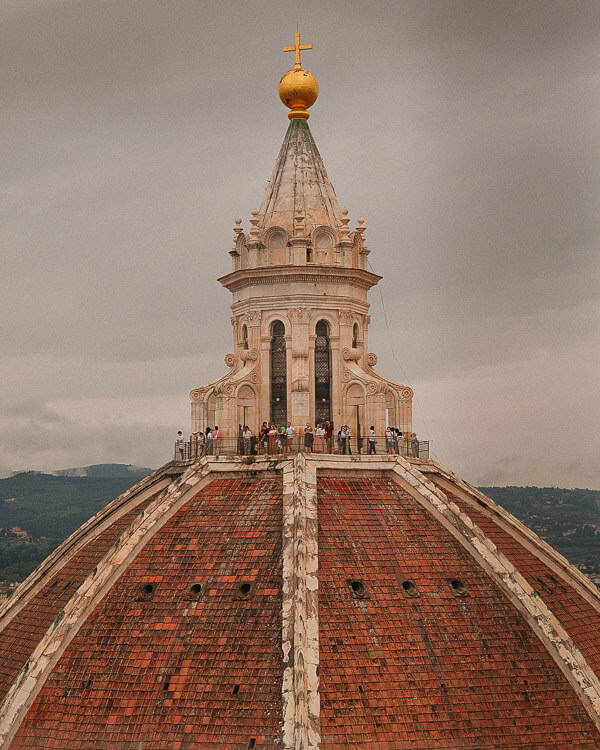
After lunch, it’s time to tackle Florence’s crown jewel: the Duomo complex. More than a mere cathedral – it’s a testament to human ingenuity and Renaissance ambition, and still, to this day, is the largest masonry dome that has ever been built.
The Cathedral and Brunelleschi’s Dome
The story of the Duomo’s construction never fails to fascinate me. Imagine the audacity of starting to build the largest dome Europe had ever seen… without knowing how to complete it! For 140 years, the cathedral stood unfinished, a source of embarrassment for the Florentines.
Then, enter Filippo Brunelleschi, the man who would change architectural history.
His innovative double-shell design, where an interior dome supports the one outside, was inspired by ancient Roman techniques and, as previously mentioned, remains an engineering marvel to this day.
If you’re up for a climb (and not claustrophobic), ascending the dome offers an unparalleled view of Florence, as well as some very up-close views of Vasari’s Last Judgement frescoes on the interior of the dome within the cathedral.
Just be sure to book well in advance as tickets are limited and sell out very quickly.


Giotto’s Campanile and the Baptistry
If the dome climb seems daunting, consider scaling Giotto’s Campanile instead.
The bell tower offers equally stunning views, and you get to see the dome itself in all its glory. It’s a bit roomier than the dome climb, though there are still some narrow spots.
It’s also well worth swinging into the Baptistry with its glittering mosaic ceiling. Its bronze doors, too, particularly Ghiberti’s “Gates of Paradise,” are a masterclass in Renaissance sculpture.
Santa Reparata and the Opera del Duomo Museum
If you have an all-access ticket for the Duomo complex, then you’ll also be able to visit the Opera del Duomo Museum.
In its own right, it is a place that is highly worth visiting (there are incredible Michelangelo and Donatello statues here, as well as the gigantic bronze doors from the Duomo).
Extremely interesting too, are the underground remains of Santa Reparata.
You descend through the floor of the cathedral to the ruins of one of the first Christian temples in the history of Florence. Operating for 500 years, it was demolished in 1379 and the current cathedral was built atop the ruins.
There is still much to see, and it’s like descending into a hidden, ancient, underground world.
PLAN YOUR VISIT to the Duomo
There are three tiers of tickets:
- Brunelleschi Pass (includes dome climb, bell tower, baptistery, museum & Santa Reparata)
- Giotto Pass (includes bell tower, baptistery, museum & Santa Reparata)
- Ghiberti Pass (includes baptistery, museum & Santa Reparata)
Purchase tickets on the official website here. The Brunelleschi Pass sells out well in advance – if so, search for tickets here.
Guided tour: This superbly rated tour gives you VIP access to the Duomo’s terraces, a dome climb, and a museum tour.
Time saving tip: take this small-group tour to climb Brunelleschi’s dome, and visit the Statue of David outside of visiting hours.
Evening: Shopping and Aperitivo
As the day winds down, treat yourself to some retail therapy and a classic Florentine aperitivo.
Florence’s shopping scene is a great mix of high-end designers, local artisans, and everything in between.
For luxury brands, stroll down Via de’ Tornabuoni. For high street brands, take to the area that runs between Via de’Tornabuoni and Piazza della Republica.
But, if you’re after something more unique, I’d recommend exploring the Oltrarno district. Via dei Serragli is lined with independent boutiques, artisanal workshops, and quirky vintage stores.
Cap off your day with an aperitivo at Procacci on Via de’ Tornabuoni, an institution that has been in operation for over 100 years.
Don’t let its upmarket appearance deter you – it’s more affordable than it appears. Their truffle panini are heavenly, and at less than €10 for a glass of wine, it’s a steal in this upscale neighbourhood.


Day 2: Historic Centre and Uffizi
I’ve structured day 2 so that you can dive deeper into Florence’s historic heart. The early bird catches the worm, and you’ll kick off your day by viewing world-class art collections.
Then, you’ll move on to the political centre of Renaissance Florence, before capping it off with a more laid-back evening on the ‘other side’ of the Arno.
Morning: Uffizi Gallery
Rise and shine early for your visit to the Uffizi Gallery. Housing some of the world’s greatest masterpieces, this museum can be overwhelming. My advice? Do a little homework in advance and prioritise what you want to see. You can check out the floor plan here.

I’ll never forget my first glimpse of Botticelli’s “Primavera” – it’s even more enchanting in person. The Niobe room, with its twelve exquisite sculptures, is another favourite. Look out for the two monumental Rubensworks that bookendat the room.
A word to the wise: book the earliest time slot available. The Uffizi gets crowded quickly, and there’s nothing quite like having a moment alone with these masterpieces.
PLanning your visit to the Uffizi
- I would strongly, strongly advise that you book skip-the-line tickets for the Uffizi – queues get really long, even from the morning and it was so nice to just breeze past the hundreds of people waiting outside for the sake of a few extra Euro.
- You’ll need to collect your tickets from the office beside the entrance so make sure to give yourself plenty of time before your allotted entry.
- Guided Tour: this superbly rated, small-group guided tour will whisk you around the highlights in the Uffizi in 1 hour and 45 minutes.
Late Morning: Bargello Museum
After the Uffizi, head to the often-overlooked Bargello Museum.
Housed in a 13th-century former palace-turned-prison, the Bargello is a treasure trove of Renaissance sculpture, as well as being home to some unique collections on its upper floors (check out the armoury).
What I love about the Bargello is its more intimate atmosphere.
You can get up close to works by Donatello, Michelangelo, and Cellini without the crowds of the Uffizi. Donatello’s bronze David is a highlight – it caused quite a stir in its day for its sensual portrayal of the biblical hero.
For some reason, it had never left that much of an impact on me when viewing pictures of it, but seeing it in person was a completely different experience. It says so much, and is noticeably different to the other sculptures of the day. It’s a truly incredible piece.


Lunch: Traditional Florentine Sandwich
For lunch, seek out a traditional Florentine schiacciata.
My go-to spot is I Girone Dei Ghiotti. Yes, you might have to queue for a few minutes, but trust me, it’s worth it.
Their bread is perfectly crisp, and the fillings are sensational. Grab a spot upstairs if you want to sit and savour your sandwich.
Afternoon: Piazza della Signoria, Palazzo Vecchio, and Loggia dei Lanzi
Post-lunch, immerse yourself in the political heart of Renaissance Florence.
Piazza della Signoria has been the city’s main square for centuries, witnessing everything from public executions to political rallies.
Palazzo Vecchio
The imposing Palazzo Vecchio dominates the square. This fortress-palace was the seat of Florentine government and later the Medici residence.
If you can, take the Secret Passages tour. It’s a thrilling way to explore hidden rooms and concealed corridors once used by the Medici family and was a real highlight for me when I took it.
The most impressive part of the Palazzo Vecchio (apart from its badass secret rooms) is the Salone dei Cinquecento (Hall of the Five Hundred). The scale of this room and Vasari’s frescoes seriously pack a punch, and fulfil their aim in asserting Florence’s dominence. Look out for Michelangelo’s “Genius of Victory” tucked in along one of the walls.


Loggia dei Lanzi
Before leaving the square, take a moment to appreciate the open-air sculpture gallery of the Loggia dei Lanzi.
Among the most prominent sculptures is Cellini’s Perseus with the Head of Medusa, a dramatic bronze statue that captures a pivotal mythological moment.
Nearby, Giambologna’s Rape of the Sabine Women stands as a masterful marble depiction of raw human emotion and struggle.
Keep an eye out, too, for the regal grandeur of the Medici lions – yet another symbol of the family’s power in the city, as well as the copy of Michelangelo’s Statue of David that stands outside the entrance to Palazzo Vecchio – where it originally stood.
Late Afternoon: Ponte Vecchio and Arno River Stroll
As the afternoon light turns golden, make your way to the iconic Ponte Vecchio.
Did you know this bridge once housed butcher shops? The smell became so unbearable that in 1593, Ferdinand I decreed that only goldsmiths and jewellers could have shops on the bridge – a tradition that continues to this day.
Take a leisurely stroll along the Arno River. The play of light on the water and the historic buildings lining the banks creates a magical atmosphere that I find irresistible, especially during the golden hour.

Evening: Food and Wine Tour in Oltrarno
Cross the Ponte Vecchio to the Oltrarno district for your evening food and wine tour. This area feels worlds away from the tourist-heavy centre, with a more bohemian vibe and rich artisanal heritage.
On my own meanderings here, I’ve discovered hidden enotecas, sampled mouthwatering Bistecca alla Fiorentina, and even sipped wine from one of Florence’s historic “wine windows” – small openings in palazzo walls where wine was once sold directly to passersby during plagues.
This tour is a perfect way to end your day, getting to know more about Florence’s food and wine heritage, as well as learning about some of its peculiarties (like wine windows!).
If you’d prefer to go it alone, make your way towards Piazza Santo Spirito. Don’t forget to explore some side streets and seek out a wine window for yourself!
For a special experience, I recommend that you book a table for drinks at the Loggia Roof Bar of the historical Palazzo Guadagni. Now a hotel, its terrace overlooks the piazza and it is a lovely way to wile away your evening.
I advise that you book a table in advance – you can do so here.


Day 3: Oltrarno and Panoramic Views
On your final day, you’ll potter back and forth between the lesser-visited but equally enchanting Oltrarno and Sant Croce/ Sant’Ambrogio districts, before taking in some breathtaking views of Florence to cap off your Florentine experience.
Morning: Pitti Palace
Start your day at the magnificent Palazzo Pitti. This enormous palace, once home to the Medici family, houses several museums within its walls.
The highlight for most will the the Palatine Gallery. With over 500 paintings, including works by Raphael, Titian, and Rubens, it’s hard to know where to look.
Unlike most museums, the paintings here are displayed in the 17th-century style – frame-to-frame, covering nearly every inch of wall space. I’m not sure if this is a positive or a negative, but due to the sheer volume of them and how magnificent each is, they almost get lost amidst the others.
While you’re there, you should also make sure to visit the Royal Apartments. Walking through these opulent rooms, it’s almost hard to remember that these were lived in – they are enormous and dripping in so much finery.
They truly mark the heights that the Medici family scaled, from humble wool merchants to the pinncale of Florentine power and influence. I feel like it’s a good place to visit for a third, or final day in Florence, as it takes you neatly to the ‘end’ of the Medici story.


Late Morning: Boboli Gardens
Step out from the Pitti Palace into the vast Boboli Gardens. This is where the Medici would escape the pressures of political life, and it’s easy to see why. The gardens offer am expansive oasis and a splash of greenery in the heart of the city.
I loved wandering the wide gravel paths, discovering hidden grottos and admiring the numerous sculptures scattered throughout. The amphitheatre, where the Medici once hosted lavish entertainments, is particularly impressive.
Make sure to climb to the highest point of the gardens. The view back over Florence, with the Duomo rising above the sea of terracotta roofs, is unforgettable.
PLAN YOUR VISIT to the Pitti Palace & Boboli Gardens
You have a couple of option for purchasing tickets:
- Entry tickets for the Pitti Palace and Boboli Gardens only. Get them here.
- A combined ticket that includes the Uffizi Gallery, Pitti Palace and Boboli Gardens, valid for several days. Get them here.
Guided tour: There is much to see at the Pitti Palace, particularly if you are interested in art and want to learn more about the Palatine Gallery and the garden’s features. This guided tour is extremely well-reviewed.
Early Afternoon: Explore the Oltrarno Neighborhood
After the grandeur of Pitti Palace and Boboli Gardens, lose yourself in the charming streets of Oltrarno. This neighbourhood has been home to artisans for centuries, and it’s still upheld its more ‘alternative’ edge today.
Wander down Via Maggio and Via Santo Spirito, popping into the numerous workshops and boutiques. You might see bookbinders, goldsmiths, or furniture restorers at work. It’s lovely to see.
The area around Piazza Santo Spirito is my favourite for a leisurely lunch. On weekends, there’s often a market in the square selling everything from vintage clothes to local produce – so do make an effort to drop by if you’re visiting Florence at the weekend.


Mid-Afternoon: Bardini Gardens
Next, make your way to one of Florence’s hidden gems – the Bardini Gardens. While less famous than the Boboli Gardens, I find the Bardini equally, if not more, charming.
If you’re lucky enough to time your visit in April, then the wisteria tunnel here is a sight to behold in full bloom. The cascade of purple flowers framing views of the Duomo is probably one of my favourite scenes in all of Florence.
Even if you’re not visiting in spring, there is a panoramic terrace offers from which you’ll get some stunning views over the city.
Late Afternoon: Sant’Ambrogio and Santa Croce Neighbourhoods (If Time Allows)
If you’re not too footsore, cross back over the Arno to explore the Sant’Ambrogio and Santa Croce neighbourhoods. This area offers a more local feel compared to the touristy centre.
Visit the Basilica di Santa Croce, often called the “Temple of Italian Glories” due to the many illustrious Italians buried here, including Michelangelo, Galileo, and Machiavelli. The Pazzi Chapel, a masterpiece of Renaissance architecture by Brunelleschi, is a must-see if you do drop in.
For a taste of local life, stop by the Mercato di Sant’Ambrogio. This covered market is where many Florentines do their daily shopping and it offers a different vibe to Mercato Centrale.


FOODIE TIP
In this area, you’ll find a couple of places that I love. The first is Coffee Mantra, a superb third-wave coffee shop just across the street from Mercato di Sant’Ambrogio. You also have Pino’s Sandwiches, which is arguably one of the best places in Florence to grab a schiacciata. For an utterly Florentine experience, head to Cibrèo Caffè, a local institution for an afternoon pick me up.
Evening: Sunset at Piazzale Michelangelo
For a grand finale to your Florence trip, head up to Piazzale Michelangelo for sunset. The climb might be steep, but I promise the view is worth every step.
As the sun dips below the horizon, watch the city transform. The fading light paints the Renaissance skyline in hues of gold and pink, with the Duomo and Palazzo Vecchio standing proud above the sea of terracotta roofs.
Fair warning – this spot can get crowded at sunset.
If you find it too busy, walk a bit further up to the Church of San Miniato al Monte. Not only will you escape some of the crowds, but you’ll be treated to an even higher vantage point. Plus, if you time it right, you might catch the haunting sound of Gregorian chant from the monks’ evening worship.

As you stand here, taking in the panorama of Florence bathed in the soft light of dusk, reflect on your journey through this remarkable city.
From Renaissance masterpieces to hidden gardens, from grand palaces to local neighbourhoods, by now you’ll have experienced the many facets that made me fall in love with Florence, and hopefully you will too!
Essential Advice For A Successful trip
Important building blocks of this itinerary
For this 3-day Florence itinerary, focus on booking these key attractions first:
- Day 1 (AM): Galleria dell’Accademia (Michelangelo’s David)
- Day 1 (PM): Florence Cathedral (Duomo) & Brunelleschi’s Dome
- Day 2 (AM): Uffizi Gallery
- Day 2 (PM): Palazzo Vecchio
- Day 3 (AM): Pitti Palace and Boboli Gardens
Once you’ve secured these, build the rest of your itinerary around them.

Tips for visiting Florence
- Book tickets well in advance – Florence’s top attractions sell out quickly, especially during peak seasons. Book your tickets for the Dome climb, Galleria dell’Accademia, and Uffizi Gallery as soon as your travel dates are set.
- What to do if tickets to bucket list attractions are sold out – If you can’t get tickets directly, consider booking a guided tour. Many tour operators hold tickets for popular attractions, and you’ll benefit from expert insights.
- Guided tours worth taking – I highly recommend booking at least one guided tour during your stay. It will enrich your experience and provide valuable context to Florence’s art and history. My top tour company of choice is Walks. I take their tours in every city I visit that they operate in, and they are absolutely superb. Alternatively, Viator, GetYourGuide, or Tiqets for high-quality experiences.
- Plan around museum closures – Remember that national museums, including the Uffizi and Accademia, are closed on Mondays. Plan accordingly and visit other attractions like the Duomo Complex or Palazzo Vecchio on these days.
- Take advantage of free entry days – The first Sunday of certain months offers free entry to many attractions. However, expect large crowds and plan to arrive early, as you won’t be able to purchase tickets in advance online.
- Rise early for a different perspective – Start your days early, between 8 and 9 am, to experience Florence’s quiet streets and stunning architecture without the crowds. It’s a great time to spot unique features like wine windows, especially in the Oltrarno area.
- If ease of access to the sights is crucial, build your itinerary first and choose your accommodation second – Florence is compact and walkable, with most sights within 2-3km of each other. For convenience, choose accommodation central to your planned activities. However, most places within the city centre offer good access to major attractions.

READ NEXT | ESSENTIAL FLORENCE TRAVEL GUIDE + INSIDER TIPS
An Alternative Way To Spend 3 Days In Florence

While Florence itself offers endless attractions, this alternative itinerary allows you to experience the best of the city in two days and then venture into the stunning Tuscan countryside or nearby historic towns on your third day, giving you a more diverse taste of the region.
Days 1 +2: Follow Cultured Voyages’ 2-day itinerary
For your first two days, I recommend following our comprehensive 2-day Florence itinerary. This will ensure you see all the city’s major highlights and get a real feel for Florence’s Renaissance splendour.
Day 3: Take a day trip
On your third day, venture beyond Florence to explore the breathtaking Tuscan countryside or visit one of the region’s charming towns.
Here are some options:
Take a tour
If you’re short on time or prefer a guided experience, consider joining an organised tour. Here are my top picks:
- Wine lovers: Chianti wine tour – Experience Tuscany’s famous wine region with tastings and scenic drives. I’ve also curated a list of the best Chianti wine tours from Florence – check it out for detailed recommendations.
- Foodies: Cooking class & lunch at a Tuscan farmhouse – Learn to prepare traditional Tuscan dishes in a rustic setting, then enjoy the fruits of your labor.
- All-rounder: Tuscany day trip to Chianti, Siena, and San Gimignano – This tour combines wine tasting with visits to two of Tuscany’s most beautiful towns.
- Tuscan towns: Siena, San Gimignano, and Monteriggioni – Explore medieval architecture and history in these well-preserved Tuscan gems. Also includes a stop for wine tasting.


Do it independently
For more flexibility, consider exploring on your own:
- Rent a car: Pick up a car in Florence and set off to discover picturesque Tuscan towns at your own pace. This option allows you to create your own itinerary and stop wherever catches your eye.
- Train to Siena: Just 90 minutes from Florence, Siena offers stunning medieval architecture, including the famous Piazza del Campo. Don’t miss the breathtaking Duomo and climb the Torre del Mangia for panoramic views.
- Arezzo: Just an hour away by train, Arezzo offers a rich artistic heritage and vibrant market culture. Don’t miss the Piazza Grande, the Basilica of San Francesco with its frescoes by Piero della Francesca, and if you’re lucky, catch the famous Arezzo Antiques Fair.
- Pisa: An hour away by train, see the iconic Leaning Tower and explore the beautiful Piazza dei Miracoli.
- San Gimignano: Known as the “Town of Fine Towers,” this hilltop town boasts medieval architecture and stunning countryside views. It’s about 1 hour and 15 minutes by bus or car.
- Lucca: Explore this charming town’s Renaissance walls and well-preserved historic center, just 1.5 hours by train from Florence.
- Chianti Region: If you’re comfortable driving, spend a day winding through vineyards, stopping at picturesque villages like Greve in Chianti for wine tastings.
- Montepulciano: This hilltop town, famous for its Vino Nobile, offers Renaissance architecture and sweeping valley views. It’s about 1.5 hours by car.
- Val d’Orcia: For stunning landscapes and more wine tasting opportunities, head to this UNESCO World Heritage site. Visit charming towns like Pienza and Montalcino (famous for Brunello wine).
Whichever option you choose, a day trip from Florence will give you a broader perspective on Tuscany’s rich cultural heritage, beautiful landscapes, and world-renowned cuisine and wine. It’s the perfect way to round out your 3-day Florence experience, should you not wish to spend all your time in the city itself.
Where To Stay In Florence

When staying in Florence, choose accommodation near the city centre for easy access to all attractions. Book well in advance to ensure availability and support your itinerary plans.
Florence offers a range of accommodations, from luxurious 5-star hotels to charming boutique and guesthouse options.
If you’re seeking a little indulgence, check out this post on the blog that rounds up the best Florentine retreats with pools. If you prefer a home-away-from-home experience, explore my curated list of luxurious vacation rentals in Florence.
For a greater breakdown of neighbourhoods and selection of lodgings, read our guide on the best areas & accommodation in Florence .
Below, however, is a curated selection of top accommodations to consider for your visit:
LUXE FOR LESS
Peruzzi Urban Residences
****
Peruzzi Urban Residences are a seriously stylish set of central apartments located in a renovated tower. Close to all major attractions, the property is mere 300 metres away from Piazza della Signoria.
BOUTIQUE BOLTHOLE
AdAstra Suites
****
A wonderful boutique hotel option in Florence is AdAstra Suites , which is a quirky lodging that occupies the upper floor of a beautiful, historic palace in the Oltrarno. It comes with a cherry on top; with gorgeous views over large, private gardens.
CENTRAL LUXURY
NH COLLECTION PORTA ROSSA
*****
This Florence 5-star hotel is superbly located in the heart of Florence’s centro storico. 350m from the Ponte Vecchio, it’s also a mere 500m walk to the Duomo and even less to the Uffizi Gallery. It successfully blends old and new, with contemporary finishes in an old building that boasts original frescoes.
STYLISH LUXURY
Hotel Lungarno
*****
Set on the banks of the Arno river, this 5 star hotel, Florence, is owned by the Ferragamo family and is situated 100m from the Ponte Vecchio, offering wonderful views of Florence’s famous bridge. It also boasts a Michelin-starred restaurant onsite.
CLASSIC LUXURY
Villa Cora
*****
Villa Cora, a great option for those looking for 5 star Florence hotels with pools. Overlooking Florence from above Piazzale Michelangelo, this lavish 19th century villa is still close enough to Florence city centre, located within a 20 minute walk from the Uffizi Gallery. Villa Cora offers decadently decorated rooms, a sauna with Turkish bath and a much-welcome outdoor swimming pool.
Where To Eat (And Drink) In Florence


Brunch & Coffee spots:
- Ditta Artigionale – Third-wave coffee institution with multiple locations
- Melaleuca Firenze – Buzzing spot with large portions near the Arno
- Le Vespe Cafe – Healthy, preservative-free Canadian-style breakfast
- Floret Artisan Kitchen & Bar – Instagrammable rooftop garden setting
- Coffee Mantra – Superb third-wave coffee in a local neighbourhood
Local favourites:
- Cammillo Trattoria – Authentic Tuscan meals in Oltrarno
- Alla Vecchia Bettola – Lively local gem near Pitti Palace
- I’ Girone De’ Ghiotti – Top spot for schiacciata sandwiches
- Pino’s Sandwiches – Family-run with a great wine selection
Restaurants:
- Trattoria La Burrasca – Hidden gem with excellent pasta and steaks
- Ristorante Frescobaldi – Elegant dining on Piazza della Signoria
- Da Garibardi – Surprisingly good Tuscan dishes near Mercato Centrale
- Gurdulu Gastronomia – Contemporary cocktail bar and restaurant in Oltrarno
Aperitivo spots:
- Procacci – Affordable wine and delightful panini on Via de’ Tornabuoni
- Il Santino – Atmospheric wine bar in a former cellar
- Le volpi e l’uva – Enoteca featuring small, local wine producers
- Casa del Vino – Traditional wine bar in a local leather market
- Divina Terrazza – Stylish rooftop with Duomo views
- La Terrazza Bar – Unique 13th-century tower overlooking Ponte Vecchio
Planning Your Visit To Florence

Is 3 days enough for Florence?
Three days in Florence offers a well-balanced experience, allowing you to explore the city’s major highlights without feeling rushed. During this time, you can:
- Visit the iconic attractions like the Uffizi Gallery, Accademia (home to Michelangelo’s David), and the magnificent Duomo complex.
- Explore some of the less-frequented but equally fascinating sites such as the Bargello or the Medici Chapels.
- Wander Florence’s charming streets, and absorb the city’s unique, sophisticated atmosphere.
- Indulge in leisurely meals, savouring the exquisite local cuisine.
- Take in breathtaking views from vantage points like Piazzale Michelangelo.
While you won’t uncover all of Florence’s treasures, three days will likely provide you with a satisfying introduction to the city’s rich art, history and culture.
Are 3 days too much for Florence?
For most visitors, three days in Florence is far from excessive. In fact, you might find yourself wishing for more time. Here’s why:
- Florence boasts an incredible concentration of art and history. Even after three days, you’ll likely feel there’s more to discover.
- The city’s compact nature makes it easily explorable but also means there are hidden gems around every corner.
- Three days allows for a more relaxed pace, giving you time to appreciate the nuances and details that make Florence unique.
- You’ll have the opportunity to venture into less touristy neighbourhoods like Oltrarno or Sant’Ambrogio, where local life thrives.
- This timeframe offers the flexibility to consider a half-day trip to a nearby Tuscan town or vineyard, should you desire.
Florence is a city that reveals its charms gradually. The longer you stay, the more you’ll appreciate its subtleties and lesser-known attractions. If your schedule allows, three days in Florence offers a wonderful opportunity to immerse yourself in this Renaissance jewel.

RELATED READING | How Many Days Should You Spend in Florence? Find Out Here!


How to make this itinerary longer or shorter
To make your trip shorter, utilise my 2-day itinerary which goes through how to make the most of a couple of days in Florence.
To make this itinerary longer, you can follow the full 3-day plan for Florence outlined in this itinerary. You can then elect to take a day trip (or a number of them, depending on how long you’re staying for).
Alternatively, you can choose to follow the 2-day itinerary, do a day trip to somewhere in Tuscany on your third day and then you could elect to venture outside of the region.
Places outside of Tuscany that are easy to reach from Florence by train include:
- Bologna: Italy’s culinary capital, known for pasta, mortadella, and food markets, as well as its well-preserved medieval city centre.
- Modena: Birthplace of balsamic vinegar and Ferrari. Combines gastronomic importance with automotive history.
- Reggio Emilia: Origin of Parmigiano-Reggiano cheese. Notable for its innovative approach to early childhood education.
- Parma: Home of Parma ham and Parmigiano-Reggiano cheese. Boasts elegant architecture and significant cultural heritage.
- Ravenna: Houses stunning Byzantine mosaics in UNESCO World Heritage sites. Important for early Christian art and architecture.
Because of how good the fast train is, you could even venture as far as Rome (although it requires much more than a day if you’ve never visited before) or Venice.
Because Venice is so heavily overtouristed, however, and because much of this is because of cruise ships and daytrippers, I’d recommend doing the decent thing and only visit Venice should you be in a position to stay at least one night.
As well as banning cruise ships from docking, the city has also recently introduced a daily entrance fee, in order to combat the ‘Disneyfication‘ of this incredible city. Please consider the impact your visit may have, should you elect to visit only for the day.
The best time to visit Florence
In my experience, the best times to visit Florence are April, May, and October. These months offer pleasant weather and fewer crowds, and will make sightseeing more enjoyable.
Spring in Florence is magical, especially with the wisteria in full bloom, painting the city in shades of purple. Daytime temperatures in April hover around 18°C (64°F), rising in May. Pack layers – I found a mix of light clothes with a sweater or cardigan worked well. Don’t forget a light rain jacket for potential April showers!
October is equally delightful, with temperatures around 21°C (70°F) and dwindling tourist numbers.
Having spent a month in Florence during the scorching summer of 2023, I can attest that July and August can be uncomfortably hot and crowded. For the best experience, aim for the shoulder seasons if possible.
How To Get To And Around Florence

Thankfully, Florence is easily accessible by air and train, with options to suit various travel preferences.
How to get to Florence from within Italy & abroad
Getting to Florence from Florence Airport
Florence has its own airport, Aeroporto di Firenze-Peretola, just 10km from the city centre. If you can find a flight that lands in here (the airport is relatively small), then this is the most convenient option.
The T2 tram line offers the easiest and most affordable transfer to the city centre. At €1.50 per ticket and a 20-minute journey time to Santa Maria Novella train station, it’s hard to beat.
Taxis are available for those with heavy luggage, with set fares ranging from €22-€25 depending on the time of day.
Getting to Florence from Pisa Airport
In my experience, Pisa Airport will likely be the go-to for most international flights. Here’s how I usually make the transfer:
- Take the Pisa Mover train to Pisa Centrale Station (€5, few minutes)
- Catch a direct train to Florence (around €10, 1 hour)
Pro tip: Make sure you board the faster, direct train to Florence rather than the slower regional service.
Getting to Florence by train
The train is my preferred method of arriving in Florence from elsewhere in Italy. Santa Maria Novella station is centrally located, just a 5-10 minute walk from the Duomo.
Approximate journey times from major cities:
- Rome to Florence: 1.5 hours
- Milan to Florence: 2 hours
- Venice to Florence: 2 hours
- Bologna to Florence: 30 minutes
If your accommodation is far or you have heavy luggage, consider taking a taxi from the station.
How to get around Florence
Florence is incredibly walkable, and I find this the best way to explore the city. The historic centre is compact, with most points of interest within easy walking distance.
However, be prepared for cobbled streets and narrow paths, which can be challenging for those with mobility issues. During one stay, I ended up on crutches and found navigation quite difficult.
The city is divided by the River Arno, with the historic centre on one side and the less touristy Oltrarno on the other. The Ponte Vecchio is the most famous crossing point.
For those who prefer not to walk, buses and a local tram service are available. Taxis are also an option, though the pedestrianised areas and one-way systems can make journeys longer than expected.
Related reading for visiting Florence
- FLORENCE HOTELS WITH POOLS | 14 Incredible Hotels In Florence With A Pool
- IS FLORENCE WORTH VISITING | Is Florence Worth Visiting? 19 Pros + 6 Cons to Help You Decide
- FLORENCE TRAVEL GUIDE | Florence Travel Guide: 28 Unmissable Tips for the First-Time Visitor
- FLORENCE VACATION RENTALS | Ultimate List Of The Best 17 Airbnbs In Florence Italy For Luxury Lovers
- BEST CHIANTI WINE TOURS FROM FLORENCE | 15 Best Chianti Wine Tours From Florence: Curated Picks
Related reading for the region of Tuscany
- TUSCANY ITINERARY | Tuscany Guide – How To Have A Very Memorable Tuscan Road Trip
- TUSCANY TOWNS | 11 Best Towns In Tuscany That You Need To Visit At Least Once
- TUSCAN VILLAS WITH POOLS | 19 Beautiful Villas In Tuscany With Private Pools
- SIENA GUIDE | The Perfect Way To Spend A Day In Siena, Italy
- SIENA VACATION RENTALS | The Best Airbnb Siena Italy – A Luxury List Of Siena’s Loveliest Listings
Wine tours in Tuscany
- BEST WINE TOURS IN TUSCANY | 15 Best Wine Tours in Tuscany (+ Tips For Choosing)
- BEST WINE TOURS IN MONTEPULCIANO | 11 Best Wine Tours in Montepulciano: Curated Picks
- BEST BRUNELLO WINE TOURS | Best 15 Brunello Wine Tours: Curated Picks & Essential Tips
- BEST WINE TOURS IN SIENA | 10 Best Wine Tours in Siena + Tips to Maximise Your Experience
Like this post? Pin for later!


