Disclosure: Some of the links on this site are affiliate links. If you make a purchase through one of them, I may earn a small commission at no extra cost to you. Read my full disclaimer here. Thank you for your support!
This is a guide to the best things to do in Porto – 13 of them, chosen not because they’re the most Googled, but because they’re the ones that genuinely make the city worth the trip.
If you’re planning your first visit and want to spend your time on experiences that actually reflect Porto’s character rather than just ticking off its landmarks, this is the guide for you.
Porto was the first city I stopped in when I made the leap to full-time travel writing, and I chose it deliberately. Something about its particular combination of weathered grandeur, river views, and complete lack of pretension felt right for a new beginning.
I arrived in a chilly January with my partner Andy, and what I found in those winter weeks – the mist over the Douro in the mornings, the ease with which you fall into conversation with people at market stalls, the way the city rewards wandering – has stayed with me since.
I’ll be honest about one thing before you read on: I arrived in Porto with little interest in port wine. It was something I associated with elderly relatives at Christmas rather than something I’d voluntarily seek out.
By the end of my stay, I was confidently ordering Late Bottled Vintage as a nightcap after spending nearly two hours at Taylor’s lodge, genuinely absorbed in the history of how the stuff is made.
That kind of reversal – walking in with low expectations and leaving a convert – happened to me in Porto more than once.
The 13 things below aren’t everything the city offers. They’re the ones that earned their place for me.
Essential links for booking your Porto trip
Transport: book your train tickets here and search for and book car rentals here.
Top rated tours & experiences in Porto:
☆ Porto walking tour (great for a general overview)
☆ Six Bridges Boat Tour (a must do in Porto)
☆ Food and wine tasting tour (perfect for foodies)
☆ Douro Valley Small-Group tour (great for wine lovers)
Cultured Voyages accommodation picks:
Torel Avantgarde (5* hotel with pool & city views // Rio & Sol (incredible riverside apartment where I stayed) // Vincci Ponte de Ferro (stylsh & affordable luxury // Rosário Luxury Suites (affordable boutique guesthouse)

TABLE OF CONTENTS
- Things to Do in Porto: Cultured Voyages’ Top Picks
- 1 Discover Porto’s Port Heritage
- 2 Explore the Historic Ribeira District
- 3 Visit Porto’s Magnificent Mercado do Bolhão
- 4 Cross the Dom Luis I Bridge & Explore Vila Nova de Gaia
- 5 Climb Clérigos Tower
- 6 Experience Porto’s Azulejo Heritage
- 7 Take in Porto’s Best Viewpoints
- 8 Tour the Opulent Palácio da Bolsa
- 9 Visit Porto Cathedral (Sé) & Complex
- 10 Immerse Yourself in Porto’s Food Scene
- 11 Take a Douro River Perspective
- 12 Step Inside (And Battle The Crowds At) Livraria Lello
- 13 Explore Porto’s Local Neighbourhoods
- Make the Most of Porto: Essential Tips, Guides & Resources
- Planning Your Porto Trip: Where to Go Next
Things to Do in Porto: Cultured Voyages’ Top Picks
1 Discover Porto’s Port Heritage

In Porto, Port wine isn’t just a drink – it’s a legacy that runs as deep as the Douro River itself. I’ll admit, before visiting Porto, my experience with Port was limited to polite sips of my father’s Christmas Port – it was something I associated with gentlemen of a certain age rather than something I’d choose to drink myself.
But Porto changed all that.
By the end of my time in the city, I found myself confidently ordering Late Bottled Vintage (LBV) Port as a nightcap, having developed quite a taste for it. Just remember – while it goes down as smoothly as regular wine, at 20% alcohol content, it packs quite a punch!
Port’s story begins in the 17th century when British merchants started adding brandy to wine to prevent it from spoiling during transportation. This fortified wine gained such popularity that by the 18th century, it had become one of Britain’s most coveted drinks.
Today, it remains the defining drink of Porto, produced exclusively in the nearby Douro Valley – the world’s oldest demarcated wine region, established in 1756.
Traditionally, wine would be transported down the Douro River by rabelo boat – a rather perilous journey – to age in the great wooden barrels of Vila Nova de Gaia’s port lodges, where it can still be found today.
Visiting the port lodges in Vila Nova de Gaia is a relatively accessible experience, with many offering basic tasting packages that allow you to sample a variety of ports at an affordable price. However, for those keen to dive deeper, there are various flights available, ranging up to premium and more expensive older vintages.
My own enlightening experience came at Taylor’s.
While I’d initially planned for a quick visit, their self-guided tour proved unexpectedly engrossing. I spent nearly two hours absorbing the fascinating history not just of port wine itself, but of the intricate grape-growing process and the region’s heritage. By the time I reached the tasting room, I had a completely different appreciation for what I was about to sample.
If you’re new to port wine, as I was, you likely don’t need to visit multiple lodges – the experiences won’t differ dramatically enough to justify multiple visits. However, do take time to properly engage with whichever lodge you choose. The history and production process are as interesting as the tasting itself.


Insider Tip
If you’re visiting in low season, you can often wander up without a booking, as we did. However, some lodges may be closed (we had hoped to visit Graham’s but found it closed in January). During peak season, it’s worth booking in advance.
Popular Port Lodges to Consider:
- Graham’s: Offers guided tours with panoramic city views. Take the Gaia Cable Car from the bridge for unique perspectives
- Burmester: Founded in 1730, conveniently located next to Dom Luiz I Bridge
- Cockburn’s: The largest of the Port lodges, uniquely offering views of coopers at work
- Poças: Family-owned, specialising in vintage Port
- Taylor’s: Excellent self-guided tour with comprehensive information and comfortable tasting rooms
- Calem: Features an interactive museum alongside traditional tastings
BOOK A COMPREHENSIVE PORT EXPERIENCE | If you’re keen to deep-dive into port production and tasting, consider taking a longer tour with a local expert. This half-day tour has 1,400+ 5 star reviews, is well priced and provides 7 tastings during a multi-cellar experience during a 3.5-hour tour.
2 Explore the Historic Ribeira District

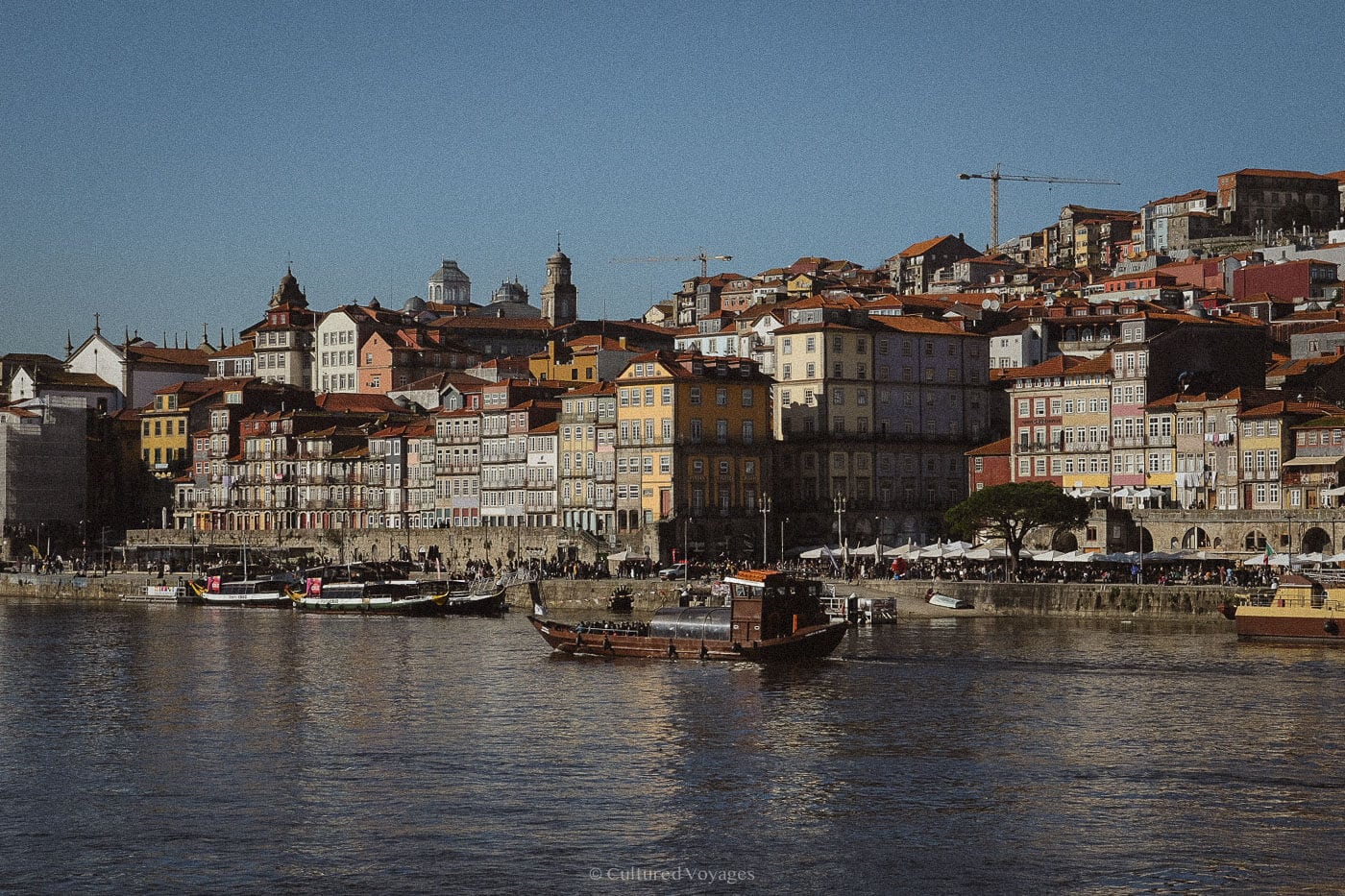
Descending into Ribeira for the first time delivers that unmistakable “I’m in Porto” moment. Like catching your first glimpse of the Duomo in Florence or the Bay of Naples, it’s one of those views that tells you you’ve arrived somewhere special.
A Cultured Voyages Guide
Seven shifts that take you from sightseeing to actually understanding a place – the same ones I use on every trip I plan.
The district reveals itself gradually as you descend.
Narrow streets wind their way down towards the water, each cobbled path drawing you further into old Porto. Along the waterfront, you’ll find what’s probably the city’s most iconic view – a line of tall, narrow buildings in warm pastels, their balconies and shutters stacked above the promenade in that distinctive style that’s become synonymous with Porto.
My first morning in Ribeira remains vivid in my memory. Visiting in winter, I found the district wrapped in a gentle river mist, the cold, crisp air lending everything a timeless quality.
Traditional rabelo boats sat gracefully on the Douro’s surface, their silhouettes emerging dreamlike through the haze – not eerie, but romantic, as if the scene before me could have been from any era in the city’s rich history.
Like any great European district, Ribeira’s character shifts with the hours.
Early mornings are peaceful, perfect for watching the neighbourhood slowly come to life. By lunchtime, the riverfront promenade buzzes with activity – tourists and locals alike spilling out of cafes, perhaps a street musician providing the soundtrack to an afternoon of people-watching.
The evenings, though, are when Ribeira truly shines.
Even on a freezing winter night, we couldn’t resist dining outside at Casario, wrapped up against the cold but enchanted by the twinkling lights of Vila Nova de Gaia reflecting across the water. I can only imagine how magical these riverside evenings must be in summer.
PRACTICAL INFORMATION:
- Best times to visit: Early morning for photography and peaceful exploration, evening for atmosphere
- Don’t miss: The quayside promenade, views of Dom Luis I Bridge, traditional architecture
- Key spots: Praça da Ribeira, Rua da Fonte Taurina for traditional architecture
- Food tip: Despite being a tourist hotspot, there are some excellent restaurants like Casario – just book ahead
3 Visit Porto’s Magnificent Mercado do Bolhão

The Mercado do Bolhão occupies an entire block in the heart of downtown Porto, and from the moment you step inside, you sense that this is no ordinary market.
Following an extensive renovation completed in 2022, the space strikes a remarkable balance – gleaming modern facilities housed within the bones of its historic 19th-century architecture.
What captured me first was the sheer sense of space and cleanliness.
Despite housing 79 vendors on the ground floor alone (plus 10 restaurants upstairs and 38 shops facing outward), the market never feels cramped. Instead, it flows beautifully, with wide aisles between stalls allowing you to properly admire the fresh produce, meats, fish, and local specialities on display.
The market’s story stretches back to the mid-19th century when a municipal decree in 1839 consolidated all of Porto’s existing markets into this central location.
The current building, constructed during WWI, has become an architectural icon of the city. Today’s renovation honours that heritage while adapting to modern needs – you’ll find traditional fishmongers selling bacalhau (salted cod) alongside speciality food stalls, wine vendors and cafes.
For me, my own visit to Mercado do Bolhão was particularly poignant.
It was here, in January 2024, that I found myself perched on the market’s central steps – a popular gathering spot where both locals and visitors pause to enjoy their purchases.
A vendor had just passed over two glasses of crisp rosé (perhaps not the obvious choice in either January, or in Porto, but the city has a way of making any moment feel celebratory).
As I sat there with my partner Andy, watching the market life unfold below, it hit me: this was our first stop as newly location-independent digital nomads in Europe. It was quite the pinch-me moment.
I’d definitely visit the market hungry.
Beyond raw ingredients, the market is home to speciality stalls where you can sample regional cheeses, olives, and freshly baked bread.
Sweet-toothed visitors will delight in traditional pastries like the iconic pastel de nata (custard tart). Several small eateries within the market serve authentic dishes, allowing you to savour classics like tripas à moda do Porto (tripe stew) and francesinha, a hearty sandwich layered with assorted meats and smothered in a rich beer-based sauce.
The market also features vendors selling local wines, including the famed Port and Vinho Verde.


The upper level is an ideal place to relax and enjoy a meal while soaking in the bustling atmosphere below. Many of these eateries take pride in showcasing regional ingredients sourced directly from the market’s vendors, ensuring the freshest and most authentic flavours.
Highlights include small plates of petiscos (Portuguese-style tapas), grilled seafood, and hearty dishes like arroz de pato (duck rice) or caldeirada (Portuguese fish stew).
Notable establishments include:
- Madureira’s Real Bolhão: Known for its traditional Portuguese dishes.
- O Pintainho 36: Offers a variety of local specialities.
- Peixe no Mercado – No Meat: Specialises in fresh fish and seafood, sourced directly from the market’s ground-floor vendors.
- Herdade 1980: Provides a range of regional delicacies.
- Nelson dos Leitões – Original da Bairrada: Famous for its traditional Bairrada-style roast suckling pig.
PRACTICAL INFORMATION FOR VISITING THE MERCADO DO BOLHÃO:
- Open Monday-Friday 8:00 AM – 8:00 PM, Saturday 8:00 AM – 6:00 PM
- Closed Sundays
- 79 stalls on the ground floor, 10 restaurants upstairs, and 38 exterior shops
- Best visited in morning hours for the freshest produce
- Don’t miss: The central steps are perfect for people-watching with a glass of wine
- Multiple entrances around the block make it easy to pop in and out
4 Cross the Dom Luis I Bridge & Explore Vila Nova de Gaia

It’s only when you’re actually standing on the Dom Luis I Bridge, or capturing that perfect photo of its sweeping arch from below, that you truly appreciate what a monumental feat of engineering it really is.
While many cities have their iconic bridges, I found something special about how close and personal you can get with this one – its industrial beauty becomes even more striking when you’re walking its upper deck, suspended high above the Douro.
The height of the crossing rewards you with some of Porto’s most spectacular views. From this elevated position, the city unfolds before you, its terracotta roofs cascading down to the river’s edge, while rabelo boats dot the water below like toys.
Cross to the Vila Nova de Gaia side, and you’ll discover what feels – and technically is – a completely different city.
The architecture and street atmosphere shifted noticeably; I could see how everything here grew organically around the historic port wine trade, with the whole area developing to accommodate the wine cellars and storage facilities.
Today’s Vila Nova de Gaia, however, offers much more than its mercantile past might suggest.
The area has undergone an impressive regeneration in recent years. Gleaming and well-kept, it balances its historic port lodges with contemporary attractions.
During my visit, I found some unexpected gems. The sophisticated Angel’s Share Wine & Cocktail Bar tucked away at the top of the World of Wine museum, proved perfect for an aperitif of wine and cheese. For another excellent vantage point, consider drinks at the bar of Vincci Ponte de Ferro.
You can really appreciate the contrast between old and new here – from centuries-old lodges to contemporary riverside restaurants. Take the cable car for yet another perspective on Porto’s distinctive cityscape.
PRACTICAL INFORMATION FOR THE BRIDGE & VILA NOVA DE GAIA:
- Bridge access: Both levels are accessible to pedestrians
- The upper deck offers the best views but can be windy
- Cable car: Single ride €6, return €9. Operates 10:00 AM – 6:00 PM (Jan-Mar, Nov-Dec); 7:00 PM (Apr, Oct); 8:00 PM (Sep). Closed Christmas Day.
- Several good accommodation options if you prefer this side of the river (see my Where to Stay in Porto Guide for more)
5 Climb Clérigos Tower

Porto’s iconic bell tower rises 76 meters above the city, offering what I found to be some of the most spectacular 360-degree views of Porto. Even in early January, the tower’s enduring popularity was evident – this is clearly one of Porto’s must-do experiences, regardless of season.
Designed by Italian architect Nicolau Nasoni and completed in 1763, the tower stands as a masterpiece of baroque architecture and was once the tallest building in Portugal.
What makes it particularly remarkable is how it was built – the entire structure was crafted from granite blocks, each carefully positioned to create the tower’s distinctive silhouette that has become one of Porto’s most recognisable landmarks.
The climb itself is an adventure through history. With about 240 steps to tackle, you’ll quickly realise this tower wasn’t designed with tourism in mind!
The narrow stone staircase requires some careful navigation when passing others on their way down, and if you’re claustrophobic, you might want to keep this in mind. However, there are windows at various levels offering welcome breathers and preview glimpses of the view to come.
What makes the viewing experience at the top particularly special is how unobstructed it is. Unlike many tower climbs in Europe, there’s no intrusive safety fencing to spoil your photos, yet you still feel completely secure. Helpful maps around the viewing platform help you identify landmarks in Porto’s sprawling cityscape below.
Don’t make the common mistake of overlooking the church attached to the tower. The Church of the Clerics is quite beautiful in its own right, and you might catch an interesting temporary exhibition on your way up through the complex.


PRACTICAL INFORMATION FOR VISITING CLÉRIGOS TOWER:
- 240 steps to the top
- Multiple levels with windows during the climb
- Can get busy – book tickets in advance to avoid queues
- Open daily 9:30 AM–1:00 PM and 2:30 PM–7:00 PM (Apr–Oct); 10:00 AM–12:00 PM and 2:00 PM–5:00 PM (Nov–Mar); 10:00 AM–7:00 PM (Aug).
- Purchase skip-the-line tickets for Clérigos Tower here
6 Experience Porto’s Azulejo Heritage

Porto’s azulejo tradition dates back to the 15th century when the technique was introduced by the Moors.
Over time, they evolved into a distinctly Portuguese art form, with intricate patterns and vivid blue-and-white designs becoming the hallmark of azulejos during the 17th and 18th centuries.
While Porto’s blue-and-white tiled facades are a defining feature of the city, I found that not all azulejo experiences are created equal.
The cloisters of Porto Cathedral offered my favourite setting to appreciate these iconic tiles. Here, the azulejos wrap around a peaceful courtyard, creating a serene atmosphere that allows for proper contemplation of their artistry and detail.
The scene at Igreja do Carmo presents a fascinating contrast.
The church’s impressive azulejo-covered exterior wall has become one of Porto’s most photographed spots, but what captured my attention was the juxtaposition of this historic artistry with modern city life. There’s something particularly striking about watching the traffic lights change and pedestrians cross at the corner, contemporary life flowing past these centuries-old tiles.
São Bento Station houses some of Porto’s most celebrated azulejos, with over 20,000 tiles depicting scenes from Portuguese history. Created by artist Jorge Colaço between 1905 and 1916, the panels are truly magnificent.
However, as this is a working train station, appreciating the artistry requires some patience – you’ll be sharing the space with hurrying commuters rather than enjoying the hushed atmosphere of a museum.


Keep your eyes peeled for more stunning examples across the city.
Capela das Almas (Chapel of Souls) on Rua de Santa Catarina offers another spectacular display, with its exterior completely covered in blue and white tiles depicting scenes from the lives of various saints.
The Igreja de Santo Ildefonso, perched near São Bento Station, is another masterpiece featuring approximately 11,000 tiles created by artist Jorge Colaço in 1932. The tiles here depict scenes from the saint’s life and passages from the Gospels.
For something a bit different, head to Casa da Música, Porto’s contemporary concert hall, where you’ll find modern interpretations of traditional azulejo designs – a testament to how this art form continues to evolve.
PRACTICAL INFORMATION FOR VIEWING PORTO’S AZULEJOS:
- São Bento Station: Free to enter. Try early morning or evening for quieter viewing
- Porto Cathedral Cloisters: Entry fee €3
- Igreja do Carmo: Free to enter
- Capela das Almas: Free to enter
- Igreja de Santo Ildefonso: €1
- Casa da Música: Viewable from exterior, or take a guided tour [insert cost]
7 Take in Porto’s Best Viewpoints

Porto’s dramatic topography, with its steep hills tumbling down to the Douro, creates some spectacular vantage points across the city.
While Jardim do Morro might be Porto’s most famous viewpoint – and for good reason – I discovered each miradouro (viewpoint) offers its own unique perspective on the city.
Just as you wouldn’t skip Piazzale Michelangelo in Florence, Jardim do Morro should be on every first-time visitor’s list.
I found it particularly magical at sunset when the fading light turns the Douro to gold and Porto’s terracotta roofs glow warmly. You’ll likely share the space with others, but there’s something quite special about joining locals and visitors alike as they gather to watch the day end over the river.
My personal favourite spot was Miradouro da Vitória. Here, you get fantastic views that capture everything iconic about Porto – the river, the bridges, the clustered buildings climbing the hills – but with an added layer of authenticity.
The area has a slightly edgy feel, with street art brightening walls and that signature Porto mix of perfectly preserved and gently crumbling buildings. It’s a viewpoint that shows you both the picture-perfect Porto and its more real side.
Other notable spots include the square in front of Porto Cathedral, offering sweeping views over the rooftops, and the upper deck of Dom Luis I Bridge, where you can appreciate the city’s layout from mid-air. For a 360-degree perspective, head up Clérigos Tower – just be prepared for the 240-step climb.


For those seeking more off-the-radar viewpoints, Porto has several hidden gems worth discovering.
The Miradouro das Fontainhas offers stunning views over the Douro from the eastern side of the city, with a particularly lovely perspective of the Maria Pia Bridge. Serra do Pilar, just behind Jardim do Morro, provides an elevated vantage point from its monastery terrace. Meanwhile, the Crystal Palace Gardens (Jardim do Palácio de Cristal) offers not just views but beautifully manicured gardens to explore – head to the domed pavilion for some of the best vistas.
For something completely different, consider the rooftop bar at Porto Cruz in Vila Nova de Gaia, where you can enjoy the views with a white port and tonic in hand.
8 Tour the Opulent Palácio da Bolsa

Porto’s former Stock Exchange Palace offers a fascinating glimpse into the city’s commercial heritage, but it’s the building’s lavish interiors that really steal the show.
Built in the mid-19th century after Queen Mary II gifted the site of a ruined convent to the Porto Commercial Association, the palace stands as a testament to the city’s mercantile power.
The highlight is undoubtedly the Arabian Room, a space that feels wonderfully unexpected in the middle of a Portuguese administrative building.
Reminiscent of Granada’s Alhambra (albeit on a smaller scale), this jaw-dropping hall features intricate stucco work, beautiful stained glass windows, and a massive chandelier weighing over 1,000 kilograms.
While the Arabian Room commands most of the attention, don’t overlook the building’s other treasures.
The grand staircase leading to the first floor is particularly magnificent, and you’ll find interesting touches throughout, including the office of Gustave Eiffel himself – the same engineer who would later design Paris’s iconic tower also left his mark on Porto, most notably with his work on the Maria Pia Bridge.
The palace can only be visited via guided tour, and while this might seem restrictive, I found it actually enhanced the experience. The guides provide crucial context about the building’s history and architectural details that you might otherwise miss.
However, photographers should note that you’ll have limited time to capture images during the tour – you might manage to snatch a few minutes at the end, but this isn’t the place for an extensive photo session.


PRACTICAL INFORMATION FOR VISITING BOLSA PALACE:
- Visits by guided tour only, lasting approximately 30 minutes
- Tours run in English, French and Spanish
- One tour in each language every hour, with departures every 20 minutes
- You may need to wait up to 40 minutes for a tour in your preferred language
- Open daily from 9:00 AM to 6:30 PM
- Photography is permitted but time is limited
- Book tickets in advance here.
9 Visit Porto Cathedral (Sé) & Complex

Walking up to Porto Cathedral, I felt a real sense of anticipation. Perched at one of Porto’s highest points, the cathedral’s elevated position makes it feel like you’re approaching something truly significant in the city’s story – which, of course, you are.
The square in front of the cathedral offers some of Porto’s most spectacular views, with the city sprawling out beneath you and the Douro River winding its way through the landscape. It’s hard to believe that this same picturesque spot once served a much grimmer purpose – it was here that public executions were carried out in medieval Porto.
The cathedral’s journey through time is written in its architecture.
While its fortress-like towers and crenellated walls speak to its 12th-century Romanesque beginnings (a time when houses of worship often needed to double as places of defence), the gorgeous rose window and Gothic cloisters tell the story of later medieval additions.
The baroque porch and loggia, added in the 18th century, reflect Porto’s growing wealth and confidence during the port wine boom.
Inside the cathedral complex, I found the cloisters to be a particular highlight. I’m generally drawn to cloisters for their peaceful, contemplative atmosphere, and these were especially charming with their distinctively Portuguese touch – walls adorned with traditional blue and white azulejo tiles.
What struck me most was how quiet it was during my visit. Whether it was the uphill location that deterred some visitors, or simply because we arrived later in the day, the serenity of the space really enhanced the experience.


Elsewhere, you’ll find hints of the city’s wealthy maritime past in the sacristy, where an elaborately carved wooden chest speaks to the riches flowing through Porto during the Age of Discovery.
The beautiful stonework in the Gothic cloisters shows off the skills of 14th-century craftsmen, while tucked away, you’ll find the chapel of João Gordo – a wealthy merchant whose presence here reminds us that Porto has always been a city built on trade.
I was pleasantly surprised by how affordable entry was, too – it felt like a nominal fee for such an important piece of Porto’s cultural heritage.
PRACTICAL INFORMATION FOR VISITING PORTO CATHEDRAL:
- Entry fee €3
- Open daily – 9:00 AM – 6:30 PM (April – October) and 9:00 AM – 5:30 PM (November – March)
- Treasury and cloisters included in the entry
- Best visited later in the day for a quieter experience
- Wear comfortable shoes for the uphill walk
10 Immerse Yourself in Porto’s Food Scene

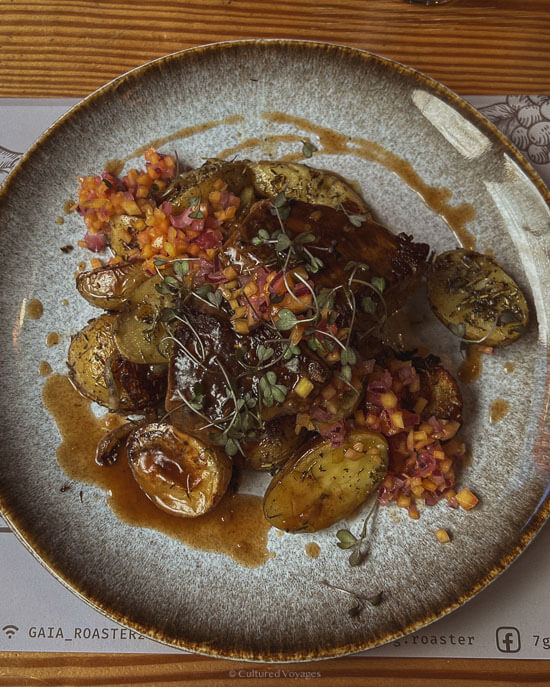
While Porto’s traditional dish, the Francesinha, might be the city’s most famous culinary export – a hefty sandwich stuffed with various meats, covered in melted cheese and a rich beer-based sauce – I found myself drawn to the city’s more contemporary dining scene.
The heart of Porto’s food culture beats at Mercado do Bolhão, where the recent renovation has created a wonderfully clean, spacious environment.
With 79 stalls on the ground floor and 10 restaurants upstairs, it’s the perfect spot to get a feel for local produce and cuisine. As mentioned earlier in this guide, I particularly enjoyed perching on the central steps with a glass of wine, watching market life unfold below.
Porto’s modern restaurant scene really impressed me.
High on my list was Restaurante Casario, and though I’d forgotten to book ahead, we lucked out with the last available table. Located among the traditional casario townhouses along the riverfront, this refined spot offers a stark contrast to the area’s tourist traps. The fish bonbons were a highlight, and if you can snag an outdoor table, the Douro views are positively dreamy.
Cantina 32 was another standout. In this modern, aesthetically pleasing space, we enjoyed both traditional Portuguese dishes like Bacalhau à Bráz (salted cod with fried potatoes and egg) and more creative interpretations. The lively atmosphere and friendly service made for a really enjoyable evening.
For something more intimate, Muro do Bacalhau along the river’s edge offers a perfectly curated sharing menu in a cosy but contemporary setting.
The city has also embraced brunch culture with enthusiasm.
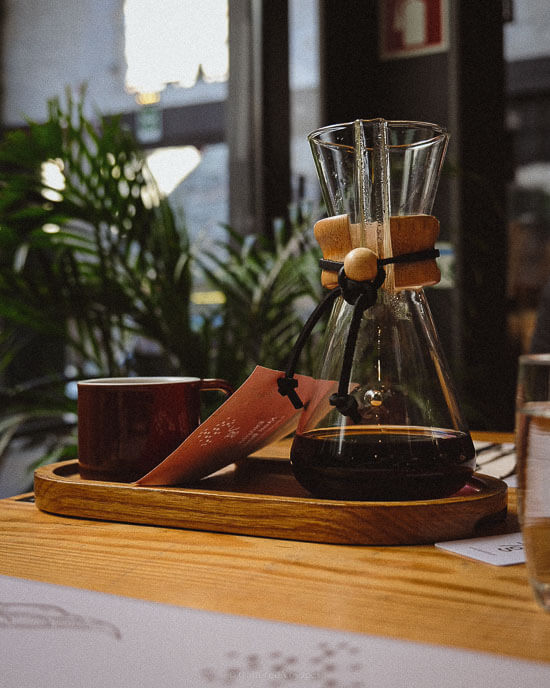
Zenith was a favourite of mine, housed in an industrial-style space with upbeat tunes and an all-day brunch menu. For coffee lovers, 7g Roasters in Vila Nova de Gaia proved to be a hidden gem – a buzzy, inviting space perfect for anything from specialty coffee to more substantial meals.
Nicolau Porto, meanwhile, offers a good spot for all-day dining, offering brunch, breakfast, lunch, and early dinner. With an outdoor space as well as a spacious indoor one, Nicolau has a nice mix of those meeting socially, along with a smaller cohort of those working on their laptops.
11 Take a Douro River Perspective

The Douro River isn’t just a waterway running through Porto – it’s the city’s lifeblood, the force around which Porto has grown and evolved. Standing by the river’s edge, you can feel how it shapes the rhythm of daily life here.
The Six Bridges cruise has become one of Porto’s signature experiences, offering a unique perspective of the city’s historic bridges and riverfront architecture.
These relaxing 50-minute journeys take you under all six of Porto’s bridges, each with its own story – from the iconic Dom Luis I to the graceful Maria Pia, another testament to Gustave Eiffel’s influence on the city. Traditional rabelo boats, once used to transport port barrels, now guide visitors along these historic waters.
Early mornings bring a gentle awakening. Mist often clings to the water’s surface while the first boats begin to stir, their silhouettes breaking through the haze. The riverfront promenade is peaceful at this hour, perfect for photographers or those seeking a quieter experience of the river.
By midday, the riverside buzzes with energy. Tourists and locals alike fill the outdoor cafés and restaurants, the clinking of glasses and hum of conversation mixing with the calls of boat operators. The promenade comes alive with street performers and vendors, while restaurants prepare for the lunch rush.
The late afternoon light is particularly magical here.
The sun’s rays dance across the water’s surface, turning the Douro to liquid gold, while casting long shadows from the bridges above. This golden hour transforms both the river and the city rising up from its banks, the light warming the terracotta roofs and creating a spectacular display.
PRACTICAL INFORMATION FOR TAKING A SIX BRIDGES CRUISE:
- Cruises depart regularly from both banks of the river. Make sure to check your departure point if pre-booking. You’ll more likely snag a last minute ticket on the Vila Nova de Gaia side if you haven’t booked in advance – it looked a lot quieter than Ribeira.
- Duration: 50 minutes – 1 hour
- Best times: early morning for peace, sunset for spectacular light
- Multiple operators offer similar routes.
- Book your tickets here in advance, particularly during peak season. The price approximately €18 per person.
12 Step Inside (And Battle The Crowds At) Livraria Lello

The reality of visiting Livraria Lello may come as a bit of a shock if you’re expecting that serene, book-browsing experience you’ve seen on Instagram. As one of the oldest bookshops in Portugal and regularly rated among the world’s most beautiful, it’s become a victim of its own popularity.
Built in 1906 by engineer Francisco Xavier Esteves, this neo-Gothic masterpiece truly deserves its reputation.
The interior is a bibliophile’s dream – elaborately carved wooden arches soar overhead, while a stunning double helix staircase forms the heart of the space. Art Deco touches blend seamlessly with stained glass windows, and busts of Portuguese writers watch over the proceedings, lending the space a distinct literary gravitas.
Despite the tourist crowds (and there will be crowds), I could absolutely understand why this bookshop has captured so many imaginations. If you’re a book lover like me, you can’t help but be swept away by the romanticism of it all, even as you jostle for position on that famous staircase.
While some claim it inspired J.K. Rowling’s depiction of Hogwarts (it didn’t), the building’s own story is fascinating enough. The carved wooden ceilings, ornate banisters, and floor-to-ceiling shelves speak to a more nostalgic time when bookshops were built to be temples to literature rather than just functional retail spaces.
I’ll be honest – after about 20 minutes of navigating through the crowds trying to take photos, I was ready to leave.
However, I’d still recommend a visit – just go in with realistic expectations. A skip-the-line (‘Gold’) ticket includes a classic book from their collection, so take time to browse and choose something special. They also have a solid selection of contemporary books if you’re looking for something specific.


PRACTICAL INFORMATION FOR VISITING LIVRARIO LELLO:
- Book tickets in advance – same-day skip-the-line tickets are rare except mid-week or during low season
- Standard ‘Silver’ entry €8, skip-the-line ‘Gold’ tickets €16 (worth the extra cost as it allows you to pre-book your time)
- New ‘Platinum’ ticket includes access to the Gemma Room (rare books collection)
- Open daily 9:30 AM to 7:00 PM (closed on major holidays)
- Best times: first thing in the morning or late afternoon
- Allow about 30-45 minutes for your visit
- Photography is allowed but challenging due to the crowds
13 Explore Porto’s Local Neighbourhoods

While most visitors stick to Ribeira, I found Porto’s true character in its other neighbourhoods, where you get a real sense of daily life.
During my stay in Miragaia, I loved watching locals go about their routines – picking up groceries, chatting on doorsteps, hanging laundry from balconies.
One thing that struck me was the number of abandoned buildings throughout Porto. Around one in five buildings stands empty or needs serious repair.
There’s an interesting story behind this – decades of strict rent controls meant landlords couldn’t make enough money to maintain their properties, and when they died, complex inheritance issues often left buildings stuck in legal limbo.
At first, I found it a bit jarring, but then I realized it’s part of what makes Porto real – this isn’t some polished tourist city, but a place dealing with real urban challenges.
If you’re interested in Porto’s creative side, head to Cedofeita. I found some great independent shops and galleries here, especially along Rua Miguel Bombarda. Street art pops up in unexpected places, and there’s a really nice mix of old architecture and new energy.
For something completely different, take a trip out to Foz do Douro, where the river meets the sea. The contrast here will likely surprise you – suddenly you’re in an upscale neighbourhood with a beautiful beachfront promenade and some seriously good restaurants. It feels worlds away from central Porto’s weathered charm.
Over in Boavista, you’ll see Porto’s modern face. The striking Casa da Música completely catches the eye – it’s such a bold piece of contemporary architecture and shows how Porto isn’t just about preserving the past.
PRACTICAL INFORMATION FOR EXPLORING PORTO’S NEIGHBOURHOODS:
- Most neighbourhoods are easy to reach on foot, by public transport, or by using the FreeNow taxi hailing app.
- Early morning and evening are best for seeing local life
- Some areas like Foz need transport from the centre
- Look for local cafes rather than tourist spots if you want to mingle with the locals


Make the Most of Porto: Essential Tips, Guides & Resources
While these 12 curated things to do in Porto showcase some of the city’s finest experiences, I’ve barely scratched the surface of what makes this riverside city so special.
From wandering through less-visited neighbourhoods to discovering your own favourite spot to watch the sunset over the Douro, Porto has a way of revealing itself slowly to those who give it time.
If you’re at the planning stage of your Porto adventure, you might be wondering how to fit everything in.
Pulling it all together | My guide to spending 3 days in Porto offers a carefully structured itinerary that helps you make the most of your time. Or, if you’re pressed for time, discover how to experience Porto in one day to hit the highlights.
Where should you stay? | Choosing where to stay can make or break your Porto experience – each neighbourhood has its own distinct character. My detailed guide to where to stay in Porto breaks down the best areas and includes handpicked accommodation recommendations for every budget.
Off-season travel | Porto’s charms still enchant in the quieter seasons, when the temperatures drop. Read my winter guide to visiting Porto to plan your trip.
Still on the fence about visiting? | Have a read through my thoughts on whether Porto is worth visiting (spoiler: it absolutely is). And before you go, my essential Porto travel tips will help you avoid common pitfalls and make the most of your visit.
Getting out of Porto | For those tempted by the allure of port wine, consider venturing beyond the city to its source. My guide to the Douro Valley helps you plan the perfect wine country escape, while my roundup of the best Douro Valley tours from Porto makes it easy to explore the region, even if you’re short on time. Even better, make a trip of it and spend the night at one of these magnificent quintas in the Douro Valley!

Before you go
Everything I check before a trip now lives on one page.
Seven shifts I run on every trip I plan, each one paired with the story that taught it to me and the steps for using it yourself — built to be printed, kept, and pulled back out before the next one.
It arrives when you join The Cultured Voyages Edit, a fortnightly letter on European cultural travel.
Planning Your Porto Trip: Where to Go Next
If this list has done its job, you’re now thinking seriously about a trip.
The natural next steps from here are working out how to structure your time in Porto and where to base yourself.
If port wine has piqued your interest and you want to go further, my first-timer’s guide to the Douro Valley is the place to start.
Related reading for Porto & North


Like this post? Pin for later!

