Disclosure: Some of the links on this site are affiliate links. If you make a purchase through one of them, I may earn a small commission at no extra cost to you. Read my full disclaimer here. Thank you for your support!
This 10-day Amalfi Coast itinerary is for travellers who want to experience the region properly, and not just move through the version they’ve seen on social media.
I’ve been visiting Campania in different ways for years: first on family holidays, later through the glossy, Positano-led lens that dominates Instagram, and more recently as a slower, more deliberate traveller.
Over time, my relationship with the Amalfi Coast has changed, and so has the way I think it’s best experienced.
What I’ve learned is this: the Amalfi Coast is spectacular, but it’s surprisingly easy to get wrong.
Many itineraries move too quickly, rely too heavily on a single base, or underestimate how draining constant transfers, crowds, and repacking can be.
Ten days gives you something most visitors don’t have: the space to choose your bases intelligently, experience towns beyond their busiest hours, and build in contrast rather than repetition.
This itinerary is for you if:
- You care about food, towns, walking, and history as much as views
- You’d rather travel by ferry than deal with coastal driving
- You want iconic places like Capri and Positano – but balanced with calmer, more grounded stops
- You prefer staying put for a few nights rather than packing up every morning
It’s a ferry-first, car-free route designed to feel considered rather than chaotic and is varied without being exhausting.

Table of Contents Show
🗒️ Your 10-day Amalfi Coast itinerary (at a glance)
10-Day Amalfi Coast itinerary in brief:
➊ Days 1–2: Naples
➋ Days 3–4: Capri
➌ Days 5–7: Positano or Praiano
➍ Days 8–10: Amalfi, Minori & Ravello
You start with the cultural and culinary context of Naples, experience Capri properly once the day trippers leave, spend unhurried time on the most iconic stretch of the coast, and finish in the Amalfi/Ravello area, where the pace slows, and the scenery becomes more expansive.
Logistics-wise, ferries do most of the heavy lifting throughout, which keeps the trip far calmer than a car-based itinerary.
TIP: Prefer something greener and more under the radar? I’ve included a fully structured Ischia alternative later in this guide.
Booking & Planning Shortlist
If you want the simplified version, start here ➟
🏨 Hotels:
These are the bases I’d personally book for this route:
Naples: B&B Ruffo di Bagnara
Capri: Hotel Canasta
Positano: Hotel Conca d’Oro
Amalfi: Amalfi Luxury House
Minori (hidden gem): Orto Paradiso
🛥️ Ferries:
Compare routes & book: Ferryhopper
🍋 Amalfi Coast Experiences I rate highly
→ Small-group boat tour from Positano
→ Amalfi farmhouse cooking class
How to Think About the Amalfi Coast (Before Planning Your 10 Days)

A quick note on what people mean by “the Amalfi Coast”
Strictly speaking, the Amalfi Coast refers to the stretch of coastline running from Positano down to Salerno. That’s the UNESCO-listed section, and where towns like Amalfi, Ravello, Minori and Praiano sit.
In practice, though, I find that people apply it more loosely to describe a wider travel area that includes places like Naples and nearby islands, largely because Naples is the main arrival point and the islands are so closely tied to how people experience the region.
Therefore, with ten days, it makes sense to think beyond the coastline alone. For that reason, I’ve added Naples (and potentially Ischia) to this itinerary so you’ll have added contrast, breathing space, and a much more rounded experience of Campania.
One important mindset shift before you plan anything else
The Amalfi Coast is much bigger (and much more varied) than the version you see online.
If you only look at Instagram, it can seem like the entire region is boats, beach clubs and a handful of perfectly framed viewpoints. That version exists, of course, but it’s narrow.
With ten days, you don’t have to chase that one glossy ideal.
There’s excellent food here. Proper walking. Layers of history that go well beyond pretty façades. Towns that feel completely different once you spend a night in them rather than two crowded hours.
Even if you’re not particularly interested in beaches or yachts, there’s more than enough to hold your attention.
I built this itinerary around that fuller picture – staying long enough for places to change character in the evenings, and to avoid constant packing and repacking.
Getting Around For This 10-Day Amalfi Coast Itinerary (Without a Car)
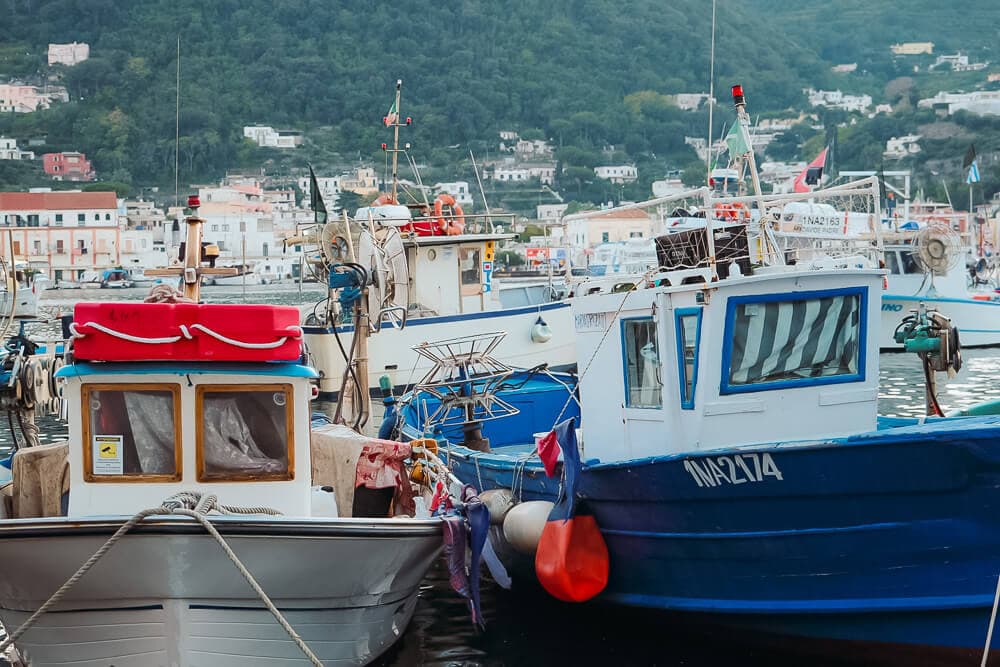
One of the biggest assumptions people make when planning a longer Amalfi Coast trip is that having more time means they’ll need a car.
Well, let me tell you that with ten days, you have the flexibility to base yourself well and rely on ferries instead, which makes the experience far calmer and far more enjoyable.
Travelling by sea along the coast is not only scenic, but it is often faster and more predictable than travelling by road, particularly during the busier months.
Ferry travel: the simplest way to move around
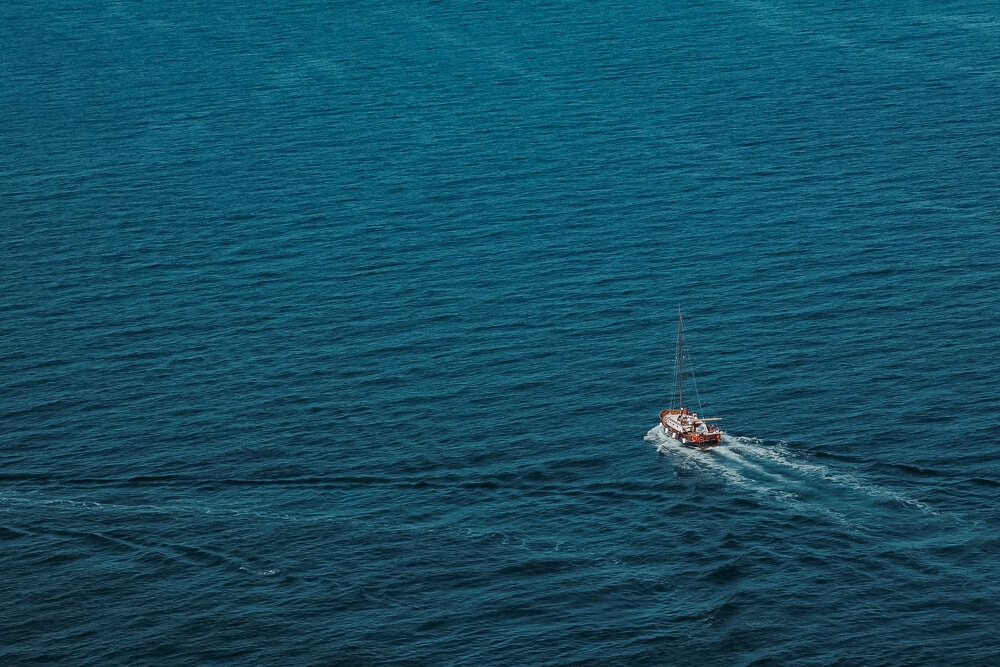
Ferries run between Naples, Capri and most of the main Amalfi Coast towns very regularly from spring through to early autumn. Provided the weather isn’t bad, they are the least stressful way to get around.
They allow you to:
- avoid traffic and parking entirely
- arrive directly in the centre of towns
- enjoy the coastline from the water rather than a congested road
If you position yourself near a ferry port, you can move between bases and take day trips without long transfers or early starts. This is one of the biggest quality-of-life upgrades you can make on a trip like this.
Ferry schedules are seasonal and weather dependent, so it’s always worth checking times a day or two in advance rather than assuming they’ll run exactly as planned.
Do you need a car for the Amalfi Coast?
For this itinerary, no, you don’t.
Driving on the Amalfi Coast is challenging even for confident drivers.
My own experience of driving there is narrow roads resulting in some white-knuckle moments, sheer drops off one side, and overhanging rocks on the other. Roads are narrow, traffic can be heavy, and parking is limited and expensive in most towns.
On top of that, seasonal driving restrictions have been introduced in recent years to reduce congestion, which can make hiring a car more hassle than it’s worth if you’re moving between multiple locations.
If you’re travelling off-season or are staying in a remote inland property, then it may make more sense, but to be honest, in most other instances, I find it adds stress rather than freedom.
If you want a deeper breakdown of when a car might or might not make sense, I’ve covered that in detail in my separate guide on whether you need a car on the Amalfi Coast.
Buses, taxis and private transfers
Local buses run along the coast and between nearby towns, and they can be useful for short hops, particularly outside peak season. During summer, however, I’ve found queues can be long, and buses can fill quickly, which makes them less appealing if you’re on a tight schedule.
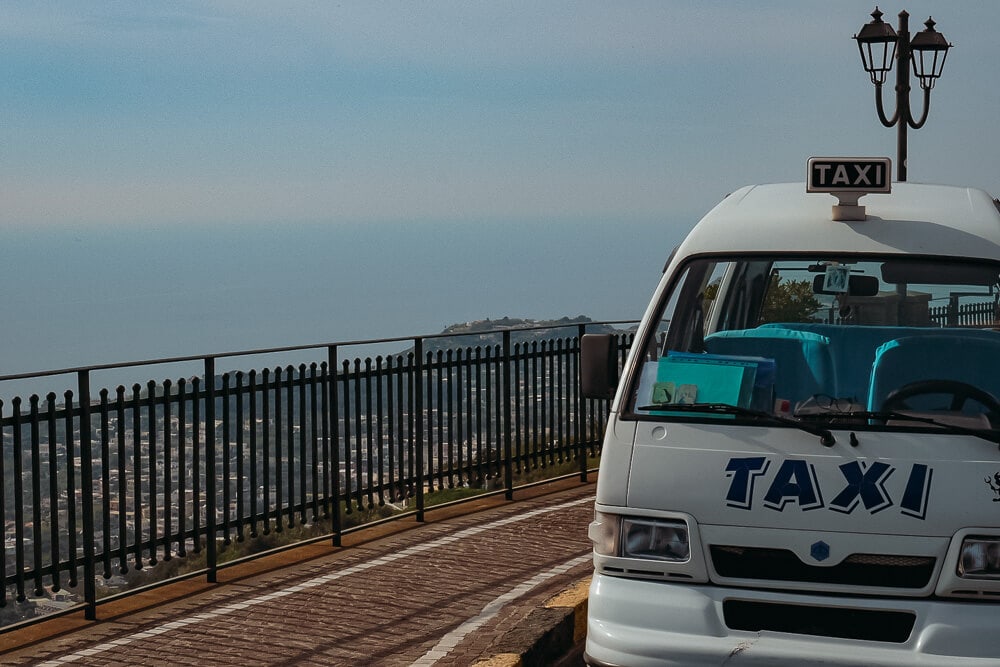
Taxis and private drivers are widely available, but costs add up fast. I’d suggest using them selectively, such as for getting to or from accommodation that isn’t well connected by ferry, or for specific transfers where sea travel isn’t practical.
This is another reason why choosing your base carefully matters so much. A beautiful hotel loses some of its appeal if every trip in and out involves a long walk, a bus queue or an expensive taxi.
Consider how much luggage you bring to the Amalfi Coast
A lot of accommodation on the Amalfi Coast sits above sea level, often reached by uneven stone steps rather than roads.
It’s happened to me on more than one occasion where I’ve arrived by ferry and then realised my hotel involved hauling luggage up a long flight of steps (well, luggage hauling for my partner, that is!!).
Before you book anywhere, check:
- how close it is to the ferry port
- whether porters are available
- how you’ll physically get your bags to the property
Packing lighter than you think you need and understanding the layout of your accommodation in advance will save you a lot of frustration on arrival.
Why I didn’t include Sorrento as a base in this itinerary
While it’s not even technically on the Amalfi Coast, Sorrento is a great resort town -I’ve even stayed there myself in the past. It can work well if you’re short on time or want one simple, well-connected base.
With ten days on the Amalfi Coast, though, I think it works against the experience most people actually want from this region.
Staying in Sorrento often means day-tripping into Capri, Positano and Amalfi at their busiest, then leaving again – so you miss the quieter evenings and the feeling of actually being in those places once the crowds thin out.
Instead of avoiding the crowd, you become part of the crowd!
If you have limited time, Sorrento can absolutely work as a base. If you have ten days, I’d rather see you stay on the coast itself (and an island) and experience those towns at their best.
10 Days on the Amalfi Coast: Itinerary in Full
Days 1–2: Naples

I like starting any trip to the Amalfi Coast in Naples for a very simple reason.
Your first day is almost always a partial day, depending on when you land, how long airport logistics take, and whether your flight is delayed.
Naples lets you ease into the trip without feeling like you’ve already “missed” part of the Amalfi Coast experience. You arrive, drop your bags, get your bearings, and then you have one full day the next day to properly sink into it.
Naples is also the capital of the region, and it gives you cultural context that you simply do not get if you go straight to the coast.
You have Vesuvius sitting there in the distance, the Bourbon legacy everywhere you look, and the feeling that this place stretches back well beyond the Romans to the ancient Greeks.
It is a proper introduction to the south of Italy too, which is its own world compared to the north. It is not all luxury hotels and glossy views. There’s grit, history, resilience, and a very specific energy that you either get or you don’t. I happen to love it.

Day 1: Arrival, a proper wander, and your first Neapolitan meal
Once you’ve checked in, Naples is one of those places that’s genuinely satisfying to just walk for a few hours, even if you do nothing “major”.
If it’s your first time, I would still walk through Spaccanapoli because it’s classic Naples and it gives you the pulse of the city quickly, even if it’s more touristy than it used to be.
The Spanish Quarter is worth seeing too. It’s rough around the edges, but you don’t need to be nervous about it during the day, just keep normal city awareness with your bag and belongings.
Then, if you want a total change of pace, head to the Lungomare. I love it because it feels like a microcosm of Neapolitan life. You’ll see older locals outside playing cards, couples sitting close together, families out for their evening stroll.
Food-wise, you’re in Naples, so yes, pizza is non-negotiable!
Naples is the source, and you taste it immediately. Campania’s tomatoes and mozzarella taste the way they do because they come from volcanic soils and the surrounding landscape, and it’s one of those moments where the “food is better here” cliché is actually true. My favourite pizzerias in Naples include Pizzeria da Attilio and Palazzo Petrucchi.
If you want to go beyond pizza, you absolutely should. Naples does seafood pasta brilliantly, and dishes like spaghetti alle vongole are the kind of simple, perfect meal you’ll remember. Pasta alla genovese is another one I’d encourage if you spot it.
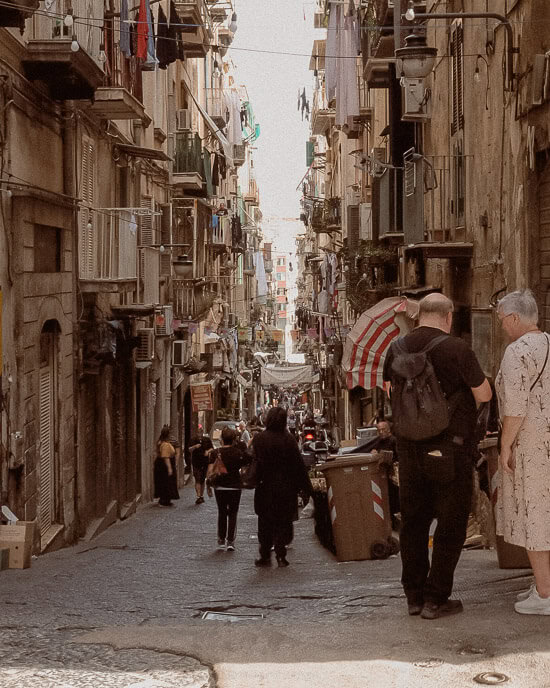


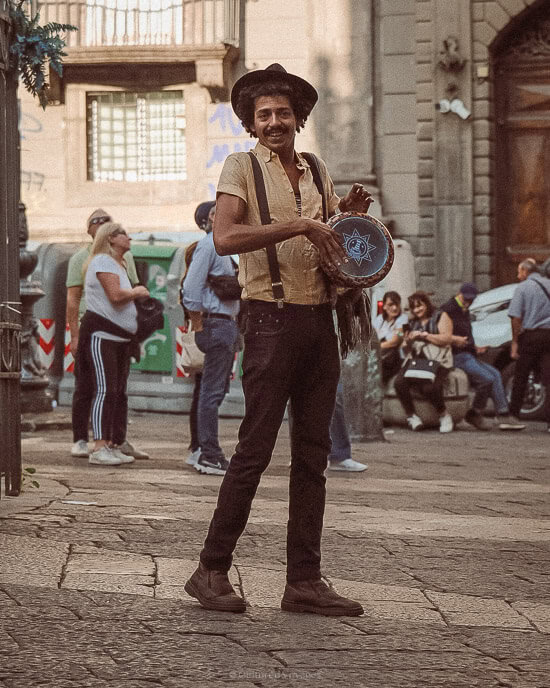
Day 2: Underground Naples, culture and history
If you’re going to do one “proper” activity in Naples itself, I strongly encourage that it’s Naples’ underground side, because it’s genuinely unique to the city.
My personal favourite Naples experience so far has been the Catacombs of San Gennaro.
There’s something about this quiet, reverent place that feels very intimate, rather than the creepiness you’d expect to feel when you hear the word ‘catacomb’. They tell you so much about the city and its people, and they feel very different to ticking off another museum.
If you’d rather stay closer to the historic core, you can also choose one of Naples’ underground experiences nearer Spaccanapoli, or the Bourbon Tunnel, depending on what appeals.
After that, I’d weave in the things that make the city feel most alive rather than trying to cram in “top sights”. This is a great day for:
- another long wander through the historic centre
- a proper espresso at the bar, standing up, like the locals do
- a food market stop (especially if you’re heading towards the Spanish Quarter)
- Taking the funicular up the hill to Castel Sant’Elmo for birdseye views of the city
That said, if you’re an art or history lover, Naples is very rewarding.
You have the National Archaeological Museum, which gives essential context for Pompeii and Herculaneum; the Veiled Christ in the Sansevero Chapel; the Royal Palace overlooking Piazza del Plebiscito; and Capodimonte, set above the city, with one of Italy’s most important art collections.
Add in places like the Cloister of Santa Chiara and Naples’ many historic churches, and you could happily spend far longer here than this itinerary allows.
Naples is one of my favourite Italian cities, so you’ll find plenty more advice in my Naples guides below.
Should you visit Pompeii? (or Herculaneum, or Vesuvius)

Naples is where it makes sense to decide whether you’re doing Pompeii, Herculaneum, Vesuvius, or a combination.
If you’ve never seen anything like it before and you have even a passing interest in ancient Rome, Pompeii is astonishing.
The last time I went, I spent over eight hours there, and that wasn’t even my first visit. There’s something very human about it, not just historically interesting. You feel the scale of everyday life, and the tragedy of what happened there.
That said, Pompeii can be punishing in summer. It gets exceptionally hot, with very little shade. Personally, I was even quite warm when visiting in early October most recently.
If you want something shorter, more contained, and easier to do in half a day, Herculaneum may suit better. You can cover it in two to three hours, and it’s closer and simpler logistically.
If you want to add Vesuvius, Herculaneum pairs really well with it.
The buses up towards Vesuvius leave from the small piazza outside Herculaneum station, so you can realistically do Herculaneum first, then head up to Vesuvius afterwards if the timing works and the weather is on your side.
This option can be particularly good if you’re travelling with teenagers, or if you want a full experience without committing to an all-day Pompeii mission.
Where to stay in Naples for this itinerary


For this trip, I’d stay in or near the historic centre, or around Via Toledo, because you get the atmosphere without making onward travel a headache.
You can read my full Naples Accommodation and Neighbourhood Guide if you want to see all my recommendations. Here are three in particular, however:
B&B Ruffo di Bagnara Monumental Palace
I stayed here on my last visit, and it really does have a wow factor. Set on the top floors of a grand palazzo overlooking Piazza Dante, right by Via Toledo and the Spanish Quarter, it combines chic interiors, a lovely breakfast, and surprisingly reasonable prices for the location.
Artemisia Domus
A very strong choice in the heart of Naples’ Centro Storico, housed in a beautifully restored historic building. It feels modern and thoughtfully designed without losing its sense of place, and it works particularly well if you want to be immersed in the old city.
Costantinopoli 104
One of my top picks if you want something a little more indulgent. Set in a 19th-century villa near the historic centre, it stands out for its elegant interiors and rare central swimming pool, which feels like a real luxury in Naples.
Getting from Naples to Capri (and my top ferry tip)

The transfer from Naples to Capri is straightforward. You go to the port and take the ferry, and I strongly recommend booking your tickets online in advance, particularly because Capri is a hugely popular day trip and some sailings do sell out at peak times.
I use Ferryhopper for this because it’s organised and easy, and it saves you that slightly stressful port ticket queue where you’re watching the minutes tick down.
Once you’re at the port, you find your terminal, queue up, show your ticket, drop your bags where instructed, and you’re on your way.
One thing I always add here, because I learned it the hard way, is the seasickness factor. I’m prone to it, and I can tell you with full confidence that sitting at the front of the boat is a completely different experience to sitting at the back.
The last time I took this ferry, I felt totally fine at the back, then walked up towards the front to use the bathroom, and it was wildly rockier. I could literally feel my stomach turn within minutes. This is why I always sit at the back, and I take anti-nausea tablets before boarding.
If you’re not normally affected by seasickness, you might be fine, but if you’re even slightly unsure, don’t test it on your first transfer of the trip.
📍 Prefer Something More Under the Radar?
If you’d prefer something greener and slower than Capri, Ischia is a compelling alternative. I love it for its thermal waters, unique, small towns (each with its own atmosphere) and a far more local pace of life.
In that case, swap Capri for 2–3 nights in Ischia instead. The rest of this itinerary works exactly the same.
I’ve outlined exactly how to structure that version – including where to stay – in the Alternative Version: 10 Days Including Ischia after the main itinerary section of this post.

Days 3–4: Capri

Capri is the natural first stop from Naples (or indeed, from Ischia) by ferry.
Capri is the closest island to Naples by ferry, so this creates a clean, simple transition and keeps the itinerary moving forward rather than zig-zagging.
But more than that, the contrast is immediate. You leave a loud, intense, endlessly layered city and less than an hour later, you’re stepping off a ferry onto an island that looks and feels completely different.
Day 3: Arrive on Capri and orient yourself properly


Capri’s port has been hectic each time I’ve visited. I can’t stress enough that the port itself, the funicular, and the Piazzetta area can be extremely busy, especially late morning through mid-afternoon, when ferries arrive back-to-back from Naples and elsewhere.
That doesn’t mean the whole island is like that. It just means you’ve arrived at the same time and place as everyone else.
What I do on arrival is simple. I drop my bags, get clear on where I’m staying, and then spend the rest of the afternoon walking in my immediate area rather than trying to see everything straight away.
Capri is small enough that you can cover a lot on foot in a few hours, particularly if you’re not doubling back through the busiest pinch points.
I deliberately move away from the Piazzetta and explore the quieter lanes and viewpoints on its edges.
The real shift tends to happen later in the afternoon. As the last ferries start to leave, the island thins out noticeably. You still have people staying overnight, of course, but the frantic edge drops away. That’s when Capri becomes easier to enjoy.
You can eat well on Capri, but if there’s somewhere you really want to eat, make a reservation in advance.
If you want more detailed guidance on areas to stay, how the island is laid out, and how to decide between Capri town and Anacapri, I cover that in depth in my Capri travel guide.
Day 4: See Capri without fighting the crowds


Your second day is where staying overnight really pays off, as timing is everything on Capri.
If you want to see Capri town and the Piazzetta area without it feeling overwhelming, aim to be there before 10am, or wait until after about 4 or 5pm, when most day trippers have already started leaving. The middle of the day is when it’s at its most congested.
With a full day, I recommend choosing one main focus, not several.
That might be:
- a boat trip around the island to see the Faraglioni and swim
- spending time in Anacapri for views and a quieter atmosphere
- visiting one or two key sights, then stopping
What I wouldn’t try to do in two nights is run around the island ticking everything off.
One of the biggest mistakes I see people make, even when staying overnight, is spending all their time clustered around the same busy areas and then concluding that the entire island is unbearably crowded. It isn’t. You just have to move away from where everyone else is standing.
A good rule of thumb is this: notice where people are gathering, then walk in the opposite direction. Even ten minutes can make a significant difference.
Take a boat trip while visiting Capri
A boat trip is one of the best ways to experience Capri if you want to spend time in the sun and see the island from a different angle. It also gets you physically away from the crowds, which is no bad thing.
Private boats can be expensive, so a small group tour is often a sensible compromise. Larger group boats are more functional than romantic, but they’re still a good way to get out on the water. It’s just worth being realistic about what kind of experience you’re booking.
If you’re trying to decide what’s achievable in a shorter timeframe, or you’re weighing up whether Capri should be a day trip or an overnight stay, my guide to visiting Capri as a day trip from Naples lays out those trade-offs clearly.
Where to stay in Capri for this itinerary

If you want easy access to restaurants, nightlife, and transport links, stay just outside Capri town, within about a ten to fifteen-minute walk of the Piazzetta. You’re close enough to dip in when you want to, but far enough away to escape the constant foot traffic.
If crowds are really not your thing, Anacapri is the better choice.
It’s quieter, more residential, and suits travellers who are here primarily for views and atmosphere rather than shopping and nightlife. You’ll rely more on local buses, but the trade-off is space and calm.
Hotel Canasta
A lovely boutique bolthole with a private garden and swimming pool. It’s close to the Faraglioni viewpoints and within easy reach of Capri town, but feels quietly tucked away rather than exposed to foot traffic all day.
To Be Capri Sea View Rooms
A small, romantic B&B just above Marina Piccola, with genuinely beautiful sea views. I like this option if you want something intimate and view-led, while still being able to walk into Capri town easily.
Il Giardino dell’Arte
A gorgeous boutique B&B set in a quiet, green part of Anacapri. It feels personal, calm, and rooted in place and is ideal if you’re staying on Capri for atmosphere and views rather than nightlife.
Leaving Capri and continuing the itinerary
Capri’s port can be busy, so I always make sure I know exactly how I’m getting down there in advance, whether that’s by funicular, local bus, or a pre-arranged transfer.
I also book ferry tickets ahead of time, particularly in peak season. Capri is extremely popular, and sailings do sell out.
Once you leave the island, you arrive straight onto the coast and shift into a slower, more grounded phase of the trip. The ferry to Positano from Capri typically takes around 30-40 minutes.
Days 5–7: Positano or Praiano

This stretch of the itinerary is about staying put and experiencing one side of the Amalfi Coast properly, rather than using it as a transport base. Three nights gives you enough time to settle in, enjoy the setting, and avoid designing every day around logistics.
Should you stay in Positano or Praiano?
Both work well, and you’ll be blessed with blissful scenery from both – they just offer different energy.
Positano
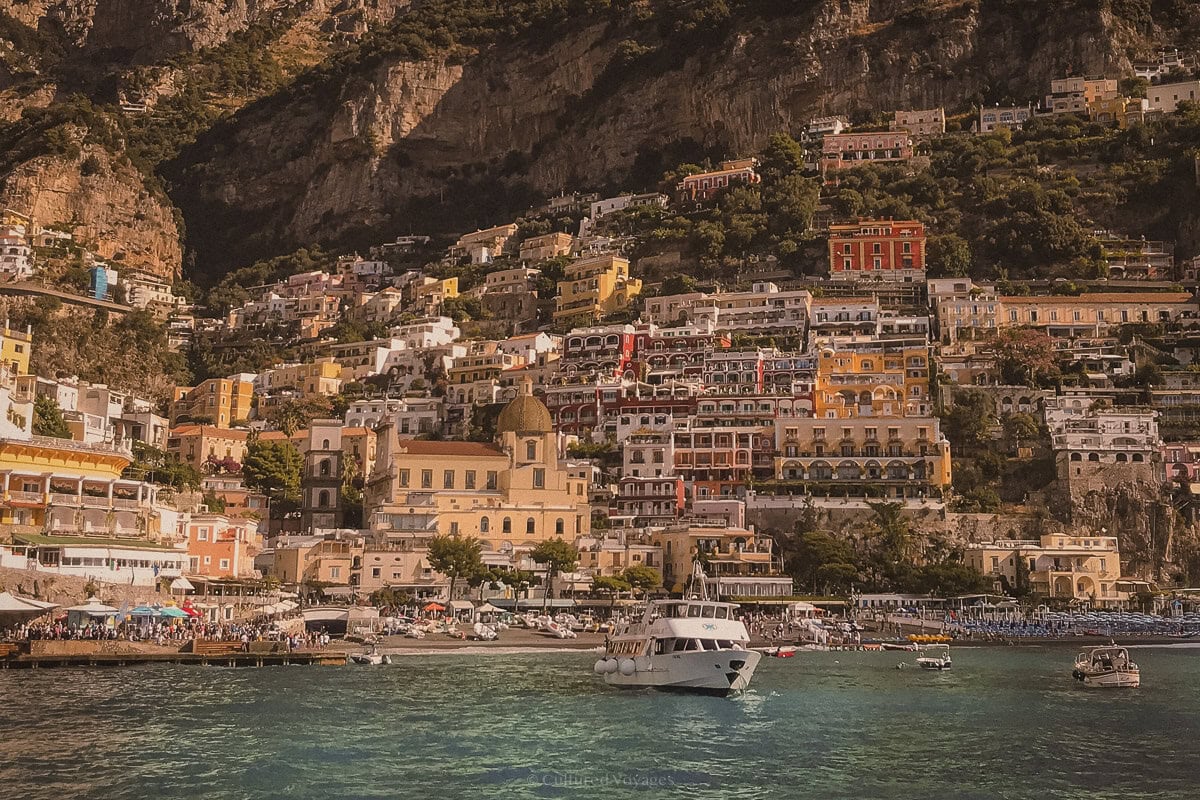
Positano is the full theatre of the Amalfi Coast.
It will suit you if you actively want to be in the middle of it: the views, the restaurants, the dressing up for dinner, the social buzz. If Positano has been the image in your head for years, this is where it belongs in the itinerary – as a place you stay, not somewhere you commute into.
It works less well as a transport hub. The stairs, crowds, and costs start to grate if you’re constantly packing up and heading elsewhere.
Where to stay in Positano
Hotel Conca d’Oro
Perched high above Positano with sweeping sea views, this hotel is known for its panoramic terraces and romantic setting. Rooms are bright and Mediterranean in style, many with private balconies, and there’s an on-site restaurant overlooking the coastline.
Hotel Royal Prisco
A smaller boutique-style hotel close to the beach and ferry dock, making it one of the more practical Positano bases. Rooms are comfortable and contemporary, and the location reduces the number of steps you’ll face daily.
Praiano
Praiano, by contrast, is quieter and more residential.
It’s a good fit if you want the same dramatic stretch of coastline but prefer to sleep somewhere calmer and slightly removed from Positano’s intensity.
The main trade-off is logistics. Praiano doesn’t have a ferry port, so reaching Positano involves buses, taxis, or water taxis, and those costs can add up. I’ve seen €80 quoted for a water taxi and €70 for a car from Praiano to Positano (nuts!). There is a local bus, though, so don’t despair.
Praiano works best if you’re largely staying local, with one or two intentional trips elsewhere rather than daily shuttling.
Where to stay in Praiano
Hotel Smeraldo
A well-located Praiano hotel with gardens and terraces facing towards Positano and Capri. It’s within walking distance of beach access steps and has an on-site restaurant serving regional dishes.
How to spend 3 days in Positano/ Praiano

Rather than prescribing a rigid Day 5, Day 6, Day 7 plan, I’ve learned this stretch works far better when you think in terms of anchors. I suggest you pick one or two meaningful things per day and leave space around them.
1. Beaches and beach clubs
This is one of the best places on the coast to lean into beach time properly.
- Spiaggia Grande for atmosphere and people-watching
- Fornillo Beach if you want something a little quieter and less performative
- Arienzo Beach Club if you want a more polished, book-ahead experience with orange umbrellas, boat shuttle access, and better afternoon sun.
If you want loungers, I’d plan ahead for all beaches. Turning up without a plan in peak season usually means limited (or no) choice and inflated prices.
2. Wandering, shopping, and simply being there
Positano is steep, busy, and intensely visual. When I’m there, I enjoy it most when I let go of the idea that I need to “cover” it.
I spend time:
- drifting up and down staircases
- wandering into quieter side streets
- browsing linens, handmade sandals, leather goods, and ceramics
I tend to note things I like rather than buying immediately. Coming back later (especially in the early evening) makes the experience far calmer.


3. The Path of the Gods (if you want something active)
If you’re planning to hike the Path of the Gods on this trip, this is the most logical base to do it from.
Being in Positano or Praiano simplifies access to Nocelle considerably. That said, it’s a proper hike and deserves a dedicated half-day, decent footwear, and cooler temperatures. I wouldn’t try to squeeze it in around other commitments.
4. Cooking classes
If food experiences are part of how you like to travel, a cooking class is a lovely way to spend a day without moving towns.
From Positano, this small-group, farm-based cooking class takes place in a private setting above the town and focuses on classic dishes like gnocchi and tiramisu.
I like this as a way to step away from the crowds without leaving the area.
5. Boat tours (a standout option here)
Boat trips are a viable option from several points on this itinerary, and Positano is one of the strongest.
If you didn’t do a boat tour in Capri – or you want a fuller view of the coastline – this small-group full-day cruise from Positano, limited to 12 people and run by the very well-regarded Blue Star Positano, is an excellent option.
Leaving directly from Positano keeps the day simple and avoids unnecessary transfers. In my experience, it’s one of the most enjoyable ways to see the coast when you have the time to linger.
Where to eat in Positano (book ahead)

In my experience, Positano is not a place where walking in works well, particularly in peak season. The restaurants worth eating at book out early, and having a reservation changes how the whole day feels. I treat lunch especially as a way to step out of the crowds and reset.
Below are some places I recommend.
- Li Gali Restaurant (Hotel Villa Franca) – High above Positano with extraordinary views. Modern, refined cooking focused on local produce, and Michelin-starred for good reason.
- Bruno – One of the best balances of view, atmosphere, and price in Positano. Lively without being chaotic. Ask for a table with a view.
- Il Ritrovo – Set in a small square above Positano and offering a free shuttle from town (arrange in advance). Calm, warm service and a menu rooted in local ingredients.
Days 8–10: Amalfi, Minori & Ravello

For the final stretch of this itinerary, base yourself in one of the central Amalfi Coast towns and explore the others from there. Amalfi, Minori and Ravello sit close together but offer distinctly different atmospheres.
Three nights in one of them works beautifully. You avoid another hotel move while still experiencing different perspectives of this side of the coast.
Where to base yourself (and how to choose)
Amalfi: the most practical all-round base


If you want ease and connectivity, Amalfi is the simplest choice. Ferries leave directly from the harbour, buses run frequently uphill to Ravello, and everything in town is walkable.
Yes, it’s busy during the day – but in the evenings, once the ferries leave, it softens noticeably. That’s when Amalfi feels most enjoyable.
Where to stay in Amalfi
Amalfi Luxury House (affordable luxury)
A polished, design-forward B&B right in the centre of town, which makes it extremely easy to step out for dinner or catch early ferries. There’s no pool, but if you plan to be out exploring all day, it’s a very comfortable base to return to.
Getting around from Amalfi
- Ravello: local SITA bus or taxi (around 20 minutes)
- Minori / Maiori: ferry (10–15 minutes)
- Positano: ferry (around 30 minutes)
Minori: quieter, more local, beautifully balanced

As a return visitor, Minori has really grown on me.
It gives you almost the same access as Amalfi, but with noticeably fewer crowds and a much more local feel. You hear Italian around you more than English.
Cafés feel like places people actually use, not just pass through. It’s calmer, more normal, and honestly (for me, at least), more grounding. It may be a tad quiet for some, however.
Where to stay in Minori
Orto Paradiso (luxe for less)
I stayed here myself, and it’s one of those places I almost hesitate to share. Set among terraced gardens above Minori, it has a small pool, sweeping views over the town, and a quietly artistic feel. It does involve steps, but I found the climb more than worth it for the setting.
Getting around from Minori
- Amalfi: ferry (10 minutes)
- Ravello: bus or taxi (via Amalfi, or directly uphill)
- Maiori: walk or ferry
Ravello: special, elegant, and quietly extraordinary
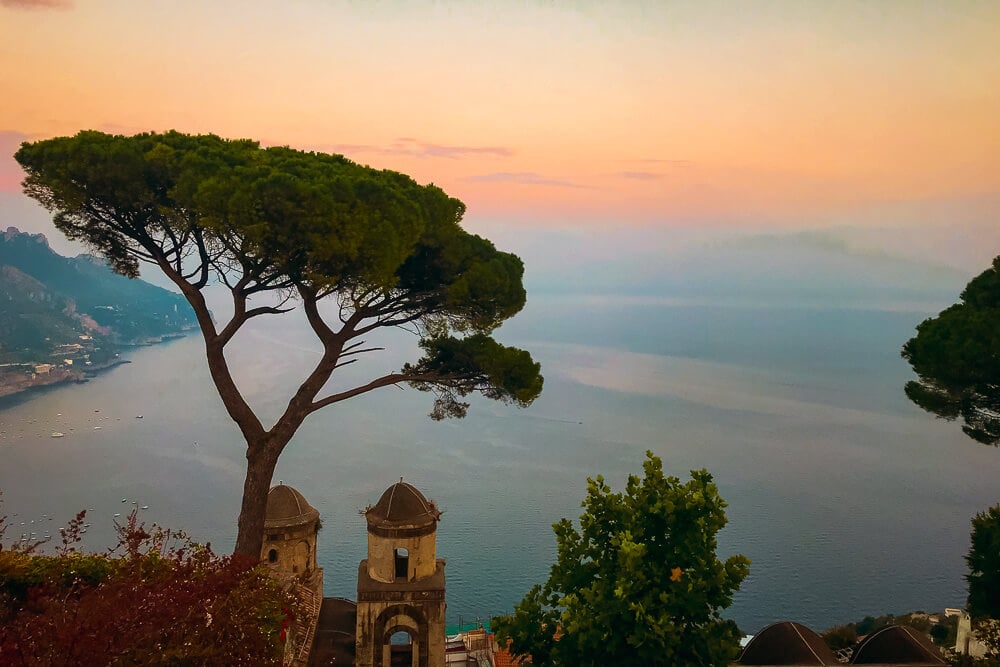
Ravello is different.
Perched high above the coast, it doesn’t have ferries, and it requires a bit more logistical effort. But if I had transport at my fingertips and wasn’t concerned about the cost of taxis, hotels, or transfers, this is where I’d choose to stay time and time again.
It’s cooler, calmer, and deeply romantic. If you’re travelling for a honeymoon, anniversary, or genuinely special trip, then I highly recommend that you round off your trip with three days in Ravello.
Where to stay in Ravello

Villa Piedimonte (boutique beauty)
Bright, understated and beautifully positioned, Villa Piedimonte offers spacious rooms – many with sea views – and a pool with sun loungers, which is a real asset in Ravello. It feels relaxed but polished.
If you’d prefer a smaller, terrace-led B&B option instead, Gala Residence Villa Giovanna is another I’ve seen readers book with great feedback.
Getting around from Ravello
- Amalfi: bus or taxi (20 minutes downhill)
- Minori: walk down (30–45 minutes) or taxi
- Maiori: reachable via Minori
RELATED READING:
– Is Ravello Worth Visiting: Pros & Cons Explored
– Things to do in Ravello
Day 8: Amalfi (or Minori) properly, without rushing it

After the movement of earlier parts of the trip, I recommend keeping this day intentionally close to wherever you’re staying.
If you’re based in Amalfi, spend the morning wandering beyond the main cathedral square. Step into the Duomo di Sant’Andrea if you’d like context, then peel off into the quieter streets behind it. Amalfi is far more interesting once you step off the main drag.
For dinner, this is a good night to book somewhere you’re genuinely excited about.
- Glicine at Hotel Santa Caterina is exceptional if you want a refined, Michelin-starred meal in a spectacular setting – very much a “this is why we came to Italy” evening.
- If you’d prefer something warmer and more traditional, Da Ciccio feels timeless and reliably good.
- Da Gemma is another long-standing Amalfi institution with white tablecloths and strong seafood pasta.
If you’re staying in Minori, lean into its slower pace instead. Spend time at the beach, visit the Roman Villa if it interests you, and let the day unfold.
For food in Minori:
- Giardiniello was consistently excellent for pizza and a relaxed terrace setting.
- La Botte is simple, local, and consistently satisfying – I’ve left here more than once feeling properly well-fed.
- And whether you’re staying here or just passing through, Sal De Riso is essential for pastry lovers.
Day 9: Ravello, then down to Minori (with the Lemon Walk)
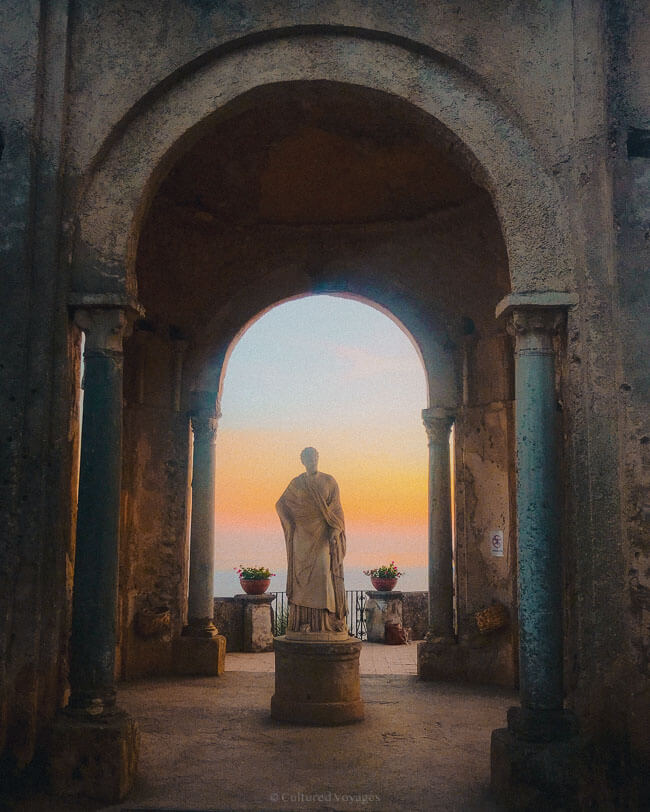
Morning
This is the standout day of this part of the itinerary, and the one I’d protect most carefully.
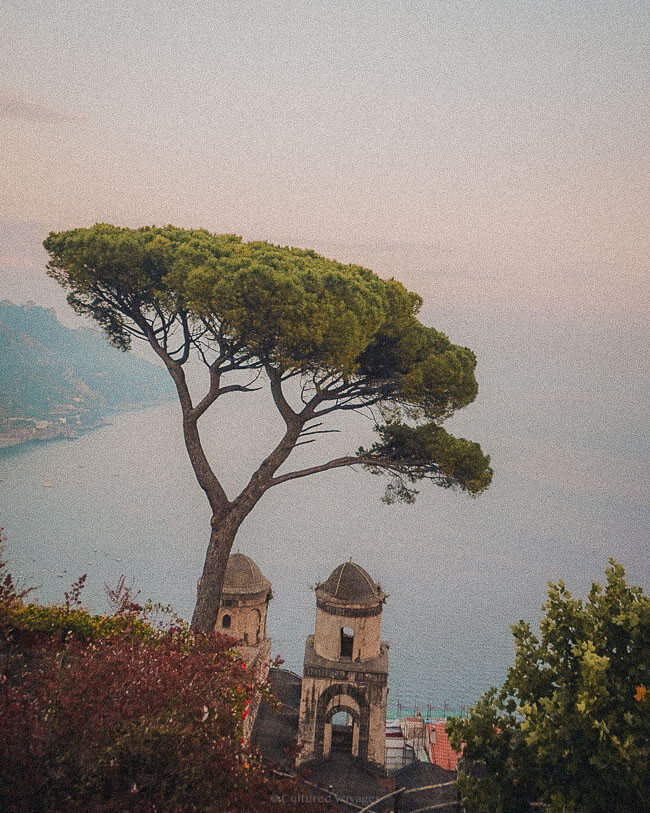
I’ve visited and stayed in Ravello several times, and my approach to it hasn’t really changed: go up early, take your time, then come down slowly (unless you’re staying there, and if you are, Ravello is particularly magical at sunset).
From Amalfi or Minori, you’ll need to get up to Ravello first. That means either:
- the local SITA bus, or
- a taxi if you want to avoid queues or heat (note this has cost me €60 for the approximately 8-minute car ride before!).
Once you arrive, you’ll feel the shift immediately. Ravello is cooler, calmer, and far more composed than the towns below.
If it’s your first visit, I would prioritise Villa Cimbrone over everything else. I’ve been back a couple of times now, and I still think its gardens are some of the most spectacular I’ve ever visited, anywhere. The position, the scale, the sense of space is extraordinary.
Villa Rufolo comes next, closer to the main square, and while the gardens themselves are smaller, the viewpoint and the setting are iconic. I’d allow time for both if you can, but if it’s very hot or crowded, Cimbrone is the non-negotiable.
Lunch


Lunch in Ravello is worth planning ahead.
- Rossellinis is unforgettable for a special occasion – I celebrated my 30th birthday here, and it remains one of the most memorable meals I’ve had.
- Da Salvatore strikes a beautiful balance between elevated and relaxed, especially if you request a view table.
- Ristorante Pizzeria Vittoria or Mimì Bar Pizzeria work well if you want something informal but genuinely good.
Afternoon

From Ravello, walk down to Minori if you’re up for it. The descent gives you a completely different perspective of the coastline.
Once in Minori, you can decide how much further you want to go.
If you still have energy, this is the perfect moment for the Lemon Walk (Sentiero dei Limoni) from Minori to Maiori.
It’s not difficult, but it does involve some uneven steps, so I only recommend it if you’re comfortable on your feet and the heat isn’t oppressive. The reward is a beautiful, very human slice of the coast, and a real sense of how these towns were once connected.
Whether you stop in Minori or continue on to Maiori, I’d finish the day by ferrying back rather than retracing your steps.
Day 10: Choose Your Ending


By now, you’ll know what you need more of.
Some people reach this point wanting one last experience. Others just want to soak up where they are. This day works either way.
Option 1: Stay Grounded & Go Deeper
If you’d prefer something immersive but low-stress, this is a lovely moment for a hands-on experience.
A small-group Amalfi farmhouse cooking class takes you away from the busiest parts of town and into a more rural setting, where you’ll cook classic dishes rooted in Campanian food culture. It’s relaxed, personal, and a satisfying way to close the trip.
👉 Book the Amalfi Farmhouse Cooking Experience
If you’re curious about the region’s famous citrus, a lemon garden tour & tasting run by a local family offers something more intimate than the larger Sorrento-style tours. It’s short, thoughtful, and deeply tied to the landscape you’ve been moving through all week.
Option 2: End on the Water

If the sea is calm and you want to finish beautifully, this is the day to hire a boat.
A self-drive boat rental from Amalfi gives you complete freedom – no group, no timetable – just the coastline at your own pace. It’s a very different way to experience the Amalfi Coast, and a memorable way to close the trip.
Alternative Version: 10 Days Including Ischia (Instead of Capri)
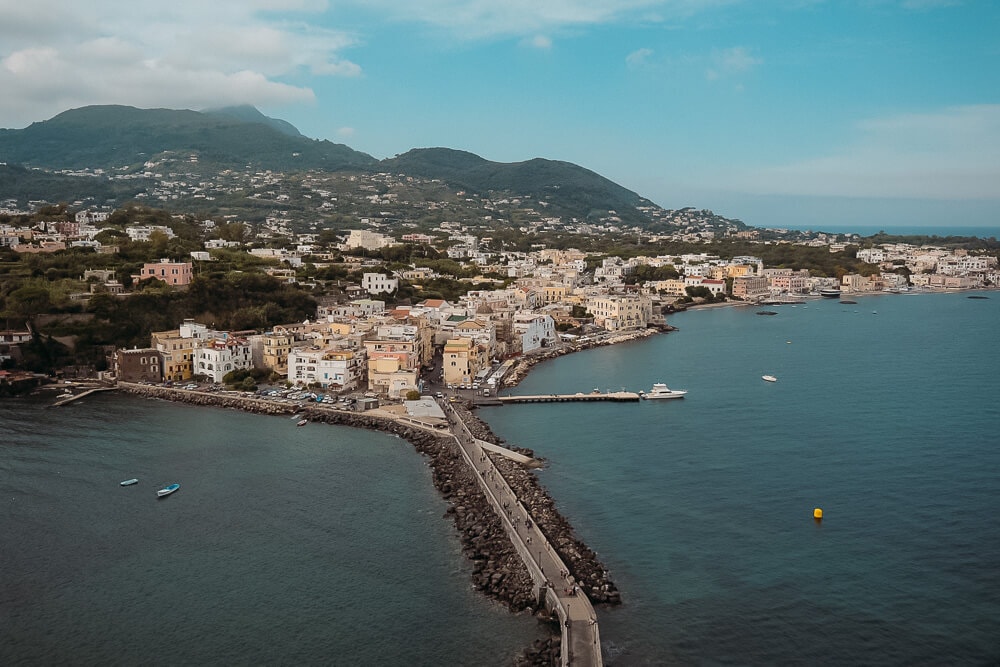
I’ve fallen in love with Ischia over several trips now, and I keep going back. It’s the place I choose when I want to properly switch off and feel like I’m on holiday, rather than just moving through somewhere beautiful.
It’s greener and more grounded than Capri, and it feels far more tied to its landscape. The thermal waters are a big part of that, and I find, after several days in a row of utilising them, I feel genuinely more restored.
Time on Ischia has its own rhythms.
You might spend a morning at a thermal park, an afternoon swimming off the rocks below your hotel, and an evening wandering through Ischia Ponte or Forio as locals go about their day.
There are beautiful gardens, layered history, and some of my favourite low-key food experiences in Campania – especially the little agriturismi up in the hills, where you climb up narrow roads for simple, local dishes and views stretching back down towards the sea.
It feels like its own tiny microcosm of life, slightly removed from the performance of the Amalfi Coast, which is why I value it so much.
How to structure your time on Ischia
Follow the main 10-day Amalfi Coast itinerary exactly as written, but replace the Capri section with:
- Day 1: Arrive in Naples
- Days 2–4: Ischia
- Days 5–10: Continue exactly as outlined (Positano/Praiano → Amalfi, Minori & Ravello)
If you still want to see Capri, you absolutely can. It’s reachable by ferry from Ischia, or even more easily as a day trip later from Positano.
My recommended accommodation in Ischia

Villa Livia (boutique, view-led, personal favourite)
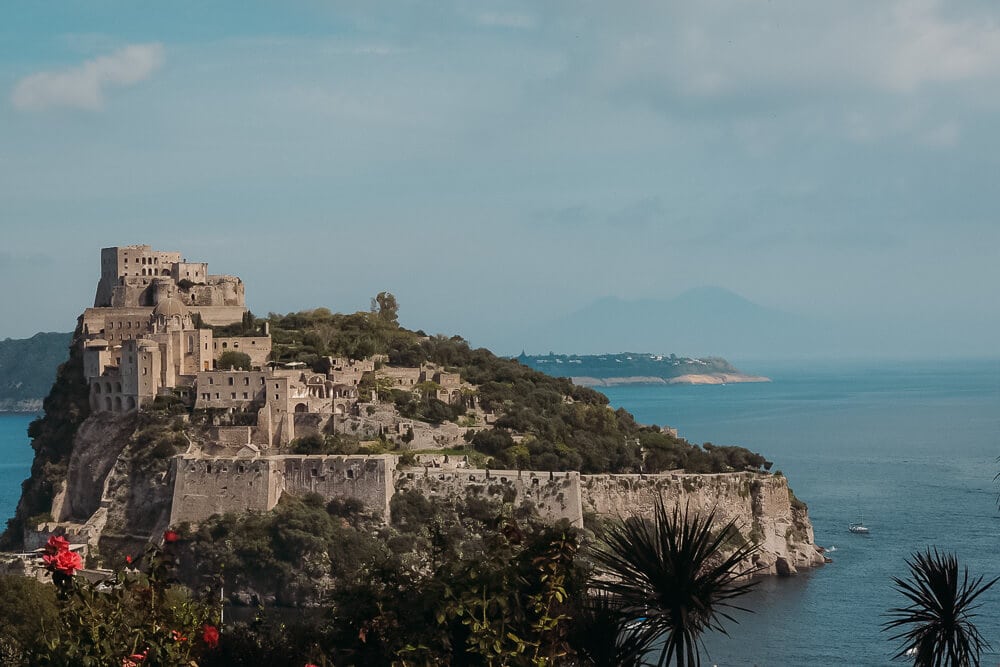
I had a wonderful stay here, and I almost hesitate to share it! Set just above Ischia Ponte with sweeping views towards the Castello Aragonese, it feels intimate and peaceful without trying too hard. The pool terrace alone makes it worth it.
Albergo Il Monastero (atmospheric, utterly unique)
Located inside the Castello Aragonese itself, this is one of the most commanding positions on the entire island. It’s rustic rather than polished, but the setting is extraordinary and staying within those walls feels completely different from anywhere else in Campania.
I’ve covered Ischia in much more depth elsewhere on the blog – including where to stay, neighbourhood guidance, and how it compares directly to Capri – so if it’s calling to you, I’d strongly recommend exploring those guides before deciding.
How to Get Back to Naples Airport from the Amalfi Coast

This itinerary finishes in Amalfi, Minori, or Ravello.
From any of these, getting to Naples Airport (NAP) is straightforward, but some options are far more reliable than others.
If you’re flying the same day, my advice is simple: prioritise road transfers over ferries. Sea conditions, seasonal schedules, and longer crossing times make ferries a risk when timing matters.
Direct to Naples Airport
Shared shuttle bus to Naples Airport
- Direct from Amalfi / Minori / Ravello
- No changes or transfers
- Designed specifically for airport runs
- More affordable than a private transfer
This is the option I recommend most often. It’s predictable, low-stress, and removes the guesswork on your final day, especially welcome after time on the coast.
Private transfer to Naples Airport
- Door-to-door service
- Fastest and most flexible option
- Ideal for early flights, heavy luggage, or groups
This is the most expensive choice, but also the smoothest. If budget allows, it’s the least mentally taxing way to end the trip. Check prices and availability here.
Transfer to Salerno, then bus or train to Naples
- Reach Salerno by ferry, local bus, or taxi from Amalfi or Minori
- Then:
- SITA Sud directly to Naples Airport, or
- Flixbus or train to Naples Centrale (if staying overnight in Naples)
This route can work well if you’re not under pressure and want to keep costs down. That said, it does involve more moving parts, so I wouldn’t choose it for a tight schedule.
Ferry to Naples
Ferry from Amalfi or Minori to Naples Port
- Crossing time: around 2 hours (often longer)
- More vulnerable to weather and sea conditions
From the port, you’ll need a taxi or airport shuttle to reach the airport.
I don’t recommend this option if you’re flying the same day. It’s much better suited if you’re spending a night in Naples and want a slower, more scenic transfer.
As before, search routes and book ferry tickets via Ferryhopper.
Frequently asked questions about this 10-day Amalfi Coast itinerary

Is 10 days too long for the Amalfi Coast?
Not at all, provided you don’t try to spend those 10 days constantly moving. The Amalfi Coast becomes stressful when it’s compressed. With more time, you can stay in places long enough to experience mornings and evenings properly, include an island or two, and build in days that aren’t about logistics.
Do I need a car for this itinerary?
No. I’ve travelled this region both with and without a car, and for an itinerary like this, I find a car adds far more friction than freedom. Ferries are faster, more pleasant, and remove the stress of traffic, parking, and narrow roads. Buses and taxis can fill in here or there as required.
Is Capri worth staying overnight, or should I just day trip it?
If you have the time, staying overnight changes everything. Capri early in the morning and in the evening bears very little resemblance to Capri at midday. Day trips can work, but they’re rushed and crowd-dependent. An overnight stay gives you space, quiet, and a completely different relationship with the island.
Is Ischia really worth including instead of somewhere more obvious?
In my experience, yes, and that’s exactly why I encourage people to consider it. Ischia offers something fundamentally different to Capri or Sorrento: thermal waters, space, and a slower, more local feel.
It isn’t for everyone, which is why I frame it as an option rather than a requirement, but for the right traveller, it will likely be the place they end up loving most, and I’ve had readers email to tell me this.
Where’s the best base on the Amalfi Coast for a first visit?
For most people, Amalfi or Minori offers the best balance. You have excellent ferry access, walkable evenings, and easy connections to Ravello and Positano.
What’s the biggest mistake people make on the Amalfi Coast?
Trying to see everything! This is not a destination that rewards box-ticking. The trips that work best are the ones where people choose fewer places, plan their transport thoughtfully, and allow themselves to stop once they’re somewhere beautiful rather than constantly chasing the next view.
Continue planning your trip to the Amalfi Coast

If this itinerary feels like it’s speaking your language, it’s probably because you’re not looking to conquer the Amalfi Coast – you’re looking to experience it properly.
Everything here is shaped by how the region actually works: ferries over roads, staying put rather than hopping endlessly, and understanding when to lean into iconic places and when to step away from them.
If you want to go deeper into a few key decisions, these guides will help without undoing that slower, more considered pace:
- Is Ischia Worth Visiting? Pros & Cons
A clear-eyed look at whether Ischia suits your travel style, and when it makes sense to include it. - Ischia vs Capri: Which Island Is Right for You?
If you’re torn between the two, this breaks down the differences honestly, without assuming one is “better” than the other. - Naples to Capri Day Trip: How to Plan the Perfect Visit
Practical advice on ferries, timing, and how to see Capri well if you’re short on time. - 4-Day Amalfi Coast Itinerary: Plan in Detail
If you decide to spend less time on the Amalfi Coast, discover how to see plenty of it from one anchor base.
If you take one thing away from this itinerary, let it be this: the Amalfi Coast is at its best when you stop trying to extract everything from it. Choose your bases carefully, plan transport with intention, and let the place reveal itself at a human pace.
Related reading for the Amalfi Coast


Like this post? Pin for later!


