Disclosure: Some of the links on this site are affiliate links. If you make a purchase through one of them, I may earn a small commission at no extra cost to you. Read my full disclaimer here. Thank you for your support!
This guide to things to do in Naples covers 16 personally chosen experiences – from the catacombs beneath Rione Sanità to the world’s best pizza, from underground Greek tunnels to one of Italy’s finest art collections – organised to help you work out what to prioritise and in what order.
I’ve been visiting Naples for years and each trip adds something new.
What follows is my genuine shortlist: the places and experiences I keep returning to, the ones I recommend to anyone who asks, and the ones that in my view reveal what makes Naples unlike anywhere else in Italy.
Naples overwhelms before it seduces – it takes a visit or two before the city starts to make sense, and then it becomes somewhere you can’t stop thinking about.
My first visit here was, if I’m honest, simply about finding my footing – adjusting to the constant surge of energy that fills the ancient streets. There’s the unforgettable scent of pizza mingling with exhaust fumes, the relentless hum of mopeds, and the sheer density of people spilling from doorways and alleyways.
And then there are the layers of history, everywhere you look, from the Bourbon palaces to the Maradona shrines – a whole, complex world that pulled me in and left me wanting more.
Since that initial plunge, each return has been about piecing together what makes Naples feel so vital, so distinct.
One conversation with a local business owner stands out to me still – he pointedly remarked that “Italy was created too soon.” I had to laugh, but I think that this sentiment from 2022 about events of the late 1800s perfectly captures Naples’ fierce independence.
In this guide, you’ll find a curated selection of my personal highlights, which I feel reveal Naples in all its complexity.
From historical sites to backstreet trattorias, these are the things that have shaped my understanding of Naples over repeated visits.
What to Do in Naples: Browse by Interest
Jump to the section that matches how you want to spend your time:
Neighbourhoods & Streets: Spaccanapoli & Via dei Tribunali | Spanish Quarter & Maradona Murals | Rione Sanità | Historic Shopping Areas
History & Culture: Underground Naples – Catacombs & Napoli Sotterranea | Archaeological Museum (MANN) | Bourbon Legacy – Royal Palace & Capodimonte | Sacred Spaces & Churches
Food & Drink: Pizza Pilgrimage | Street Food & Local Cuisine | Waterfront & Aperitivo
Art & Architecture: Veiled Christ & Caravaggio | Chiostri di Santa Chiara | Castel Sant’Elmo & Views
Day Trips & Islands: Pompeii, Herculaneum & Vesuvius | Island Hopping – Capri, Ischia & Procida
Cultured Voyages Top Naples Resources
→ Trains: Check Omio to search schedules and buy tickets
→ Ferries: Search ferry schedules and book tickets here
Top Tours & Experiences in Naples
⭑ Catacombs of San Gennaro (*Cultured Voyages top pick*)
⭑ Street Food Tour with Local Guide (perfect for foodies)
⭑ Sightseeing tour by e-bike (cover more ground in less time)
Best full/half-day guided experiences from Naples:
⭑ Pompeii Ruins & Mount Vesuvius Day Tour
⭑ Sorrento, Positano & Amalfi Full-Day Tour from Naples
Cultured Voyages recommended accommodation
→ Grand Hotel Santa Lucia (waterside luxury with sea views)
→ Decumani Hotel De Charme (central hotel with old school charm)
→ Artemisia Domus (extremely well-located luxe-for-less pad)
→ La Casa Sul Nilo (old world luxury on a budget)
Things to Do in Naples: Cultured Voyages’ Top Picks
1 Wander Through Time Along Spaccanapoli & Via dei Tribunali

There’s no better introduction to Naples than stepping onto Spaccanapoli for the first time.
This ancient Greek decumanus (main street) quite literally splits Naples in two – hence its name, which translates to “Naples splitter.” For me, it’s where Naples declares “you’ve arrived” in the most emphatic way possible.
My first walk along Spaccanapoli remains vivid in my memory – it’s where Naples announces itself with all its characteristic energy.
You find yourself shoulder-to-shoulder with thousands of others, walking the same routes that millions have traversed over centuries. Tall buildings tower over narrow alleys, creating urban canyons where the scent of pizza wafts from doorways and vendors sell everything from silver jewellery to Aperol Spritz.
Peek down side alleys and you’ll discover unexpected street art, while laundry billows from balconies overhead like festive bunting. Grand old palazzo doors offer tantalising glimpses into hidden courtyards, now home to apartment blocks with stories spanning centuries.
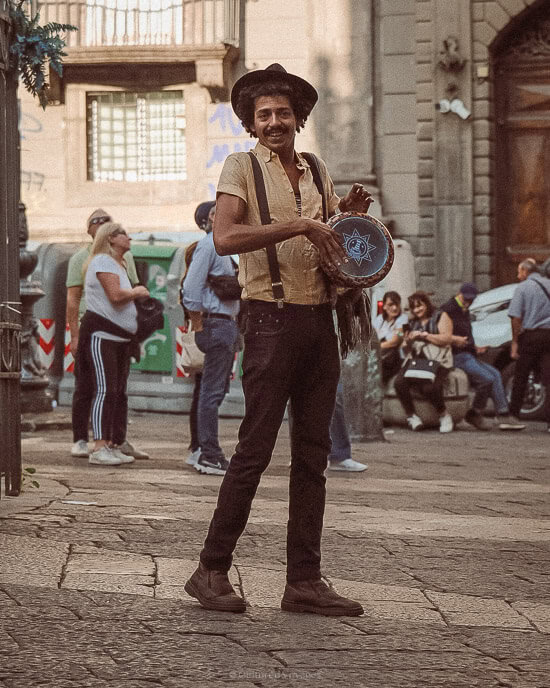
The street brims with characters who embody Naples’ quirky soul.
One example is a rather engaging puppeteer who displays his creations hanging from a tree branch, who I think perfectly captures the city’s vigorous yet whimsical spirit.
Each time I passed him, he was deep in lively conversation with a different passerby, yet he sensed my lens immediately and turned theatrically towards the camera.
The magic of Spaccanapoli and Via dei Tribunali lies in how they force you to engage with Naples on its own terms.
You’ll dodge scooters weaving through what elsewhere might be considered pedestrian zones, and you’ll learn to embrace the controlled chaos that makes these streets – and indeed Naples itself – so damn captivating.


Key Stops Along Spaccanapoli
Gesù Nuovo Church
Don’t let the unusual diamond-pointed facade fool you – step inside to discover an explosion of baroque splendour. The contrast between the austere exterior and the ornate interior perfectly captures Naples’ ability to surprise.
Basilica Santa Chiara
Famous for its majolica-tiled cloister (which features as its own separate thing to do later in this blog post), this church complex offers a peaceful retreat from the bustling streets. The church itself showcases an interesting mix of styles, having been restored to its original Gothic design after WWII bombing.
San Domenico Maggiore
Both the church and its piazza are worth exploring. You’ll often find students from the nearby university gathering in the square, creating a lively atmosphere that contrasts with the church’s solemn interior.
Via dei Tribunali
Running parallel to Spaccanapoli, Via dei Tribunali offers its own treasures.
This street, another ancient Greek decumanus, is particularly atmospheric in the early evening when both locals and tourists converge. Here you’ll find some of Naples’ most famous pizzerias alongside medieval churches and crumbling palazzi.
Notable Stops:
- San Lorenzo Maggiore: Built atop ancient Roman ruins you can visit
- Pio Monte della Misericordia: Home to Caravaggio’s Seven Works of Mercy
- Naples Underground: Entrance to the fascinating underground city
2 Go on a Pizza Pilgrimage

In Naples, pizza isn’t just food – it’s an art form protected by its own governing body, the Associazione Verace Pizza Napoletana.
A Cultured Voyages Guide
Seven shifts that take you from sightseeing to actually understanding a place – the same ones I use on every trip I plan.
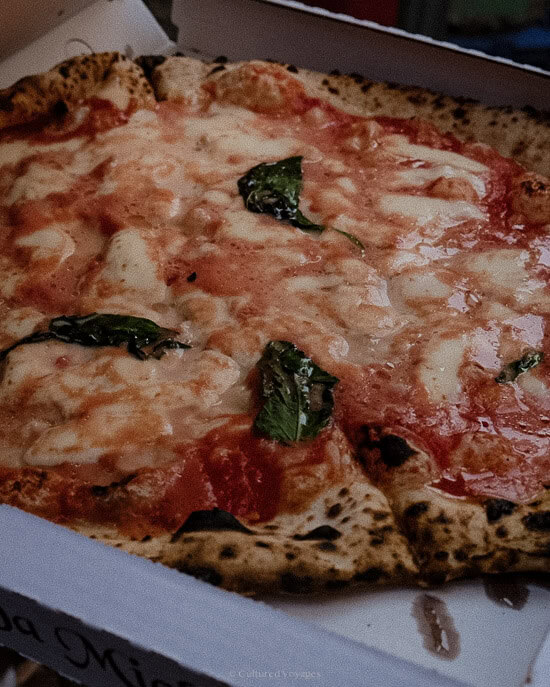
A true Neapolitan pizza must be cooked for exactly 60-90 seconds in a wood-burning oven heated to 485°C, resulting in a slightly charred, pillowy crust that’s simultaneously crisp and tender.
But beyond these technical specifications lies something more profound: pizza in Naples is a cultural touchstone, a source of civic pride, and for visitors, an unforgettable culinary undertaking.
I can still remember my first time having a pizza in Naples.
Squeezed around a small table at Da Attilio with my family, I watched in anticipation as the most magnificent pizza was wheeled out in front of me – their famous star-shaped creation with a crust ingeniously stuffed with ricotta. I don’t think I even saw what the others were eating!
That first bite was heaven, and to this day, whenever I think of Naples, this moment is one of the first things that comes to mind.
The Da Michele experience is equally embedded in my memory, though for different reasons.
Despite arriving early, we found that already, there was a queue forming outside this historic establishment.
The scene that greeted us has played out countless times since 1870: a steely-eyed hostess managing the door with military precision, distributing and collecting coloured tickets with an unwavering commitment to order. When one roll of tickets reaches its end, into the machine is slotted a different coloured roll – yes, you read that right; the waitlist rolls that high!
Having surveyed this scene for a few minutes with what I’ll admit was initial trepidation, we soon twigged that there was a separate line for takeaway. Within a few minutes of queuing we’d made our order and then stepped back to hover in the street in front of the doorway, with the many others who stood outside.
Soon (it took around 45 minutes – much better than the several hours we faced had we chosen to dine inside) we were clutching our hot pizza boxes with barely contained excitement.
We located a vaguely clean-looking spot in a small, slightly grubby piazza just around the corner and dove in as soon as it was cool enough to eat. The burst of flavour from those tomatoes, the way the base was so light yet substantial – it was an experience that justified all the hype.
While these famous spots deserve their reputation, I’ve found some lesser-known gems over my visits.
My personal favourite is Pizzeria Palazzo Petrucci, which I feel gets overlooked because of its slightly more upmarket appearance.
An offshoot of a Michelin-starred restaurant, they do these incredible seasonal pizzas that change based on what’s available locally. I’ve had everything from speciality local pork to the most divine combinations of pumpkin, mint, and courgette – toppings you might not expect but that work beautifully.
The setting adds to the experience too – you can choose between sitting in the beautiful Piazza San Domenico Maggiore or up on the restaurant’s roof, where at night you get this magical view over the square below.


Essential Pizzerias in Naples to Try
From my many pizza adventures in Naples, here are the spots I keep returning to (or plan to):
- Da Attilio (Via Pignasecca, 17)
- L’Antica Pizzeria da Michele (Via Cesare Sersale, 1)
- Sorbillo (Via dei Tribunali, 32)
- 50 Kalò (Piazza Sannazaro, 201/B)
- Starita (Via Materdei, 27/28)
- Palazzo Petrucci (Piazza San Domenico Maggiore, 4)
- Antica Pizzeria Di Matteo (Via dei Tribunali, 94) – Note the correct name.
- Concettina ai Tre Santi (Via Arena della Sanità, 7)
- La Notizia (Via Michelangelo da Caravaggio, 53)

Foodie Tips for Pizza in Naples
- Pizzas come unsliced – use your knife and fork to cut it into manageable pieces, then feel free to eat with your hands if you prefer
- Order one pizza per person – sharing isn’t the norm here
- While traditionally paired with beer, I always enjoy mine with wine and nobody bats an eyelid
- Book ahead for the more upscale places like Palazzo Petrucci, but expect to queue at historic spots like Da Michele
- For the places that don’t take reservations – arrive early, even if it doesn’t agree with your own eating schedule, or be prepared to wait!
3 Explore Naples’ Street Food & Local Cuisine

Beyond its famous pizzas, Naples offers a culinary landscape that ranges from simple street snacks to hearty traditional dishes.
Like most places in Italy, what makes dining here special isn’t just the food itself, but how deeply embedded it is in daily life – from market vendors shouting their daily specials to locals debating their favourite pasta spots. It just all comes wrapped up with a distinct Neapolitan flavour.
Traditional Trattorias
Once you’ve stuffed yourself with enough pizza, then I’d strongly urge you to patronise some of Naples’ traditional trattorias.
Locanda del Gesù Vecchio, tucked down a quiet street off Spaccanapoli, perfectly embodies the city’s approach to dining in a slightly more elevated way for the discerning foodies amongst you.
Here, you can choose between a handful of tables on the narrow pavement or dine inside, where a partially glass floor offers glimpses into the wine cellar below (I’ve done both and each come with their own benefits).
Their pasta Genovese, a hearty slow-cooked sauce that’s somehow both stew-like yet distinctly pasta-based, showcases how Naples can transform simple ingredients into something extraordinary through patience and tradition.
Another standout memory comes from a family-run trattoria on the edge of the Spanish Quarter, where three generations of women – Nona, Mama and daughter – were expertly running the place.
There’s something magical about sitting at a checkered tablecloth on the side of a street, wedged between towering buildings, twirling pasta made with tomatoes grown on Vesuvius and fresh mussels from the bay.
You’ll have to forgive me, but my inner travel blogger went missing at that meal, as I forgot to record the name of the trattoria and I can’t for the life of me find it Google Maps!
Taking the positives, however, it does go to show how in Naples you can stumble upon some real gems simply by going for a wander and popping into somewhere that tickles your fancy.


Must-Try Traditional Dishes in Naples
- Pasta alla Genovese: Despite its name, this is quintessentially Neapolitan – a slow-cooked sauce of onions and beef or veal that creates an incredibly rich, deep flavour
- Spaghetti alle Vongole: Fresh clams with garlic, olive oil, and sometimes cherry tomatoes – the simplicity allows the seafood’s freshness to shine
- Pasta al Ragù: A weekend tradition, cooked for hours until thick and rich – quite different from the northern Italian version
- Zuppa di Cozze: A garlicky mussel soup that’s traditionally eaten at Easter but delicious year-round
- Parmigiana di Melanzane: The Neapolitan version is lighter than others, layers of fried eggplant with mozzarella and tomato sauce
- Babà: These rum-soaked sponge cakes are a Naples institution
Traditional Restaurants to Try in Naples
- Trattoria Da Nennella (Spanish Quarter) – Famous for pasta e patate and lively atmosphere
- Antica Trattoria da Carmine (Via dei Tribunali) – Local favorite for lunch, authentic seafood
- Locanda del Gesù Vecchio (Near Spaccanapoli) – Outstanding pasta Genovese
- La Cantina di Via Sapienza (Historic Center) – Classic eggplant parmigiana since 1900
- Tandem Ragù (Multiple locations) – Naples’ best meat sauce


Markets & Food Shopping
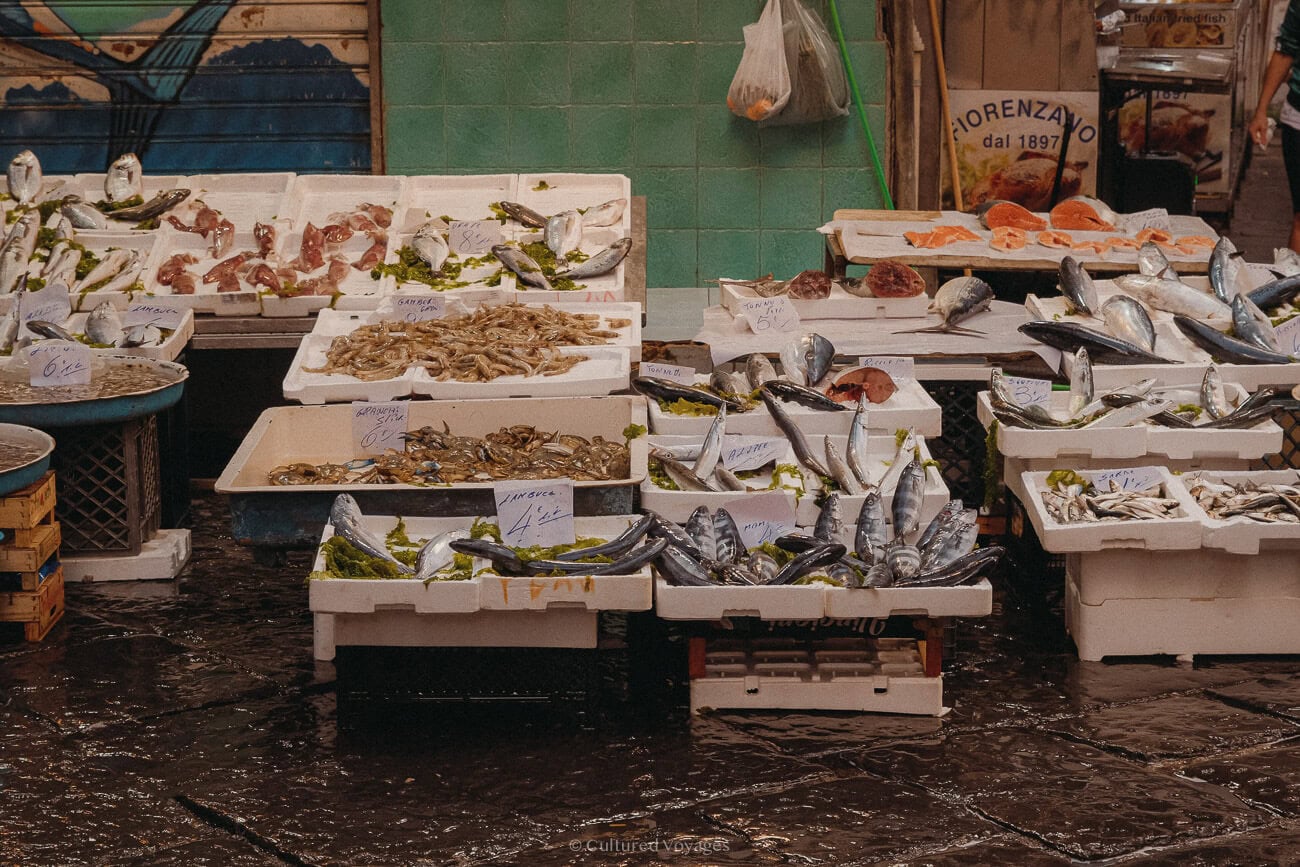
The Pignasecca market is a must-visit for anyone wanting to experience authentic Naples. It’s a sensory overload in the best possible way – a cacophony of vendors’ calls, the shuffle of countless shoppers, and the vibrant displays of produce.
What makes it special isn’t just the food (though that’s impressive enough) but the life that flows through it.
You’ll witness endless transactions between vendors and regulars, casual conversations between locals who’ve known each other for decades, all creating this intoxicating mass of sound and movement that epitomises Naples’ energy. I head there every time I’m in Naples.
Street Food Delights To Try in Naples
Naples’ street food scene is an essential part of the city’s culinary fabric. Here’s what you shouldn’t miss:
- Sfogliatella: While some enjoy these shell-shaped pastries for breakfast, I’ve found they make the perfect afternoon pick-me-up with coffee. The contrast between the crispy, paper-thin layers and the zingy ricotta filling is divine.
- Cuoppo: Paper cones filled with fried goodies – either seafood (cuoppo di mare) or vegetables (cuoppo di terra)
- Frittatina di Pasta: Fried pasta balls filled with béchamel, ham, peas, and cheese – available at many pizzerias
- Panzarotti: Potato croquettes often hiding a melty mozzarella centre
- Montanara: Small, deep-fried pizzas topped with tomato and cheese – a street food twist on Naples’ favourite dish

FOODIE TIPs
1 – Timing matters – lunch is typically 12:30-15:00, dinner from 20:00. Many places close in between
2 – Most markets, including Pignasecca, are best visited before noon
3 – For coffee, do as the locals do: stand at the bar for a quick espresso (it’s cheaper too)
4 – Don’t skip street food just because you’re headed to a nice restaurant later – the portions are small enough to enjoy both
4 Experience Local Life in the Spanish Quarter

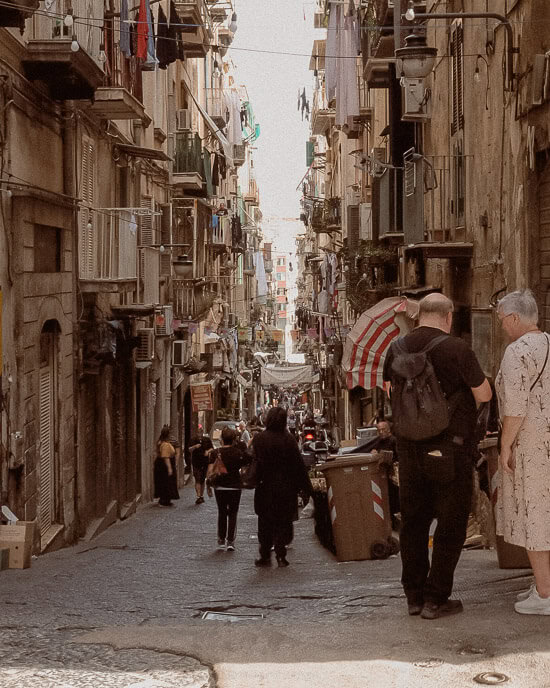
The moment you cross into the Spanish Quarter (Quartieri Spagnoli), you feel it – a distinct threshold where Naples takes on a different character. Built in the 16th century to house Spanish troops under the Bourbon rule, the quarter’s grid-pattern streets and functional architecture create an atmosphere unique from the rest of the city.
Buildings tower over narrow alleyways, their stark utility a contrast to Naples’ baroque extravagance elsewhere, while festoons of laundry lines and banners crisscross overhead like celebratory bunting.
Every visit here is a stream of daily life unfolding – one moment flowing into the next. I’ve found the locals here to be remarkably welcoming, despite (or perhaps because of) the area’s formerly rough reputation.
During one visit, my parents spent an hour in animated conversation with a local anti-terrorism detective heading home after his shift. On another occasion, a woman went out of her way to offer me directions when she saw me wandering with my camera, despite having little English.
The quarter’s atmosphere shifts dramatically depending on where you are.
Along its edges, particularly near popular eateries like Da Nennella, you’ll find yourself amid a lively buzz of diners and drinkers. However, venture deeper into the quieter streets, and the atmosphere becomes more intimate, though somewhat edgy – particularly at night.
While the area has become significantly more welcoming to visitors in recent years, solo travellers might still want to exercise usual city precautions.


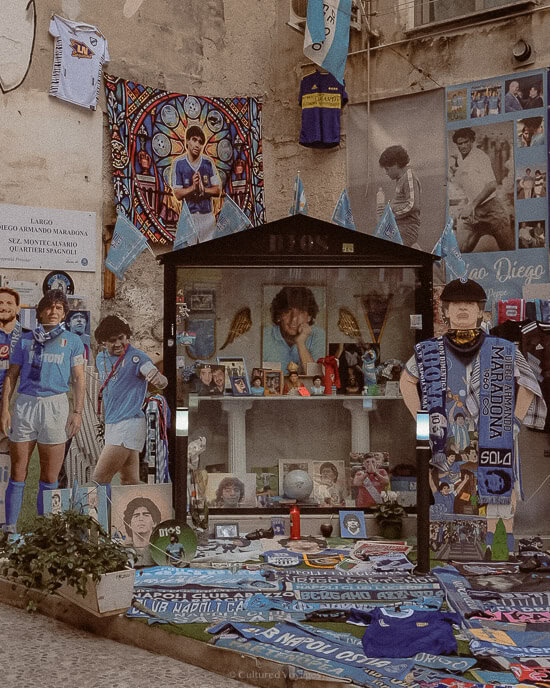
The Maradona Legacy
Nothing prepared me for my first encounter with the Maradona murals.
Walking through residential streets, you suddenly emerge into an explosion of Napoli team colours, where massive portraits of Diego Maradona dominate entire apartment blocks. The scene feels more reminiscent of South America than Europe – with jerseys for sale, flags flying, and banners everywhere.
Maradona’s significance to Naples transcends football – during his time at Napoli (1984-1991), he led the team to their first-ever Serie A titles, bringing pride and recognition to a city that often felt looked down upon by northern Italy.
He became a symbol of Naples’ defiant spirit and potential for greatness, which explains why, even decades later, his presence still dominates these streets.
When Napoli finally won their third Serie A title in 2023, their first since Maradona’s era, the celebrations here were particularly poignant. I visited just after the win and the sheer volume of celebratory flags, banners, merchandise – you name it – was off the charts!
Worth knowing: If you want to truly immerse yourself in this iconic Neapolitan neighbourhood, take this highly-rated guided walking tour with a local.


What to See in the Spanish Quarter
- Church of Santa Maria degli Angeli – A hidden baroque gem from 1600 with an impressive dome and frescoes
- Palazzo Medicina – A grand 18th-century palace with one of Naples’ most impressive staircases, though less visited than its more famous counterparts
- Chiesa della Santissima Trinità degli Spagnoli – The Quarter’s main church, built by the Spanish in 1573 and featuring striking baroque interiors
- Largo Baracche – A panoramic viewpoint offering spectacular vistas over the Bay of Naples and Castel Sant’Elmo
- Maradona Murals – The famous murals on Via Emanuele De Deo, including the three-story portrait that’s become a shrine to the football legend
- Pignasecca Market – Naples’ oldest street market, bustling with vendors selling everything from fresh seafood to local produce. Best visited in the morning when the atmosphere is most vibrant
- Galleria Borbonica Underground – Part of Naples’ extensive underground network, this tunnel was built in 1853 as an escape route for the royal family. Tours reveal WWII bomb shelters and vintage cars abandoned in its depths
5 Discover the Soul of Naples in Rione Sanità

The Rione Sanità feels markedly different from Naples’ other historic neighbourhoods. While these days, tourists flock to the Spanish Quarter as well as the historic centre, this district maintains a truly local, if not somewhat hip, flavour.
The name, meaning “health” in Italian, stems from its history as a place of healing – its position in a valley outside the ancient city walls was believed to have curative properties.
This geographical separation from central Naples would later contribute to the district’s complex story.
Once home to nobility who built spectacular baroque palaces, the neighbourhood fell into decline during the 20th century, becoming one of Naples’ most disadvantaged areas. Crime and poverty took hold, and for decades, guidebooks warned visitors to avoid the area entirely.
But Sanità’s recent transformation tells a compelling story of community-led regeneration.
In 2006, local youth formed Cooperativa La Paranza, taking over management of the neglected catacombs. Their mission wasn’t just about preserving history – it was about creating opportunities in a neighbourhood where hope was scarce.
The results have been remarkable: visitor numbers soared from 8,000 in 2008 to over 80,000 in 2016 and from there to over 200,000 in 2022, creating jobs for dozens of young locals (56 at the most recent update).
This spirit of renewal is visible throughout the district. The “Holy Mile” walking route now connects the area’s treasures, from the tomb of San Gennaro to the district’s baroque churches.
In the Cappella dei Bianchi, contemporary artist Jago’s “Veiled Son” creates a powerful dialogue with the famous Veiled Christ in central Naples – both sculptures achieving the seemingly impossible feat of making marble appear transparent, but while one depicts divine sacrifice, the other forces viewers to confront modern realities, through the swollen belly of a drowned migrant child.
What makes Sanità special today isn’t just its monuments – it’s how stubbornly it holds onto its soul. While other parts of Naples have polished their edges for tourists, Sanità remains delightfully, defiantly authentic.
The morning air fills with shouts of “FRUTTA FRESCA!” from market vendors, while Nonnas perch on doorsteps trading neighborhood gossip. Laundry still flutters between once-grand palaces, and local businesses operate as they have for generations – each one helping the other survive and thrive.
Yes, exciting new ventures are breathing fresh life into the district, from acclaimed pizzerias to artisan workshops, but they’re opened by locals who understand Sanità’s spirit, each adding to rather than diluting the neighborhood’s distinct identity.
As you’ll see from the below, you can easily pass a full day exploring the neighbourhood.
From experience: If you’d like to learn more about this unique Neapolitan neighbourhood, take this highly-reviewed guided tour to discover its story and revival.


What to See in Riona Sanità
- Palazzo dello Spagnolo – The neighbourhood’s crowning glory, this baroque palace features one of Naples’ most spectacular staircases, a double-ramped marvel that seems to dance its way skyward…or collapse its way inward, depending on how you choose to see it!
- Basilica di Santa Maria della Sanità – A stunning baroque church built atop ancient Christian catacombs, its distinctive yellow dome dominates the district’s skyline
- Catacombs of San Gennaro – The most important historical site in the area, these ancient burial tunnels contain some of the city’s earliest Christian art
- Fontanelle Cemetery – A haunting ossuary carved into the tufa rock, holding the remains of victims from Naples’ great plagues
- Casa di Totò – Birthplace of Naples’ beloved comedian Totò, marked with a plaque (it’s privately owned, however)
- Local Markets – Several traditional street markets where vendors sell some of the city’s finest produce
- Concettina ai Tre Santi – One of Naples’ most celebrated pizzerias, where fourth-generation pizzaiolo Ciro Oliva creates both traditional and innovative pies
- Ipogei dei Cristallini – Recently opened to the public, these 2,300-year-old Greek burial chambers offer a glimpse into Naples’ ancient past
- The Holy Mile – A curated walking route connecting the neighbourhood’s treasures, from ancient catacombs to baroque churches
- Cappella dei Bianchi – Home to Jago’s contemporary “Veiled Son” sculpture, creating an intriguing dialogue with the historic Veiled Christ in central Naples
6 Explore Underground Naples

Walking Naples’ chaotic streets, you’d never guess that beneath your feet lies another city entirely – a vast network of caves, tunnels, and ancient aqueducts stretching for 450 kilometres.
While photos of the catacombs first drew me to explore Naples’ underground world, the reality far exceeded my expectations. Each site I visited revealed another layer of how Neapolitans have used these spaces over millennia.
The Catacombs of San Gennaro
When you descend into the catacombs, you immediately sense what feels like a sacred energy. This isn’t just another historical site – it’s a place that has remained spiritually significant to locals for centuries.
As you explore the expansive burial chambers, your guide (a young local from the Cooperative that manages the site) brings the space alive with stories of its significance to the community throughout history.
The remarkably preserved early Christian frescoes and mosaics are stunning and significant in their own right from an art history perspective, but it’s understanding how these spaces have been continuously meaningful to Neapolitans that makes the visit so special.
Napoli Sotterranea
This is an entirely different underground experience.
I remember feeling almost overwhelmed as I descended what felt like countless stairs with a large tour group, entering what truly felt like the belly of the beast – vast cavernous spaces that began as ancient Greek quarries and Roman aqueducts. To this day, you can still see the chisel marks of Greek slaves from the earliest days of its use.
There’s a heavier energy here compared to the Catacombs, particularly poignant when I learned how these chambers served as bomb shelters during World War II. The guide shared how conditions became so bleak underground that many eventually chose to risk the bombs above rather than remain in the darkness below.
For the adventurous, there’s an optional route through extremely narrow passages to see the Roman aqueducts. I’d recommend skipping this 15-minute detour if you’re claustrophobic – you can simply wait for the group to return like I did.
But if you’re comfortable in tight spaces, it offers an incredible glimpse into how these ancient aqueducts were originally navigated by those who maintained them.


The Bourbon Tunnel
While I haven’t managed to visit this site yet (it’s only open on specific days), this tunnel tells another fascinating story of Naples’ underground world. Built in 1853 as an escape route for King Ferdinand II, it had an unlikely second life as a WWII bomb shelter and later became a dumping ground for seized vehicles. It’s definitely on my list for my next visit to Naples.
Fontanelle Cemetery
Another site on the ‘Uniquely Naples’ list is the haunting Fontanelle Cemetery. This former tufa quarry became an ossuary in the 17th century, housing victims of the plague and cholera epidemics.
What fascinates most about this site is the local cult of “anime pezzentelle,” where Neapolitans would adopt and care for anonymous skulls, creating a unique bond between the living and the dead.
7 Marvel at Ancient Treasures in the Archaeological Museum (MANN)

Naples’ Archaeological Museum houses one of the world’s finest collections of Greco-Roman artefacts, many salvaged from Pompeii and Herculaneum.
What struck me first was the dramatic lighting in the Farnese Collection rooms, where a 2nd-century AD copy of a 2nd-century BC Greek original depicting a dying Amazon atop a rearing horse immediately commands attention.
Then there’s the colossal Farnese Hercules, towering over 10 feet tall – a Roman copy of a Greek original that once adorned the Baths of Caracalla in Rome.
The museum’s real treasure lies in how it brings Pompeii to life.
While the ruins themselves are impressive, it’s here you’ll find the vibrant mosaics and frescoes that once adorned their walls, alongside everyday items that tell intimate stories of Roman life – from hairpins and jewellery to cooking utensils and cosmetic containers.
The famous Alexander Mosaic, depicting a battle between Alexander the Great and Darius III of Persia, showcases an artistry that rivals Renaissance paintings.
The “Secret Cabinet” offers a fascinating glimpse into Roman attitudes toward sexuality. These erotic artefacts, from wall paintings to household items, were considered so scandalous by the Bourbon rulers that they restricted access to only select visitors.
Today, they provide valuable insights into how the Romans viewed sexuality as a natural part of daily life, with these motifs appearing everywhere from private homes to public spaces in Pompeii.


What to See at MANN
- Farnese Collection: Monumental Roman sculptures including the Farnese Bull, the largest single sculpture recovered from antiquity
- Pompeii Frescoes: Vibrant wall paintings that once decorated the city’s grandest villas
- Temple of Isis: Complete set of artefacts from Pompeii’s Egyptian-style temple
- Mosaics: Including the remarkable Alexander Mosaic from the House of the Faun
- Secret Cabinet: Collection of Roman erotic art from Pompeii
- Gems & Glass: Delicate ancient jewelry and perfectly preserved glassware
Practical Tips For Visiting MANN
- Your ticket is valid for two consecutive days – a little-known fact that’s worth utilising given the collection’s size
- For a focused visit, prioritise the Farnese Collection and Pompeii rooms (included the Secret Cabinet!)
- Visit early of late in the day for the quietest experience with the sculptures
- Consider visiting before exploring Pompeii – it provides crucial context for what was actually contained within the buildings and how life enfolded on a day-to-day basis
- Allow at least 3 hours for a highlights tour, or split your visit over two days – there’s so much in there that it’s actually a bit overwhelming
BOOK TICKETS | Open daily except on Tuesdays from 9AM – 7.30PM. Tickets can be purchased on-site, or you can buy in advance here, permitting you to skip the line if there is a queue.
First Sundays of the month are free. The collection is vast and people’s personal interests vary, so if you’d like a more in-depth, personalised visit then this private guided tour is very well reviewed.
8 Find Peace in the Chiostri di Santa Chiara

Amidst Naples’ maze of narrow streets and towering buildings, stepping into the Chiostri di Santa Chiara feels like discovering a secret garden.
Built between 1739 and 1742, this remarkable cloister offers one of the city’s most serene experiences, its design more reminiscent of Portuguese aesthetics than Naples’ typical baroque excesses.
Arriving just as it opened, I found myself almost alone in this peaceful space.
The morning light played across the majolica-tiled columns, each decorated with colourful 18th-century scenes depicting pastoral life and maritime themes. Octagonal pillars line walkways painted in brilliant yellows and blues, connected by benches with hand-painted tiles.
You could spend hours examining the different designs, and their different parables.
What makes this space special isn’t just its artistic beauty – it’s the profound sense of tranquillity it offers.
As a cloistered space designed for prayer and contemplation, it still serves its original purpose perfectly. I found myself wishing I had brought my journal with me – I could easily have propped myself on one of the benches and scribbled away for an hour or two.
The adjoining church of Santa Chiara offers an interesting contrast.
Originally Gothic, it was lavishly redecorated in baroque style in the 18th century, only to be almost completely destroyed by World War II bombing (here is an image of how extensive the damage was). Its post-war reconstruction returned it to its medieval, Gothic simplicity, and that is the iteration you’ll see today on a visit.
Don’t miss the small museum rooms off the cloister either, which house archaeological findings and religious artefacts, though the real star remains the sun-drenched courtyard with its decorated walkways and citrus trees.
Tips For Visiting The Chiostri di Santa Chiara
- Arrive at opening time for the most serene experience, although I suspect closing time is likely lovely too, if you’re amongst the last there
- Allow at least an hour to properly appreciate the tile work and soak in the atmosphere
- The dress code is modest – shoulders and knees should be covered
BOOK TICKETS | Cloister open 9.30AM – 17.30PM Monday – Saturday and 10AM to 14.30PM on Sunday. Tickets €6 adult admission, €4.50 reduced and available at the door.
9 Experience Naples’ Masterpieces

The Veiled Christ at Cappella Sansevero
The Cappella Sansevero’s strict no-photos policy might initially disappoint, but it turns out to be a gift – forcing you to truly see Sanmartino’s masterpiece rather than view it through a phone screen. The intimate nature of both the space and the sculpture demands this kind of direct engagement.
You’ll likely spend an hour here, simply circling this extraordinary sculpture and trying to comprehend how marble could appear so like fabric.
Carved from a single block in 1753, the sculpture shows Christ after crucifixion, covered by what appears to be a transparent veil. Every detail of his face and body is visible through this ‘fabric’ – a feat that seems impossible in stone.
The sculpture is deeply moving, both for its subject matter and the sheer mastery of its execution.
Book your tickets well before you arrive in Naples – ideally during your initial trip planning. I learned this the hard way on my first visit, trying to book just a week ahead and finding it completely sold out. This will especially ring true if you’re planning a visit around the weekend, or during the busier summer months.
BOOK TICKETS | Open daily, except Tuesdays from 9AM – 7PM. Adult tickets cost €8 (+ €2 booking fee) and sell out quickly – purchase them a few weeks in advance here. There is also a great opportunity to visit with a guide and learn about the centro storico, on this highly popular Veiled Christ & downtown guided tour.
Caravaggio’s Seven Works of Mercy
At Pio Monte della Misericordia, Caravaggio’s masterpiece still hangs exactly where the artist intended – above the church’s main altar.
Painted in 1607 after fleeing Rome, this complex work combines all seven Catholic acts of mercy into a single scene. The natural light playing across its surface throughout the day creates an experience you simply couldn’t get in a museum setting.
Early morning visits offer the best light and smallest crowds. The church’s design allows sunlight to illuminate the painting differently throughout the day, highlighting various aspects of Caravaggio’s masterful use of light and shadow.
BOOK TICKETS | Open daily from 10:00 – 18:00, except on Sundays, when open 9:00 – 14:30. Adult tickets cost €10, reduced rate of €8. Buy tickets here.
10 Take in City Views from Castel Sant’Elmo

The experience of visiting Castel Sant’Elmo begins not at the castle walls, but at the Monte Santo funicular station. This historic railway, climbing the steep hill since 1889, builds anticipation for what’s ahead while offering increasingly spectacular glimpses of Naples below.
Built in its current star-shaped form under Charles V in the 16th century, the castle seems to emerge organically from the hilltop – it’s hard to tell where natural rock ends and fortification begins.
After passing through the lower gate, you’ll follow a winding ramp up to the courtyard, catching tantalising snippets of the view with each turn. I found myself imagining the countless carriages and horses that made this same journey over centuries.
The real reward comes at the top.
The castle’s position offers an unmatched 360-degree panorama of Naples. Looking down directly over the historic centre, you can trace the straight line of ‘Naples Splitter’ (Spaccanapoli) cutting through the dense cobbled streets.
Turn another direction and you’ll see the sprawling Rioni districts, while the bay view might be the most spectacular of all – the blue waters stretching out to Vesuvius, with Ischia and Procida shimmering on the horizon.
PLAN YOUR VISIT | Open every day from 8.30AM to 19.30PM – ticket office closes at 18.30PM. General adult admission costs €5. Better to have cash or buy in advance from here. Take the metro from Museo to Montesanto or walk from the museum to the Montesanto funicular station. Grab a one-way ticket for €1.20 and disembark at the ‘Morghen’ stop, just a short walk from the fortress entrance.
11 Explore Naples’ Historic Shopping Areas

Via Toledo
Naples’ main shopping street has been a commercial hub since 1536. Today, this busy thoroughfare mixes contemporary high-street shops with traditional Italian fashion houses.
I particularly enjoy visiting as twilight sets in, when locals finished with work either head home or pop into shops, giving the street a particularly authentic buzz.
Among the familiar brands, you’ll find old-school Italian menswear shops offering quality pieces at surprisingly good value.
Also, while on Via Toledo, make sure to pop down to the metro station, which features the most impressive of Naples’ art-adorned underground metro stations. It’s very space-agey, especially as you travel up the escalator from below.
Galleria Umberto I
While it may have seen grander days, this 19th-century shopping gallery demands a visit for its stunning architecture alone.
Built in the 1890s taking inspiration from Milan’s Galleria Vittorio Emanuele II, its soaring glass dome and elaborate iron and glass roof create one of Naples’ most impressive indoor spaces.
While today’s shops might not match its architectural splendour, the gallery offers a fascinating glimpse into Naples’ attempts to modernise under the Bourbons.


Via San Gregorio Armeno
Known as ‘Christmas Alley’, this narrow street offers one of Naples’ more peculiar shopping experiences.
The tradition of craft workshops here dates back to ancient times – once home to a temple dedicated to Ceres, where locals would leave terracotta offerings. As Christianity spread, these figurines evolved into nativity scene characters, with the street becoming Naples’ presepio (nativity scene) headquarters by the 18th century.
Today, the street is a bit bonkers – in the best possible way. Workshops overflow with nativity figures both traditional and decidedly modern.
Be prepared for some startling moments; the life-sized figures can look unnervingly real out of the corner of your eye. Shopping for Christmas decorations in summer might feel odd, but it’s all part of the street’s unique charm.
It’s a short section of street, but I always walk down it when I’m in the area because of its thoroughly unique nature!
12 Learn about the Bourbon Legacy

Naples as we see it today owes much to the Bourbon dynasty’s vision.
When Charles III arrived in 1734, he inherited a city neglected by years of distant rule. The Bourbons set about transforming Naples into a capital to match their ambitions – creating the Teatro San Carlo, establishing the Capodimonte porcelain works, and building palaces that would showcase their power.
Their mark remains across the city, from the sweep of Piazza del Plebiscito to the elegant Via Toledo. Two sites, in particular, demonstrate in particular their influence and legacy.
Palazzo Reale
I missed the Royal Palace on my first Naples visit, a mistake which I’m happy to confirm that I’ve since corrected. The entrance staircase alone merits a visit – a masterpiece of marble that sets the tone for what follows.
Moving through the Royal Apartments, each room adds another chapter to the Bourbon story. The porcelain room highlights their artistic ambitions, while the private theatre speaks to more intimate court life.
The throne room still captures the height of Bourbon rule, though I found myself equally drawn to quieter spaces like the royal chapel. Even a brief visit helps piece together how this dynasty shaped Naples, though you’ll want at least two hours to take it all in properly.
BOOK TICKETS | The palace is open daily from 9.00AM – 8.00PM except for Mondays, when it is closed. Last entry at 7.00PM. Tickets can be purchased in advance at this link.


Museo di Capodimonte
Set high above Naples, what started as a royal hunting lodge grew into one of Italy’s finest museums.
The story begins with Elisabeth Farnese, whose family had gathered an outstanding art collection through generations of papal and ducal influence. In 1714, Elisabeth married the Bourbon King of Spain, and when her son Charles became King of Naples, this collection found a new home at Naples when it was bequeathed to him upon her death.
Despite many overlooking it on their way to the Amalfi Coast having popped into one or a combination of Venice, Florence and Rome on their way down the spine of the country, I would argue that Naples is one of the great art cities of Italy.
A huge part of this claim rests on the collection at Capodimonte.
While some Farnese treasures, like the Farnese Bull, found their home at MANN (the National Archaeological Museum of Naples), the Capodimonte Museum itself houses an extraordinary collection of Renaissance and Baroque masterpieces.
Among its highlights are Titian’s Pope Paul III and His Nephews, Parmigianino’s evocative Antea, Masaccio’s Crucifixion, and Caravaggio’s intense Flagellation of Christ, each of which exclude a particular presence within the museum’s intimate, historic setting – especially when you know the back story.
However, Capodimonte was more than a gallery; the Bourbons used it as their summer residence, and the Royal Apartments reflect this dual purpose. The porcelain room showcases pieces from their nearby factory, each one demonstrating their determination to rival the finest European courts.
The Real Bosco park surrounding the palace offers a different side of Bourbon life.
Beyond hunting, they used these grounds for agricultural experiments, introducing exotic species from across their realm. Today, these 134 hectares provide a perfect escape from the city, with paths winding through formal gardens and woodland sections.
BOOK TICKETS | Open daily except on Wednesdays from 8.30 AM – 7.30 PM (last entry at 6.30 PM). Tickets cost €12 and can be bought at the door or in advance at this link.
From experience: Beyond the royal palaces, the Bourbon legacy is everywhere in Naples. Look for their grand vision in Teatro San Carlo (Europe’s oldest working opera house), the sweeping Piazza del Plebiscito, and the elegant Galleria Umberto I. Even the layout of Via Toledo – now Naples’ main shopping street – was part of their plan to create a capital to rival Paris.
13 Discover Naples’ Sacred Spaces

Religion pulses through Naples’ streets as powerfully as its coffee culture. Churches punctuate nearly every square, from modest chapels to magnificent cathedrals, each telling its own story of the city’s deep spiritual connections – much like the rest of Italy.
Naples Cathedral
Behind a relatively plain exterior slotted between surrounding buildings, Naples Cathedral holds remarkable treasures. This 13th-century cathedral, officially the Cattedrale di Santa Maria Assunta, is most famous for its Chapel of San Gennaro, where the city’s most intriguing religious ritual takes place.
Three times a year, locals gather to witness the alleged liquefaction of San Gennaro’s blood, held in a sealed glass ampoule. The saint, beheaded in 305 AD, became Naples’ patron after reportedly protecting the city from plague and volcanic eruptions. Today, Neapolitans consider the blood’s liquefaction a sign of the city’s wellbeing.
PLAN YOUR VISIT | Cathedral open Mon – Sat, 8:30AM – 1:00PM and 3:30PM – 7:30PM and Sunday from 8:30AM- 1:00PM and from 4:30PM – 7:30PM. Entry free. Museum open daily from 9.30AM – 6.30PM. Tickets available at door and cost €5.
Gesù Nuovo
Standing in Piazza Gesù Nuovo, you might mistake this church for a fortress. Its unusual diamond-pointed facade tells the story of its origins – built in 1470 as a palace for the Sanseverino family.
The family’s fortunes changed dramatically when they opposed Spanish rule; accused of treason, their property was confiscated. The Jesuits acquired the palace in the 1580s for a fraction of its worth, transforming this symbol of noble power into one of Naples’ most significant churches.
Step inside, though, and the contrast is striking.
The austere exterior gives way to one of Naples’ most opulent baroque interiors, complete with marble decorations, magnificent frescoes, and bronze reliefs. Take time to sit and absorb the sheer scale of artistic detail – it’s overwhelming in the best possible way.
PLAN YOUR VISIT | Free admission. Open 7AM – 1PM and 4PM – 8PM daily.
Other Notable Churches
- Santa Chiara: Gothic simplicity with its famous majolica-tiled cloister (see more info in the dedicated section above)
- San Domenico Maggiore: Historic Dominican church with remarkable artwork
- San Lorenzo Maggiore: Built atop ancient Roman ruins you can visit
- Pio Monte della Misericordia: Home to Caravaggio’s Seven Works of Mercy
14 Experience the Waterfront

The transformation from Naples’ tight, cobbled streets to its open seafront promenade (Lungomare Caracciolo) is almost startling.
Here, the city exhales. The packed alleyways give way to wide-open views across the Bay of Naples, with Vesuvius brooding in the distance.
The Lungomare offers a perfect stage for watching Neapolitan life unfold in all its unrestrained glory.
Elderly men in speedos play cards in the sunshine, young couples engage in passionate displays of affection without a hint of self-consciousness, divers launch themselves in a range of contortions into the water and families gather for gelato.
There’s something delightfully voyeuristic about it all – life playing out in full view with little concern for privacy. Photographers and people-watchers will find endless subjects here.
Standing guard over this daily theatre is Castel dell’Ovo, Naples’ oldest fortress, rising from its own little headland.
Local legend claims the Roman poet Virgil placed a magical egg in its foundations, warning that if it ever broke, both castle and city would face catastrophe. The egg must still be intact, as both are still standing.
hile the castle mainly hosts temporary exhibitions these days, its ramparts offer stunning views of the bay and the small fishing boats bobbing in the marina below.
As evening approaches, the waterfront takes on a different character. The harsh sunlight softens into golden hour, perfect for photography, and the pace slows as locals emerge for their evening passeggiata and aperitivo.
FOODIE TIP
For outstanding pizza with a view, head to the much-celebrated 50 Kalò at the far end of the Lungomare – it’s a much venerated institution in Naples.
15 Explore Pompeii, Herculaneum & Vesuvius

The archaeological sites around Naples offer extraordinary windows into Roman life, each preserved by the same catastrophic eruption but telling different stories.
Pompeii
I’ve found Pompeii most remarkable for its sheer scale – 44 hectares of ancient Roman life frozen in time by Vesuvius’s eruption in 79 AD. The site remained buried until its accidental discovery in 1748, and excavations continue to uncover new treasures.
The newly reopened House of the Vetti is worth seeking out, showing how freed slaves displayed their newfound wealth. Most recently, when I wanted to escape the crowds, I headed to the House of the Golden Cupid at the site’s edge – it was well worth the walk, and the solitude that it offered – it’s a truly beautiful villa.
Pompeii lies just 25km from Naples, a 35-minute journey on the Circumvesuviana train. While you can explore independently, I’d recommend starting with a guided tour for context before wandering at your own pace.
Here is the small-group Pompeii tour that I took and really highly rate (you’ll need to make your own way to Pompeii from Naples) or alternatively, if you’d like it all taken care of, take a look at this well-rated 4-hour Pompeii experience that leaves from Naples.
The only downside to this, of course, is that if you want your lift back to Naples you won’t have time to explore Pompeii independently afterwards.
Herculaneum
I think Herculaneum offers a more intimate glimpse into Roman life. While smaller than Pompeii, it’s better preserved – I was amazed to see original wooden doors and even food items survived.
The archaeological site was sealed by 23 metres of volcanic material that hardened into rock, creating a perfect time capsule. What struck me most was the ancient shoreline, where hundreds sought shelter from the eruption. Today, what remains is the grizzly nature of their demise, in that their skeletons still remain in the spot that they succumbed to the tragedy of the eruption.
Just 13km from Naples, Herculaneum is a 20-minute train ride to Ercolano Scavi station. The site’s compact nature makes it perfect for a half-day visit – a visit will take you around 2 hours, plus transport time on either end.
The site’s intimate nature makes it perfectly set up for taking a tour – I’d highly recommend this tour with an archaeologist that I took – he had worked on excavating the sewer system (very glamourous!) but it was fascinating to hear about the process, as well as the history of Herculaneum.


Mount Vesuvius
I’ll be honest – I haven’t climbed Vesuvius yet. A knee injury stopped my planned ascent on my most recent trip to Campania, but I have researched the living daylights out of it for my eventual visit (and will update this section accordingly when the time comes)!
The volcano that destroyed these ancient cities remains active, closely monitored by the Vesuvius Observatory. The hike is a 3.5km round trip with 170 metres elevation gain, typically taking 1.5-2 hours.
From what I understand, the views over the Bay of Naples make every step worthwhile.
Buses run regularly from Ercolano Scavi station to the volcano’s parking area, where the trail begins. You can purchase a timed entry ticket for Vesuvius, plus the return bus fare, from this ticket provider for your convenience.
Practical Information For Visiting Pompeii, Herculaneum & Mt. Vesuvius
Consider combining Herculaneum and Vesuvius in one day – they share a convenient bus connection and their compact size makes this doable.
Pompeii, however, deserves its own full day in my humble opinion (although you could do a highlights visit to both Pompeii and Herculaneum, or combine a highlights visit of Pompeii with a hike up Vesuvius if you are the energetic type who is limited on time). Visit early morning or late afternoon to avoid peak heat and crowds.
16 Island Hop in the Bay of Naples

While many visitors make a beeline for Capri, the Bay of Naples offers three distinct islands, each with its own character. From my experience, rushing to see them all as day trips misses their true essence, however they are all very feasible day trips from Naples.
Capri
Capri has long been a playground for the rich and famous, and it shows.
While undeniably beautiful, I find it can be both rewarding and challenging as a day trip. Even on a weekday in October, the crowds are considerable. Your first task is simply getting up from the port – either by small bus or funicular – and this alone requires patience.
Once you’ve made it to town, though, Capri’s charms emerge. The island offers stunning natural beauty, from the dramatic Faraglioni rocks to the ruins of Villa Jovis. For a quieter experience, head away from the main squares to spots like Villa Lysis or take a boat tour around the island.
For more information on visiting Capri, read my detailed Capri travel guide. If you’re still tossing it up between a visit to Capri or neighbouring Ischia, I settle the score in this Ischia vs Capri comparison!
Ischia
The largest island in the bay has become one of my favourite places in Italy.
What I love most about Ischia is its authentically Italian feel – it’s where Italians themselves holiday. The island’s thermal waters and spas offer natural relaxation, while the imposing Castello Aragonese provides historical intrigue.
I’ll warn you now – the biggest mistake you can make is visiting Ischia for just a day. The island deserves at least a few nights to appreciate its slower pace and natural beauty. Consider staying at a thermal spa hotel to truly unwind.
I’ve written a bit about Ischia and I recommend that you consider it for your trip to Campania. Discover if you’ll like it by reading about my pro’s and con’s, then discover all you need to know in my bumper Ischia travel guide, and finally, learn where to lay down your head in my guide about the best places to stay in Ischia.


Procida
This tiny gem, with its pastel-coloured houses, offers the most authentic island experience. There’s no long list of ‘must-see’ attractions here – instead, Procida invites you to simply ‘be’. I find it’s a place to slow down, watch fishermen mend their nets, and join locals for coffee at neighbourhood cafés.
The absolute highlight is watching sunset from Terra Murata, as the evening light bathes Marina Corricella’s colourful houses in warm hues. This experience alone makes an overnight stay worthwhile – the island becomes magical when day-trippers leave.
For more information on all the island’s charms, read my guide to Procida.
Practical Information
Regular ferries and hydrofoils depart from Naples’ Molo Beverello port throughout the day. Book tickets ahead in peak season, especially for Capri. If you’re short on time, choose based on your interests:
- Capri for natural beauty and glamour
- Ischia for thermal spas and authentic Italian atmosphere
- Procida for local life and peaceful escapes
Better yet, consider splitting your time between Ischia and Procida for a true taste of island life – you’ll thank me later!


Before you go
Everything I check before a trip now lives on one page.
Seven shifts I run on every trip I plan, each one paired with the story that taught it to me and the steps for using it yourself — built to be printed, kept, and pulled back out before the next one.
It arrives when you join The Cultured Voyages Edit, a fortnightly letter on European cultural travel.
Planning your Naples trip
If you’re working out how to structure these into your time in the city, the 1-day, 2-day and 3-day itineraries give you routes that pull the best of this list into a workable order.
For food specifically, the best food tours in Naples covers every worthwhile option in detail – the street food tour of the historic centre is the one I’d recommend most for a first visit, and it doubles as a strong walking introduction to the city.
For where to base yourself, the Naples accommodation guide covers all eight neighbourhoods with handpicked hotel picks for each.

You’ll find all our Naples travel guides below—or head to our Naples destination hub for more tips, itineraries, and local insights.
Related reading for naples


Like this post? Please save or share for later

